What Taiji Qigong Shibashi Reveals About Authentic Practice
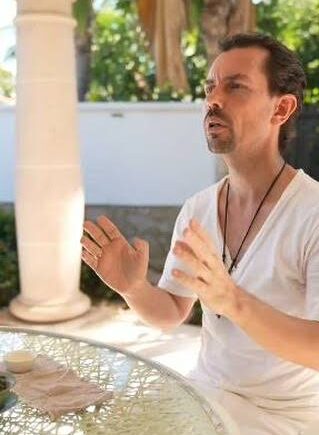
with Fabrice Piché
Medical qigong, embodied awareness, moving meditation, and the cultivation of transformation through lifelong practice.
What makes authentic qigong more than a sequence of movements? Fabrice Piché shares the
lineage of Professor Lin Housheng and explains how Taiji Qigong Shibashi develops
awareness, perception, and embodied transformation through disciplined practice.
Taiji Qigong Shibashi is practiced by millions of people throughout the world. Its graceful movements have introduced countless people to qigong, improved health and mobility, and provided an accessible entry point into the internal arts. Yet its widespread popularity has also created a common misunderstanding. Because the movements appear simple, many assume the practice itself is simple.
This conversation with Fabrice Piché reveals something very different. As a medical qigong practitioner and one of the few Westerners to study privately with Professor Lin Housheng—the creator of Taiji Qigong Shibashi—Fabrice offers a rare glimpse into the principles that shaped the system. His reflections move well beyond choreography, inviting us to consider what authentic practice is actually cultivating within the practitioner.
“The movements are simple. The practice is not.” —Fabrice Piché
Simplicity Often Conceals the Greatest Depth
Professor Lin Housheng did not create Taiji Qigong Shibashi merely as another exercise routine. Commissioned during China’s modern public health initiatives, the system was designed to improve the health of ordinary people while remaining simple enough for anyone to learn. Behind that simplicity, however, stood decades of research into medical qigong, internal cultivation, and the relationship between movement, physiology, and consciousness.
As Fabrice explains, accessibility should never be mistaken for superficiality. The eighteen movements provide an elegant structure through which practitioners can gradually cultivate coordination, relaxation, breathing, attention, and awareness. Beginners may only notice the external form, but those who remain with the practice discover that the real work unfolds internally. The movements never become more complicated; instead, perception becomes increasingly refined.
This reflects a principle found throughout authentic traditions. Great systems are rarely profound because they are complex. They are profound because they continue revealing deeper dimensions of experience long after their outward form has been mastered.
From Learning Movements to Cultivating Awareness
Every practitioner begins by thinking about technique. Attention is occupied with remembering where the hands should move, how the body should turn, when to inhale, and how deeply to bend the knees. This stage is both necessary and unavoidable because imitation is how the body first learns.
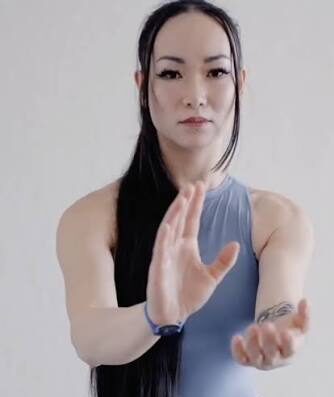
Over time, however, something important begins to change. The movement no longer requires constant mental effort, and awareness gradually becomes available for something else. Instead of directing every action, attention begins observing sensation itself. Breathing becomes more tangible. Weight shifts become clearer. Structure becomes easier to perceive. The practitioner is no longer simply performing the form but participating in the experience unfolding within the body.
Fabrice describes this beautifully when he explains that each repetition should eventually feel different because the body itself is continually changing. Taiji Qigong Shibashi practice is no longer about repeating identical movements but about cultivating an increasingly intimate relationship with one’s own experience.
“The goal is not perfect repetition. The goal is increasingly refined perception.” —Fabrice Piché
Understanding Qi Through Direct Experience
Few ideas generate more confusion than qi. Some dismiss it because they cannot measure it, while others surround it with mystical explanations that move beyond direct experience. Fabrice offers a refreshingly balanced perspective grounded in both Chinese medicine and decades of personal practice.
Rather than defining qi simply as energy, he describes it as the dynamic process through which information is communicated throughout the organism. Within traditional Chinese medicine, qi coordinates the relationship between structure, function, perception, and consciousness. It is less an object than an ongoing process of organization and communication that allows the body to function as an integrated whole.
Whether modern science ultimately explains these processes through neurophysiology, connective tissue, nitric oxide signaling, or other emerging models, the essential insight remains remarkably consistent. Authentic cultivation is not concerned with believing in qi as an abstract concept. It is concerned with developing the sensitivity to observe these living processes directly through practice.
Why Repetition Never Becomes Repetition
Modern culture often encourages us to seek constant novelty. We move quickly from one method to another, assuming that progress requires continual variety. Internal cultivation follows a different logic. Its depth emerges through sustained engagement with a relatively small number of practices.
Professor Lin’s own internal training reportedly involved years of standing practice before progressing further. Such discipline may appear repetitive from the outside, but repetition gradually transforms into exploration. As awareness becomes more refined, subtle changes in posture, breathing, intention, balance, and sensation continually reveal themselves. The external movement remains unchanged while the internal landscape becomes increasingly rich.
This is why experienced practitioners rarely become bored. Their attention is no longer occupied with memorizing movements but with discovering how each repetition reveals something previously unnoticed. The form becomes a laboratory for observing the continual transformation of the body and mind.
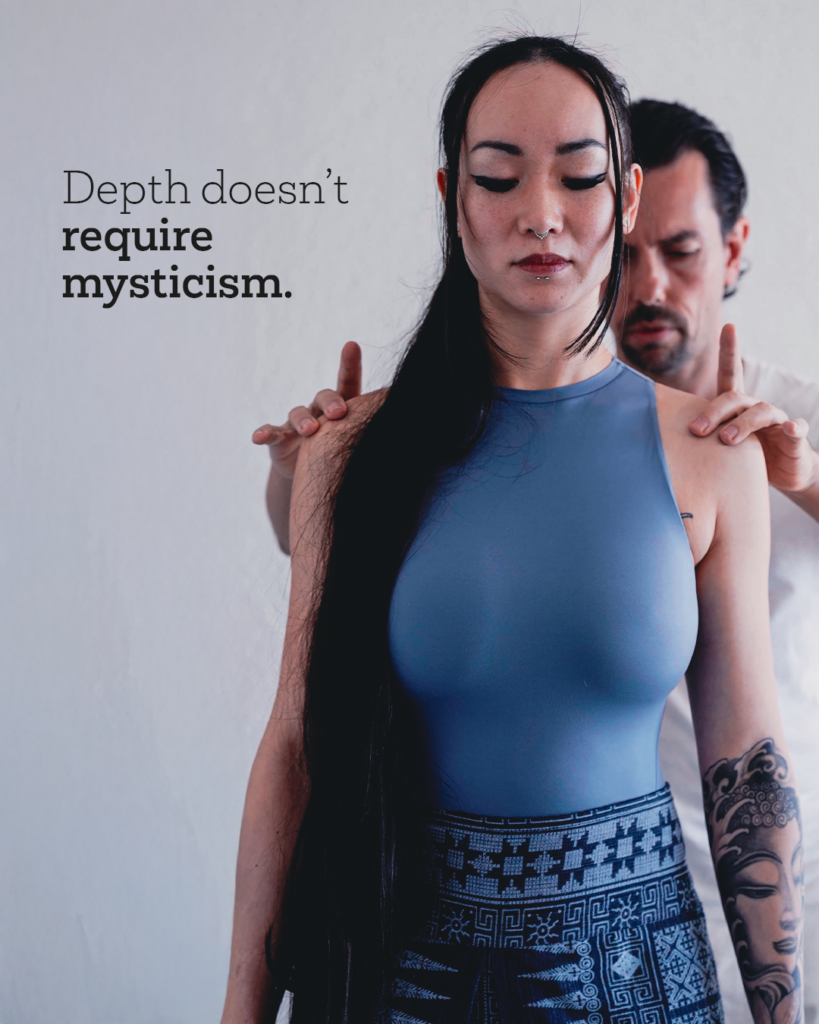
Moving Meditation and Everyday Life
One of the most valuable insights from this conversation concerns the relationship between meditation and movement. Many contemplative traditions cultivate deep states of awareness while sitting quietly. Maintaining that same quality of presence while walking, working, teaching, or responding to everyday situations is often far more difficult.
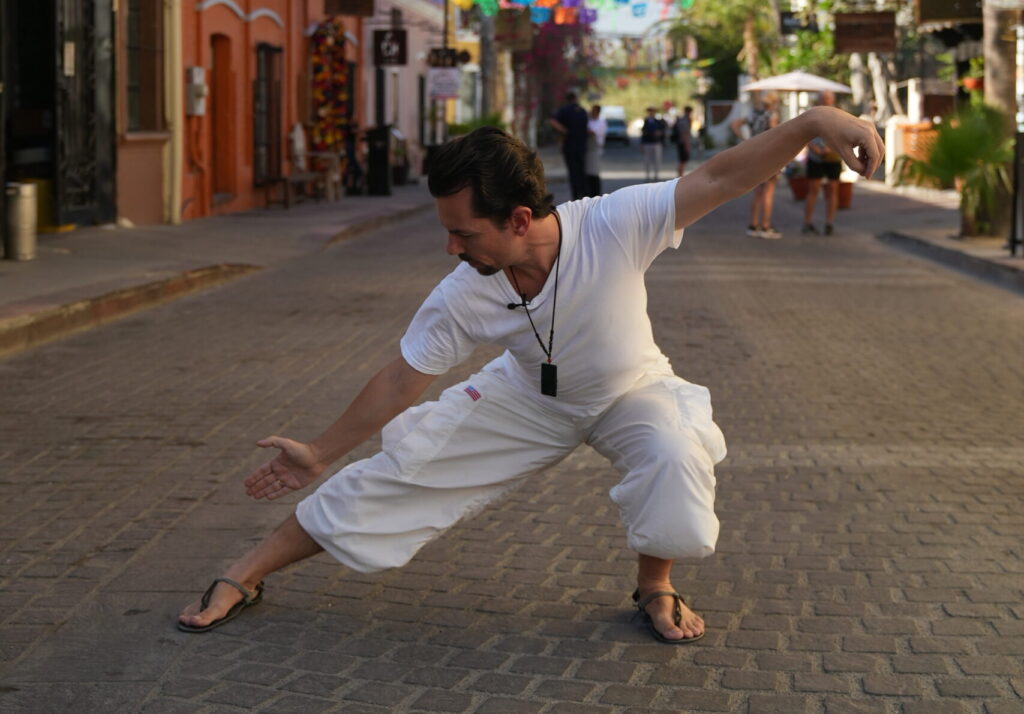
Taiji Qigong Shibashi provides an important bridge between these two worlds. The body continues moving while awareness remains settled and attentive. Instead of leaving meditation behind when practice ends, the practitioner gradually learns to carry that quality of attention into ordinary life. Presence becomes something that moves with the body rather than remaining confined to the meditation cushion.
This mirrors one of the central aims of Inner Life itself. Practice is not intended to create extraordinary experiences that disappear once the session ends. Its purpose is to cultivate enduring capacities that reorganize how we perceive, participate in, and respond to life itself.
“Awareness must eventually learn to travel if it is to transform everyday life.” —Fabrice Piché
The Real Measure of Practice
Perhaps the deepest lesson offered by Fabrice Piché is that authentic cultivation should never be measured by the number of techniques we know or the elegance of our movements. Those qualities may reflect experience, but they do not necessarily reveal transformation.
The more meaningful questions are quieter. Has practice made us more attentive? More relaxed? More responsive? More patient? More capable of meeting change without losing ourselves? These qualities cannot be memorized or performed. They emerge gradually through years of disciplined participation in a living practice.
Taiji Qigong Shibashi remains one of the world’s most practiced qigong systems because it succeeds in something remarkably difficult. It welcomes beginners while continuing to reveal new depths to experienced practitioners. Its movements invite us inward, but its true purpose lies beyond the movements themselves. They become the means through which awareness is embodied, perception is refined, and transformation quietly unfolds over a lifetime of practice.
About the Guest
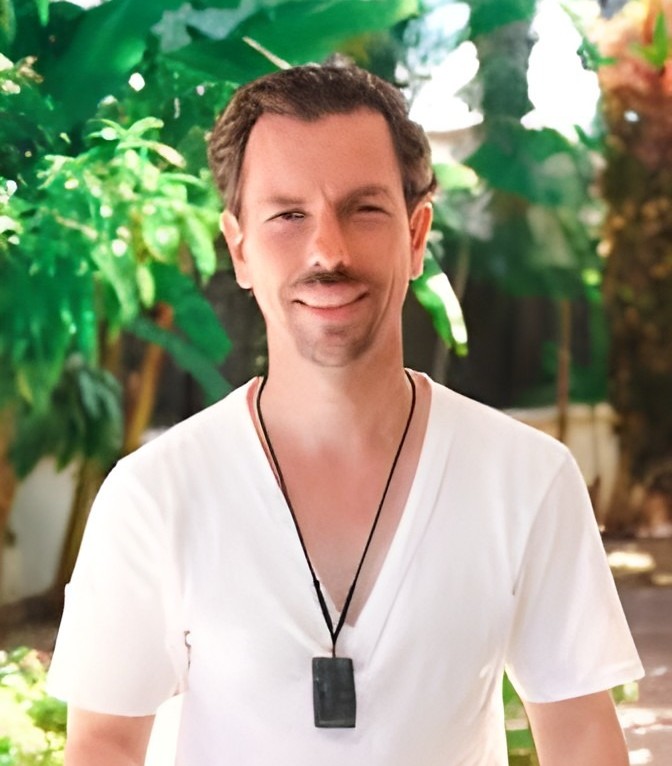
Fabrice Piché is a medical qigong practitioner, teacher, and lineage holder dedicated to the authentic transmission of Taiji Qigong Shibashi (18 Movements Qigong). An indoor student of Professor Lin Housheng, the creator of the Shibashi system, Fabrice has devoted decades to the study of Chinese medicine, medical qigong, and internal cultivation.
Today, Fabrice teaches Taiji Qigong Shibashi, Medical Qigong, Shaolin Neijin and Yizhichan standing practices, and therapeutic methods of qi cultivation. Through his teaching and educational work, he is committed to preserving the depth, precision, and healing potential of this living lineage for students around the world.
Continue Exploring This Theme