
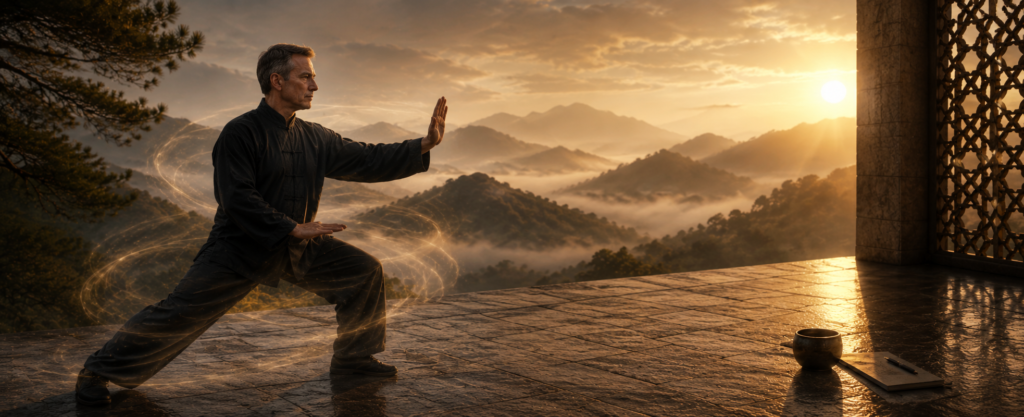
The Body Reveals What the Mind Cannot
Reflections on Daoism, Tai Chi, Gratitude, and the Wisdom Revealed Through a Lifetime of Practice
by Mark V. Wiley
This reflection was inspired by my conversation with the late Stuart Olson in the Integral Being series. And yet, while our conversation with was ostensibly about Daoism, Tai Chi, Buddhism, and cultivation, as the discussion unfolded, it became clear that the deepest lessons had little to do with technique.
Stuart had spent decades studying with renowned teachers, translating classical texts, practicing meditation, undertaking pilgrimage, and teaching internal arts. What remained after all those years was not a collection of methods or theories, but a way of meeting life itself.
Again and again, the conversation returned to a handful of enduring themes: humility, gratitude, yielding, direct experience, and the quiet wisdom that emerges through long-term practice. These lessons were not presented as abstract philosophy. They were grounded in lived experience, shaped by decades of training, reflection, success, failure, and the inevitable realities of aging and mortality. Beneath the stories and teachings was a simple but profound insight: the deepest forms of understanding are often discovered through participation in life rather than through thinking about it.
“I’ve got to meet this man.” —Stuart Olson
The Search for Meaning
Many people begin a path of practice because they sense that something is missing. The details vary from person to person, but the impulse is familiar. There is often a feeling that the routines of daily life, while necessary, do not fully answer the deeper questions of existence. What are we cultivating? What does it mean to live well? What remains when achievement, status, and identity no longer satisfy?
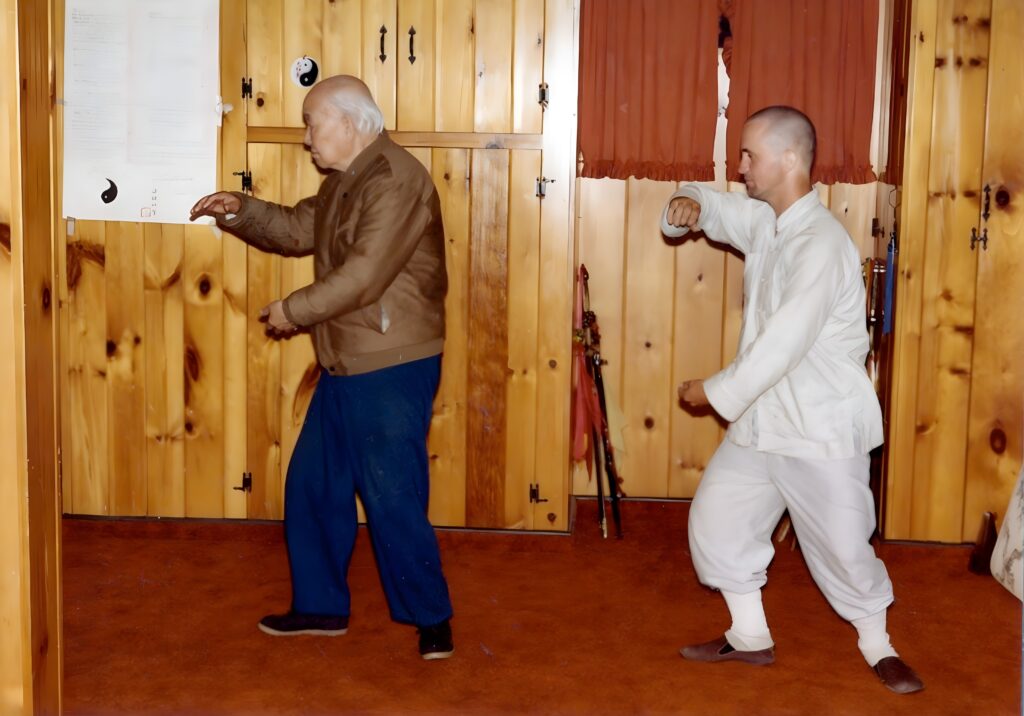
Stuart’s own journey reflected this search. As a young man, he encountered the image of the Chan Buddhist master Hsuan Hua and felt an immediate certainty that he needed to learn more. That decision eventually led him into years of Buddhist practice, Taoist cultivation, Tai Chi training, pilgrimage, and study. Yet what struck me during our conversation was not the uniqueness of his path, but how familiar its underlying motivation was. Like countless seekers before him, he was looking for something more authentic than the assumptions and expectations that shape ordinary life.
“The body reveals what the mind cannot conceptualize.” —Stuart Olson
The search itself, however, contains a hidden challenge. The desire for growth can become another form of ambition. The wish to awaken can become another identity to perform. Spirituality can become one more arena in which the ego seeks validation. What begins as a sincere search for truth can quietly transform into a search for recognition, accomplishment, or specialness.
When Practice Becomes Performance
One of the most revealing moments in our conversation emerged from Stuart’s reflections on the famous Nine Steps One Bow pilgrimage. For more than two years he traveled across the American Midwest, stopping every nine steps to perform a full prostration. To most observers, the undertaking appears extraordinary. It is the kind of story that naturally attracts admiration and respect.
Yet Stuart’s interpretation of the experience was unexpected. Looking back, he described it with humor and self-awareness, referring to aspects of the undertaking as “Spiritual Olympics.”
“The real cultivators are the people who get up every morning, go to work, raise families,
and still practice.” —Stuart Olson
That observation cuts directly against many assumptions about spiritual development. Modern culture often celebrates the dramatic, the exceptional, and the visible. We are drawn to stories of extreme dedication and remarkable achievement. Yet genuine cultivation rarely unfolds in public. It takes place in the midst of ordinary responsibilities, ordinary relationships, and ordinary challenges.
The insight is especially relevant today. Many people unconsciously compare practices, teachers, experiences, and accomplishments. The temptation to measure ourselves against others is always present. Stuart’s reflection suggests that the deeper question is not how impressive a practice appears, but how thoroughly it transforms the way we meet everyday life. The measure of cultivation is not found in dramatic experiences. It is found in patience, humility, consistency, and the ability to remain present under ordinary conditions.
Learning How to Lose
Among the many influences on Stuart’s life, few were more important than his relationship with Master T.T. Liang. Although Liang was widely respected for his skill in Tai Chi, the lessons he transmitted extended far beyond martial arts. What remained with Stuart was not a collection of techniques, but a radically different understanding of conflict itself.
Most people approach martial arts through the lens of victory. They seek effectiveness, power, and the ability to overcome resistance. The language of winning and losing often dominates the discussion. Yet Stuart repeatedly returned to a different lesson, one that T.T. Liang emphasized throughout his teaching: learn how to lose.
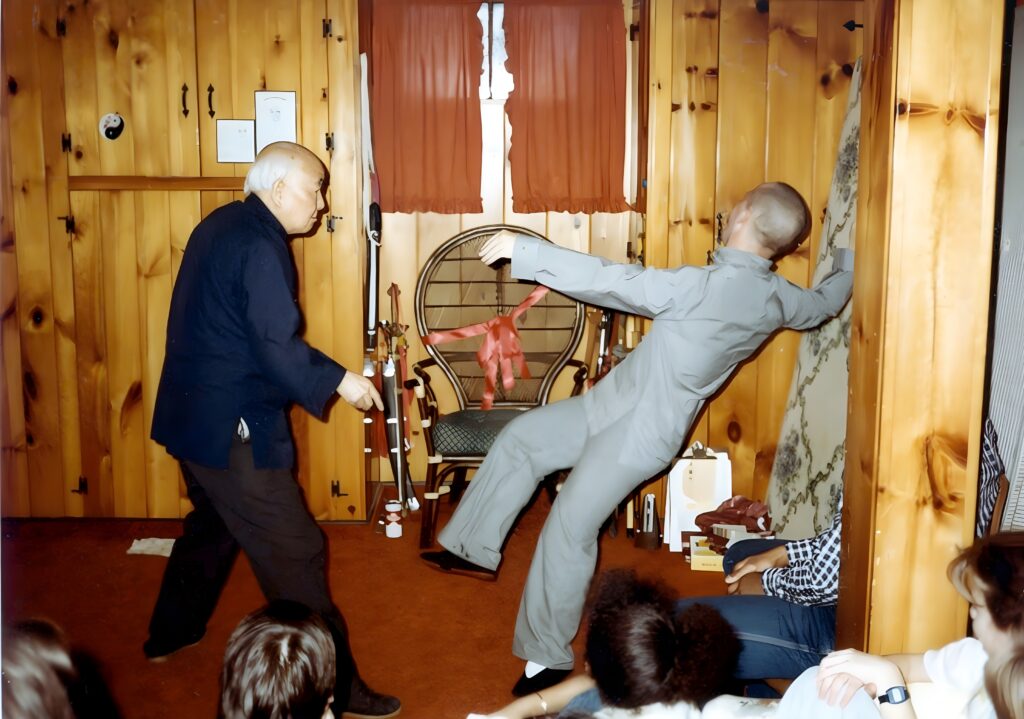
of Tai Chi on his disciple Stuart Olson.
At first glance, the statement appears simple. Upon closer examination, it reveals an entirely different understanding of practice. The greatest obstacles we encounter are often internal rather than external. Rigidity, impatience, pride, fear, and attachment create far more conflict than the circumstances around us. We resist situations that cannot be changed. We cling to identities that no longer serve us. We insist that reality conform to our preferences rather than learning to adapt to what is actually occurring.
This is where the Daoist principle of yielding becomes so powerful. Yielding is frequently misunderstood as passivity or weakness. In reality, it requires tremendous awareness. To yield effectively, one must perceive clearly, remain adaptable, and respond without becoming rigid. The lesson applies equally to relationships, work, health, aging, and personal development. Learning how to lose is ultimately learning how to stop fighting unnecessary battles.
“The primary opponent is the self.” —Stuart Olson
What the Body Reveals
One of the most compelling themes in the conversation was Stuart’s emphasis on direct experience. Modern culture places enormous value on explanation. We analyze, interpret, compare, categorize, and construct elaborate frameworks for understanding the world. While these capacities are valuable, they also have limits. Some forms of knowledge cannot be reached through concepts alone.
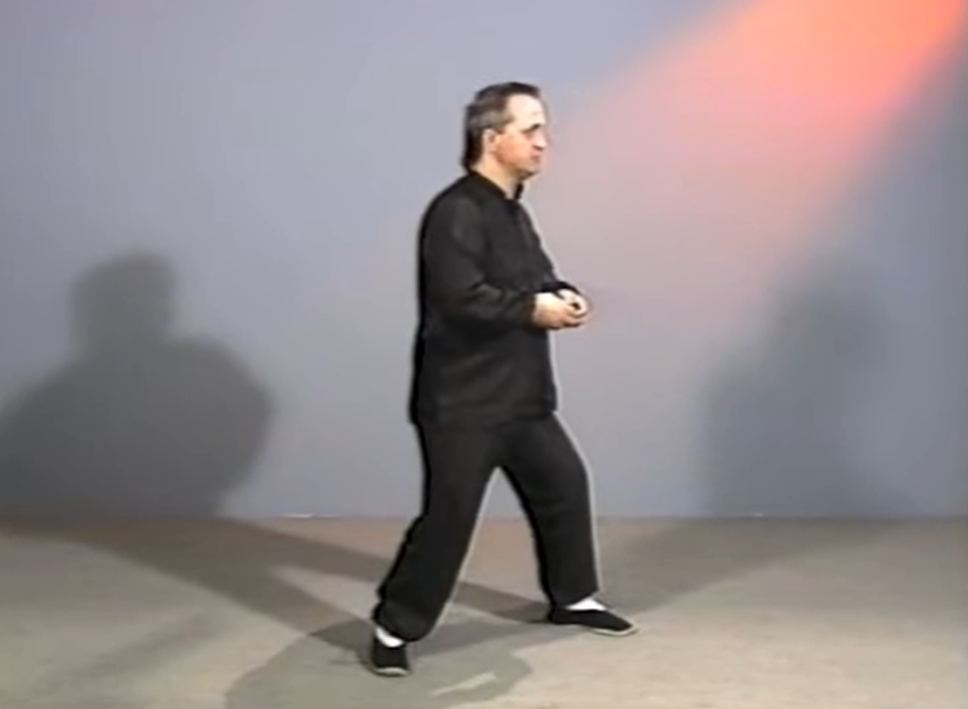
“The body reveals what the mind cannot conceptualize.” —Stuart Olson
This statement points toward a principle found across contemplative and embodied traditions. The body participates in reality before the mind explains it.
One of the most compelling themes in the conversation was Stuart’s emphasis on direct experience. Modern culture places enormous Through practice, we begin to perceive patterns that intellectual understanding alone cannot reveal.
We notice tension that had previously gone unnoticed. We recognize habits that exist beneath conscious awareness. We discover how our emotions, beliefs, and assumptions manifest physically long before we can describe them verbally.
Throughout his stories, Stuart Olson repeatedly illustrated this principle. Encounters with strangers, unexpected acts of kindness, moments of hardship, and experiences that defied explanation all contributed to his understanding. The lessons were not learned because someone explained them. They emerged because he was fully present to the experience itself. The body became a vehicle for perception rather than merely an object to be managed or controlled.
This insight has implications far beyond Tai Chi or Daoism. Every serious practice eventually confronts the limits of conceptual knowledge. There comes a point where understanding must be embodied. The shift from thinking about experience to participating in experience marks a profound transition in development. It is often at that threshold that deeper transformation becomes possible.
Living Well and Dying Well
Toward the end of our discussion, the conversation turned toward mortality. This subject often receives surprisingly little attention within contemporary discussions of growth and development. Much of modern culture is focused on optimization, productivity, longevity, and self-improvement. Rarely do we ask what it means to age well or die well.
For Stuart Olson, these questions were inseparable from cultivation itself. Throughout his life he had observed teachers who approached death with remarkable clarity and dignity. Their example demonstrated that practice is not merely preparation for success. It is preparation for the full spectrum of human experience, including impermanence and loss.
“Life is to be appreciated.” —Stuart Olson
This statement carries a depth that becomes more apparent with time. Appreciation is not dependent upon ideal circumstances. It does not require certainty, achievement, or control. Rather, it emerges from a recognition of life’s inherent value despite its impermanence. To appreciate life fully is also to acknowledge that it will end.
The Daoist and Buddhist traditions often emphasize tranquility and clarity. Tranquility allows us to meet life without unnecessary agitation. Clarity allows us to perceive reality without distortion. Together they create the conditions for living well and, when the time comes, dying well. This perspective is neither pessimistic nor fatalistic. It is grounded in acceptance and gratitude for the opportunity to participate in life at all.
A Wonderful State of Mind
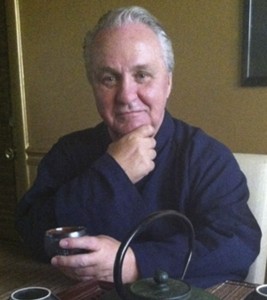
Stuart Alve Olson (1850-2025)
Near the beginning of our conversation, Stuart shared the story of a monk who was asked why he continued a demanding bowing practice. The monk replied that he was doing it because he was grateful. When asked what he was grateful for, he offered an unexpected answer.
“Ultimately nothing, but it’s a wonderful state of mind.” —Stuart Olson
That response may be the most concise expression of the entire conversation. It points toward a form of appreciation that is not dependent on achievement, possession, or circumstance. Gratitude becomes less a reaction to favorable conditions and more a way of inhabiting the world. It reflects a relationship to life rather than a calculation of benefits received.
When I reflect on Stuart’s life and teachings, this is what remains with me. Not the books, the pilgrimage, the lineage, or the accomplishments, significant as they were. What remains is a spirit of humility, curiosity, and appreciation. His example suggests that authentic cultivation is not about becoming extraordinary. It is about becoming more fully present, more adaptable, and more capable of meeting life directly.
Perhaps that is what the body reveals that the mind alone cannot. Not another idea to possess or another belief to defend, but a way of being that allows us to participate more fully in the reality already before us. The deepest lessons are often the simplest, and the simplest lessons are often the ones that take a lifetime to understand.
Watch the Conversation with Stuart Olson
You can read Sifu Stuart Olson’s obituary here.
Continue Exploring
The Inner Life Model
How body, breath, attention, and perception organize into lived experience.
The Practice Field
What emerges when perception, awareness, and embodied capacities begin functioning together.
Integrated Modular Training (IMT)
How capacities develop, integrate, and become stable traits rather than temporary experiences.
Integral Being
Conversations exploring transformation, embodiment, and the cultivation of the human being.