
INNER LIFE ECOSYSTEM
The living environment in which embodied human development is cultivated
What Is the Inner Life Ecosystem?
If the Inner Life Model defines the developmental system, the Inner Life Ecosystem provides the environments in which that system can be explored, practiced, and embodied.
It is not another stage of development. Nor is it another method. Rather, it is the living network of practices, disciplines, teachings, conversations, resources, and communities that support human development over time.
Each part of the ecosystem contributes something different. Each develops particular capacities. None is complete in isolation. Together they create the conditions through which the capacities described by the Inner Life System can be cultivated, refined, stabilized, and ultimately embodied.
These domains do not simply coexist. They continuously interact, revealing both their strengths and their limitations. Development is not the accumulation of separate methods, but the gradual organization of the capacities they cultivate into a coherent whole.
Each discipline enters through a different doorway. Meditation develops attention. Internal arts cultivate structure and internal organization. Somatic practice restores sensitivity and regulation. Martial practice develops responsiveness under pressure. Healing restores balance. Contemplative traditions provide orientation toward meaning. Relational practice offers feedback, correction, and perspective.
The Inner Life Ecosystem exists because lasting development rarely unfolds through a single method. As capacities cultivated within one domain begin informing and strengthening the others, practice becomes increasingly integrated rather than increasingly specialized.
Over time, methods begin to change their function. What begins as technique becomes perception. What begins as regulation becomes realization. Disciplines begin overlapping, informing one another, and gradually dissolving the boundaries between them.
From Domains to Development
Most approaches emphasize a particular domain of practice—meditation, movement, healing, martial arts, contemplative traditions, or somatic work. Each offers something valuable. Each develops particular capacities. Yet none is sufficient on its own.
Inner Life begins from a different premise. Human development does not unfold through a single discipline, but through the gradual integration of many domains, each contributing something essential to the whole.
As capacities cultivated in one domain begin informing and strengthening the others, development deepens. What begins as separate methods gradually becomes an integrated way of perceiving, participating in, and responding to life.
The goal is not simply to accumulate experiences or techniques. The goal is greater integration. What emerges is not another method, but a more coherent, stable, and embodied way of being.
Development is not a progression from one practice to another, but a deepening through their integration. As the capacities cultivated across different domains begin informing one another, what emerges is not simply greater skill, but a more coherent, stable, and embodied way of being.
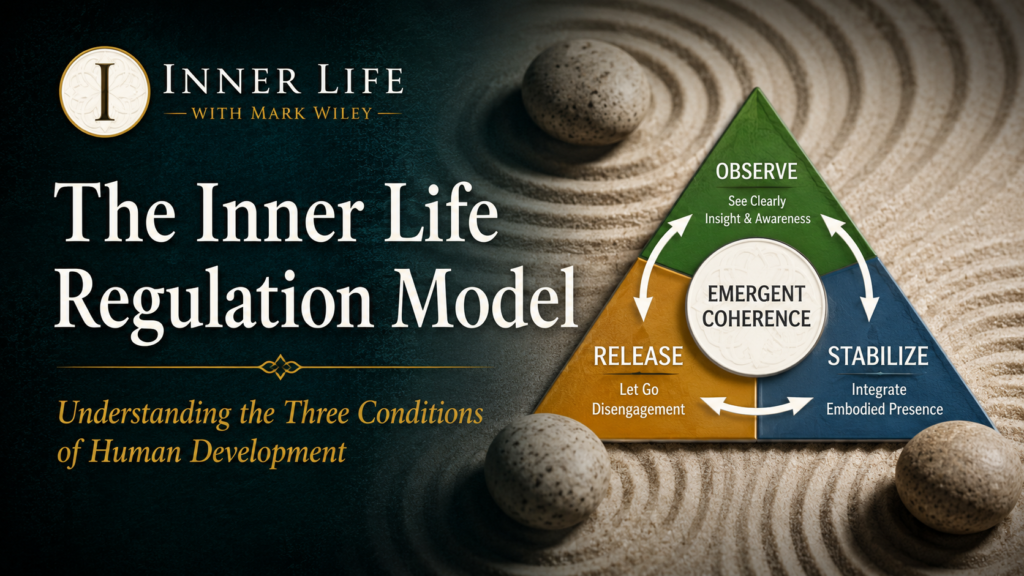
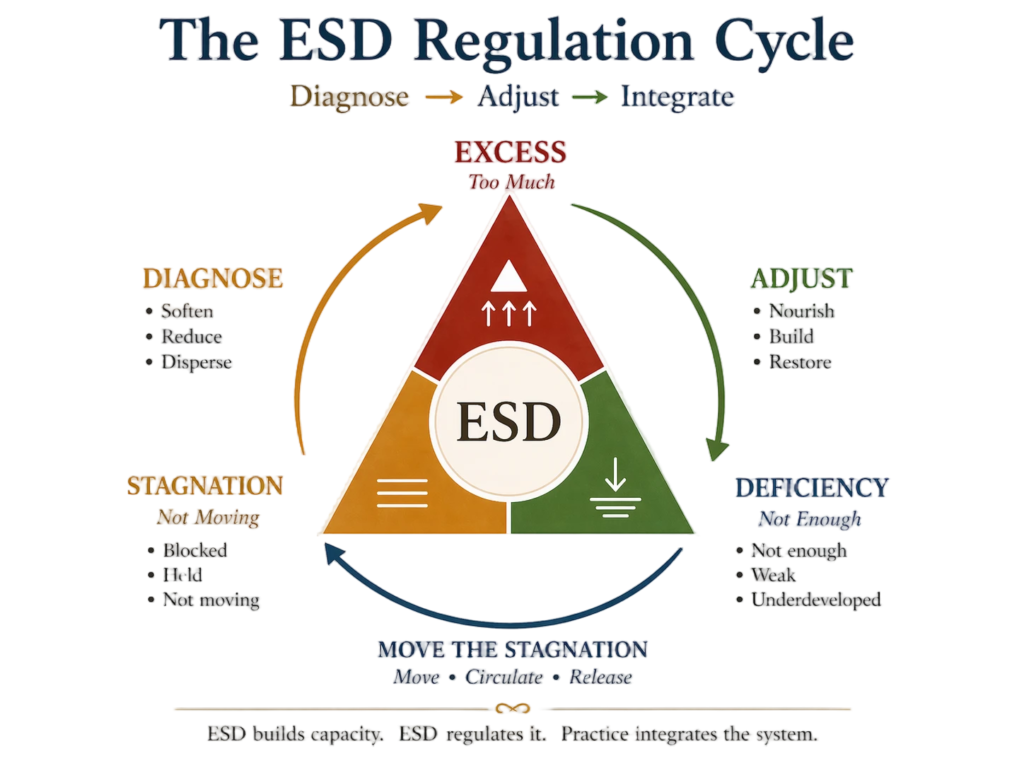
The ESD Model – Finding Balance
You may recognize these patterns already—
times when there is too much effort, no movement, or something missing.
Within Inner Life, these patterns are understood as:
- Excess — too much force, effort, or tension
- Stagnation — lack of movement or flow
- Deficiency — undeveloped capacity
These are not problems to eliminate, but signals that guide how practice is adjusted as the system moves toward coherence. This is not a progression from one practice to another, but a deepening through them.
Inner Life is not a single path or method. It is an ecosystem of embodied practices drawn from multiple traditions. At its deepest level, it is not defined by its parts, but by what emerges through their integration: a stable, coherent, embodied way of being.
The Logic of Integration
Inner Life is not only an ecosystem—it is a way of training. Development unfolds through refinement, convergence, and embodiment. The question is not what practices are included, but how they are brought into relationship—learned, combined, and embodied over time. Distinct domains become unified through continuous interaction and integration.
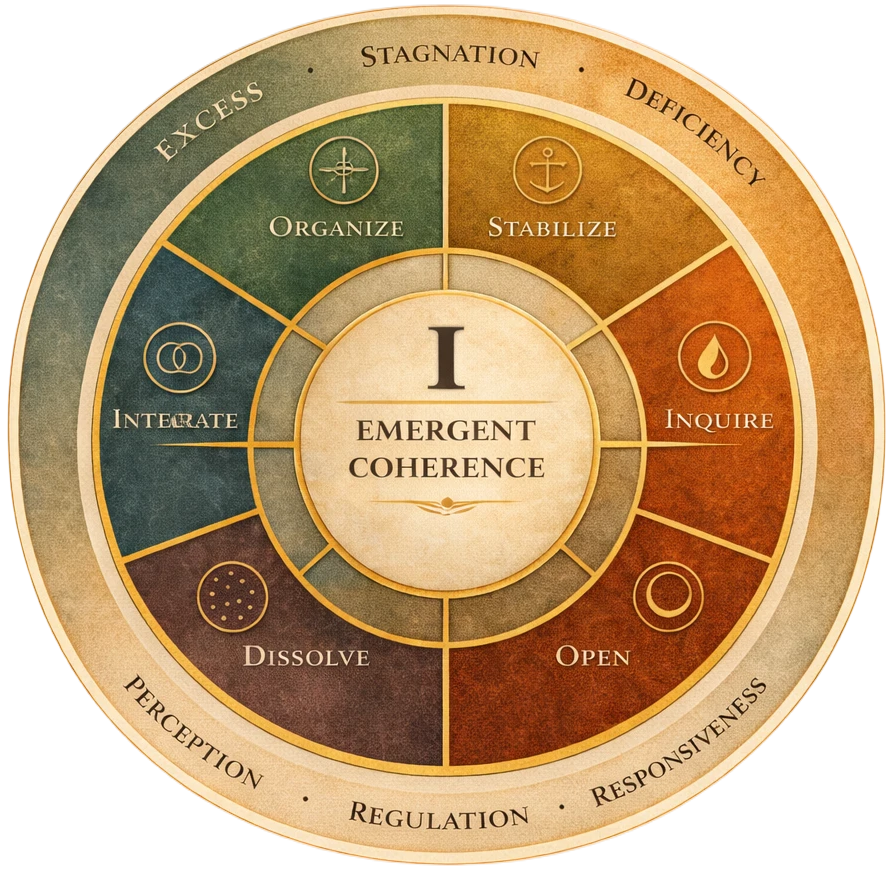
Transformation does not come from exposure to more methods, but from how methods begin to connect and operate together. Practices must be understood within their own domain, but linked across domains until they form a coherent whole.
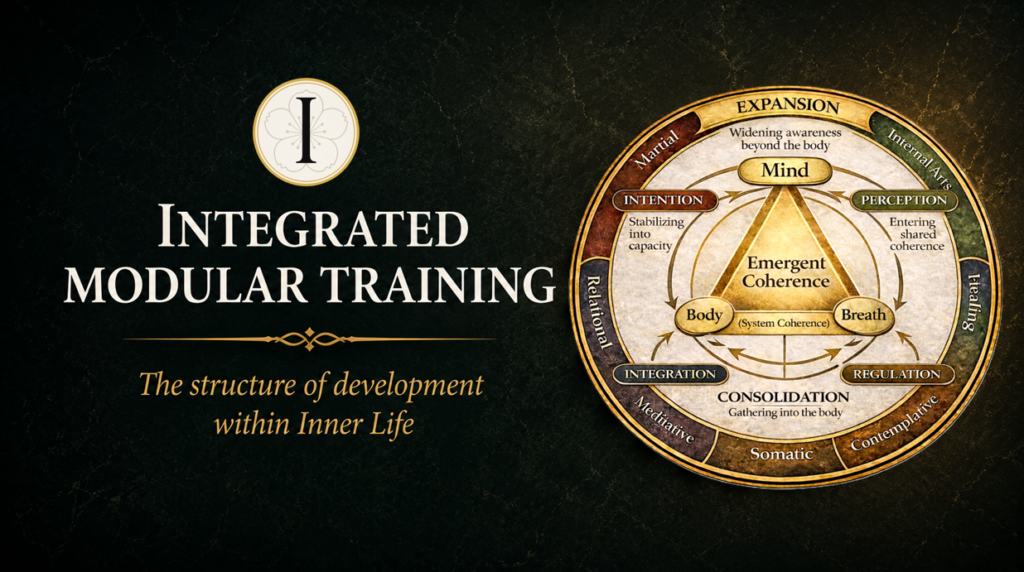
This understanding led to the development of Integrated Modular Training (IMT).
IMT emerged through practical training, where capacities such as timing, structure, and responsiveness began to transfer across contexts—revealing a broader organizing principle later extended across internal cultivation, healing, and contemplative disciplines.
What began as a method revealed itself as a structuring principle:
What begins as training becomes organization.
What becomes organized becomes lived.
Within this framework, each domain functions as a module. Each develops specific capacities, but none are complete in isolation. It is through their interaction—linking within domains and integrating across them—that stability, adaptability, and embodiment emerge.
This is not a collection of parallel paths, but a structured field of convergence. What appears separate begins to overlap in practice. What is developed in one domain begins to appear in another. Practice unfolds across three modes:
- Solo — stabilizing internal structure and perception
- Paired — refining responsiveness and relational timing
- Group — entering shared fields of coordination and coherence
Each mode develops a different dimension of how we are coupled to reality.
An Ecosystem of Practice
The Inner Life Ecosystem is composed of distinct domains of practice. Each develops specific capacities, yet each requires the others for completion.

Internal Arts — Refine breath, energy, and internal organization, developing perception from within the body.
Without integration, they can become abstract or ungrounded.
Meditative Practice — Stabilizes attention and reveals how perception arises.
Without embodiment, insight remains incomplete.
Martial Practice — Develops structure, coordination, and responsiveness under pressure.
Without internal depth, it remains mechanical.
Contemplative Traditions — Provide orientation toward reality and meaning.
Without embodiment, they remain conceptual.
Somatic Practice — Restores sensitivity, structure, and regulation.
Without integration, it remains therapeutic.
Healing Practice — Rebalances and sustains the system.
It prepares the ground, but does not replace development.
Relational Practice — Introduces feedback, correction, and perspective.
Without it, development can become isolated or distorted.
Each domain develops something essential.
Each is incomplete on its own.
Integrative / Bridge Practices
Some practices do not remain confined to a single domain. They begin as methods of regulation or training, but over time become gateways through which domains begin to merge.
Repetition becomes absorption. Technique becomes perception. These practices function as bridges:
- Dhikr, mantra, and sound practices regulate and deepen awareness
- Qigong and neigong connect physiology, perception, and healing
- Standing and moving forms practices unify movement and attention
- Internal training integrates structure, breath, and force
At a structural level, these bridges can be understood as:
Meditative ↔ Contemplative
Somatic ↔ Internal ↔ Healing
Martial ↔ Meditative
Internal ↔ Martial ↔ Somatic
Through these integrative practices, the deeper logic becomes visible:
Practice is not a collection of methods.
It is a process of convergence.
The Inner Life model is not built around what can be measured, but around what reflects integration. As the system becomes coherent, the body expresses this through stable and coordinated rhythms. Physiological signals such as heart rate variability may reflect this process—but they do not produce it.
Embodiment: The Thread That Holds It Together
Inner Life is not defined by its categories. It is a field of integration.
Conversation becomes meaningful only when it changes how we inhabit ourselves. Insight becomes real only when it is embodied. Structure becomes valuable only when it is lived.
Embodiment is where:
- Memory becomes Capacity
- Reflection becomes Posture
- Discipline becomes Presence
Practice is not a collection of methods, but a process of convergence. Distinct disciplines—movement, stillness, inquiry, healing, and relationship—gradually come into alignment, each refining and completing the others.
Over time, what begins as practice becomes a way of being. Not something performed, but something lived. Not something added, but something integrated. What begins as practice becomes a way of being. This is how practice becomes life. The Ecosystem provides the environments in which that journey is continually supported.
The Inner Life System describes the developmental process through which embodied human capacities are cultivated, refined, stabilized, and expressed.
The Inner Life Ecosystem provides the environments in which that process is explored, practiced, and sustained.
Together they form one integrated system for embodied human development.
Explore the Inner Life Framework