
INNER LIFE MODEL
The developmental framework for embodied human development
The structure through which
development is organized, regulated, and integrated over time.
The Inner Life Model is a practice-based system of embodied human development. Through sustained practice, the body, breath, attention, and perception are gradually reorganized into a coherent whole.
It is not a collection of techniques, but an integrated developmental framework. Through structured development, continuous regulation, and ongoing integration, the capacities that shape how we perceive, participate in, and respond to life are progressively cultivated and unified.
What begins as method becomes perception. What begins as practice becomes a way of being.
Information can describe the process.
Only experience can reorganize the system.
What Is Being Developed
Development is organized around fundamental capacities—functions that shape how we perceive, respond, and act.
Structure provides alignment and support.
Breath regulates internal state and continuity.
Attention stabilizes perception and directs awareness.
Release removes unnecessary tension and interference.
These are not trained in isolation. From the beginning, they are brought into relationship.
As they develop, they begin to function together. What once required effort becomes more natural. What was separate becomes coordinated.
The first threshold is reached when these capacities no longer require separate management, but remain present together during simple action.
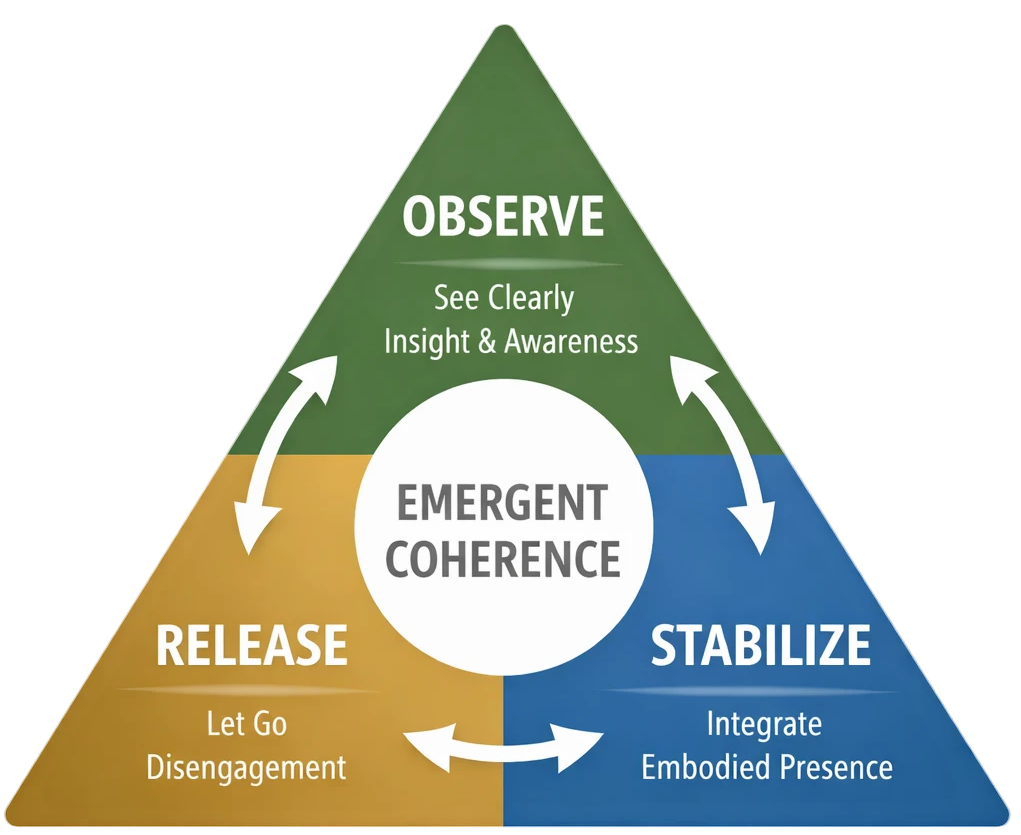
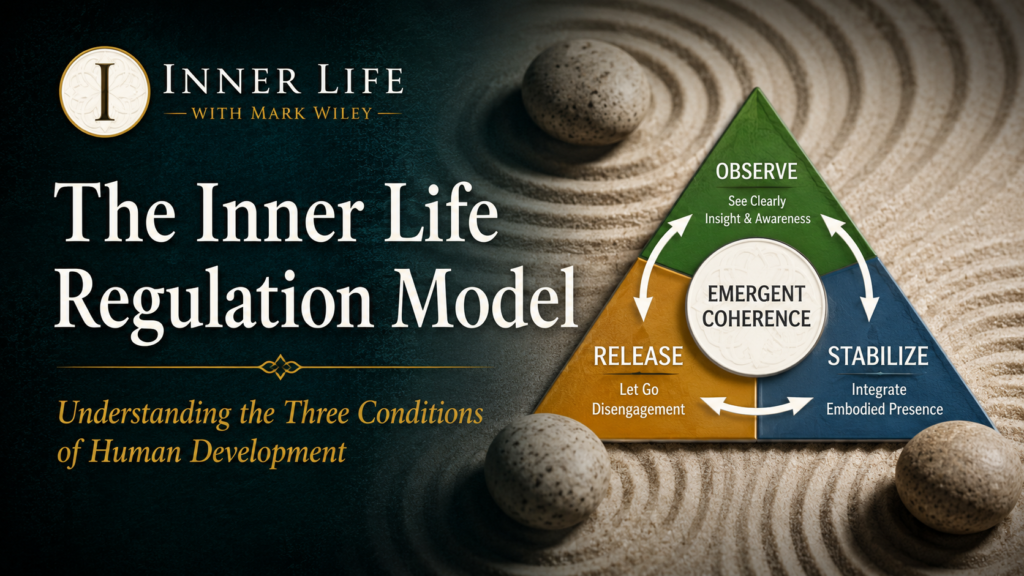
Training attention through
observation, release, and stabilization
→ Reflection: Embodied Transformation: Why Insight Alone Isn’t Enough
→ Practice: The Six Foundational Practices
The Process of Practice
Practice within the Inner Life Model is the means through which the system becomes organized.
At first, development is local—specific corrections, isolated awareness, momentary control. With sustained engagement, these begin to link.
Structure connects to breath → Breath connects to attention → Attention connects to action →
→ Over time → the system reorganizes.
Practice model may be undertaken alone, in structured training, or through interaction with others. Each reveals different aspects of the system. Each contributes to integration.
What changes is not only what one can do—but how one perceives.
→ Explore Further: Practice Leads to Embodiment
→ Explore Further: From Embodiment to Experience
→ Continue Reading: When Practice Becomes Shared
Regulation and Refinement
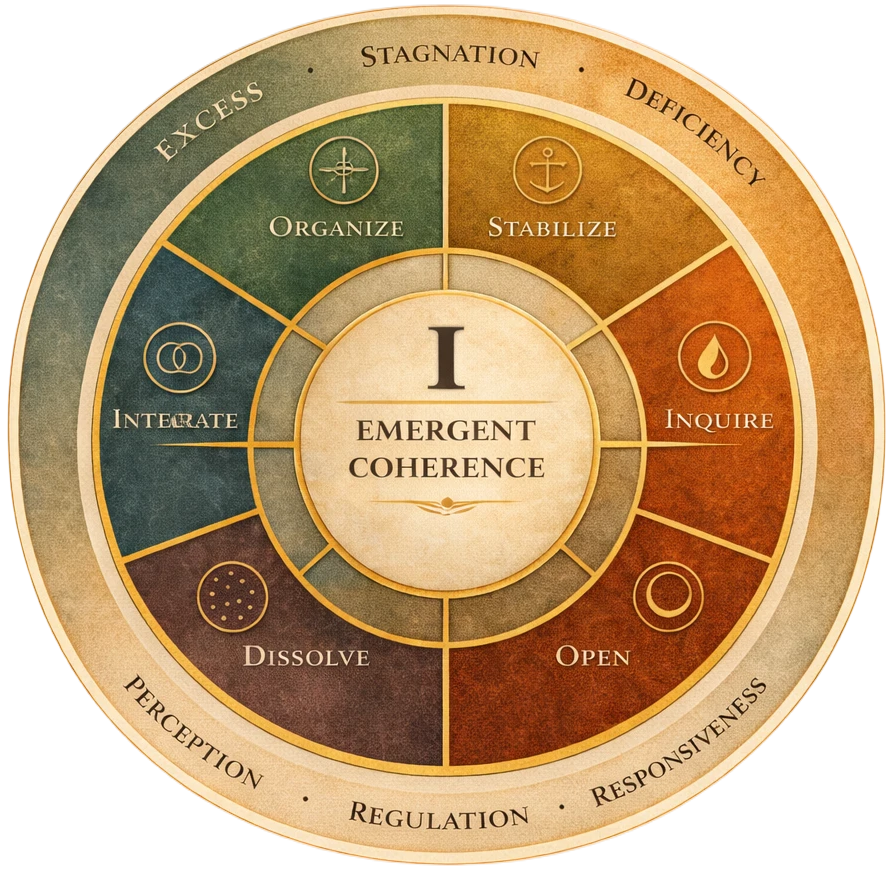
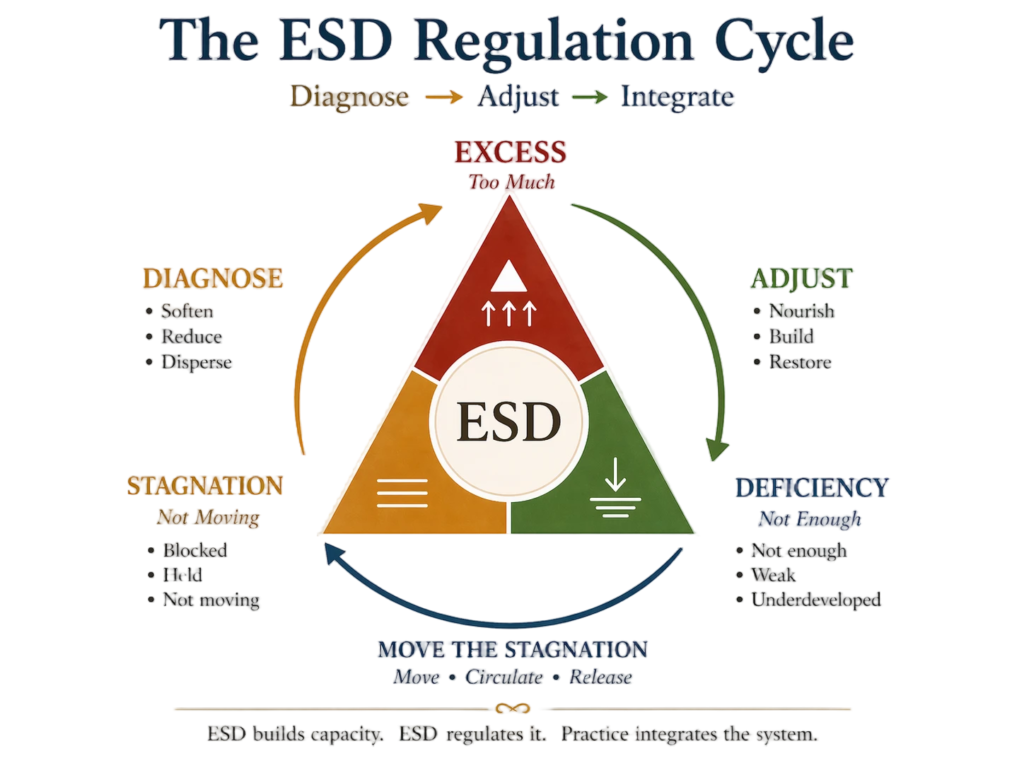
As practice deepens, patterns of imbalance become visible:
- Excess → too much
- Stagnation → not moving
- Deficiency → not enough
These are not separate conditions, but expressions of how the system is functioning.
At first → they are identified and adjusted.
Over time → they are recognized more quickly.
Eventually → they are perceived directly.
Regulation becomes continuous. Adjustment becomes skillful. Development proceeds without distortion. What begins as a model becomes a way of sensing the system.
→ Related Core Page: Inner Life Regulation Model
→ Field Observation: Structure Testing: The Language the Body Cannot Fake
→ Related Talk: Gaining Stability Through Change
Embodiment: The Unifying Thread
Embodiment is what allows practice to take root. It is where reflection becomes posture, breath becomes regulation, and insight becomes lived behavior. Without embodiment, development remains abstract. With it, change becomes stable, cumulative, and real. Embodiment is not the starting point—it is what emerges as the system becomes organized.
It begins with sensing—the ability to feel the body from within. But sensing alone is not enough. The body must become structured, aligned, and responsive.
As this stabilizes, effort decreases and coordination increases. A deeper shift follows: awareness is no longer directed at the body—it is lived within it.
Perception becomes continuous. The division between attention and physiology begins to dissolve.
At this stage, embodiment is no longer something practiced. It is the result of integration across the system.
The body is not the origin of realization.
It is the condition through which realization becomes real.
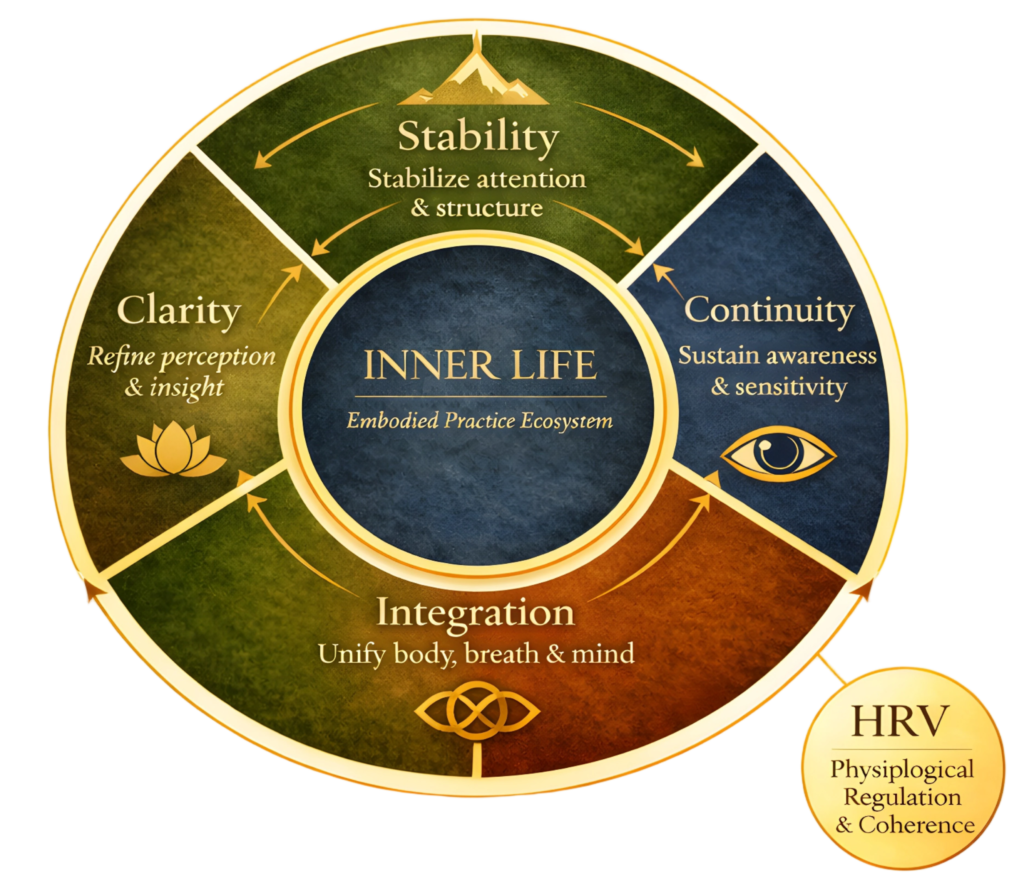
Learn more about HRV here.
→ Continue Reading: Cultivation of Embodiment in Internal Martial Arts
→ Explore Further: Cultivation Beyond Form, Toward Integration
→ Related Conversation: Will Johnson — Somatic Meditation
Integration and Emergence
As capacities align and regulation stabilizes, a shift occurs.
What was trained separately begins to function as a unified whole. The distinction between effort and action softens. Response becomes immediate and appropriate to conditions. This is not a state imposed from above. It emerges from the interaction of trained capacities over time.
As the system integrates, coherence appears.
- Attention stabilizes.
- Breath deepens.
- Perception refines.
- Action becomes coordinated.
What begins as method becomes perception.
What begins as practice becomes a way of being.
→ Continue Reading: When Practice Becomes Goalless
→ Related Reflection: The Practice Field
→ Field Observation: When Practice Stops Being Imitation
The Practice Field
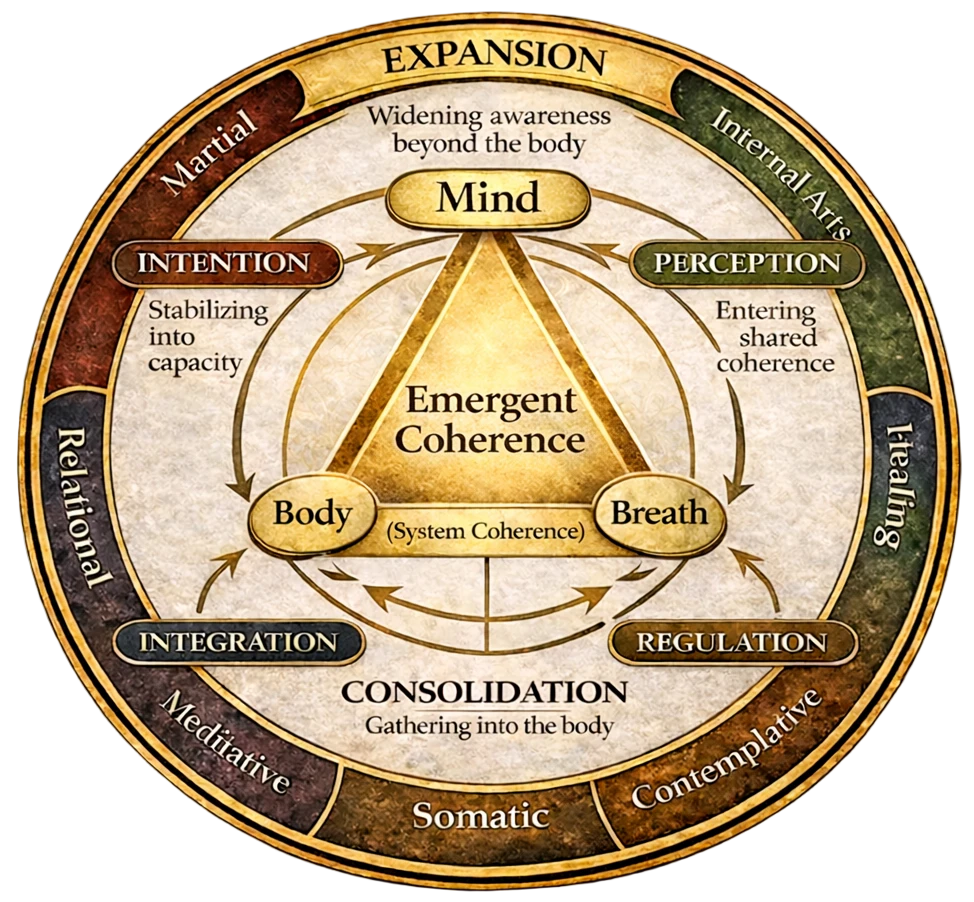
At a certain point, development is no longer confined to specific exercises.
The same coordination appears across movement, stillness, and interaction. The system no longer depends on structured practice to function.
This is sometimes described as coherence—a condition in which the elements of the system operate together without conflict.
It is directly observable, repeatable, and trainable.
→ Related Core Page: Practice Field
→ Related Practice: The Six Foundational Practices
→ Continue Reading: When Practice Becomes Shared
A Developmental Framework
Inner Life is a field of practice devoted to the disciplined cultivation of the human being through embodied practice, sustained reflection, and direct inquiry. It is not an approach to embodiment, but a system of development.
Much of what is called embodiment today refers to aspects of experience—awareness of the body, emotional presence, or connection to self and environment. These may be meaningful, but they often remain partial.
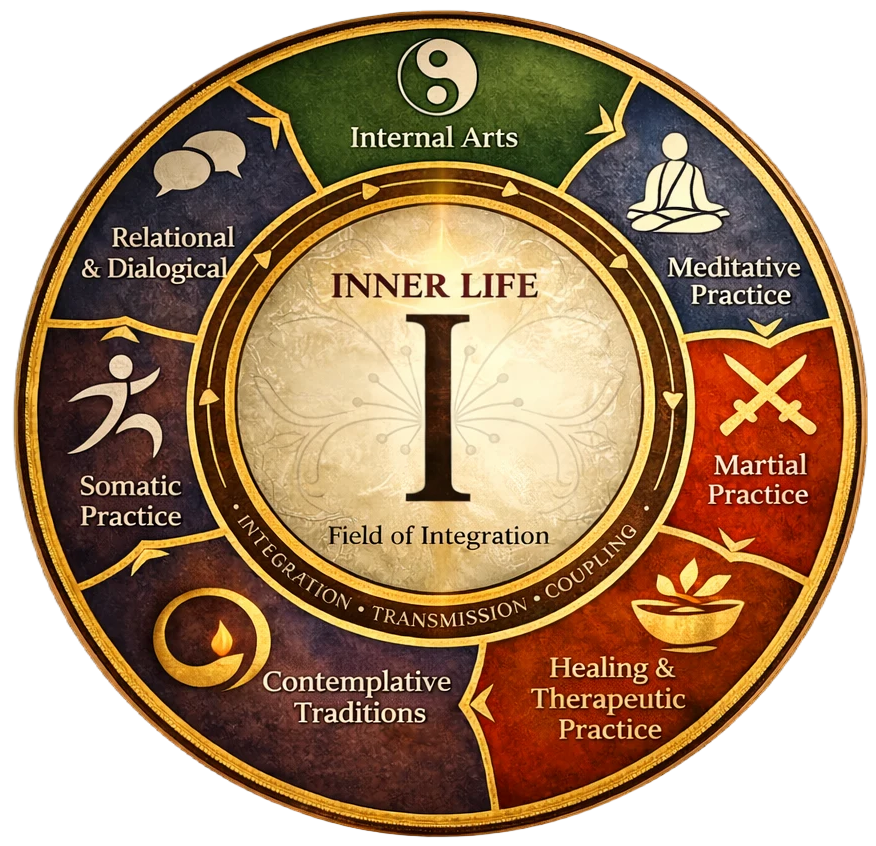
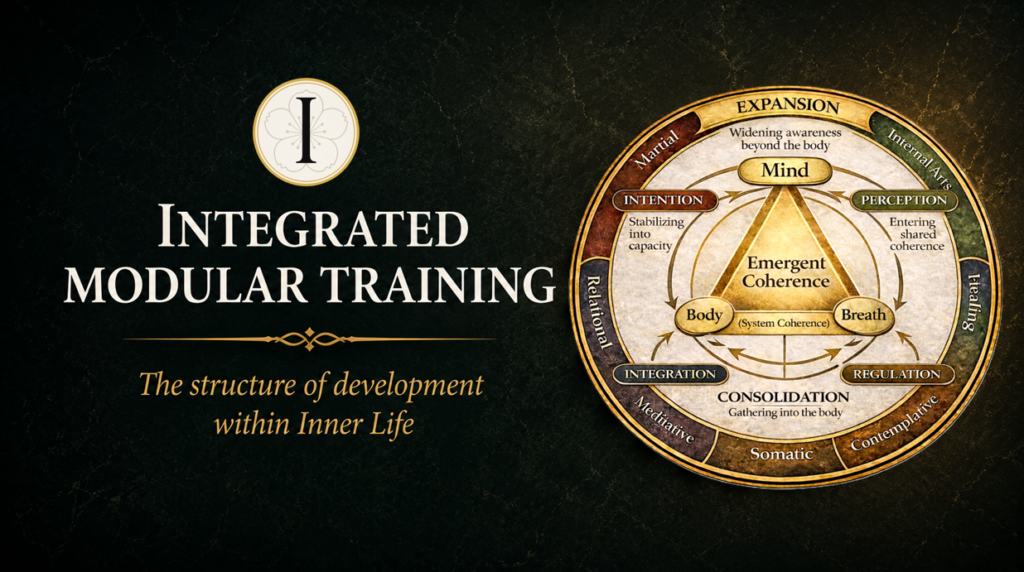
Distinct domains, unified through
continuous interaction
Inner Life begins from a different premise: embodiment is not a method or a domain—it is the result of a system becoming organized.
Across disciplines—martial, contemplative, somatic, internal, healing, and relational—distinct methods train specific capacities: attention, breath, structure, perception, and regulation. In most approaches, these are developed separately.
Here, they are not.
Each conditions the others. Each refines the system. What begins as method becomes perception. What begins as practice becomes a way of being.
This is not an ecology of practices. It is an ecosystem of transformation—distinct domains unified through continuous interaction.
→ Explore Further: René Navarro — Tai Chi as a Complete Path
→ Related Conversation: John Vervaeke — Embodiment in Practice
→ Gain More Insight: Ravi Ravindra — Journey to Awakening
First Principles
Inner Life is built on what can be embodied, tested, and lived. Development is measured not by what we accumulate, but by the increasing coherence of how we perceive, participate in, and respond to life.
- Depth over appearance
- Integration over accumulation
- Ethics over charisma
- Practice over performance
These are not ideals to admire, but principles that shape every aspect of the Inner Life System.
→ Continue Reading: The Direct Experience of Spiritual Transformation
The Inner Life System describes the developmental process through which embodied human capacities are cultivated, refined, stabilized, and expressed.
The Inner Life Model provides the developmental map that organizes and gives coherence to that process.
Together they form one integrated system for embodied human development.
Continue Exploring