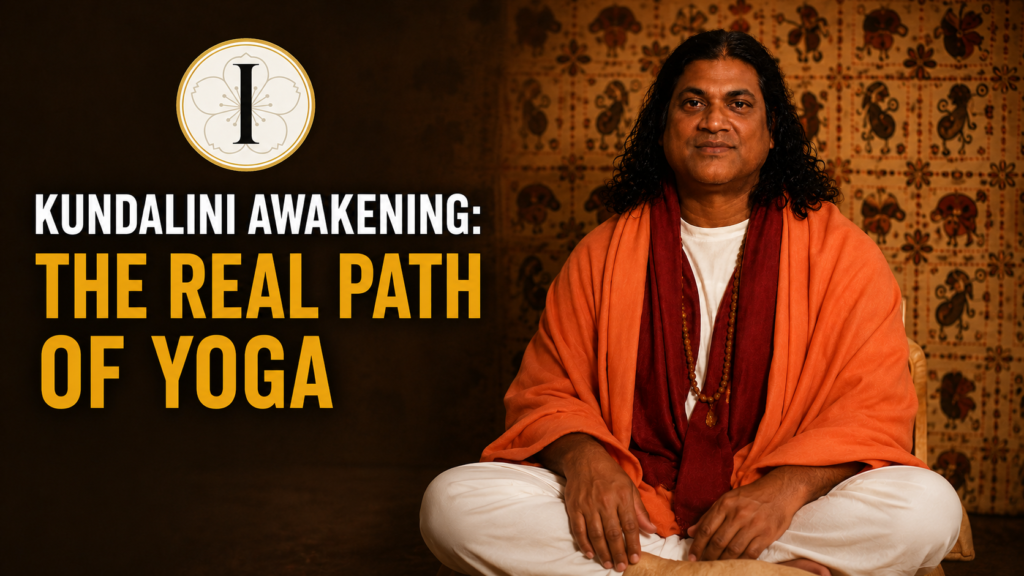

When Touch Becomes Listening
Perception, Presence, and the Practice of Receiving What the Body Reveals
by Mark V. Wiley
There comes a point in practice where technique is no longer enough.
You can know where to place the needle, how to structure a treatment, how to follow protocols, and still sense that something essential is missing. My conversation with Felix de Haas returns again and again to this deeper threshold—not simply how to work on the body, but how to truly listen through it.
Because touch, on its own, is not listening.
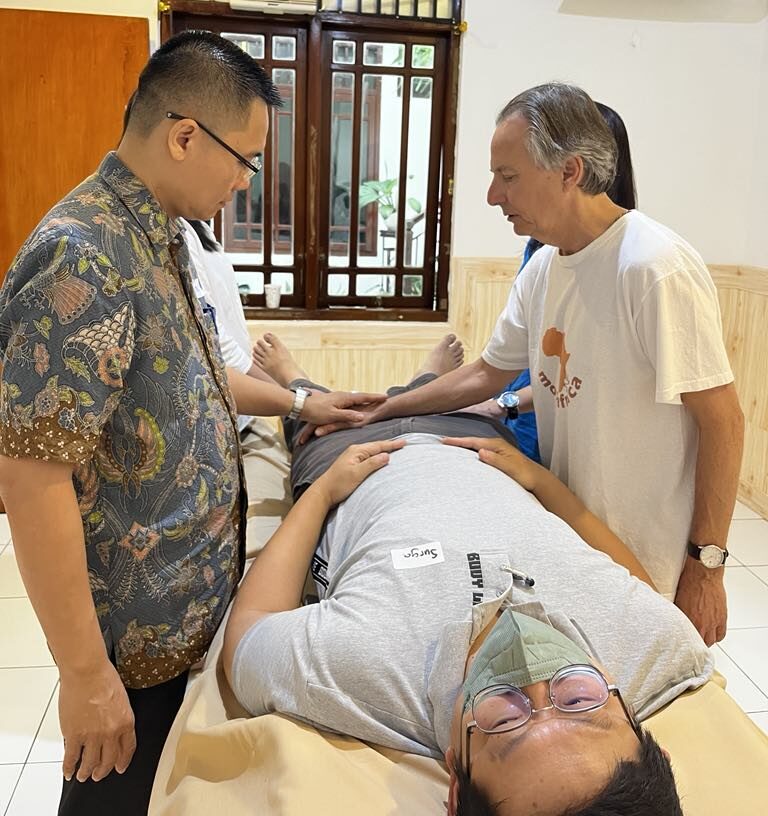
In most systems of training, touch is taught as a technical skill. You learn pressure, placement, diagnosis, and pattern recognition. Over time, however, another distinction begins to emerge: Technical touch applies knowledge. Perceptive touch receives information. That difference may sound subtle, but in practice it changes everything.
“Touch is not the same as listening.” —Felix de Haas
Felix describes acupuncture not simply as the insertion of needles, but as a form of communication with the patient’s qi. The moment practice is understood this way, the entire orientation shifts. You are no longer imposing treatment onto an objectified body. You are entering into relationship with a living system. And relationship demands presence.
The State of the Practitioner
One of the most important insights in this conversation is that the effectiveness of treatment is inseparable from the condition of the practitioner. Modern training often assumes that skill is primarily informational—the more knowledge accumulated, the more effective the practitioner becomes. But what emerges here is something far more demanding: the practitioner’s internal state shapes perception itself.
If attention is scattered, perception fragments. If the mind is rigid, sensitivity narrows. If the body is tense, what is felt becomes distorted. This reframes practice entirely. Development is not simply the acquisition of knowledge. It is the cultivation of perception.
“The practitioner’s state is not separate from the treatment.” —Felix de Haas
At a certain depth, what matters most is not merely what you know, but what you are capable of feeling clearly and without distortion. This is when touch becomes listening.
Feeling the Shape of Qi
One phrase from the conversation remained with me long afterward: Felix spoke of feeling the “shape” of qi.
At first, this sounds abstract. But the deeper implication is profound. Qi is not presented here as an idea or symbolic framework, but as something directly perceptible through refined attention—something with quality, structure, texture, movement, and presence. That kind of perception does not emerge quickly.
It develops through repetition, stillness, embodied sensitivity, and sustained contact with what is not immediately obvious, This is a very different model of learning than most modern systems encourage. When touch becomes listening is not based primarily on analysis. It is based on refinement of perception itself.
“What you can feel clearly matters more than what you can explain.” —Felix de Haas
From Structure to Responsiveness
Another powerful theme in the conversation is the transition practitioners eventually encounter between structure and responsiveness.
Early in training, systems and protocols are necessary. Structure stabilizes perception. Technique gives orientation. Defined methods provide reliability. But eventually, something changes.
The very structures that once supported development can begin to limit perception. At that threshold, practice becomes less about certainty and more about responsiveness.Felix describes this movement as becoming comfortable within uncertainty—not abandoning structure, but no longer being confined by it.
This pattern appears across disciplines. In martial arts, there is a shift from fixed technique toward timing and relational sensitivity. In meditation, there is a movement from control toward open awareness. In both cases, the progression is similar: You move from imposing structure onto experience toward allowing experience to reveal its own structure.
“At a certain point, structure must give way to responsiveness.” —Felix de Haas
Internal Cultivation and Clinical Perception
What also becomes clear throughout the discussion is that Felix’s contemplative and internal training is not separate from his clinical work. Meditative practice, internal cultivation, and perceptual refinement directly shape what he is capable of sensing in another person. This is important because it challenges a common modern assumption—that inner development and technical expertise exist independently.

Here, they are deeply interconnected. Sensitivity is not an accessory to practice. It is the ground from which deeper perception emerges. And this raises a larger question extending far beyond acupuncture or healing work: What if the deepest training of any practitioner is ultimately perceptual?
What if the real task is not merely learning how to act, but learning how to perceive without immediately imposing ourselves onto what is present? Perception is the essence of skill when touch becomes listening.
Listening Beyond Method
What stayed with me most after the conversation was a recognition that true listening requires far more than technique. It requires stillness, attention, receptivity, restraint, and the willingness to remain present without immediately trying to control or interpret
Most of us are trained to apply knowledge quickly. Far fewer are trained to sustain perception long enough for something deeper to reveal itself.
“True listening requires a kind of stillness that most of us are not trained to sustain.” —Felix de Haas
When that threshold is crossed, even briefly, touch changes. It is no longer merely physical contact. It becomes perception. And within that perception, something can finally be understood that technique alone can never fully reach.
Watch the Conversation with Felix de Haas
This Integral Being conversation with Felix De Haas about explores healing not merely as intervention, but as a deepening relationship between embodiment, awareness, and human transformation.
About Felix de Haas
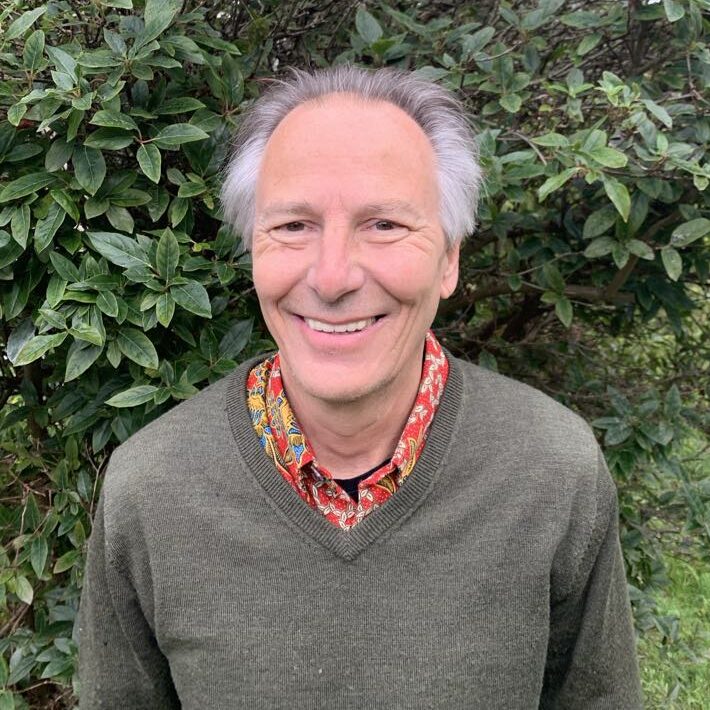
Felix De Haas has spent more than four decades studying and practicing East Asian medicine, integrating classical Chinese medicine, Japanese acupuncture, herbal medicine, palpation-based approaches, and Daoist cultivation into a deeply experiential clinical practice. Based in the Netherlands and teaching internationally, he is known for his work with the Engaging Vitality® approach and for exploring the philosophical foundations of healing. Drawing from both traditional medical systems and contemplative traditions—including Tibetan Buddhism and Daoist internal alchemy—Felix bridges medicine, meditation, perception, and embodied awareness, emphasizing attentive presence as a cornerstone of effective clinical practice.
Visit Felix’s FACEBOOK & TCM KONGRESS ROTHENBURG
Keep Exploring This Theme