INTEGRAL BEING
The Real Mechanics of Tai Chi
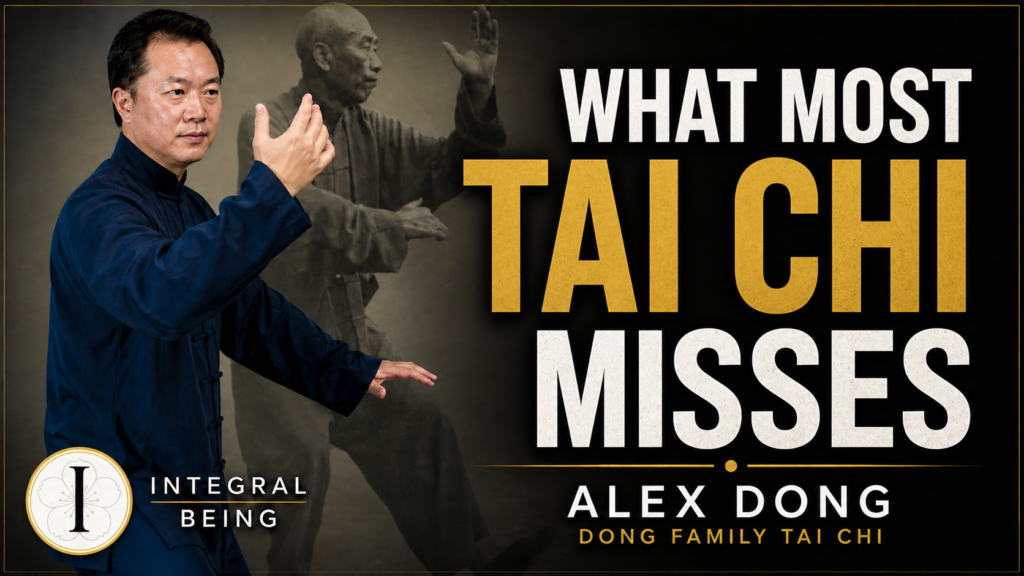
with Sifu Alex Dong
Authentic Tai Chi training, internal structure, breath, and the transformation that emerges through long practice
Mark Wiley speaks with Alex Dong about authentic Tai Chi training and what genuine internal practice
develops over time. The conversation explores structure, breath, perception, regulation, and the deeper
integration that emerges through sustained embodied practice.
Authentic Tai Chi training is rarely understood in the modern world. Beyond form and choreography, real training develops structure, breath, and perception through long-term practice: a method for reorganizing the body, regulating the nervous system, and integrating movement at a deep structural level.
In this conversation, Alex Dong, a fourth-generation lineage holder, offers a rare articulation of what authentic training actually develops over time. His perspective is not conceptual—it is lived. And what emerges is not just a clearer understanding of Tai Chi, but a deeper recognition of what remains when style begins to fall away.
What Authentic Tai Chi Training Actually Develops
One of Dong’s most important clarifications is simple—but easily missed:
“If you’re doing the form wrong and you’re too tight, you can’t have good energy… you can’t improve the internal system.” —Alex Dong
Tai Chi is not about how it looks. It is about what it does to the body. Modern interpretations often emphasize visual smoothness or choreography. Authentic Tai Chi training, however, develops:
- structural alignment
- efficient weight transfer
- sensitivity under pressure
- whole-body coordination
These are not stylistic refinements. Over time, they reorganize the system itself. What begins as movement becomes structure.
What Actually Changes in the Body
When practice is correct—and sustained—the experience begins to shift in very specific ways.
“When I make a move, it’s effortless… but the energy is there.” —Alex Dong
“The more I practice… the lighter I feel, but yet the more powerful.” —Alex Dong
This paradox—lightness with power—is not mystical. It is mechanical. The beginner relies on muscular effort. The trained body relies on:
- gravity instead of force
- alignment instead of tension
- timing instead of effort
- integration instead of isolation
Power is no longer produced—it is transmitted.
The Real Meaning of Song (松)
precisely: “Song is basically… not to be stiff.”
That distinction changes everything. Too much tension blocks movement. Too much looseness removes structure. Proper song creates a body that is:
- soft without collapse
- stable without rigidity
- responsive without tension
As Dong illustrates:
“If you’re like a log, you can be pushed over… but if you’re like a sandbag… every part of the body can be loose.” —Alex Dong
The trained body does not resist force—it distributes it.
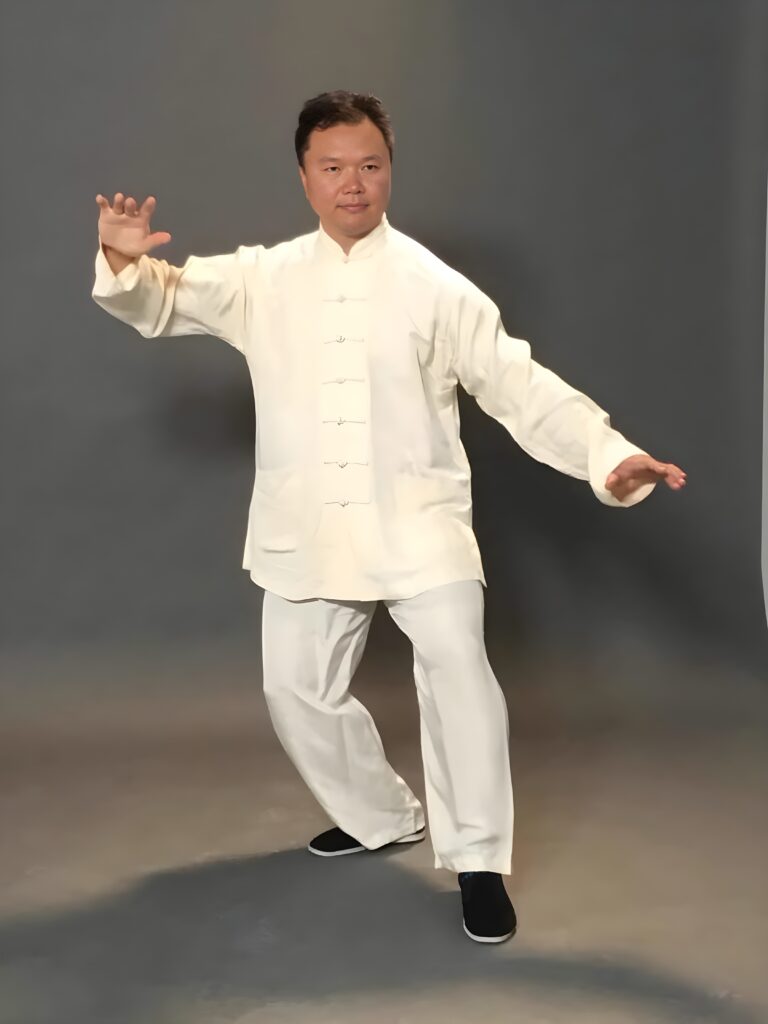
Few concepts are more misunderstood than song. Often translated as “relax,” it is frequently practiced as collapse. Dong reframes it more
Internal Does Not Mean Mystical
Throughout the conversation, Dong consistently grounds internal training in physical reality.
“Chi is really just a form of energy… everybody has it, everybody uses it.” —Alex Dong
“Internal things happen naturally… when you do things correctly.” —Alex Dong
Concepts like qi, dantian, and jin are often abstracted into philosophy. But in practice, they are functional:
- breath and oxygenation
- pressure and release
- structural coordination
- applied force
Nothing is added. It emerges when conditions are correct.
When Style Falls Away
As the discussion deepens, the subject quietly shifts. It is no longer about authentic Tai Chi training as a system—but what exists beneath all systems.
“What they were doing was not labeled… it was simply practiced, lived, and transmitted.” —Alex Dong
Forms evolve. Names change. Lineages differentiate. But what remains is not the form—it is the principle. Dong states it simply:
“The internal and external start from two different places… but you finish at the same place.” —Alex Dong
If this is true, then the divisions we emphasize—internal vs. external, style vs. style—are secondary. What matters is whether practice leads to:
- direct contact with structure
- sensitivity to movement
- continuity of attention
- integration of the whole system
From Form to Perception
At the beginning, the form feels like the practice. You memorize it. Repeat it. Try to perform it correctly. But over time, something shifts. You begin to feel what the form is doing:
- reorganizing balance
- refining perception
- stabilizing attention
- integrating the system
Eventually, the form becomes transparent.
“You’re not even thinking anymore… but the structure is still there.” —Alex Dong
This is the transition:
From technique → to integration → to perception.
Or, in your language: What begins as method becomes perception.
Correctness and the Role of Practice
A final thread runs quietly through everything: Correct practice matters.
“When you do it seriously… when you do it correctly, it’s always better.” —Alex Dong
Not as rigid imitation—but as functional alignment. Without correction, repetition reinforces habit. With correction, practice becomes transformation.
What Remains
When the conversation settles, what remains is not a system—but a recognition:
- Less concern with style
- More attention to principle
- Less attachment to form
- More sensitivity to what the form reveals
What begins as movement becomes structure. What begins as practice becomes perception. What begins as method becomes a way of being. Over time, authentic tai chi training stops being something you perform and becomes something you perceive.
→ Read a Reflection on Sifu Alex Dong’s Teachings.
About the Guest
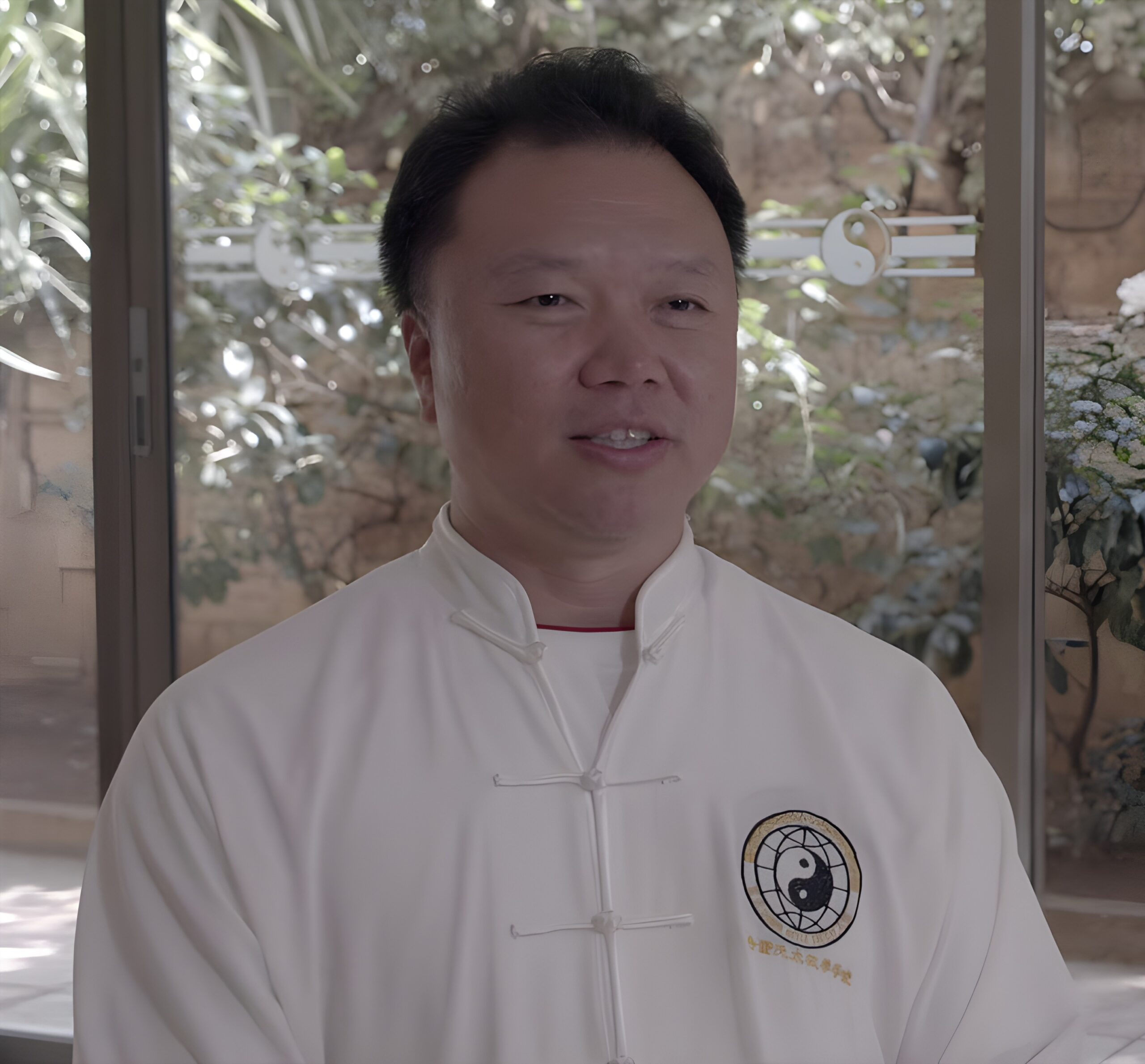
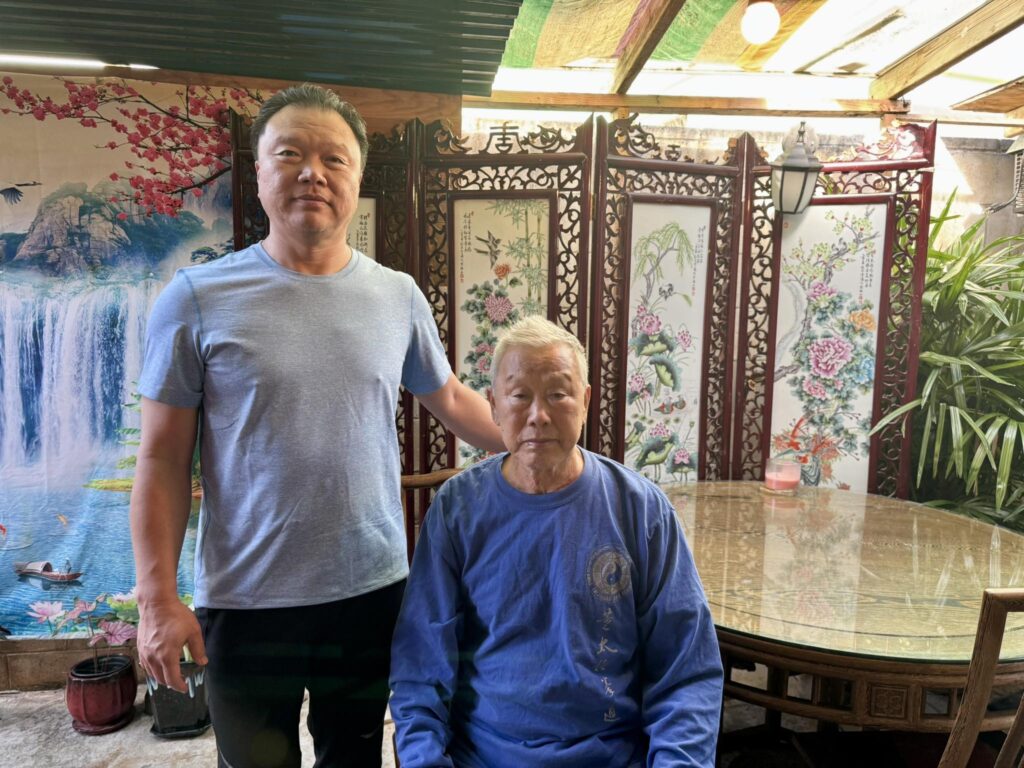
Sifu Alex Dong is a fourth-generation lineage holder of the Dong family Tai Chi tradition, descending from Dong Ying Jie, one of the senior disciples of Yang Chengfu. Raised within this lineage, his training reflects a direct transmission of traditional principles developed through long-term, lived practice rather than modern reinterpretation.
He teaches internationally and is known for his clear, practical approach to internal training—emphasizing structure, alignment, and whole-body integration over mysticism or performance. By grounding concepts like qi and song in physical experience, his work bridges traditional understanding with modern practitioners, making internal martial arts accessible without losing depth.
About Integral Being
Integral Being is a series of inquiry-based conversations exploring what changes through sustained practice.
Across traditions, these dialogues examine how attention, the body, and perception are trained and refined.
What begins as conversation becomes a way of seeing—one that can be lived.
Continue Exploring Internal Training
Real development doesn’t occur through isolated techniques, but through how practice organizes the system over time.
→ Explore the Inner Life Model
→ Understand how integration develops through Integrated Modular Training
→ See how perception emerges in the Practice Field
→ Learn how the system adapts through the ESD Model
→ Watch more conversations in Integral Being
Explore Tai Chi, Embodiment & Internal Development