Breathing Through the Whole Body Meditation
with Will Johnson
Meditation, Breath, and the Awakening of the Living Body
What happens when the body itself becomes the doorway to awakening?
In this conversation, Will Johnson explores breathing through the whole body and how breath, posture, gravity, and movement transform meditation into a fully embodied practice.
For many people in the modern West, meditation begins in the mind.
Attention is directed toward thoughts, concentration, mindfulness, or emotional regulation. Breath becomes an object of focus. Stillness becomes restraint. Over time, practice often narrows into a kind of internal management system — useful, calming, and sometimes transformative — yet still subtly disconnected from the living intelligence of the body itself.
In this Integral Being conversation, Will Johnson explores a radically different understanding of practice: meditation not as disembodied awareness, but as awakening through the body.
Drawing from decades of work in somatics, meditation, breath, movement, and the teachings of Ida Rolf, Johnson describes meditation as an embodied process of release, surrender, sensation, and participation in the living movement of breath itself.
Again and again, the conversation returns to a simple but profound question: What happens when the body is finally allowed to breathe fully, move naturally, and come alive?
Awakening Through the Body
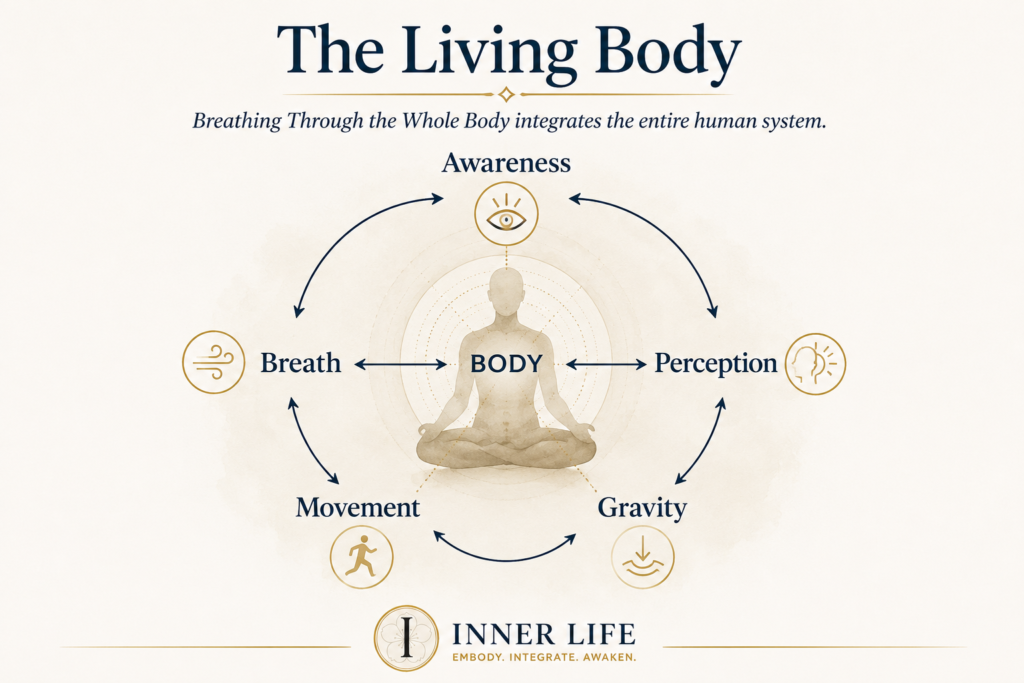
One of the most striking themes running through this conversation is that awakening is not simply something that happens in the mind. Again and again, Johnson returns to the idea that the body itself is the gateway through which deeper awareness becomes available. Rather than treating the body as an obstacle to transcend, he invites us to discover that posture, breath, sensation, gravity, and movement are themselves expressions of contemplative practice.
This perspective resonates throughout the discussion. Meditation is not reduced to concentrating on thoughts or watching the breath from a distance. Instead, the whole organism gradually awakens into participation. As the breath expands through the body and unnecessary tension begins to dissolve, awareness no longer feels confined to the head. Consciousness becomes embodied, relational, and alive.
“The entry became the whole Dharma.” —Will Johnson
Johnson suggests that many contemporary practitioners have mistaken the doorway for the destination. Early mindfulness practices develop attention, but they were never intended to be the entirety of meditation. The invitation to “breathe through the whole body” points toward a deeper unfolding in which breath, posture, movement, sensation, and awareness become one integrated experience.
Meditation Beyond the “Garden Statue”
Much of contemporary meditation culture still carries the imprint of rigid stillness. Practitioners are often taught to sit motionless, suppress movement, narrow attention, and maintain control over posture and sensation.
Johnson challenges this model directly. He describes how many practitioners unknowingly learn to hold tension in order to appear calm, upright, or “meditative.” The result is often a subtle contraction of breath, restriction of movement, and increasing disconnection from the body’s natural intelligence. Instead of awakening embodiment, meditation can become another strategy of control.
Rather than criticizing stillness itself, Johnson questions the assumption that stillness must mean rigidity. Throughout the conversation he distinguishes between a body that has become frozen through effort and one that has become naturally quiet through relaxation. Genuine stillness is dynamic rather than static. It breathes. It responds. It remains alive.
Throughout the conversation, Johnson contrasts this with an approach rooted in softness, gravity, breath, sensation, and upright balancing. Rather than forcing stillness, the body is allowed to participate in the practice fully.
The breath expands, the spine moves, and the body undulates naturally. Awareness spreads through sensation rather than remaining trapped in the head.As Johnson explains, the goal is not perfect posture or frozen composure. The goal is aliveness.
“Meditation is not meditation. It’s alive.” —Will Johnson
That distinction reshapes the entire meaning of contemplative practice.
Breathing Through the Whole Body
A central theme of the conversation is Johnson’s exploration of a phrase found in early Buddhist teachings: “As you breathe in, breathe in through the whole body.”
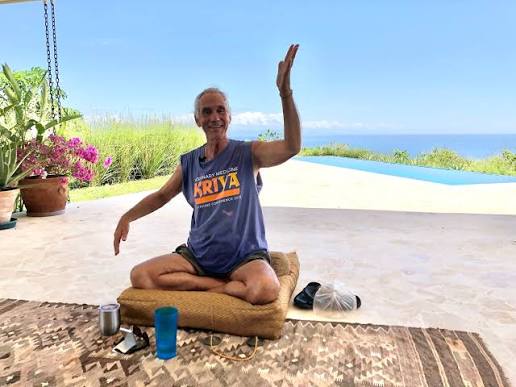
For Johnson, this instruction points toward something far deeper than ordinary breath awareness. It describes a state in which the entire organism participates in breathing — not merely the lungs or upper chest.
This changes the quality of consciousness itself.
Rather than observing breath from a distance, the practitioner begins inhabiting the body from within. Sensation awakens. Tension softens. The boundary between breath, posture, movement, and awareness begins to dissolve.
The conversation explores how modern practitioners often breathe minimally while remaining trapped in mental activity, emotional guarding, and unconscious muscular holding. Johnson argues that genuine meditation must involve the liberation of the breath and the restoration of movement throughout the body.
This includes:
- allowing the diaphragm to move freely
- relaxing during inhalation rather than bracing against it
- releasing unnecessary tension into gravity
- permitting subtle spinal movement
- awakening sensation throughout the entire body
Rather than escaping embodiment, practice deepens embodiment.
Johnson repeatedly returns to one deceptively simple insight: most people barely breathe at all. Chronic muscular holding, emotional guarding, and habitual thinking produce a breath that remains shallow and incomplete. When the body is finally permitted to soften into gravity, the breath naturally expands—not because it is forced, but because the organism remembers how to breathe as a whole.
The Body as Gateway
One of the most compelling aspects of the conversation is the shared recognition that awakening is not merely conceptual. It is somatic.
Johnson repeatedly describes how sensation, breath, posture, visual perception, and gravity interact to create openings in consciousness. As the body softens and breath deepens, identity itself begins to loosen.
The practitioner no longer feels isolated inside the head. Awareness expands outward into what Johnson describes as the “larger body” of experience.
This naturally leads into discussion of:
- visual field practices
- sky gazing
- relational perception
- movement and spontaneity
- partner gazing practices
- the collapse of rigid self-boundaries
Again and again, the body appears not as an obstacle to realization, but as the doorway through which deeper states become accessible.
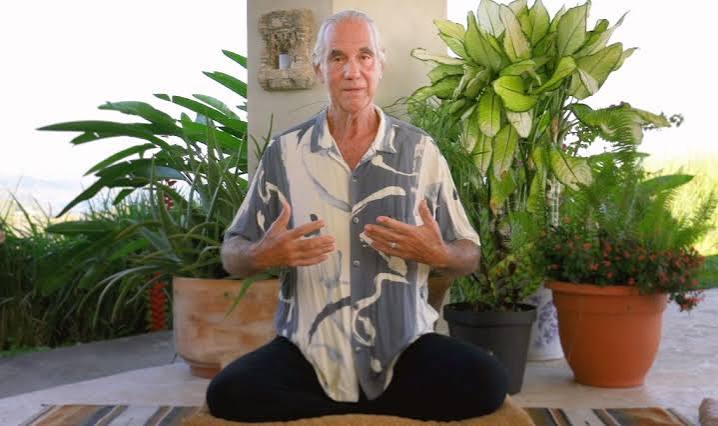
“Fortunate are those who have learned how to soften their rigidities.” —Will Johnson
Permission to Let Go
Perhaps the deepest theme running through the discussion is permission. Johnson describes his work very simply: “I’m giving people permission to let go.” That permission is both psychological and physical. Permission to soften. Permission to breathe. Permission to move. Permission to stop performing spirituality. Permission to experience meditation not as suppression, but as participation in life itself.
This becomes especially powerful in a culture shaped by chronic tension, overstimulation, and what Johnson calls a “somatophobic” relationship to the body.
In many ways, the conversation points toward a larger shift occurring across contemplative culture today: a movement away from purely cognitive spirituality and toward direct embodied experience. Not the rejection of meditation, but its reintegration with breath, sensation, movement, perception, and life.
For students of embodied practice, this shift represents far more than a new meditation technique. It reflects a different understanding of transformation itself. Rather than attempting to think our way toward awakening, the body gradually becomes the place where awakening is lived. Breath, posture, perception, and awareness cease functioning as separate practices and begin organizing into a single, integrated process.
Watch the Full Conversation
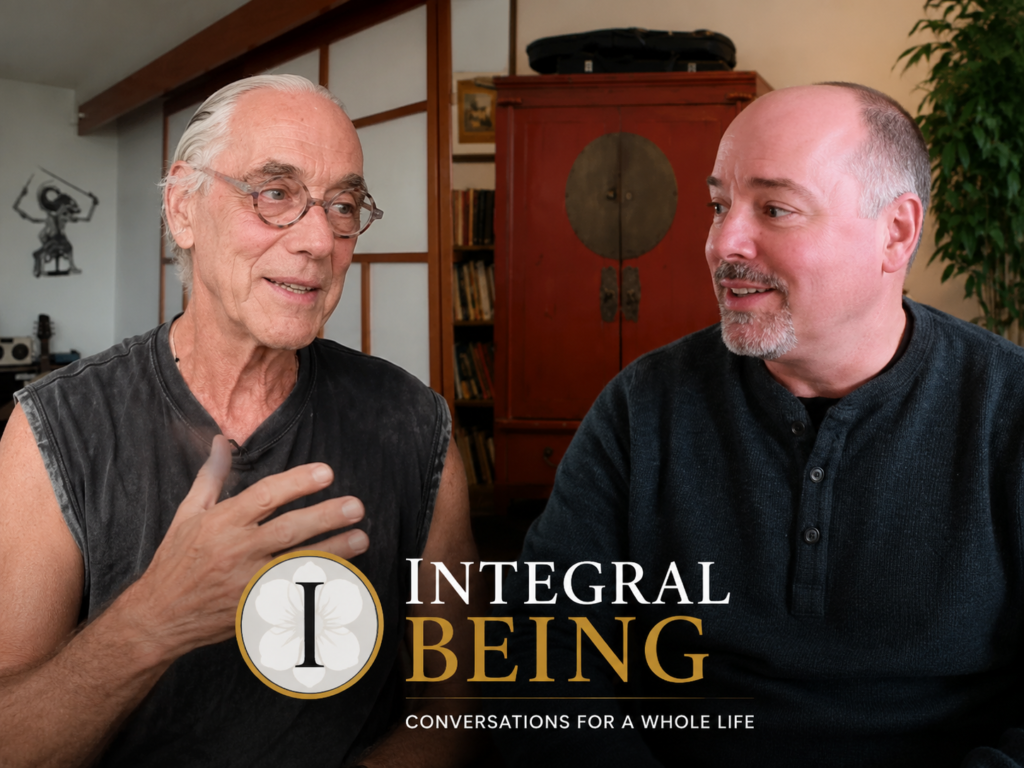
In this Integral Being dialogue, Will Johnson and Mark V. Wiley explore:
- breathing through the whole body
- somatic awakening and meditation
- Ida Rolf and structural integration
- movement and spinal motion in practice
- upright balancing and gravity
- visual field and perception
- Zen, Tai Chi, and embodied awareness
- letting go through the body
- sky gazing and openness
- psychedelics, embodiment, and contemplative practice
- meditation as aliveness rather than suppression
This conversation invites a profound reconsideration of what meditation actually is — and what becomes possible when the body is finally included.
Why This Conversation Matters
The themes explored throughout this discussion resonate deeply with the principles of Inner Life. Transformation does not arise through information alone, nor through isolated techniques practiced in succession. It emerges through the gradual integration of body, breath, attention, perception, and awareness into a coherent way of being.
Will Johnson’s work offers a powerful reminder that meditation need not become an exercise in control or self-management. At its deepest, practice is an invitation to participate more fully in life itself. As the body awakens, breathing becomes whole, perception expands, and awareness is no longer something we merely observe—it becomes the living ground from which we meet the world.
About the Guest
Will Johnson is a teacher, writer, and founder of the Institute for Embodiment Training. For more than five decades, he has explored the integration of Buddhist meditation, embodiment, somatic practice, breath, posture, and structural integration inspired by the work of Ida Rolf. He is the author of numerous influential books, including Breathing Through the Whole Body, The Radical Path of Somatic Dharma, and The Posture of Meditation, which have helped shape contemporary approaches to embodied contemplative practice.
A Buddhist practitioner since 1972 and a certified Rolfer™ since 1976, Johnson began formally teaching Embodiment Training in 1995. Today, he and his wife and teaching partner, Coco, lead intensive meditation and embodiment retreats at Bambu Hueco, the Hollow Bamboo Retreat Center in Costa Rica, where they guide practitioners in deep meditation, bodywork, and contemplative practice.
Continue Exploring