What Is Meditation Really Training?
Returning to the First Person Through Embodiment, Attention, and Presence
by Mark V. Wiley
Most people think meditation is about relaxation. Others view it as a spiritual practice, a means of stress reduction, or a technique for achieving altered states of consciousness. Some approach meditation seeking peace. Others seek insight. Many hope to find relief from the noise and pressure of modern life. Yet beneath these varied motivations lies a deeper question that is rarely asked.
What is meditation actually training?
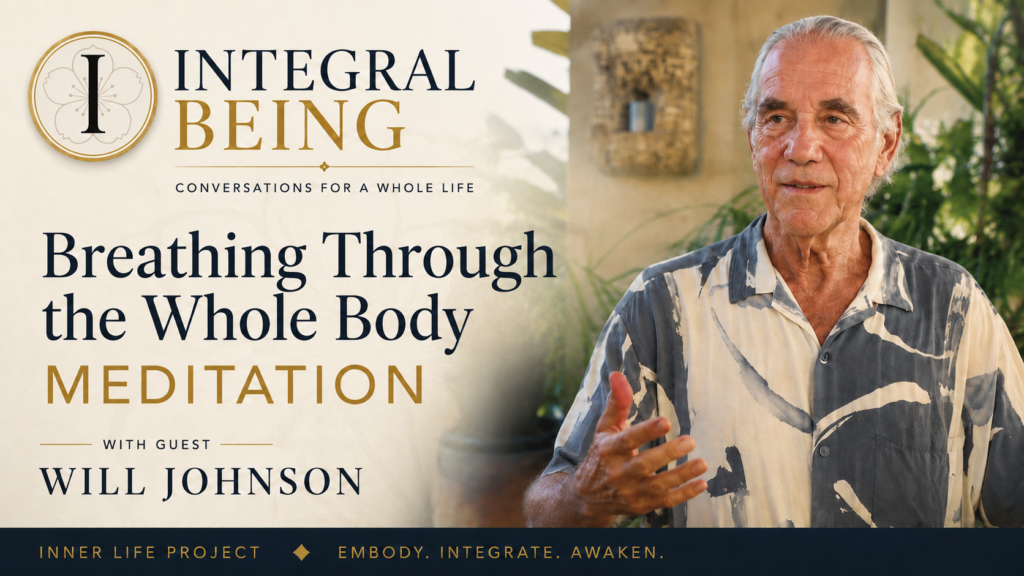
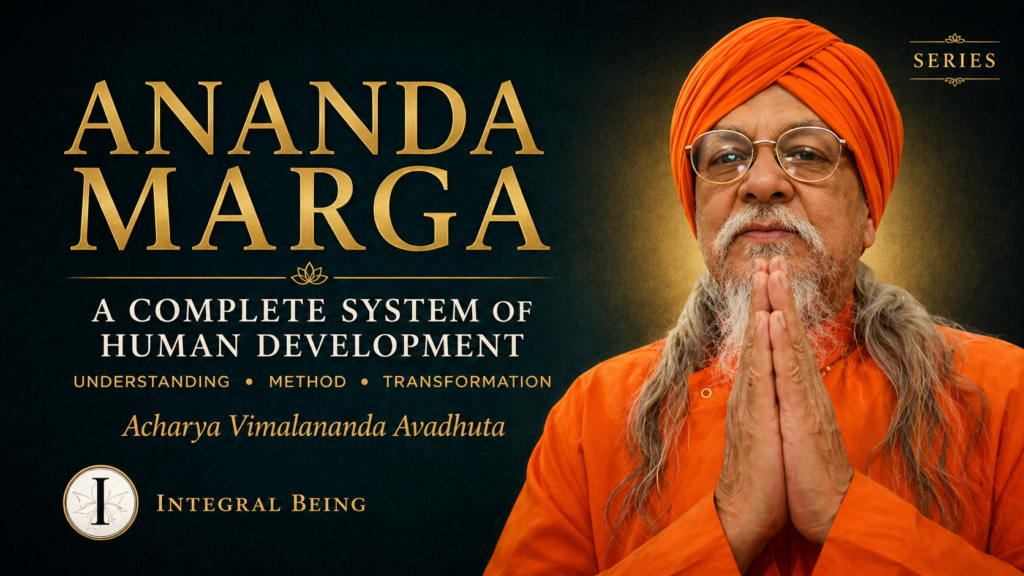
During my Integral Being conversation with Acarya Vimalananda of the Ananda Marga tradition, one observation stood out among discussions of bliss, tantra, consciousness, and human evolution. He suggested that most people spend their lives focused on what might be called the second and third person. Our attention is directed toward responsibilities, relationships, obligations, possessions, achievements, and the countless demands of daily life. We wake each morning and immediately begin interacting with the world around us. Very little time is devoted to the first person—the direct experience of being ourselves.
The statement stayed with me because it points toward a problem that extends far beyond meditation. Many people live disconnected from their own experience.
The body continues breathing. Sensations continue arising. Thoughts appear and disappear. Emotions move through the system. Yet attention remains elsewhere, absorbed by activity, distraction, and endless engagement with the external world. We become highly informed about events around us while remaining largely unfamiliar with what is happening within us.
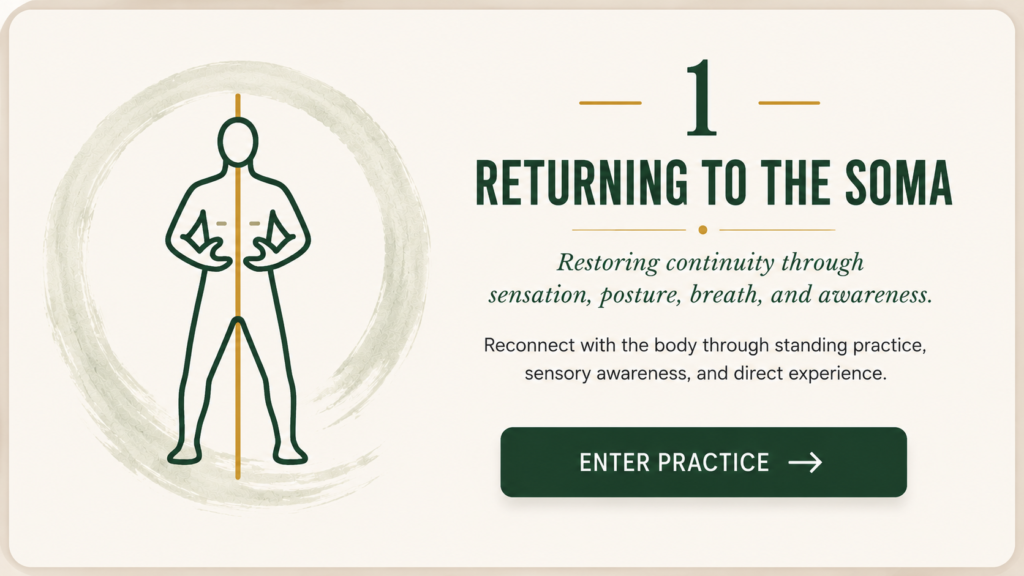
Inner Life calls this movement from living in thought back into lived experience Returning to the Soma, the first of the Six Foundational Practices.
Perhaps meditation begins here—not as a spiritual exercise, but as a return. This movement back toward direct experience is one of the central themes of the Inner Life approach to embodied practice.
The Forgotten First Person
“We have time for everyone and everything, but very little time for ourselves.”
Modern life is organized around outward attention. Every day presents new demands on perception, thought, and action. Messages arrive. News cycles accelerate. Work expands beyond traditional boundaries. Entertainment, information, and social interaction compete continuously for awareness. The result is not merely busyness. It is fragmentation.

Most people rarely experience uninterrupted contact with themselves. Even moments of solitude are often filled with planning, remembering, worrying, evaluating, or rehearsing future conversations. Attention becomes so occupied with mental activity that direct experience recedes into the background.
This is why many people find meditation unexpectedly difficult. The challenge is not sitting still. The challenge is discovering how unfamiliar stillness has become. When external stimulation decreases, we immediately encounter the restless movement of the mind. Thoughts continue. Emotions continue. Internal narratives continue. What meditation reveals is not silence but the extent of our distraction.
Acarya Vimalananda described meditation as a process of turning toward the first person. Rather than beginning with the world, the practitioner begins with direct experience. Rather than immediately engaging with external demands, attention returns to the one who is experiencing those demands. This shift may sound simple, but it represents a profound reorientation. Instead of being carried by the stream of life unconsciously, we begin observing our participation within it.
Many contemplative traditions begin precisely here. Before questions of philosophy, belief, enlightenment, or transcendence arise, there is a more immediate task: learning to be present with ourselves.
Returning to the Soma
“Before awareness can deepen, it must first return to experience.”
In Inner Life, the first foundational practice is Returning to the Soma. The reason is straightforward. Awareness cannot become continuous if it remains disconnected from experience.
The soma is not the body viewed as an object. It is the lived body. It is the felt experience of breathing, standing, balancing, sensing, moving, and inhabiting the world. It is the body from within rather than the body from outside.
This distinction is important because many people spend more time thinking about their bodies than actually feeling them. The body becomes an image, an idea, a problem to solve, or a machine to maintain. Direct experience becomes secondary to conceptual understanding.
Meditation reverses that tendency. Attention returns to sensation. Breathing is felt rather than analyzed. Posture is experienced rather than observed. Contact with the ground, movement of the chest, muscular tension, and subtle shifts in balance become available once again. The practitioner begins rediscovering dimensions of experience that were present all along but largely unnoticed.
This shift from conceptual understanding to direct participation lies at the heart of mbodied practice.
This return to embodiment is not separate from spiritual development. It is the foundation upon which deeper development rests. A person who cannot remain present to breathing will struggle to remain present to thought. A person who cannot sustain awareness during stillness will struggle to sustain awareness during challenge. Embodiment provides the ground from which continuity emerges.
In this sense, meditation is not teaching us how to escape the body. It is teaching us how to inhabit it more fully.
Why Traditions Use Chant, Mantra, and Song
“Sometimes a chant is less about belief than about organizing attention.”
One aspect of the Ananda Marga tradition that often attracts attention is the collective chanting of Baba Nam Kevalam. The phrase is commonly translated as “Everything is the expression of Infinite Consciousness” or “All is the Beloved.” Yet what interested me most during the conversation was not the philosophical meaning of the chant but its practical function.
Across cultures and traditions, human beings have used rhythm, repetition, song, prayer, mantra, and sacred recitation as tools of transformation. Whether in monasteries, temples, mosques, churches, martial arts schools, or contemplative communities, similar methods appear repeatedly. This suggests that something deeper is occurring than the communication of ideas.
Chanting engages multiple dimensions of experience simultaneously. Breath becomes rhythmic. Attention becomes focused. Voice becomes coordinated with intention. The body participates through posture and movement. Meaning, emotion, sensation, and awareness begin moving in the same direction.
From an embodied perspective, the value of such practices lies in their capacity to reduce fragmentation. Instead of attention scattering in multiple directions, the various dimensions of the human system begin organizing around a common activity. The practitioner becomes more integrated, more coherent, and more present.
This helps explain why chanting often feels different from simply thinking about a concept. An idea can remain abstract. A chant becomes embodied. It is breathed, spoken, heard, felt, and enacted. The practice moves from the level of thought into the level of lived experience.
Whatever language a tradition uses, this process ultimately concerns attention. The practice gathers dispersed awareness and directs it toward continuity. Similar organizing principles appear throughout contemplative traditions, martial arts, and breath practices explored throughout Inner Life and in the Integral Being conversations.
The Power of Practicing Together
“Individual practice develops capacity. Shared practice develops momentum.”
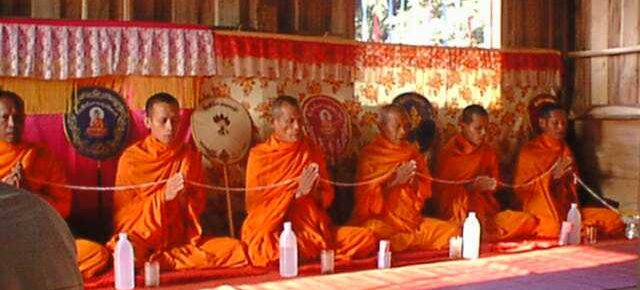
Another compelling theme in the conversation was Acarya Vimalananda’s explanation of collective meditation. He described individual practitioners maintaining their own practices while benefiting from the larger field created by a group. To illustrate the principle, he used the analogy of water. A single drop may disappear into the ground, but millions of drops flowing together generate movement, direction, and force. Within Inner Life, this is known as The Practice Field—the shared environment in which individual practice becomes strengthened through relationship, accountability, and collective intention.
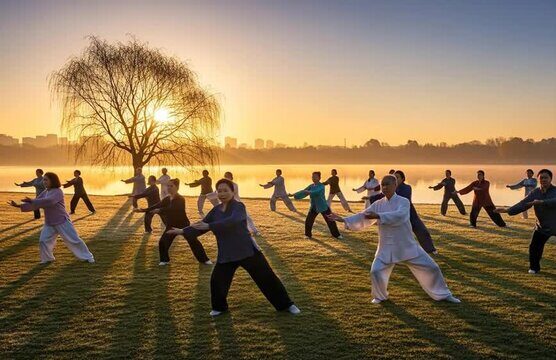
Most people who have participated in a serious practice community recognize this phenomenon immediately. Training alone feels different than training with others. Meditation at home feels different than meditation on retreat. Martial arts practice changes when performed in a dedicated training hall surrounded by committed practitioners.
Part of this difference is psychological. Shared practice creates accountability and consistency. Another part is social. Human beings are influenced by the attitudes, behaviors, and expectations of those around them. Yet there is also an experiential dimension that is difficult to quantify but easy to recognize. A group focused on a common purpose generates momentum that supports the individual.
Traditional cultures understood this well. Monasteries, temples, sanghas, lodges, training halls, and lineages were not simply places where information was transmitted.
They were environments designed to support development. The presence of others reinforced commitment. Shared values reinforced direction. Collective effort amplified individual effort.
of practitioners.
This insight remains relevant today. While personal practice is indispensable, development rarely occurs in complete isolation. Human beings grow through participation. We mature within relationships, communities, and fields of shared intention.
Meditation is not training us to escape experience.
It is training us to inhabit it more completely.
What Meditation Is Really Training
“Meditation is not training us to escape experience. It is training us to inhabit it more completely.”
Viewed from this perspective, meditation is not primarily about achieving extraordinary states. Such states may occur, but they are not the essence of the practice. Nor is meditation merely a relaxation technique, although relaxation may arise as a byproduct.
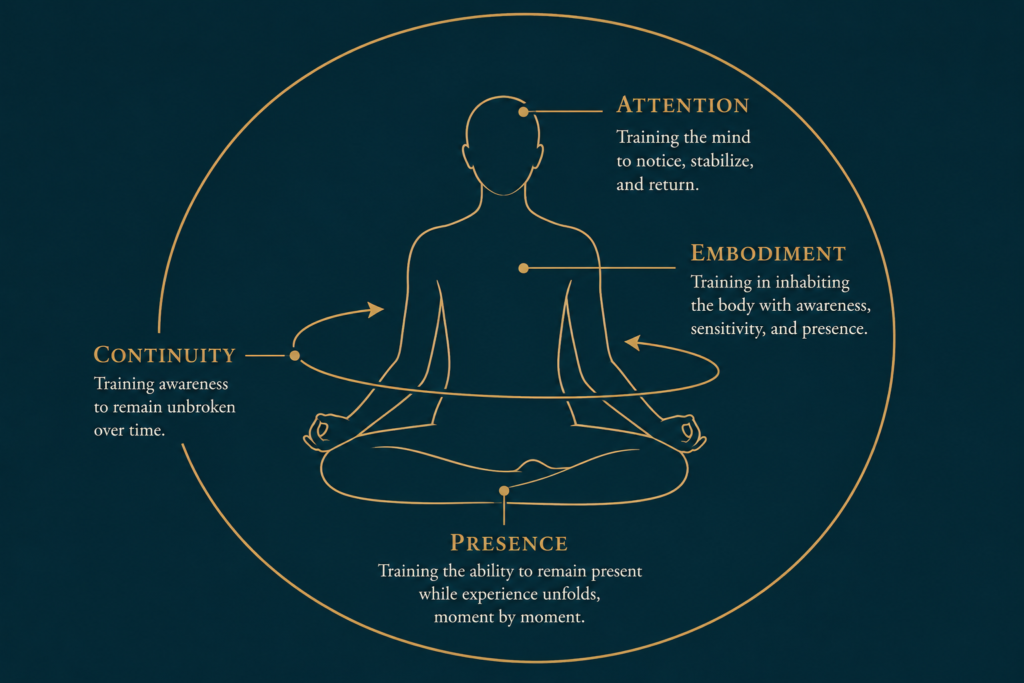
- Meditation is training attention.
- It is training embodiment.
- It is training continuity.
- It is training the ability to remain present while experience unfolds.
The practitioner learns to notice distraction and return. To notice tension and return. To notice identification and return. Again and again, awareness is brought back into relationship with direct experience. Over time, this simple act of returning begins reorganizing the entire system.
What initially appears to be a mental exercise gradually becomes a way of being. Breathing is experienced more clearly. Movement becomes more conscious. Reactions become more visible. Choices become less automatic. Presence becomes less dependent upon circumstances.
This developmental process does not happen through a single breakthrough experience. It unfolds through practice. Session after session. Day after day. Year after year. The transformation is usually gradual and often difficult to recognize while it is occurring. Yet eventually something changes. Awareness becomes more stable. Attention becomes less fragmented. Experience becomes more integrated.
Perhaps this is why meditation has survived across cultures, religions, and historical periods. Beneath differing philosophies and methods lies a common function. Meditation trains our capacity to return to ourselves. This is why the Inner Life path is not centered on collecting ideas, but on cultivating the capacities through which we participate more fully in life.
Not the self of biography. Not the self of opinion. Not the self of social identity…. The self that is present before all of those things. The breathing body. The aware mind. The direct experience of being alive.
And perhaps that is where every genuine path begins. Not in extraordinary experiences or distant ideals, but in the simple and often neglected act of becoming fully present to our own lives.
Continue Exploring This Theme