Ayurveda and Siddha Medicine: Healing From Within
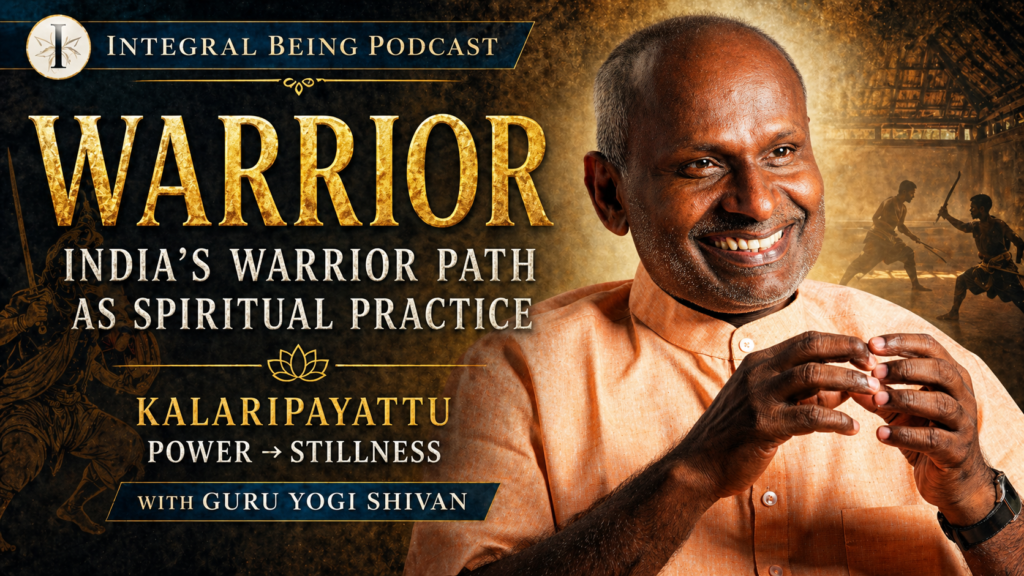
with Guru Yogi Shivan
On the body’s natural intelligence, the five foundations of health, and why medicine comes last
“Learn to use food as medicine. Learn to use your exercise as medicine. Learn to use your breath as medicine. Learn to use your mind as medicine.” —Guru Yogi Shivan
Modern discussions of Ayurveda often begin with herbs, diet, massage, or the familiar language of constitutional types. But for Guru Yogi Shivan, these are only parts of a much larger vision. Ayurveda, he explains, is fundamentally concerned with life itself: how we eat, move, breathe, think, recover, and maintain our relationship with the natural processes that sustain us.
In this second Integral Being conversation, our discussion moves from the martial traditions of Kalaripayattu into the healing traditions that historically developed alongside them. What emerges is not a collection of alternative therapies, but an integrated understanding of the human being—one in which health is cultivated through daily participation rather than simply restored after something goes wrong.
The Warrior and the Healer
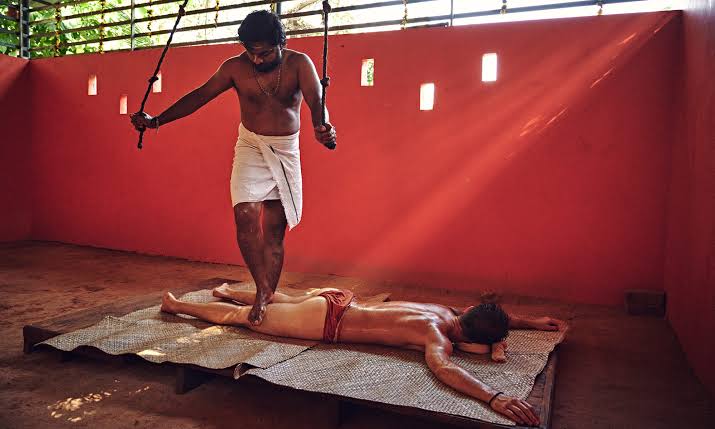
Our conversation actually begins inside the Kalari with Uzhichil, the traditional oil massage associated with Kalaripayattu. Shivan describes a form of foot-pressure massage in which the practitioner holds a suspended rope for balance while using the feet to apply rhythmic pressure to the body. The person receiving the treatment lies on the floor with the limbs extended, allowing the practitioner to work across larger structural and energetic pathways.
The significance extends beyond massage technique. Shivan describes Uzhichil as both conditioning and healing—something used to prepare the body, maintain it, address pain, and restore it after injury.
This reveals something easily lost when martial arts and healing arts are separated into modern specialties. Within the traditional Kalari, the hands and body trained to strike were also trained to restore. Conditioning, combat, massage, medicinal oils, attention to vital points, and healing belonged to a larger field of knowledge about the human organism.
The warrior and healer were not necessarily opposing identities. They could be different expressions of the same knowledge.
Ayurveda Is Knowledge of Life
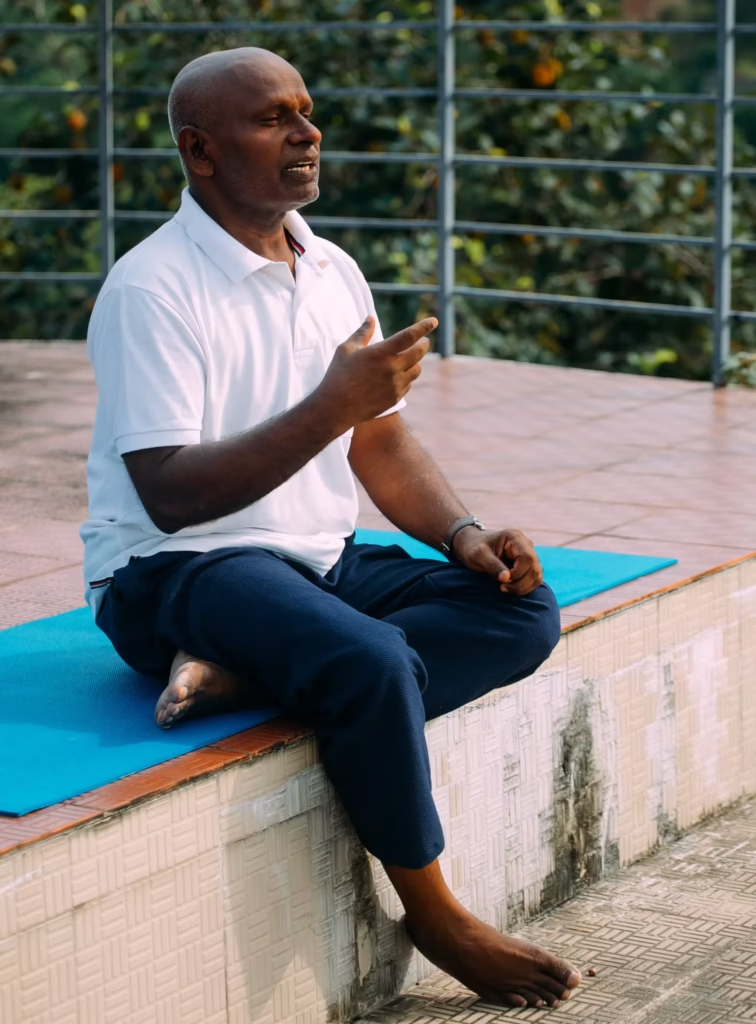
When our discussion turns directly to Ayurveda, Shivan begins not with herbs or diagnosis, but with the word itself. Ayur, he explains, refers to life, while Veda refers to knowledge. Ayurveda is therefore knowledge concerned with life and longevity.
That definition immediately expands the subject.
If Ayurveda concerns life, then health cannot be reduced to what happens in a clinic. It includes the conditions we create every day through food, movement, breathing, thought, behavior, environment, and relationship to ourselves.
For Shivan, this is where modern understandings of Ayurveda can become too narrow. When Ayurveda is presented primarily as a system of remedies, treatments, or products, something fundamental is lost. The deeper question is not simply, What can I take for this problem? It is, How am I participating in the creation and maintenance of my own condition?
That shift—from treatment to participation—is one of the central ideas running through our conversation.
The Five Powers of Health
Shivan describes Ayurveda through a framework he calls Pancha Bela Siddhanta, a fivefold approach to health management. Rather than beginning with medicine, it begins with the capacities already available within ordinary life.
The first is Anna Bela: the power of food. Food is not merely fuel or pleasure. Properly understood and used, it becomes part of maintaining the organism itself.
The second is Asana Bela: the power of movement and conscious stretching. Shivan points repeatedly to animals, which instinctively stretch and move in ways appropriate to their bodies. Human beings, by contrast, can become increasingly disconnected from these natural regulatory impulses. Movement becomes something scheduled, imposed, or performed rather than something arising from sensitivity to what the body requires.
The third is Prana Bela: the power of breath. We can survive considerable periods without food and shorter periods without water, but only minutes without breathing. Yet breath, Shivan observes, is among the most fundamental processes we routinely ignore.
The fourth is Mano Bela: the power of mind. How we direct attention, interpret experience, and relate to ourselves is not separate from bodily health. Body and mind participate in one another continuously.
Only then comes the fifth: Aushadha Bela, the power of medicine.
“Medicine comes last in Ayurveda.” —Guru Yogi Shivan
This does not mean medicine has no place. Shivan explicitly allows for herbal or modern medicines when they are needed. His point is about order. Medicine belongs within a larger ecology of health rather than replacing our responsibility for how we live.
Health as Daily Practice
This hierarchy changes the meaning of healing.
If food, movement, breath, and mind precede medicine, then health cannot be entirely delegated to another person. A physician, healer, or therapist may provide knowledge and assistance, but no practitioner can eat, breathe, move, sleep, observe, or regulate our lives for us.
This is one of the places where Shivan is most emphatic. Modern people, he argues, can become accustomed to transferring responsibility for health to specialists. We continue the behaviors that contribute to imbalance and then expect someone else to repair the consequences.
His alternative is not rejection of physicians or medicine. It is the recovery of participation. We must learn to observe ourselves closely enough to recognize what strengthens the system, what disturbs it, and what restores it. This turns everyday activities into forms of practice. Eating becomes practice. Stretching becomes practice. Breathing becomes practice. Attention becomes practice.
Health, from this perspective, is not merely something we possess. It is something we continually participate in creating.
The Body Must Be Felt From Within
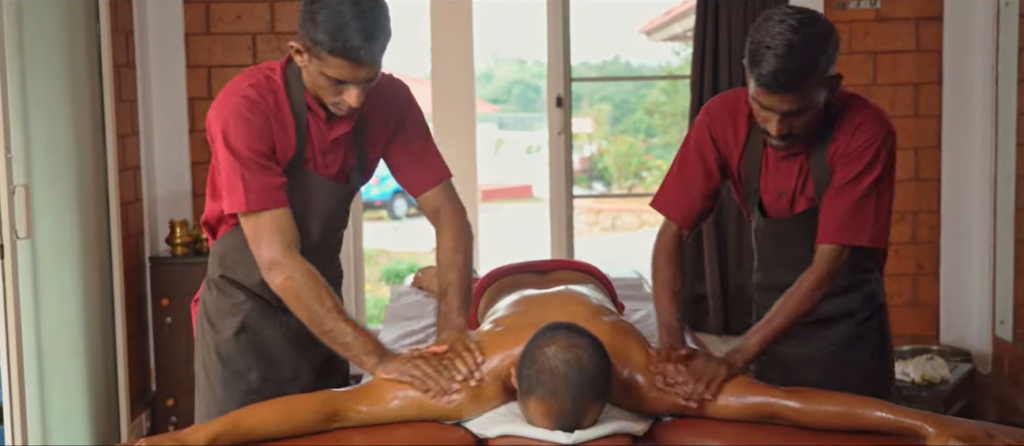
Shivan’s discussion of asana makes this especially clear. He distinguishes between simply exerting the body and consciously entering a stretch. The difference is not merely mechanical. It involves awareness.
A movement imposed from outside can become another task for the body to perform. A movement discovered through internal sensitivity becomes information. We begin to recognize where tension is held, where movement stops, where breathing changes, and where the body is asking for a different organization.
This is why inner awareness matters even in something as apparently physical as stretching.
“Cure cannot come from outside. It should come from within.” —Guru Yogi Shivan
The statement should not be read as a denial of medical intervention. Within the larger conversation, Shivan clearly discusses situations in which external treatment and medicine may be necessary. His deeper point is that sustainable health requires the organism itself to participate in the process.
Healing cannot remain something merely done to us.
Breath as a Bridge
Breath occupies a particularly important place because it moves continuously between voluntary and involuntary life. We breathe without deciding to breathe. Yet we can also become aware of breathing, alter its rhythm, observe its effects, and use it as a means of entering more deeply into the body.
For Shivan, this is part of Prana Bela. Breath is not an accessory to practice. It is one of the fundamental energies through which life is maintained.
This also brings the healing discussion back toward the martial and yogic traditions explored throughout our conversations. Whether we are speaking about Kalaripayattu, Ayurveda, Siddha practice, or yoga, breath repeatedly appears at the meeting point between physical organization, attention, energy, and mind.
The traditions may emphasize different methods, but the human organism being cultivated is the same.
Siddha Medicine and Experiential Knowledge
Our discussion then moves into the Siddha tradition. Shivan makes a useful distinction: Ayurveda, in his telling, is explanatory knowledge, while Siddha Veda emphasizes experiential knowledge. That distinction echoes a theme central to Inner Life. Information about transformation is not transformation.
We can study systems of medicine, memorize concepts, read classical texts, and accumulate increasingly sophisticated explanations of the body. But experiential traditions insist that some forms of knowledge become meaningful only when they are tested through practice and discovered within lived experience.
Shivan also discusses traditional Siddha preparations involving highly processed metals and the narrow margin between medicine and toxicity in those older methods. He sees the possibility of modern technology helping to investigate and standardize processes that historically depended upon extraordinary levels of practitioner precision.
Here, rather than simply opposing ancient and modern systems, he argues for integration.
“Take the ancient wisdom and introduce true modern science.” —Guru Yogi Shivan
That may be one of the more productive possibilities raised in the conversation: neither romanticizing everything ancient nor assuming that everything modern supersedes what came before, but investigating what each can reveal.
From Matter to Mind
The conversation becomes more esoteric when we turn toward pranic healing and mantra.
Shivan describes prana and mind as deeply interconnected and presents focused attention as something that can be cultivated into a form of energetic influence. He relates this traditional understanding to his interpretation of quantum physics and the effect of observation on matter.
These claims extend beyond what contemporary biomedical science has established, and they are best understood here as Shivan’s explanation of the traditional worldview and his own experience rather than as settled scientific conclusions.
But beneath those claims lies an important experiential question: What becomes possible when attention is no longer scattered?
Across contemplative traditions, concentration is not treated merely as a cognitive skill. It is cultivated because sustained attention changes the quality of experience. What we perceive, how we respond, and how deeply we can enter into bodily and mental processes all depend upon the stability of attention.
For Shivan, mantra belongs to this deeper training of mind.
Ancient Knowledge and Modern Science
Throughout the conversation, Shivan repeatedly returns to the relationship between ancient knowledge and contemporary science. He is critical of attempts to force traditional systems entirely into modern conceptual frameworks, but he is equally interested in scientific investigation.
The important distinction is between verification and reduction.
Can ancient observations be investigated using contemporary methods without first assuming that their original conceptual language is meaningless? Can modern medicine learn something from systems that emphasized prevention, daily regulation, and the relationship between body and mind? And can traditional practitioners accept rigorous examination without believing that scientific inquiry necessarily threatens the tradition?
These questions remain open.
What makes them interesting is that they move us beyond the simplistic choice between “ancient wisdom” and “modern science.” Human beings have been observing bodies, minds, illness, recovery, movement, breath, and consciousness for thousands of years. Modern science gives us extraordinary tools for investigating those observations.
The deeper opportunity may lie in allowing the conversation between them to continue.
24 Minutes of Inner Observation
Toward the end of our conversation, Shivan turns from healing systems to something remarkably simple. He asks us to take 24 minutes each day and withdraw from the constant flow of information. His reasoning is direct. We maintain our houses, automobiles, computers, and possessions, yet often devote remarkably little attention to understanding the organism through which we experience everything else.
What should we eat? How should we move? How are we breathing? How are we sleeping? What is happening within the mind? These questions cannot be answered entirely from outside.
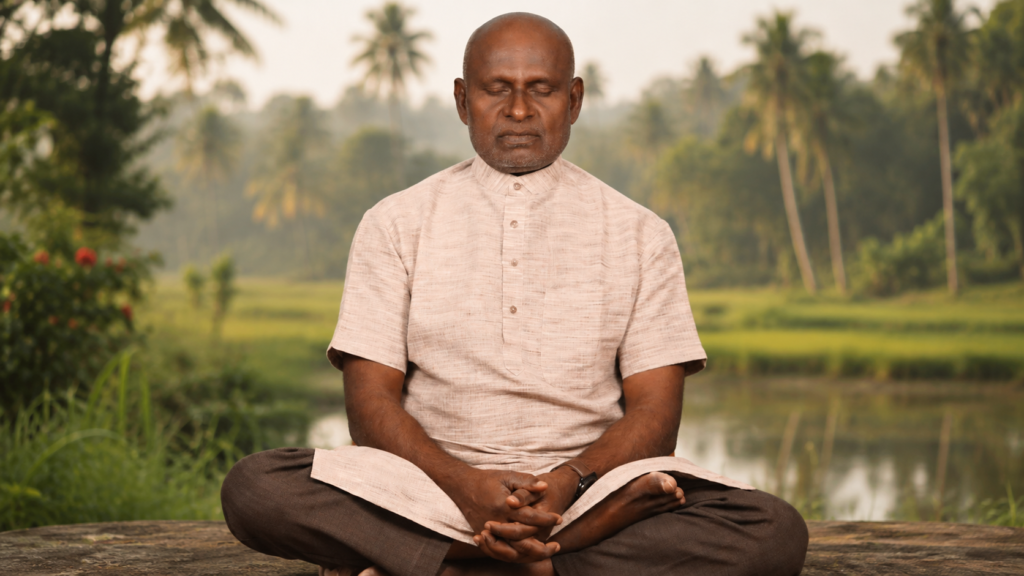
The recommendation is not another optimization strategy. It is an invitation to recover an intimate relationship with our own experience. For a short period each day, stop consuming information and begin observing.
“From 24 hours, why can’t you spend 24 minutes for your inner happiness, strength and inner observation?” —Guru Yogi Shivan
Healing as Remembrance
Across these two conversations with Guru Yogi Shivan, Kalaripayattu, Ayurveda, Siddha Veda, yoga, meditation, breath, and healing continually converge. What initially appear to be separate disciplines begin to look more like different doors into the same inquiry. How does a human being become more integrated?
How do we maintain the body without becoming disconnected from it? How do we develop strength without losing sensitivity? How do we use knowledge without allowing concepts to replace experience? How do we participate in our own health rather than surrendering responsibility for it entirely to others?
The traditional answer was not found in a single technique. It was cultivated through a way of life.
The warrior trained the body but also learned how the body could be restored. The healer worked with medicine but also understood food, movement, breath, and mind. The yogi investigated consciousness but did so through the living medium of the body.
These were not necessarily separate paths. They were different expressions of an integrated human education.
And perhaps that is the deeper meaning of healing that emerges from this conversation. Healing is not simply the removal of symptoms. It is the restoration of relationship—with the body, with breath, with attention, with nature, and ultimately with the deeper life from which all of these arise.
Healing begins with remembering how to participate in our own life.
About the Guest
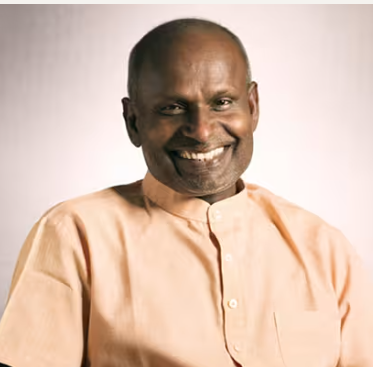
Guru Yogi Shivan is a modern mystic, master healer, and founder of Indimasi Ayurvedic Healing Village in Kerala, India. Rooted in the Siddha yogic lineage of South India, his work integrates Kalaripayattu, Ayurveda, breath science, and embodied awareness into a unified path of human development. Rather than presenting these as separate disciplines, he teaches them as expressions of a single continuum—one that trains the body, regulates the nervous system, and refines perception through direct experience.
His approach emphasizes restoration through alignment with the body’s natural intelligence. Working with individuals facing stress, burnout, and chronic imbalance, he guides practitioners not through abstract theory, but through lived process—where breath, touch, movement, and attention become the means of transformation.
Guruji’s Indimasi WEBSITE | Guruji’s YOUTUBE | Guruji’s FACEBOOK
Continue Exploring