The Warrior Path Beyond Combat
Power, Ritual, and the Development of Consciousness
by Mark V. Wiley
The warrior path can seem so distant from modern reality. Modern culture often treats strength and consciousness as separate pursuits. One path develops power while another develops wisdom. One belongs to the gym, the battlefield, or the workplace, while the other belongs to the meditation hall, monastery, or retreat center. Yet throughout much of human history these distinctions were far less pronounced. Many traditional cultures understood physical training, moral development, healing, and spiritual cultivation as different expressions of the same developmental process. Rather than viewing the warrior and the contemplative as separate archetypes, they saw them as complementary dimensions of a complete human being.
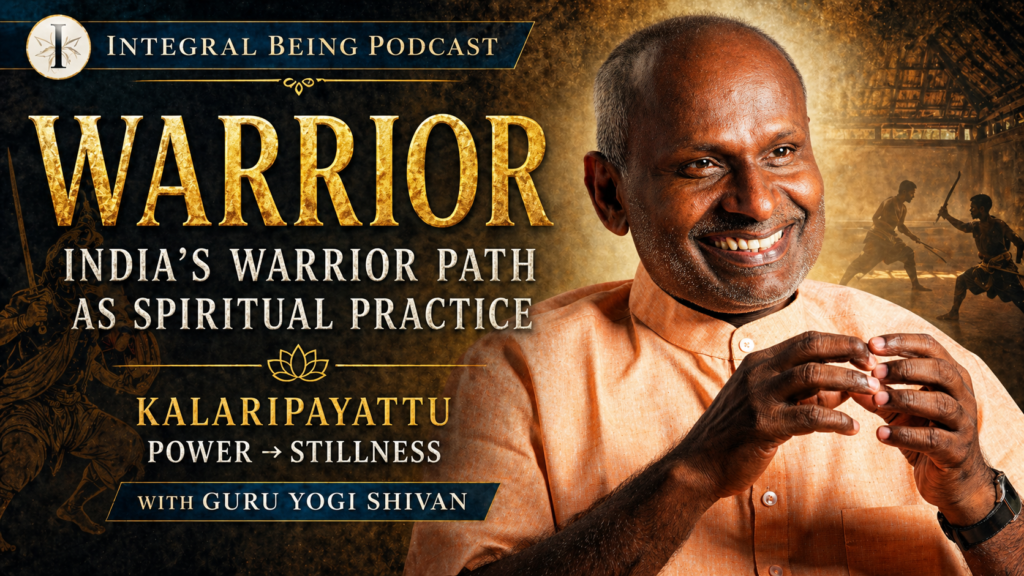
This theme emerged repeatedly during my conversation with Guru Yogi Shivan. Although our discussion centered on Kalaripayattu, one of India’s oldest martial traditions, the conversation continually returned to questions that extended far beyond martial practice. What is the purpose of training? How should power be developed? What role does humility play in human growth? And perhaps most importantly, how does a person become stronger without becoming harder, more aggressive, or more disconnected from themselves and others? Beneath the discussion of martial arts was a deeper inquiry into consciousness itself.
“Power should be handled with humility.” —Guru Yogi Shivan
Training as Human Development
Many people enter a practice seeking a specific outcome. They want greater strength, better health, improved performance, increased confidence, or practical skills. There is nothing wrong with these goals. Traditional systems sought these outcomes as well. The difference is that they rarely considered them the final objective. Physical capacity was viewed as one component of a larger developmental process aimed at cultivating balance, responsibility, self-knowledge, and maturity.
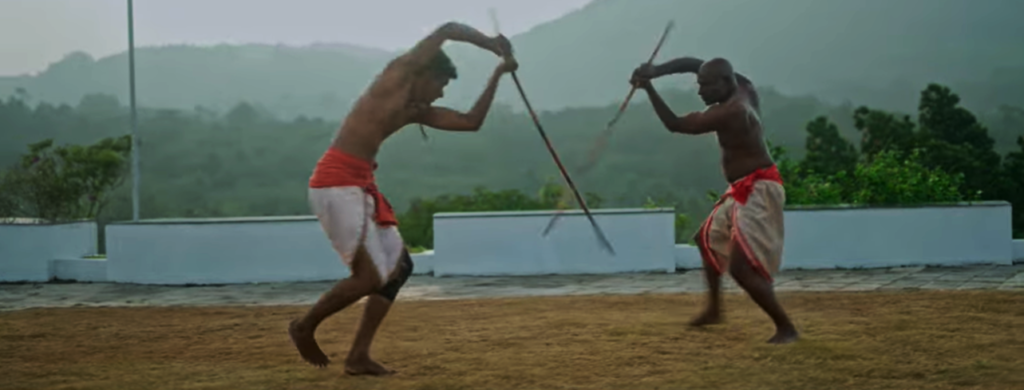
Throughout the conversation, Guru Yogi Shivan described Kalaripayattu not merely as a fighting system but as a way of learning how to meet life itself. Challenges, uncertainty, conflict, adversity, success, and failure are unavoidable dimensions of human existence. The purpose of training was never to eliminate these experiences but to prepare a person to engage them skillfully. In this sense, the martial path was not fundamentally about combat. It was about learning how to remain organized when life becomes demanding and how to maintain equilibrium when circumstances become difficult.
This understanding resonates far beyond martial arts. Every meaningful discipline eventually confronts the same challenge. Whether through meditation, artistic practice, professional work, relationships, or physical training, development occurs when increasing complexity can be met without fragmentation. The question is not whether pressure will arise. The question is whether the individual possesses sufficient organization to remain present, functional, and conscious while pressure increases.
“Development is not the absence of pressure.
It is maintaining organization while pressure increases.” —Mark V. Wiley
The Function of Ritual
One aspect of traditional training that modern culture often misunderstands is ritual. Contemporary perspectives frequently view ritual as symbolic, religious, or simply a remnant of the past. Yet within many traditional systems, ritual served a practical developmental function. It was designed to shape attention, establish intention, and create the psychological conditions necessary for learning and transformation.
Before entering the Kalari training space, practitioners bow, acknowledge their teachers, and consciously place themselves within a larger framework of meaning and responsibility. The act itself may appear simple, yet its implications are profound. The practitioner is reminded that training is not merely an exercise in acquiring power. It is also an exercise in learning how to govern power. Skill must be accompanied by humility. Capability must be balanced by restraint. Strength must remain subordinate to wisdom.
Seen from this perspective, ritual becomes less about preserving tradition and more about cultivating orientation. The bow, the moment of silence, the posture of respect, and the acknowledgement of lineage all serve to place the practitioner in a state of receptivity. They create the conditions under which learning becomes possible. Rather than focusing attention outward toward achievement, they turn attention inward toward responsibility.
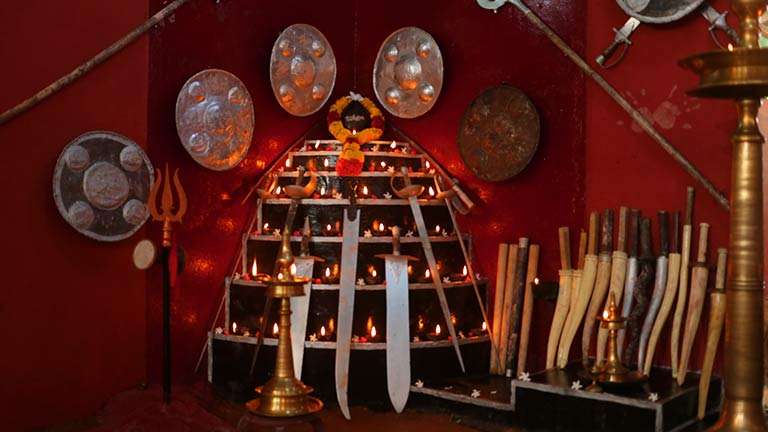
Ritual is not performed for the teacher. It is performed for the student.
Experience Beyond Explanation
Another recurring theme in the discussion was the distinction between explanation and experience. Guru Yogi Shivan described this through the relationship between Siddha and Vedic traditions, suggesting that explanation can only carry understanding so far. Language can point toward reality, describe aspects of reality, and offer useful maps of reality. Yet direct experience always exceeds the limits of explanation
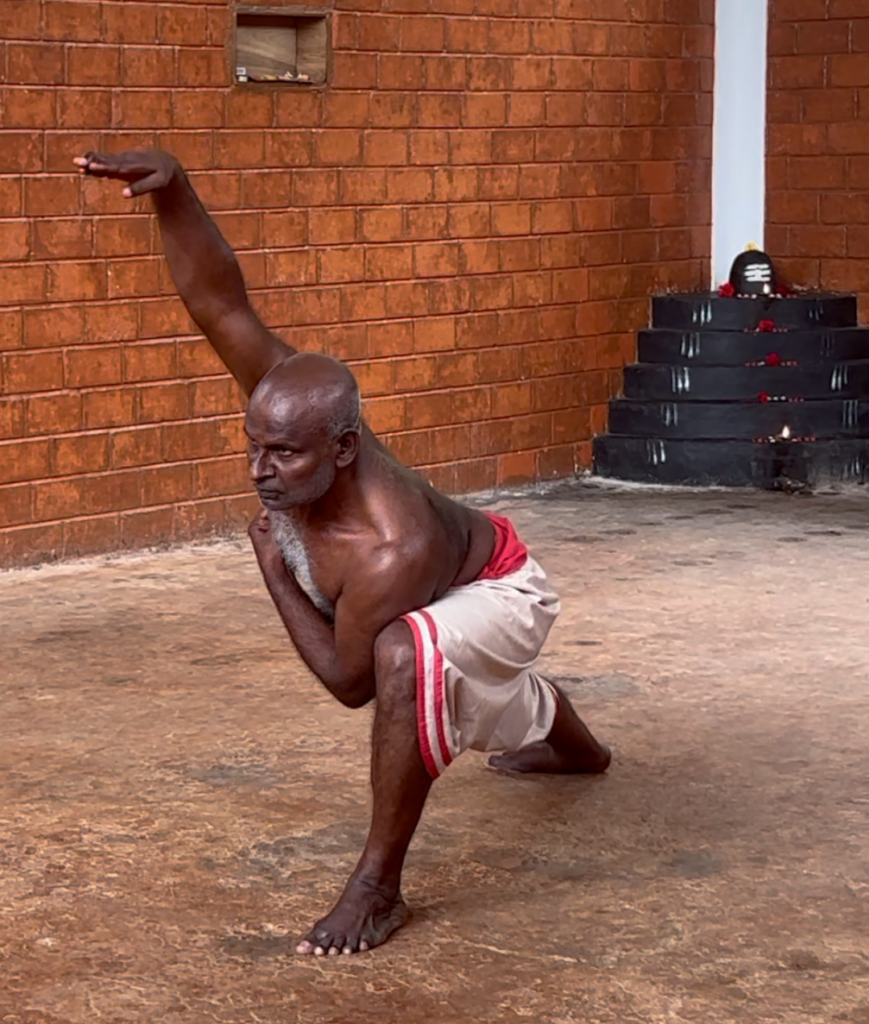
This distinction feels especially relevant in an age dominated by information. Never before have people had access to so much knowledge. Books, videos, podcasts, courses, and digital platforms provide endless opportunities to learn. Yet information alone does not produce transformation. A person can read extensively about meditation and remain restless. They can study embodiment and remain disconnected from their body. They can understand the mechanics of a martial art and still be unable to express it under pressure.
Practice occupies the space between knowledge and realization. It is the bridge that converts concepts into capacities and theories into lived experience. Ultimately, human development depends less on what we know intellectually than on what we can embody consistently.
Explanation informs. Experience transforms. Guru Yogi Shivan shows the way.
The Warrior Path to Stillness
Perhaps the most compelling insight from the conversation concerned the relationship between movement and stillness. At first glance, martial training appears to be the opposite of contemplative practice. One emphasizes action while the other emphasizes quietude. One appears external while the other appears internal. Yet many traditional systems understood these as complementary rather than contradictory.
Guru Yogi Shivan repeatedly suggested that authentic warrior training ultimately returns the practitioner to silence. Through disciplined movement, physical exertion, breath regulation, focused attention, and sustained effort, the individual gradually develops a deeper relationship with stillness itself. The purpose is not perpetual activity. The purpose is equilibrium. Intensity becomes a pathway toward balance rather than an escape from it.
This reflects a broader developmental principle. Human growth rarely occurs through the elimination of opposites. Instead, it emerges through their integration. Strength and sensitivity. Action and restraint. Discipline and freedom. Power and compassion. The mature practitioner does not choose one side of these polarities while rejecting the other. Maturity involves learning how to embody both simultaneously and appropriately.
The Warrior and the Healer
One reason traditional cultures often linked martial arts with healing systems is that both disciplines arise from the same investigation: understanding life. The warrior studies the body in order to protect it, while the healer studies the body in order to restore it. In both cases, knowledge emerges through careful observation of human structure, function, vulnerability, and resilience.
The discussion of marma points highlighted this principle clearly. The same knowledge that can be used to injure can also be used to heal. This paradox appears throughout traditional systems. Power itself is neutral. What matters is the consciousness guiding its application. Without wisdom, knowledge becomes dangerous. Without responsibility, capability becomes destructive.
Ancient traditions recognized this reality and therefore sought to develop the warrior and healer together. One cultivated strength. The other cultivated care. One learned decisive action. The other learned restoration. Together they formed a more complete vision of human development than either could provide alone.
Returning to the Ground
What remains most valuable from conversations like this is not the preservation of historical techniques or cultural traditions, important though those may be. The deeper value lies in the questions they continue to raise about human development. How should power be cultivated? What role does humility play in growth? How can increasing capability be accompanied by increasing responsibility? And how can strength emerge without sacrificing sensitivity, compassion, or self-awareness?
The traditions explored by Guru Yogi Shivan suggest that these questions are not separate from one another. They are different expressions of the same inquiry. The warrior path, at its highest level, is not a path toward aggression but toward responsibility. The healing path is not an escape from challenge but a return to wholeness. Both seek integration. Both seek balance. Both seek the development of a human being capable of meeting life with clarity, strength, humility, and wisdom.
Perhaps that is why so many ancient traditions refused to separate the warrior from the healer. Both were engaged in the same work: the cultivation of a more complete human being.
“The purpose of power is not domination. The purpose of power is integration.” —Guru Yogi Shivan
Guruji’s WEBSITE | YOUTUBE | FACEBOOK
Continue Exploring