Tai Chi as a Complete Path
with Grandmaster Rene J. Navarro
Embodied Cultivation and Internal Development Beyond Form
What if Tai Chi was never meant to be learned as a sequence of movements alone? Rene J. Navarro
reveals the traditional art as a complete path of embodied cultivation, where structure, breath,
awareness, philosophy, and internal development gradually become one integrated practice.
Many people first encounter Tai Chi as gentle exercise. They see graceful movements practiced in parks, community centers, or health clinics and discover benefits such as improved balance, relaxation, or stress reduction. While these are genuine outcomes, Rene J. Navarro suggests they represent only the outermost layer of a much deeper tradition.
Drawing on more than six decades of study with traditional teachers in the Philippines, China, and the United States, Navarro presents Tai Chi as one expression of a complete system of human cultivation. Standing practice, movement, breath, philosophy, energetic development, healing arts, and daily life were never intended to exist as separate disciplines. Together they formed an integrated path through which the practitioner gradually transformed both body and consciousness.
Throughout the conversation, Navarro returns to a principle that quietly shapes everything else: the body is not the destination of practice—it is the doorway. Physical organization prepares the conditions through which subtler capacities emerge. Authentic development unfolds not by accumulating ideas, but through years of disciplined embodied practice.
“The body is not the goal of practice. It is the doorway through which deeper transformation becomes possible.” —Rene J. Navarro
The Body as the Beginning of the Path
Before students explored concepts such as qi, meridians, or internal alchemy, they first learned to stand.
Navarro describes a traditional curriculum built upon posture, alignment, stability, endurance, and repetition. Hours were spent cultivating structure before students were introduced to increasingly sophisticated methods. This progression was not intended to slow advancement but to establish the conditions necessary for genuine development.
Rather than treating foundational practice as something to complete and leave behind, traditional teachers understood it as the ground from which everything else naturally emerged. As the body became more organized, breathing changed. As breathing changed, perception became more refined. What appeared to be physical training gradually revealed itself as the beginning of internal cultivation.
The conversation reminds us that authentic traditions rarely separate physical practice from inner development. They recognize that consciousness expresses itself through the body, and that transformation begins with how we inhabit it.
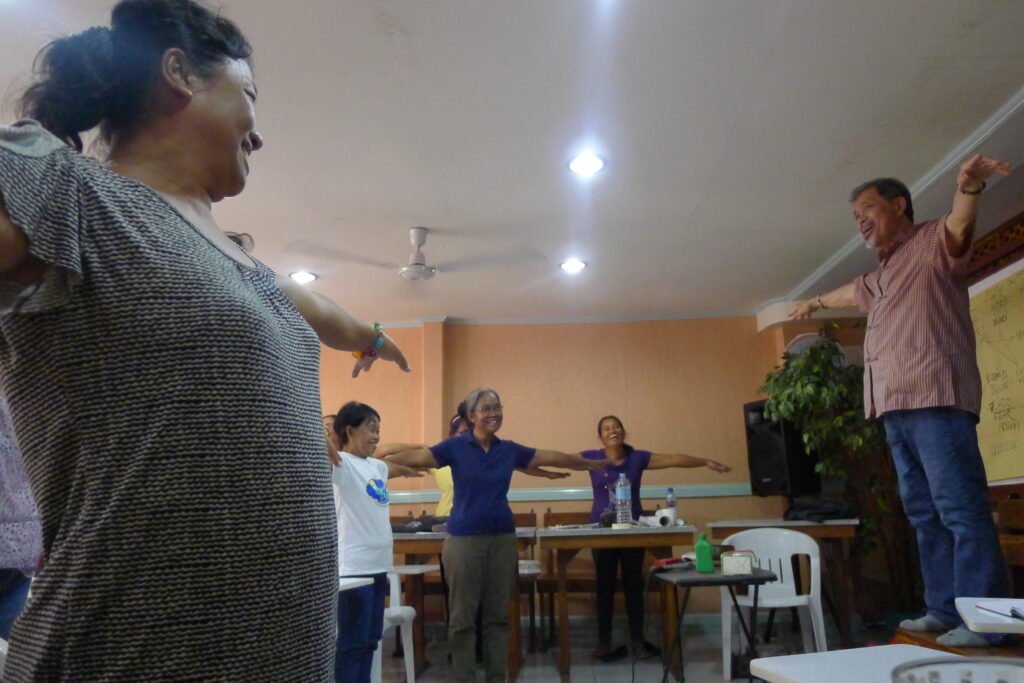
“Every profound tradition begins by changing the practitioner before it changes the practice.” —Rene J. Navarro
Beyond Technique
One of the central themes of this conversation is the distinction between learning techniques and entering a tradition.
Navarro observes that modern Tai Chi is frequently presented in isolated forms. Some learn it for balance. Others for arthritis, stress reduction, self-defense, or meditation. Each of these applications has genuine value, yet something essential can disappear when the larger context is forgotten.
Traditionally, Tai Chi Chuan belonged within a comprehensive culture of cultivation that included standing meditation, breath work, philosophy, healing arts, ethics, martial application, and contemplative practice. These were not separate subjects but different expressions of a single way of life. The form itself was never the destination. It served as one doorway into a much larger process of human development.
This perspective invites practitioners to see beyond choreography and ask a deeper question: What kind of person is this practice intended to cultivate?
“The form is not the destination. It is the doorway into a much larger way of living.” —Rene J. Navarro
Experience Before Explanation
As the conversation unfolds, Navarro explores subjects that have fascinated practitioners for centuries: qi, the meridian system, the dantian, the microcosmic orbit, and internal alchemy. Yet he consistently places direct experience before intellectual explanation.
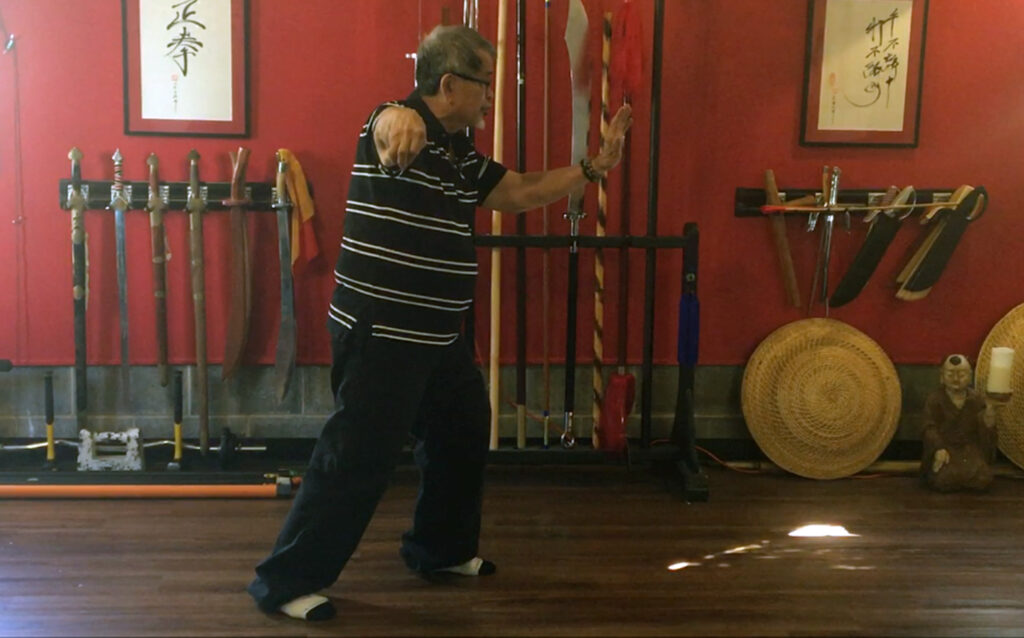
Students first learn to organize the body. They learn to breathe naturally. They cultivate stillness, relaxation, and attention. Over time, new experiences begin to arise. Traditional language developed to describe these experiences, but the experiences themselves cannot be borrowed from books or accepted merely as belief.
Whether understood through Daoist philosophy, Chinese medicine, or contemporary perspectives on embodied awareness, Navarro insists that authentic knowledge emerges through sustained practice. Explanation follows experience—not the reverse.
This reflects a principle shared across many contemplative traditions: understanding deepens as practice matures. The Inner Life framework seeks to do the same.
“Practice does not confirm a theory. Practice gradually reveals a reality.” —Rene J. Navarro
Recovering an Integrated Tradition
Perhaps the most significant contribution of this conversation is Navarro’s invitation to recover a more integrated understanding of Tai Chi. In fact, much of the grandmaster’s thoughts on this issue are recorded in several chapters of his deeply-reflective and insightful; memoir, Of Fire and Water: Alchemy and Transformation.
He contrasts the traditional culture in which the art developed with the tendency of modern life to separate movement from meditation, healing from philosophy, and physical training from spiritual cultivation. The original traditions did not divide these dimensions so neatly. They understood them as different expressions of one unfolding process.
Within that larger context, standing practice prepared movement. Movement refined breathing. Breathing deepened awareness. Awareness informed daily life. The practitioner was not simply learning techniques but participating in a gradual reorganization of the whole human being.
This integrated vision resonates far beyond Tai Chi. It speaks to any authentic discipline that seeks lasting transformation through consistent embodied practice rather than quick results or isolated methods.
“The complete path is discovered not by collecting practices, but by allowing them to become one.” —Rene J. Navarro
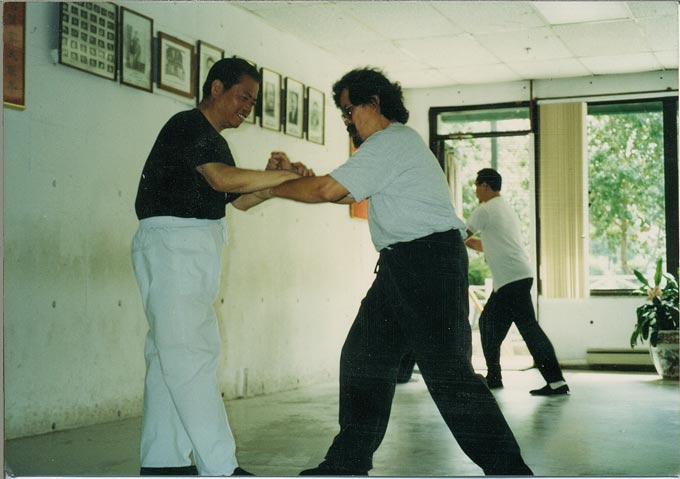
The Long Arc of Cultivation
Rene Navarro offers no shortcuts. Instead, he speaks with the perspective of someone who has devoted a lifetime to practice. Again and again, he returns to patience, repetition, and direct experience. The deepest changes cannot be hurried because they arise gradually through years of disciplined cultivation.
The conversation ultimately invites us to reconsider what mastery actually means. It is not simply technical proficiency or accumulated knowledge. It is the gradual integration of body, breath, attention, perception, and awareness until practice becomes inseparable from the way one lives.
Seen in this light, Tai Chi becomes far more than a martial art or a health exercise. It becomes a lifelong path of embodied human development—one that continues to unfold long after the techniques themselves have been learned.
“Embodied traditions do not begin by asking what you believe. They begin by asking what you repeatedly practice.” —Rene J. Navarro
About the Guest
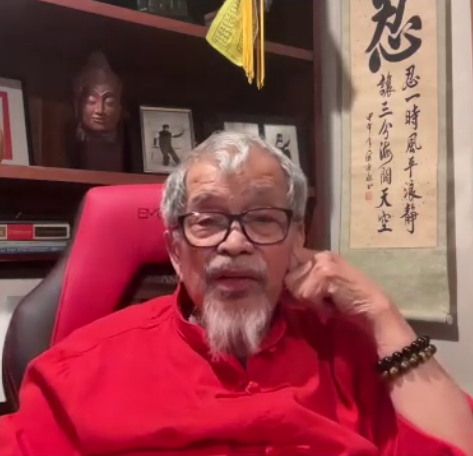
René J. Navarro is an acupuncturist, herbalist, martial artist, teacher, and practitioner of Taoist internal cultivation whose work bridges Chinese medicine, qigong, Tai Chi, meditation, and Filipino martial arts. A licensed acupuncturist and Diplomate of the National Certification Commission for Acupuncture and Oriental Medicine (NCCAOM), he has taught throughout North America, Europe, Asia, and Africa, and has lectured at institutions including Harvard University and Lehigh University. He has published extensively on Chinese healing arts, Taoist cultivation, and Philippine martial traditions.
For decades René has served as a senior instructor within the Universal Healing Tao system under Mantak Chia, teaching Internal Alchemy, Chi Nei Tsang, Microcosmic Orbit, Tai Chi Chi Kung, Healing Love, and related practices. His lifelong training also includes Classical Yang Family Tai Chi under Grandmaster Gin Soon Chu, Shaolin and Buddhist kung fu, Arnis de Mano, and advanced studies in Chinese medicine and the Taoist classics with teachers such as Jeffrey Yuen. His work emphasizes the integration of healing, embodied practice, and inner transformation through disciplined cultivation.
Explore More Cultivation