Silence, Grace, and the Long Path of Yoga
with Swami Kripananda
Why authentic yoga is not about postures or mystical experiences—
but the gradual transformation of the whole human being through disciplined practice, presence, and grace.
True transformation unfolds over years of practice, not moments of inspiration.
Swami Kripananda explores how silence gradually replaces thought, effort matures
into grace, and yoga becomes a way of being rather than something we simply do.
The Long Arc of Inner Transformation
Modern culture often presents yoga as flexibility, fitness, or stress reduction. Swami Kripananda offers something radically different. For him, yoga is neither exercise nor self-improvement. It is a lifelong process of reorganizing consciousness.
His own life reflects that transformation. Beginning in the counterculture of Goa, addiction eventually gave way to recovery. Recovery led to spiritual discipline, and discipline gradually unfolded into decades of contemplative practice. Along the way he taught members of royal families, recovered from devastating strokes, experienced profound mystical openings, and ultimately arrived at a place where external circumstances mattered far less than inner presence.
“Man plants the seed. Nature grows the tree.” —Swami Kripananda
The practitioner prepares the conditions. Transformation happens in its own time.
Yoga Begins Long Before the Postures
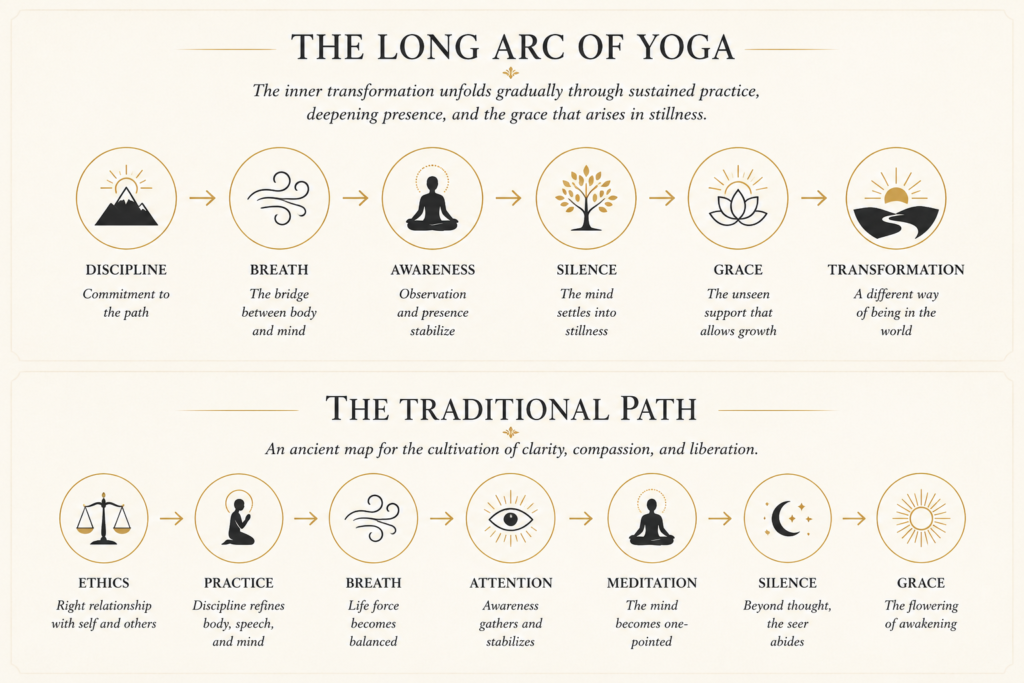
One of the strongest themes throughout the conversation is that most modern practitioners begin yoga in the middle of the tradition rather than at its beginning. The physical postures are only one stage within Patanjali’s eightfold path. Ethical development, disciplined living, breath, sensory refinement, concentration, meditation, and ultimately samadhi all belong to a much larger developmental process.
Kripananda argues that when yoga is reduced to stretching or exercise, the very purpose of yoga becomes obscured. The goal is not increased flexibility. The goal is the transformation of the practitioner.
This parallels many of the themes explored throughout the Inner Life Model, where practices gradually cultivate enduring changes in perception, embodiment, and awareness rather than temporary experiences.
“Most people start yoga with the third stage.” —Swami Kripananda
Breath as the Bridge Between Body and Mind
Rather than presenting breathing techniques as isolated exercises, Kripananda describes breath as the living bridge connecting the physical body with the mind.
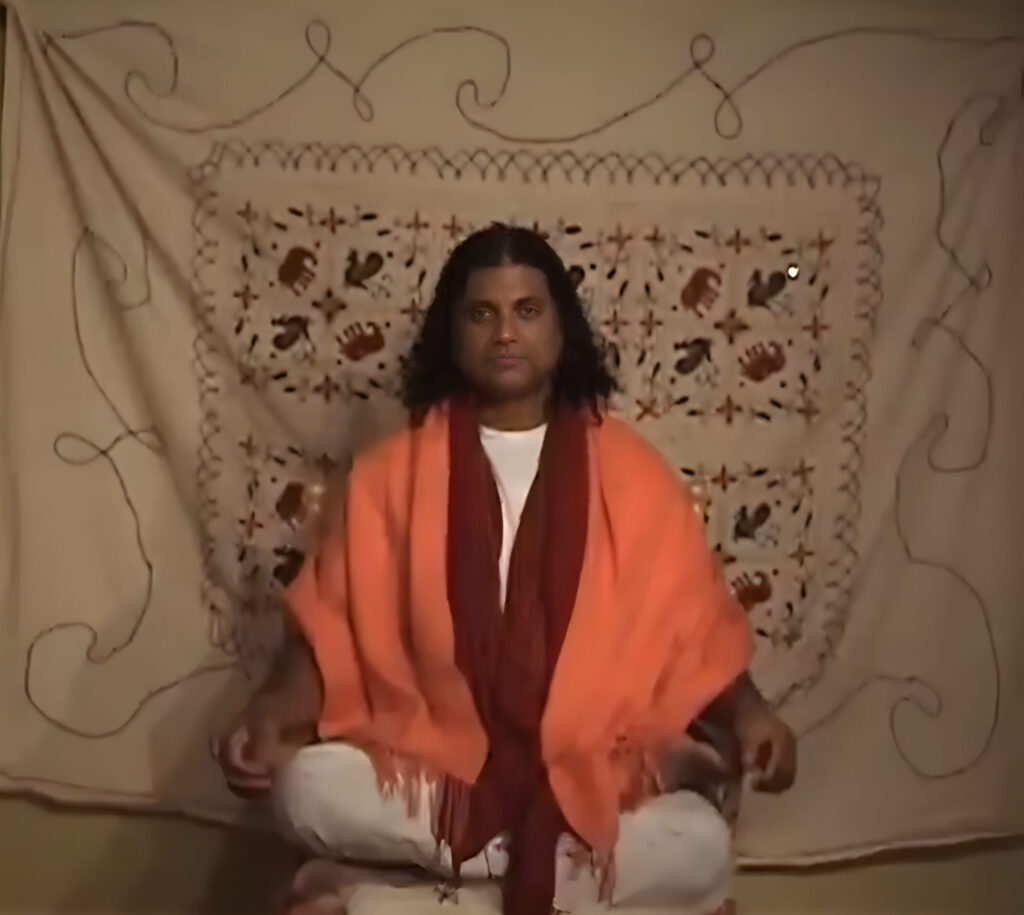
As attention settles into breathing, awareness naturally moves inward. Thoughts are not suppressed; they simply become less compelling. The body grows quieter. The breath becomes subtler. Eventually the practitioner discovers increasing periods of presence that cannot be produced through force.
This reflects a principle shared throughout contemplative traditions: awareness develops indirectly. The practitioner attends carefully to the process while transformation unfolds naturally.
“Don’t try to slow the mind. Observe the breath.” —Swami Kripananda
Breath functions as the bridge between body and mind, much like the first stages of the Six Foundational Practices, where awareness first learns to stabilize through posture and breathing.
Silence Is the Real Teacher
Perhaps the most memorable insight from the discussion concerns silence. Most people assume spiritual growth is measured by knowledge, visions, or extraordinary experiences. Kripananda proposes something much simpler.
The practitioner begins noticing increasing silence between thoughts. Over time, those moments of silence gradually become longer than the thoughts themselves. This silence is not emptiness but presence. It slowly becomes the place from which life is lived rather than merely experienced.
“The words are like the intoxicant. The silence is the high.” —Swami Kripananda
That single statement beautifully captures one of the central insights of the conversation. The destination is not another spiritual experience or mystical state. The destination is an ever-deepening intimacy with silence itself, until presence becomes the practitioner’s natural way of being. This gradual shift from doing to being reflects what Inner Life calls embodied awareness—the point where awareness becomes less an act of concentration and more the natural organization of the whole person.
Kundalini Is Not Something to Chase
The conversation also explores Kundalini awakening, energetic development, and the nervous system. Kripananda describes several powerful experiences throughout his own life while repeatedly cautioning against pursuing extraordinary states for their own sake.
Experiences may arise—or they may not. Neither determines spiritual maturity. Instead, he continually returns to the same foundations: daily practice, patient repetition, and surrender. The energy develops naturally as the practitioner becomes capable of receiving it. Trying to manufacture spiritual experiences often delays the very transformation one hopes to achieve.
This perspective places disciplined cultivation above fascination with mystical phenomena, reminding us that authentic development is measured less by dramatic experiences than by the quiet reorganization of the whole person. Rather than pursuing extraordinary states, authentic practice cultivates the capacities through which deeper transformation can naturally unfold.
Grace and Effort Work Together
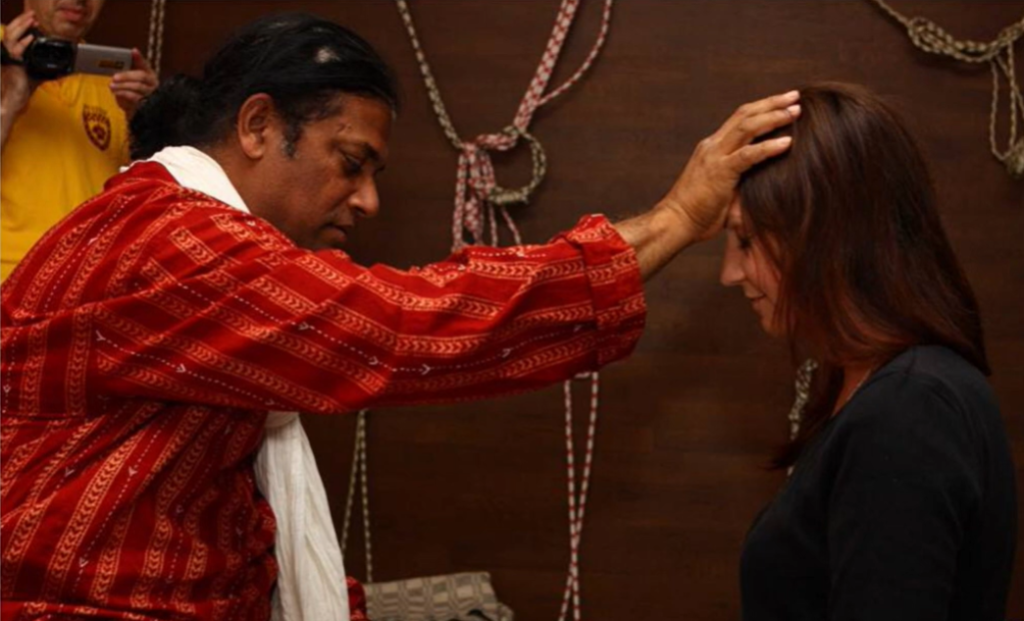
One of the most beautiful sections of the conversation explores the relationship between disciplined effort and grace. Practice cannot manufacture awakening, yet awakening rarely occurs without practice.
The practitioner prepares the conditions through consistent effort, sincerity, and discipline. Grace, however, remains its own mystery. It cannot be controlled or commanded, only received. This is perhaps the deepest paradox of contemplative life: we practice wholeheartedly while recognizing that the most profound transformations are never entirely our own accomplishment.
“You just keep watering the tree.” —Swami Kripananda
The image is wonderfully simple. Our responsibility is to keep tending the soil. Growth happens in its own time. Throughout the Inner Life ecosystem, practice is understood not as collecting experiences but as cultivating the conditions through which integration gradually becomes one’s natural way of living.
Creating Your Own Path
Kripananda frequently references Jiddu Krishnamurti’s statement that truth is a pathless land. Rather than asking students to imitate another person’s journey, he encourages them to develop practices appropriate to their own lives, bodies, and circumstances.
Teachers offer direction. Practice provides experience. Ultimately, every practitioner must walk the path personally. This does not reject tradition; it fulfills it. The purpose of an authentic teacher is not to create lifelong dependence but to cultivate the maturity that eventually allows students to stand on their own.
A Conversation About Becoming
Although the discussion includes addiction, recovery, Kundalini, nervous system development, Christian symbolism, Vipassana, gurus, and yoga philosophy, these subjects all serve one larger theme: authentic spiritual practice slowly changes who we become.
It changes how we perceive, how we respond, and how we inhabit the present moment. Perhaps most importantly, it gradually replaces effort with presence. Transformation becomes less about achieving extraordinary experiences and more about living from an increasingly integrated way of being.
Swami Kripananda reminds us that the deepest signs of transformation are often the quietest. They are not remarkable powers or mystical displays but an increasing capacity for silence, presence, and simplicity. From that silence, a different way of living naturally begins. While every path is uniquely our own, authentic practice is rarely cultivated in isolation.
Throughout many Integral Being conversations, a common theme emerges: lasting transformation develops through disciplined practice rather than isolated experiences. If this conversation resonates, continue with the Inner Life Model, explore the Six Foundational Practices, or join the Practice Field to begin cultivating these principles through direct experience.
About the Guest
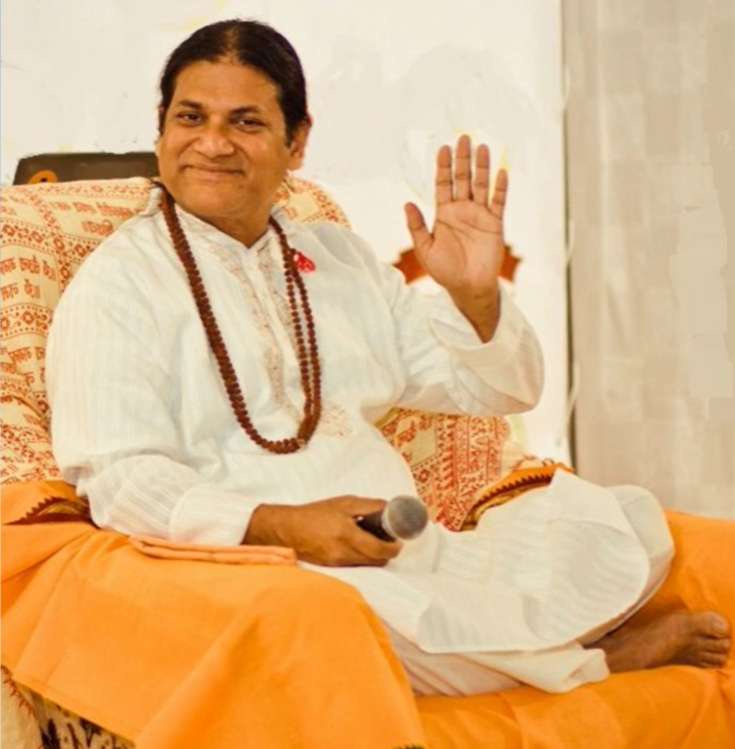
Swami Kripananda, also known as Brother Lourenco, is the founder of Kripa Yoga and an international teacher of yoga, meditation, and inner transformation. A native of Goa, India, he has studied yoga for more than four decades, including extensive training in the Iyengar tradition. He leads retreats and workshops internationally, guiding students in the integration of breath, awareness, embodiment, and sustained spiritual practice.
Drawing from his own life journey, Swami Kripananda speaks candidly about addiction, recovery, Kundalini phenomena, and the gradual unfolding of authentic spiritual transformation. His teaching emphasizes that genuine yoga is not the pursuit of extraordinary experiences but the patient cultivation of presence, silence, and grace through disciplined daily practice. Throughout his work, he encourages students to move beyond concepts and beliefs toward direct experience, allowing transformation to arise naturally over time.
Continue Exploring This Theme