Ananda Marga:
Bliss, Tantra, Consciousness & Human Evolution
with Acarya Vimalananda Avadhuta
Tantra, Neo-Humanism, Meditation, and the Path of Human Transformation
Acarya Vimalananda explores Ananda Marga, a system of meditation, tantra, ethics, and service founded by Shrii Shrii Anandamurti. More than a philosophy or religion, Ananda Marga presents a practical path of inner transformation, conscious evolution, and expanded human identity.
What Is Ananda Marga?
Ananda Marga translates as “The Path of Bliss.” Founded in India in 1955 by Shrii Shrii Anandamurti, it combines meditation, tantra, ethics, service, and social philosophy into a comprehensive system of human development.
Unlike systems focused solely on belief or doctrine, Ananda Marga emphasizes direct experience through disciplined practice. Its aim is not merely personal improvement, but the expansion of consciousness beyond the limitations of habitual identity.
Throughout this conversation, Acarya Vimalananda presents Ananda Marga as both a practical method of self-realization and a vision for the future evolution of humanity.
Bliss Beyond Pleasure
“Bliss is not something you feel. It is something that remains.” —Acarya Vimalananda
The conversation begins by distinguishing bliss from pleasure.
Pleasure depends on conditions. It arises through stimulation, achievement, possession, or circumstance. Because it depends upon external conditions, pleasure inevitably carries its opposite: loss, dissatisfaction, and pain. Bliss is different.
In the Ananda Marga view, bliss emerges when consciousness becomes less dependent upon sensory fluctuation and more rooted in its own essential nature. It is not excitement. It is not escape. It is not emotional intensity. It is a stable expansion of awareness.
This distinction reframes spiritual practice itself. The goal is not the pursuit of increasingly powerful experiences, but the cultivation of a deeper capacity for presence, clarity, and connection.
Tantra as Expansion
“Tantra is not indulgence. It is expansion.”
—Acarya Vimalananda
Few spiritual terms have accumulated more misunderstanding than tantra.
Within Ananda Marga, tantra is neither indulgence nor spectacle. It is a systematic method for expanding the mind beyond limiting patterns of fear, attachment, and conditioned habit.
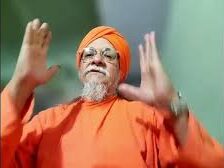
Using a traditional analogy, Acarya Vimalananda describes the human mind as something bound by constriction. Rather than attacking these limitations directly, tantra expands consciousness until the limitations themselves lose their hold.
The body stabilizes. The breath refines. The mind becomes less fragmented. Transformation is not accidental. It is developmental. This view places discipline at the center of growth—not as control, but as participation in a process of continual expansion.
Evolution Through Practice
A recurring theme throughout the conversation is that humanity is not a finished product. While biological evolution may have produced the human form, the evolution of consciousness continues. Acarya Vimalananda illustrates this through the metaphor of a river approaching the ocean. The river does not disappear when it reaches the ocean; it fulfills itself. Likewise, human development is not about becoming something other than what we are, but about realizing the deeper potential already present within us.
This process is not automatic. It requires participation. Through meditation, mantra, tantra, and service, the practitioner consciously engages in the ongoing refinement of body, mind, and awareness. The path is not one of accumulation, but of progressive expansion, refinement, and recognition.
Across all aspects of Ananda Marga, a common principle emerges: practice reorganizes the human system. The body becomes steadier, attention becomes less fragmented, identity becomes less rigid, and perception widens. What begins as effort gradually becomes participation in a larger process of development. Seen in this light, Ananda Marga is not simply a collection of techniques but a developmental framework through which consciousness can mature and expand through sustained practice.
The question at its center is not merely how to meditate. It is how a human being
About the Guest
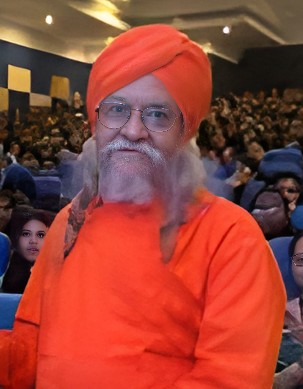
Acarya Vimalananda Avadhuta is a senior teacher within the Ananda Marga tradition and has spent more than five decades teaching meditation, tantra, ethics, neo-humanism, and spiritual philosophy throughout the world.
Drawing upon the teachings of Shrii Shrii Anandamurti, he presents a practical and developmental approach to human transformation that integrates personal realization with social responsibility.
His work emphasizes disciplined practice, expanded identity, and the evolution of consciousness as a lived reality rather than a philosophical abstraction.
Visit the Ananda Marga WEBSITE
Continue Exploring This Theme