Beyond Identity: Awareness and Human Transformation
with Dr. David Parrish
Self-realization, personality, and the integration of awareness into everyday life
Awareness may reveal what we are. Integration teaches us how to live from it. In this Integral Being dialogue, Mark V. Wiley speaks with Dr. David Parrish about personality, conditioning, meditation, and the practice of freedom.
What if the source of human suffering is not the world around us, but a mistaken understanding of who we are?
In this conversation, psychologist, meditation teacher, and non-dual practitioner David Parrish explores the relationship between awareness, conditioning, personality, and human transformation. Drawing upon decades of clinical work, contemplative practice, and his experience within the prison system, Parrish presents a perspective that challenges many conventional approaches to self-improvement. Rather than focusing exclusively on changing thoughts, emotions, or behaviors, he invites us to examine a more fundamental question: What are we beneath the personality we have learned to call ourselves?
Beyond the Personality: Awareness and Human Transformation
A central theme throughout the conversation is the distinction between personality and awareness. According to Parrish, most approaches to psychology and self-development focus on improving the personality. We seek healthier relationships, greater confidence, reduced anxiety, improved habits, and a stronger sense of identity. While these efforts can be valuable, they often leave untouched a deeper issue: the assumption that the personality itself is who we are.
The personality consists of accumulated conditioning. It is built from memories, beliefs, preferences, fears, habits, successes, failures, and the stories we tell about ourselves. Because it is constantly changing and responding to circumstances, any happiness based entirely upon it remains unstable. We spend years trying to perfect something that is inherently temporary.
Parrish argues that beneath this activity exists something more fundamental. Awareness itself is not a belief, philosophy, or spiritual concept. It is the simple fact of being conscious and present. It is the silent background within which every thought, sensation, emotion, and experience appears. Rather than creating awareness through practice, the task is learning to recognize that it has always been present throughout every stage of life.
“You cannot lose your true nature. You can only stop paying attention to it.”
This distinction between awareness and personality forms the foundation of Parrish’s teaching. Development begins not by becoming something new, but by recognizing what has always been here beneath the layers of conditioning that shape our everyday experience.
Awakening and Integration
Like many seekers, Parrish initially believed that spiritual awakening meant transcending the personality altogether. Through meditation and contemplative practice, he experienced profound states of clarity and expanded awareness. Yet what surprised him was what happened afterward. Insight did not eliminate conditioning. Anxiety still appeared. Emotional patterns remained. Old habits continued to surface despite experiences of profound realization.
This led him to an important conclusion: awakening and integration are not the same thing.
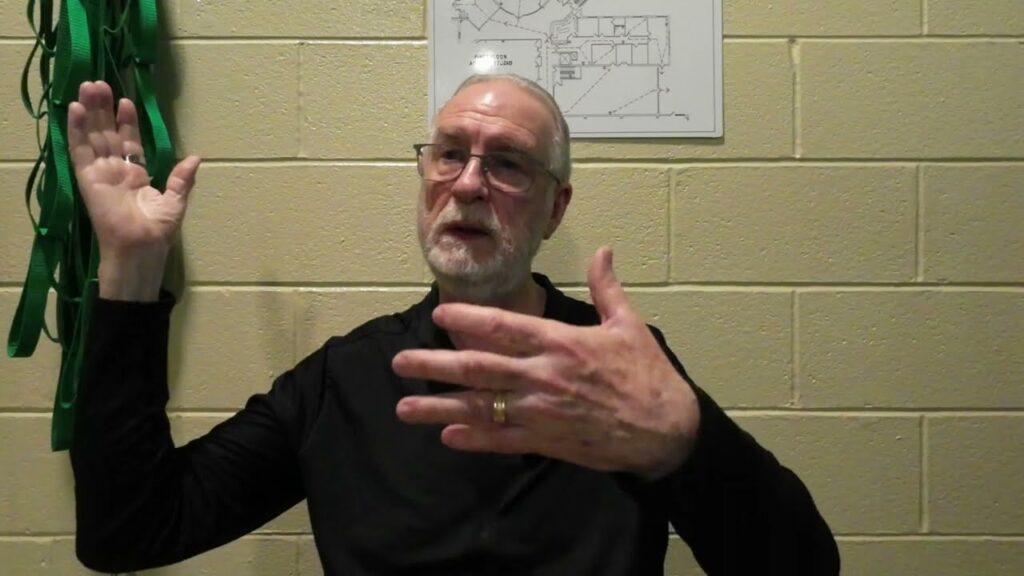
Rather than rejecting the personality, he came to see that the personality and body are themselves expressions of awareness. The problem was never their existence. The problem was complete identification with them. What followed was a shift from seeking escape to pursuing integration. The goal became bringing the personality into alignment with deeper understanding rather than attempting to transcend ordinary life altogether.
This distinction has important implications for anyone engaged in contemplative practice. Spiritual insight may provide a glimpse of a larger reality, but the actual work of transformation occurs in the midst of daily life. Relationships, emotional reactions, fears, habits, disappointments, and successes all become part of the developmental process. Awakening may reveal what we are, but integration teaches us how to live from that realization.
Awakening reveals what we are. Integration teaches us how to live from it.
Conditioning, Meditation, and Human Transformation
Parrish’s decades of work within the prison system provided a unique perspective on human behavior and change. Working with inmates exposed him to individuals whose lives had been shaped by trauma, neglect, violence, addiction, and profound psychological conditioning. What others often viewed as fixed identities, he came to see as conditioned patterns operating through human beings.
This understanding shaped both his therapeutic work and his view of human potential. Rather than seeing people as permanently defined by their history, he became increasingly interested in the possibility of transformation. Through intensive programs and contemplative practices, he witnessed individuals once considered beyond rehabilitation reorganize their lives, relationships, and sense of purpose.
Meditation became an important part of that process. Parrish describes meditation not as a religious exercise, but as a practical method for retraining attention. Most people spend their lives immersed in a continuous stream of thought. Judgments, worries, fears, memories, and anticipations become the lens through which reality is interpreted. Meditation interrupts this automatic identification by repeatedly returning attention to breath, sensation, and direct experience.
Over time, a space begins to emerge between awareness and thought. Within that space, thoughts can be observed rather than believed. Emotions can be felt without becoming overwhelming. Reactions can be recognized before they are acted upon. What begins as a simple practice of attention gradually becomes a process of reorganization affecting both mind and nervous system. The goal is not to eliminate thinking, but to stop being governed by unconscious patterns.
Happiness Beyond Circumstances
One of the most practical aspects of the discussion concerns anxiety and the pursuit of happiness. Parrish observes that much of human suffering comes from the belief that well-being depends upon circumstances. We pursue achievement, possessions, status, relationships, security, and control, believing that fulfillment lies somewhere ahead of us. Yet even when those goals are achieved, satisfaction often proves temporary.
The same dynamic appears in anxiety. We become anxious about being anxious. We fear future discomfort before it arrives. The more we resist unpleasant experiences, the more persistent they become. This creates a self-reinforcing cycle in which attention continually feeds the very patterns we hope to escape.
Parrish suggests that freedom begins when awareness itself becomes the reference point rather than external conditions. Awareness does not require circumstances to be a certain way in order to be complete. As individuals become more familiar with their true nature, they often discover a sense of peace, contentment, and connection that exists independently of success or failure.
This is not a withdrawal from life. Rather, it creates the possibility of engaging life more fully. Love, compassion, and generosity arise naturally because they are no longer strategies for obtaining something. They become expressions of what is already present. In this sense, happiness is not achieved through acquisition. It emerges through recognition.
Love is not something awareness does. It is what awareness naturally expresses.
Living the Practice
Perhaps the most important insight Parrish offers is that awareness is not a theory to be understood but an experience to be lived. Intellectual understanding alone cannot produce transformation. Meditation, contemplation, self-observation, and everyday experience provide opportunities to repeatedly return to what is already present until it becomes increasingly familiar.
The goal is not to escape the world, transcend humanity, or retreat into a cave. The goal is to bring awareness into ordinary life. Relationships become the practice. Challenges become the practice. Work becomes the practice. Life itself becomes the practice.
Seen in this light, freedom is not found by becoming someone else. It emerges through recognizing what we already are and allowing that recognition to gradually reshape the way we live, relate, and participate in the world. For David Parrish, this is the real work—not awakening alone, but the lifelong process of embodying its implications in everyday life.
This version is much closer to the style of your stronger Integral Being pages such as Felix de Haas, Ravi Ravindra, and Father Francis Tiso: fewer headings, fuller paragraphs, developmental framing, and only three pull quotes.
About the Guest

David Parrish is a psychologist, meditation teacher, and student of human consciousness whose work bridges psychology, contemplative practice, and non-dual understanding. Drawn from an early age to questions of identity, freedom, and the nature of awareness, he spent decades exploring both Eastern and Western approaches to human transformation. Influenced by teachers such as Alan Watts, J. Krishnamurti, George Gurdjieff, Carlos Castaneda, and Werner Erhard, his work focuses on the relationship between awareness, conditioning, and freedom from suffering.
For thirty-two years, Parrish worked within the prison system as a counselor, psychologist, assistant warden, and warden, where he developed transformational programs for inmates based on meditation, self-inquiry, and personal responsibility. Following his prison career, he continued his work through private practice, teaching, consulting, and writing. Today, he integrates decades of clinical experience with contemporary approaches to consciousness and human development, helping individuals discover more skillful, compassionate, and fulfilling ways of living.
Keep Exploring This Theme