THE FLOWER GARDEN OF THE HEART
Reading Bawa Muhaiyaddeen Across Traditions
by Mark V. Wiley
This reflection explores Sufi Shaykh Bawa Muhaiyaddeen’s metaphor of the heart as a flower garden through themes such as the dual nature of the human being, the supermarket of the mind, the bank of the heart, and Divine Analytic Wisdom. By comparing Bawa’s imagery with Daoist and Zen perspectives, we discover how symbolic language can reveal a universal insight:
Peace emerges when the wisdom of the heart begins to guide the energies of the mind and body.
“Everything else displays its fragrance on the outside, but Man’s Fragrance is on the inside. That is the Qalb—the Heart.” —M.R. Bawa Muhaiyaddeen
The teachings of the Sri Lankan Sufi M. R. Bawa Muhaiyaddeen unfold through a rich landscape of symbolic imagery—gardens, animals, fragrances, elements, and hidden treasures of the heart. At first encounter this language can feel mysterious, even bewildering. Rather than explaining ideas in the linear style of modern philosophy, Bawa speaks through layered metaphors that circle around an insight rather than defining it directly.
Yet when these images are examined carefully—and placed beside similar insights from Daoism, Zen, and other contemplative traditions—a surprisingly coherent vision begins to emerge. Within every human being, Bawa suggests, there exists both the restless marketplace of the mind and the quiet flower garden of the heart.
For readers trained in analytical thinking, such symbolic language can initially feel obscure. One way I have found helpful in approaching Bawa’s teachings is to group his imagery into clusters of ideas and place those ideas beside similar insights found in other contemplative traditions. Through comparison and reference, what first appears mystical or opaque gradually becomes more intelligible—at least for me.
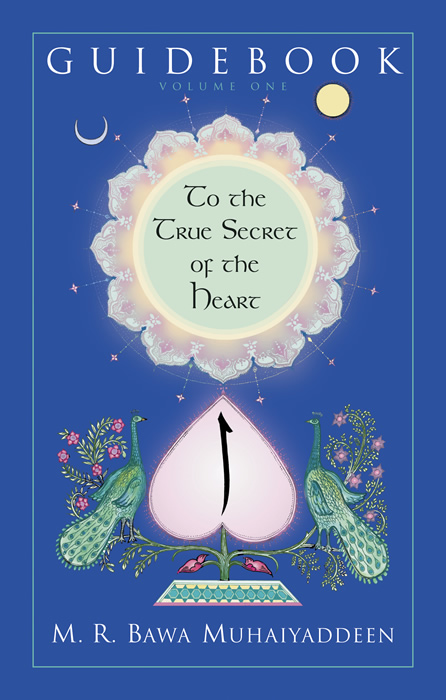
This reflection is therefore not an attempt to interpret Bawa’s teachings in a doctrinal sense. Rather, it is an attempt to understand the basic premise of his Introduction to The Guidebook to the True Secret of the Heart (Vol. 1) by examining its key metaphors and exploring how they resonate with ideas found in Daoism, Zen Buddhism, and other traditions. Through this kind of cross-illumination, the underlying insight begins to reveal itself.
Two Forms of the Human Being
One of the central ideas in Bawa Muhaiyaddeen’s Introduction is that human beings possess two forms.
The first is the outer form, which he describes as the body created from the five elements: earth, water, fire, air, and space (ether). This form is unstable and constantly changing. It contains the impulses of the animal world—desire, aggression, fear, pride, and instinct. Bawa often illustrates this condition through vivid imagery: human beings behaving like bulls, snakes, dogs, monkeys, or birds—symbols of instinctual drives rather than conscious wisdom.
“Man has an inside Form and an outside form. He has two forms. The inside Form is the Trustee of God… The outside form is the form of the five elements.” —M.R. Bawa Muhaiyaddeen
These are not literal descriptions but metaphors for psychological tendencies.
This elemental and instinctual dimension of human life is what Bawa sometimes calls hell. Hell, in this sense, is not a distant place of punishment but a state of consciousness dominated by confusion, desire, and illusion.
Opposed to this outer form is what Bawa calls the inner Form. This inner reality is associated with divine qualities—compassion, justice, patience, and peace. The faculty that allows human beings to perceive this deeper reality is what he calls Divine Analytic Wisdom: the capacity to distinguish truth from illusion and right from wrong.
Only when this wisdom awakens does a human being become fully human in the spiritual sense.
The Supermarket of the Mind
One of Bawa’s most striking metaphors is his description of the mind as a supermarket.
In this supermarket countless impulses, identities, languages, and instincts are displayed. Animals, desires, memories, habits, and inherited impulses all crowd the shelves. The mind becomes a marketplace of competing forces, each pulling attention in a different direction.
This description resonates strongly with imagery from other contemplative traditions.
“It is a supermarket. Many, many tens and tens of millions of beings speaking tens and tens of millions of languages will come to the supermarket to buy things.” —M.R. Bawa Muhaiyaddeen
In Buddhism, the restless mind is often called the monkey mind, constantly jumping from thought to thought. Daoist texts speak of the “ten thousand things” that distract the human spirit from its original nature. In the teachings of the Russian mystic G.I. Gurdjieff, the ordinary human being is described as mechanical—driven by many conflicting impulses without a unifying center.
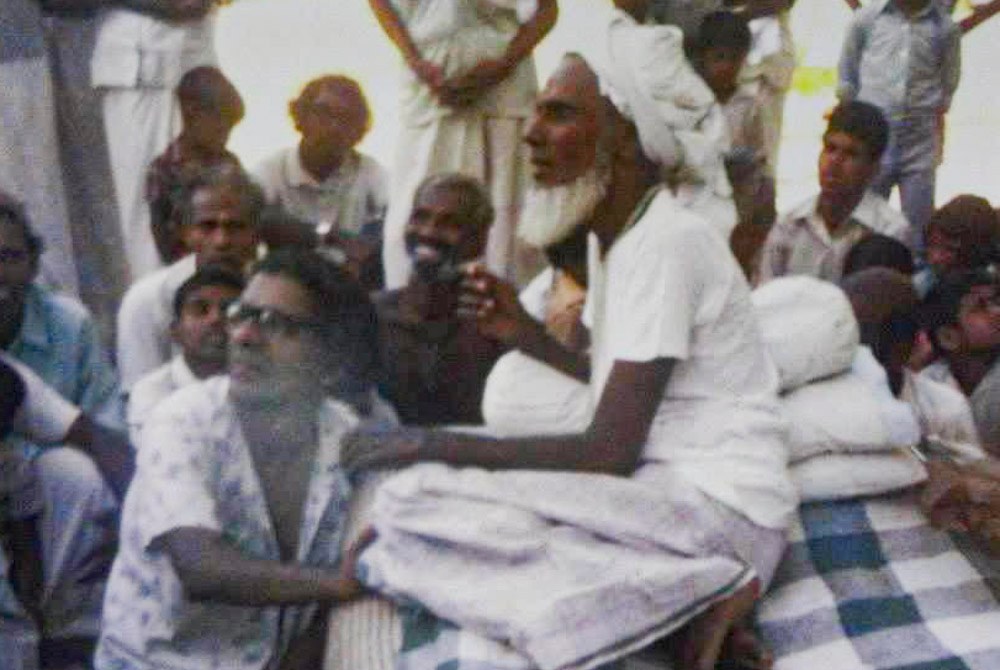
discourses emphasized direct experience, purification of
the heart, and the realization of divine qualities.
Bawa’s supermarket metaphor conveys the same insight: the ordinary mind is not unified. It is a collection of tendencies rather than a coherent self. If the mind is a marketplace of impulses, the question naturally arises: who governs it?
In Bawa’s teaching, the ordinary mind has no stable ruler. Desire, illusion, habit, and fear continually take turns managing the store. What he calls hell is not punishment but the condition of living under this unstable management.
Heaven, by contrast, appears when a different authority emerges within the human being—the awakening of wisdom. “The mind is the monkey, illusion, satan, and the baby,” warns Bawa. “That is why it will never have peace, not even for one day.”
The Bank of the Heart
Alongside the supermarket metaphor, Bawa introduces another image that clarifies the inner structure of the human being: the bank of the heart.
In his description, the human being possesses a treasury within the heart where spiritual qualities can be deposited and accumulated. Wisdom, he explains, is the money of this kingdom. The bank that holds this wealth is composed of divine qualities—love, compassion, patience, justice, and peace. These qualities form what he calls the Bank of God.
Unlike ordinary wealth, this inner currency cannot be diminished. When compassion, patience, and justice are cultivated within the heart, they are deposited into this treasury. When a person acts from those qualities, he withdraws from it. In this sense, the spiritual life resembles the management of an inner account: what we cultivate becomes our wealth.
Bawa contrasts this inner treasury with what he describes as the unstable “cooperative bank” of the body and mind. The body—formed from the elements—is subject to constant change. The mind, influenced by desire, illusion, and habit, behaves like an unstable marketplace where impulses continually trade places.
The true bank, however, is something quite different. It belongs not to the restless mind but to the deeper heart.
“The Bank of the Trustee of God is God’s Love, Compassion, Peacefulness, and Justice.” —M.R. Bawa Muhaiyaddeen
When wisdom awakens, human beings learn to deposit what Bawa calls the Treasures of Heaven—compassion, patience, justice, and peace—into this inner treasury.
Seen in this light, spiritual development is not simply a matter of belief or ritual. It is the gradual accumulation of inner wealth. Over time, the heart becomes rich in the qualities that reflect the divine.
Heaven and Hell as Inner States
Another powerful aspect of Bawa’s teaching is his reinterpretation of heaven and hell. The elemental body and restless mind belong to the world of change, conflict, and desire. This condition is what he calls hell. But the awakening of wisdom within the heart opens a different state—the state of peace.
In this sense, heaven and hell are not locations in the afterlife but conditions of consciousness experienced within human life itself.
“One is the supermarket, the cooperative store. That is hell. Hell is the state of the cooperative, or the supermarket. The other is the state of God’s Trustee, the state of His Kingdom.” —M.R. Bawa Muhaiyaddeen
This idea appears in many mystical traditions.
In early Christian writings, the “Kingdom of Heaven” is described as something found within the human being. Daoist texts speak of returning to the root of one’s original nature. Zen Buddhism points toward the recognition of one’s “original face before your parents were born.”
Though expressed in different language, these traditions point toward the same transformation: moving from confusion and fragmentation toward clarity and unity.
The Fragrance of the Heart
Perhaps the most poetic image in Bawa’s Introduction is his discussion of fragrance.
Every element of nature possesses its own scent. Roses smell like roses. Jasmine smells like jasmine. Fruits and leaves have distinct fragrances that reveal their nature.
“Man’s Fragrance is that of the Trustee of God.” —M.R. Bawa Muhaiyaddeen
Human beings, however, do not possess such a fragrance in their ordinary state. The body, he suggests rather bluntly, carries only the odor of the elements—the scent of earth rather than the fragrance of spirit.
The true fragrance of the human being does not arise from the body but from the heart.
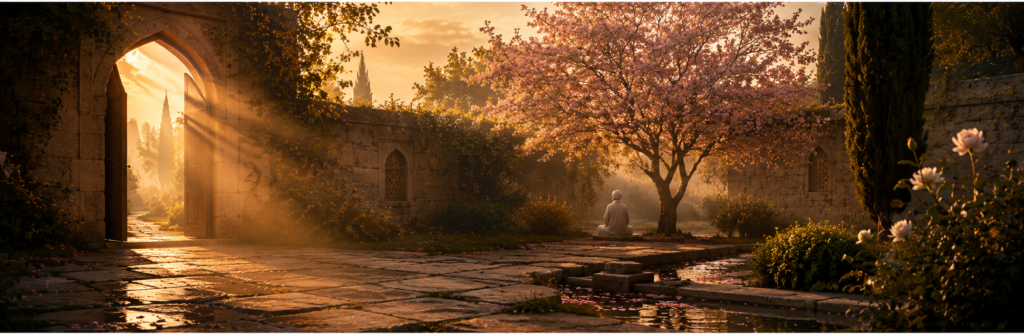
When wisdom awakens and divine qualities begin to manifest—compassion, justice, patience, and love—the heart becomes like a flower garden. From that garden a subtle fragrance emerges, a fragrance recognizable not to the senses but to the divine.
This is the meaning of Bawa’s image of the qalb, the heart that has become a blooming garden.
This should be the largest image in the article.
Bawa Muhaiyaddeen and the Garden of the Heart
The idea of the heart as a garden appears across many spiritual traditions. In Sufi literature the heart is often described as a garden that must be cultivated through remembrance and sincerity. Christian mystics sometimes describe the soul as a paradise awaiting restoration. Daoist inner alchemy refers to the body as a field or landscape in which spiritual transformation takes place.
Even Zen temple gardens, with their carefully arranged stones and raked sand, express the idea that clarity arises through the removal of unnecessary complexity.
The garden is therefore a universal metaphor for spiritual cultivation. We do not create the garden from nothing. The soil is already present. The seeds already exist. Our task is simply to clear the weeds and allow what is natural to grow.
“That Form is called the Qalb, the Flower Garden… the Lotus of the Heart, the Rose Flower.” —M.R. Bawa Muhaiyaddeen
Divine Analytic Wisdom
At the center of Bawa’s teaching is the idea of Divine Analytic Wisdom.
“God has created Divine Analytic Wisdom so that this can be understood.” —M.R. Bawa Muhaiyaddeen
This wisdom is not intellectual knowledge. It is a form of perception that allows one to see clearly what is real and what is illusion. Through this faculty the human being can distinguish between the impulses of the mind and the deeper qualities of the heart.
In Islamic thought this faculty resembles ʿaql, the divine intelligence placed within the human being. In Daoism it parallels the clarity that emerges when one returns to alignment with the Dao. In Zen it is sometimes described as direct seeing into one’s own nature.
“Divine Analytic Wisdom… distinguishes, separates, and sees.” —M.R. Bawa Muhaiyaddeen
Without this wisdom, spiritual practices themselves can become mechanical. Words, chants, or rituals may be repeated endlessly without producing peace. Only when wisdom awakens does the deeper transformation occur.
Mantra, Sound, and the Question of Repetition
One section of Bawa Muhaiyaddeen’s Introduction introduces a striking warning about sound and repetition.
After describing the many sounds made by animals and the elemental world, he cautions against using such sounds as spiritual formulas. As he writes:
“If one uses those sounds as mantras [chants, formulas, or incantations], he can never achieve peace. Peace will never come to one in that state.” —M.R. Bawa Muhaiyaddeen
At first glance this position can feel surprising. Bawa Muhaiyaddeen was a Muslim Sufi, and Islamic devotional practice itself is deeply rooted in repetition through dhikr, the remembrance of God.
Across many contemplative traditions sacred phrases are repeated rhythmically: Om So Hum in yogic practice, Om Mani Padme Hum in Tibetan Buddhism, Namu Amida Butsu in Pure Land Buddhism, and the sacred phrases of Islamic remembrance, including Allahu Akbar.
Seen in this wider context, mantra itself does not appear to be the problem. The issue may instead be mechanical repetition without understanding.
When Bawa compares certain sounds to animal cries, he may be pointing toward the unconscious patterns of the mind—the endless repetition of fear, desire, pride, resentment, and self-concern. These repetitive mental patterns function almost like involuntary mantras that continually reinforce the supermarket of the mind.
In that sense, the real question is not whether a sound is repeated, but what state of consciousness is repeating it.
A Closing Reflection
Reading texts such as Bawa Muhaiyaddeen’s can sometimes feel overwhelming because of their symbolic density. Yet when the metaphors are examined carefully—and placed beside the insights of other contemplative traditions—a coherent vision begins to appear.
Across Sufism, Daoism, Zen, and many other paths, the same essential insight repeats itself in different forms: The human being carries within himself both the turmoil of the world and the seed of divine clarity.
“Know what is wrong and what is Right. Then the Trustee of God’s Peace will understand who is the trustee to which kingdom.” —M.R. Bawa Muhaiyaddeen
The work of life is simply to recognize the difference—and to cultivate the garden where peace can grow. There is also another lesson I have gradually begun to understand while reading Bawa’s teachings.
His responses are often delivered through metaphor, yet those metaphors do not always appear to answer the question that was asked. At first this can be confusing. A student may ask one question and receive a story about animals, fragrances, banks, or gardens.
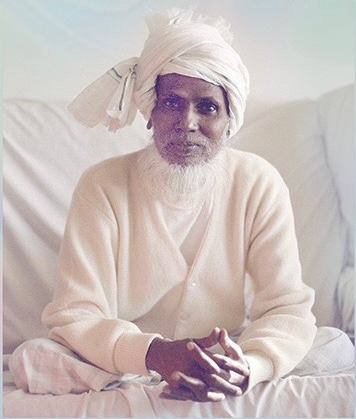
But as several of Bawa’s longtime students have explained to me, the answer may not always be directed only to the person asking the question. Sometimes the teaching addresses something deeper that the questioner himself may not yet see. At other times the story may be directed toward others in the room who need a different lesson entirely.
In that sense, the metaphor may not be an explanation of the question—it may be a teaching aimed at the deeper condition of the listener.
For those of us trained to analyze and interpret everything intellectually, this can be challenging. More than once Bawa’s students have gently reminded me: listen with the heart, not only with the mind. Do not become too attached to the question. Remain open to the possibility that a different teaching is being offered.
Perhaps this is why Bawa speaks through gardens, banks, animals, and fragrances rather than philosophical definitions. Metaphor bypasses the rigid structures of the analytical mind and points toward something more intuitive.
The mind may continue to resemble his supermarket—full of voices, instincts, and impulses gathered from the world. Yet beneath that restless surface the heart remains capable of becoming a garden.
Cultivation begins simply by learning to distinguish—moment by moment—between what belongs to the noise of the elements and what belongs to the deeper fragrance of wisdom within the heart. And when that distinction becomes clear, even briefly, the garden begins to open.
“When that Flower blooms, God will come and He will take that Trustee, that Fragrance, into His Kingdom.”
—M.R. Bawa Muhaiyaddeen
About the Text
This reflection is based on Bawa Muhaiyaddeen’s Introduction to The Guidebook to the True Secret of the Heart (Vol. 1). While written from a Sufi perspective, many of the themes explored in this reflection—original nature, inner cultivation, discernment, and transformation—find parallels across Daoist, Buddhist, and contemplative traditions.
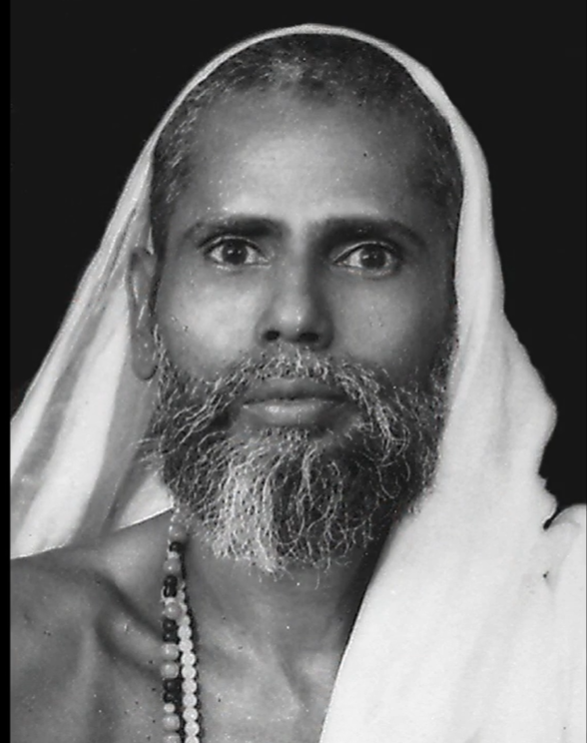
“The Guidebook to the True Secret of the Heart” is a seminal two-volume spiritual text by the Sufi mystic M.R. Bawa Muhaiyaddeen. It explores the esoteric path of divine love, teaching that true peace and the true secret of the heart cannot be found by the mind, but only within the pure light of the soul. Click here to look inside the book and read the Introduction.
To learn more about Bawa, visit The Bawa Muhaiyaddeen Fellowship website.
With special gratitude and appreciation to Michael King, Kythe Heller, Jonathan Granoff, and Maryam Kabeer for reviewing drafts and offering their insightful feedback. Meechum Andu.
Continue Exploring