
Entering the Hand
A simple practice of settling attention into sensation
by Mark V. Wiley
Many contemplative traditions invite us to begin with something close at hand: the felt experience of the body. Meditation is often imagined as a struggle against thought. Yet another approach is to give attention somewhere to rest. As a form of body awareness meditation, instead of trying to quiet the mind, we become curious about sensation.
We use our hands throughout the day, but rarely pause to feel them from within. Warmth, pressure, texture, and subtle movement usually remain in the background. When we attend to these sensations, thoughts may continue, but they may no longer occupy the foreground.
The purpose of this practice is not to control the mind or produce a special state. It is to explore the difference between thinking about the hand and directly sensing it.
The hand becomes the doorway.
The Practice
Allow three to five minutes. Sit comfortably and let your breathing move naturally. Raise one hand where you can see it easily, supporting your elbow or forearm so that your shoulder can remain relaxed. You can also rest the hand on your lap, palm upward.
There is no particular sensation to produce. If the hand feels ordinary or difficult to sense, begin there. Whatever you notice is enough to work with.
1- Begin with Looking
Let your gaze rest gently on the hand. For a few breaths, simply observe its shape, the lines of the palm, and the small movements of the fingers. There is no need to analyze what you see. When thoughts draw your attention away, gently return to looking.
2- Feel the Palm
Now shift your attention from sight to sensation. You may keep your eyes open or allow them to close. Bring awareness to the palm of the hand and notice the contact of air, clothing, or the surface beneath it. Perhaps you feel warmth, coolness, pressure, or a faint tingling. Stay for a few breaths, allowing the sensations to be as clear or as subtle as they are.
3- Explore the Fingers
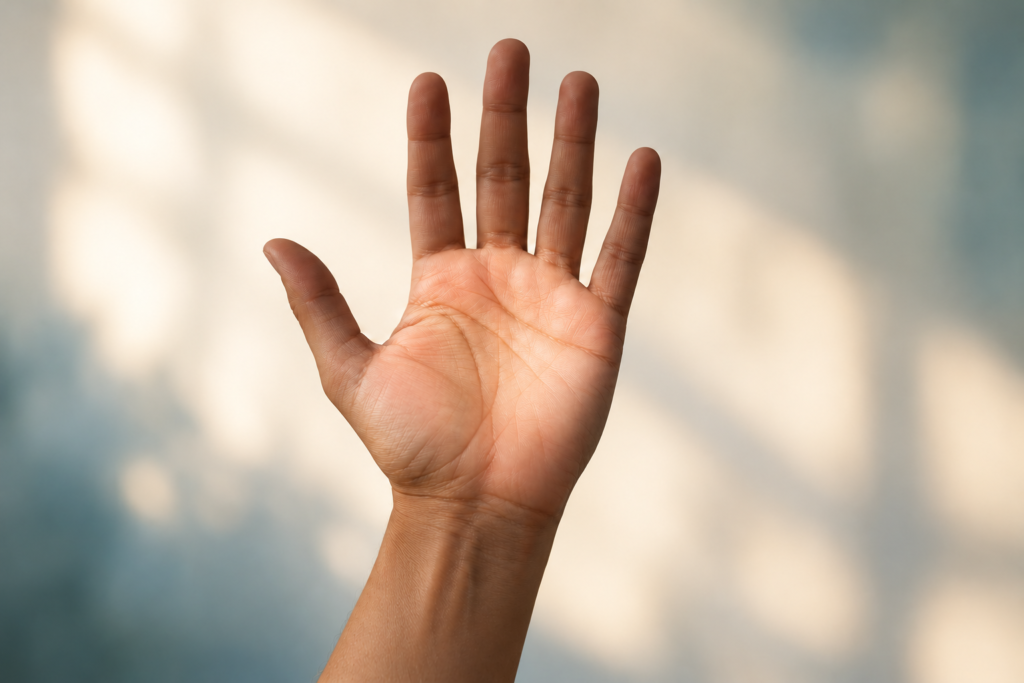
Move your attention slowly through the fingers, one at a time. Notice what you can actually feel: contact between the fingers, warmth, pressure, or the position of a joint. You do not need to picture the anatomy. Let sensation guide your attention.
Then bring awareness to the fingertips. You may notice pulsing, vibration, or very little at all. If you find yourself searching for something more, return to the simplest sensation available.
4- Sense the Whole Hand
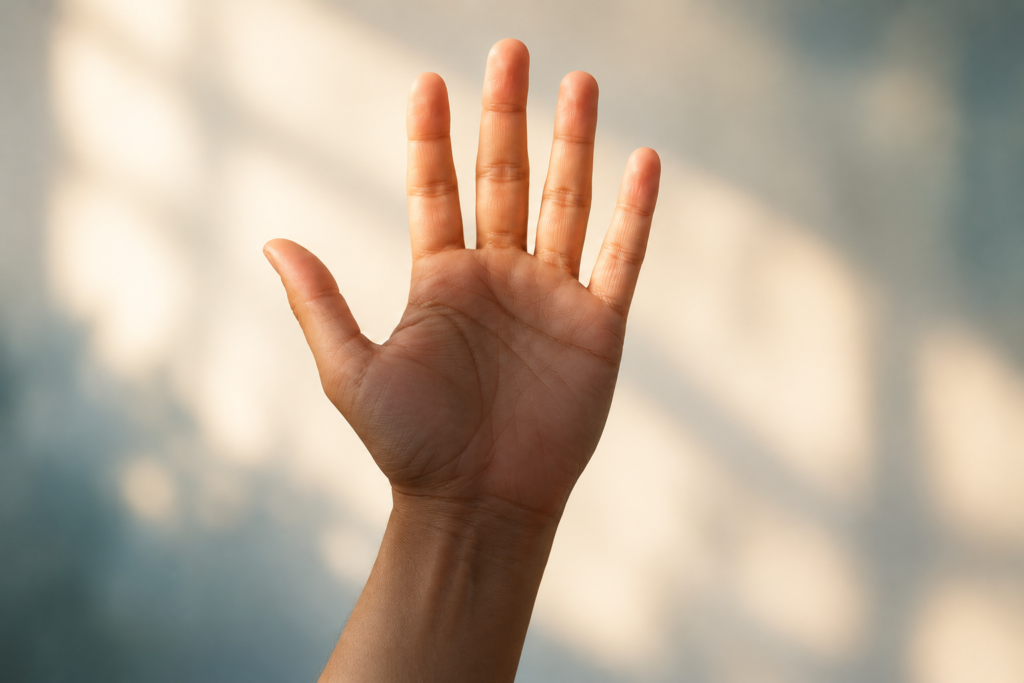
Bring attention to the back of the hand. Notice its contact with the air or any surface supporting it. Then allow awareness to include the whole hand: palm, fingers, fingertips, and back of the hand together. Without trying to imagine its interior, explore whether you can sense the hand as a whole, from within.
Some people notice a gentle pulsation or a feeling of expansion and contraction. It may resemble the slow movement of a jellyfish in water. Others notice steady warmth, a diffuse sense of presence, or no clear change. None of these experiences is required. There is no need to match the description.
Simply feel what is here.
5- Rest with the Sensation
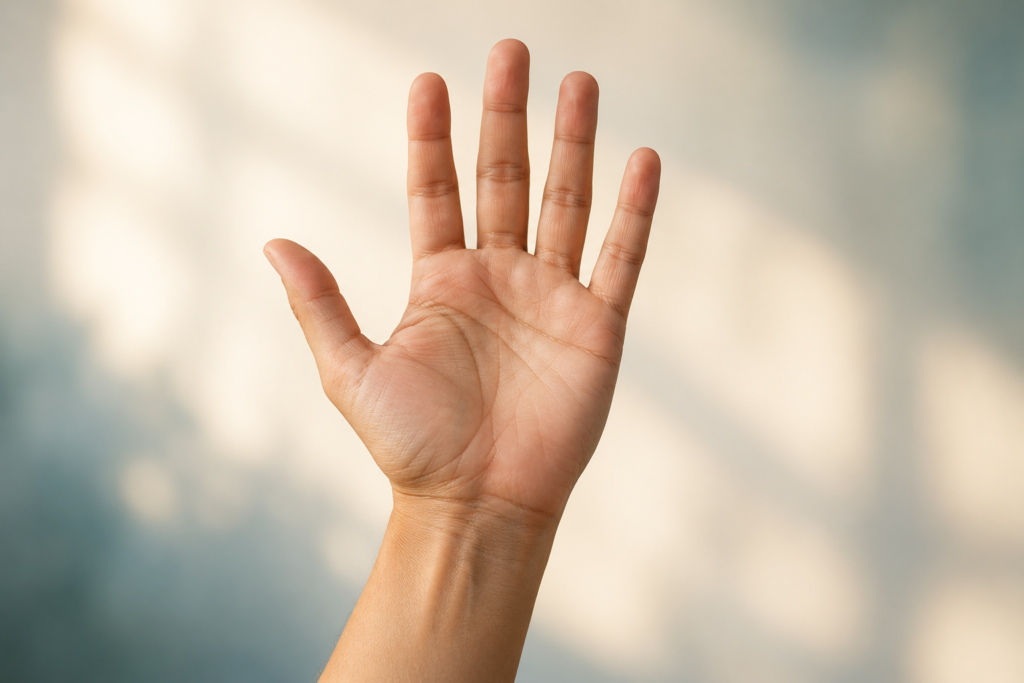
For a minute or two, let attention remain with the whole hand. You do not need to hold attention rigidly in place. When it wanders, return gently. Let the hand be an invitation rather than a demand.
At times, the distinction between observing the hand and feeling it may seem less pronounced. You may spend less time describing the experience to yourself and more time sensing it directly. Or thoughts may remain active. That, too, can be part of the practice. Notice them, then return to the hand.
When you are ready, let the hand rest comfortably. Allow attention to widen to include both hands, your feet, and the support beneath your body. Take a moment to notice how you feel, without requiring anything to have changed.
Parallels in Contemplative Practice
The shift from thinking about experience to attending to it directly has parallels in contemplative practice. The phrase “turning the light around,” associated with the classic book, The Secret of the Golden Flower, offers an evocative image for this shift. Here, we can use it to suggest bringing attention back from its habitual outward involvement toward the immediacy of our own experience.
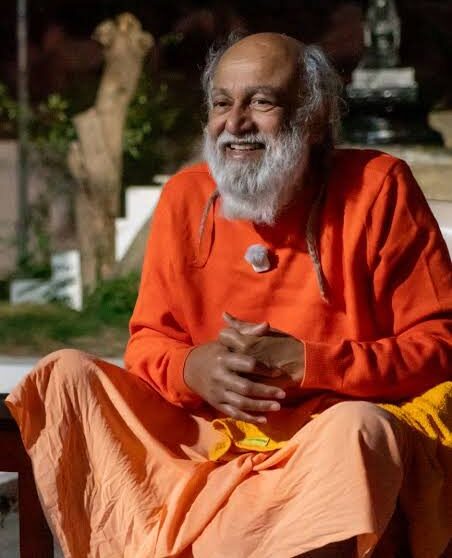
Shiva Rudra Balayogi offers another perspective through his distinction between the mind’s capacity to think and its capacity to watch. As attention becomes absorbed in watching, he explains, thinking gradually subsides:
“You are simply watching so that you become quiet.” —Shiva Rudra Balayogi
In his teaching, watching ultimately turns toward the mind itself, without an external object. This hand exercise begins with something tangible: looking at the hand, then attending to its felt presence. The parallel lies in exploring how attention can rest in experience without continually describing or interpreting it.
A related attitude appears in Sōtō Zen’s practice of shikantaza, or “just sitting.” Its practice instructions encourage allowing thoughts to arise and pass without pursuing or struggling against them. Shikantaza does not direct attention toward a particular object, but its invitation to leave thoughts alone offers a useful parallel to sensing the hand without becoming absorbed in commentary about it.
These practices differ in their methods and aims. Here, they offer perspectives on a simple exploration: beginning with the hand as something we look at and discovering how it feels from within. There is no particular state to achieve. We pause, attend, and notice what is here.
Closing Reflection
We do not always need to begin meditation by asking the mind to become still. We can begin with a form of body awareness meditation: the warmth of a palm, the pressure of a fingertip, or the quiet presence of a hand resting in the lap. These ordinary sensations give attention somewhere to settle.
Stillness may come. Thoughts may continue. Either way, we can practice returning to what is immediately here. The doorway into stillness is not always hidden in complex techniques or elaborate philosophies. Sometimes it is already attached to us.
Your hand is one such doorway.
Continue Exploring