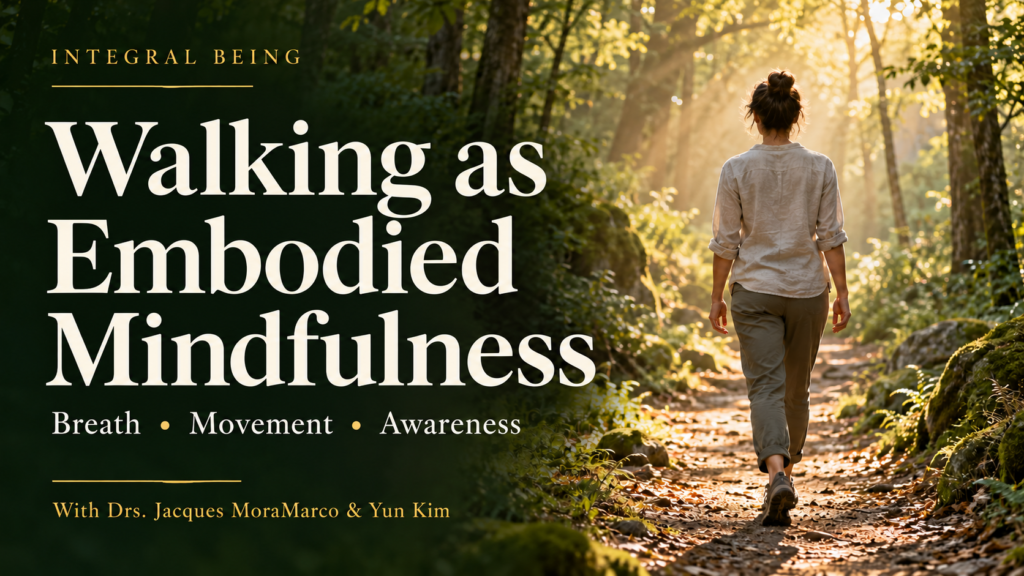
Woman walking along a sunlit forest path beside the title “Walking as Embodied Mindfulness” and the words “Breath, Movement, Awareness.”

Walking as Embodied Mindfulness

Walking offers a simple way to reconnect body, breath, and attention. Drawing on an Integral Being conversation with Dr. Jacques MoraMarco and Dr. Yun Kim, this article explores how ordinary steps become a practice of embodied mindfulness.
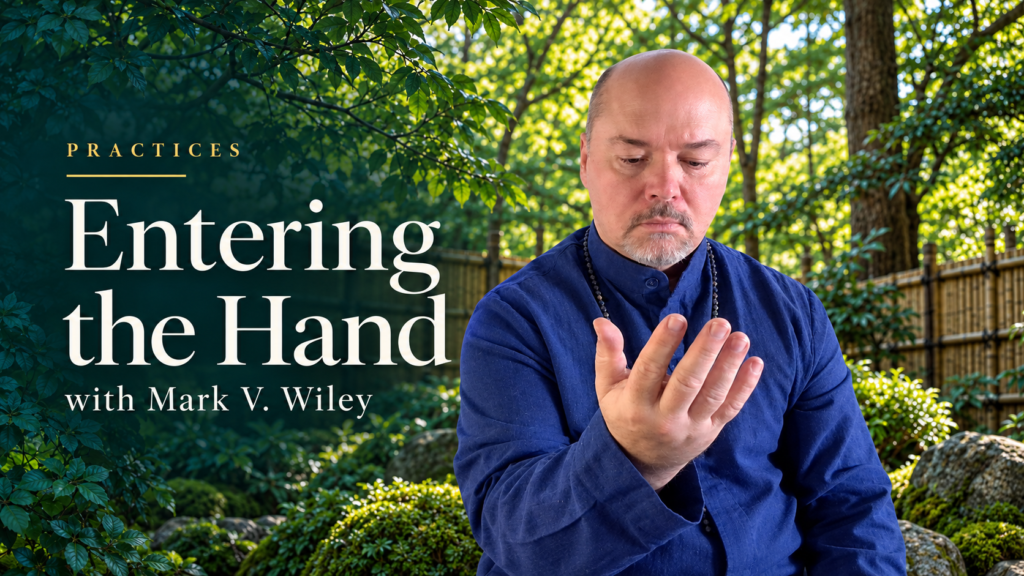
Entering the Hand: a body awareness meditation with Mark V. Wiley, shown observing his raised hand in a garden setting.

Entering the Hand

Writing

A simple body awareness meditation that begins with the hand. Through looking, feeling, and resting with sensation, explore the difference between thinking about the body and experiencing it directly.

Mark V. Wiley demonstrating coordinated hand positioning in his training room for Practice 6: Integrated Presence in Action.

Practice 6: Integrated Presence in Action

Bring breath, movement, and awareness together through sitting, pausing, and standing. Practice 6 develops integrated presence as posture, effort, and support change.

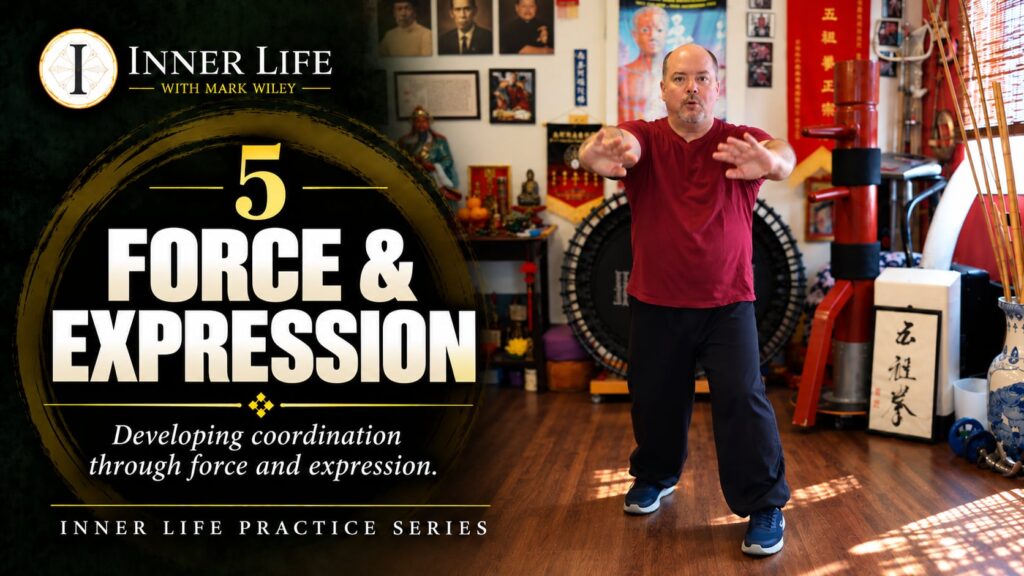
Mark Wiley demonstrating a standing movement with both arms extended for Inner Life Practice 5: Force and Expression.

Practice 5: Force & Expression

Practice 5 brings posture, breath, attention, and intention into a structured movement sequence. Explore gathering and expressing force while maintaining whole-body awareness through changes in direction, effort, and support.

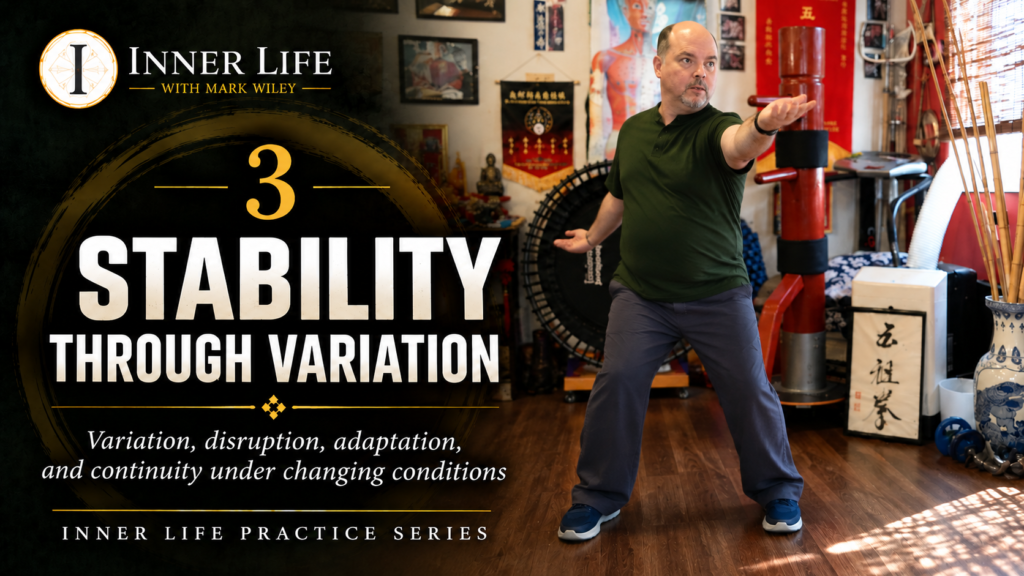
Mark V. Wiley demonstrating Practice 3, Stability Through Variation, an Inner Life practice for developing adaptation and continuity under changing conditions.

Practice 3: Stability Through Variation

Practice 3 introduces variation into rhythm, breath, movement, and attention. Through disruption and reorganization, continuity gradually develops into adaptive stability.

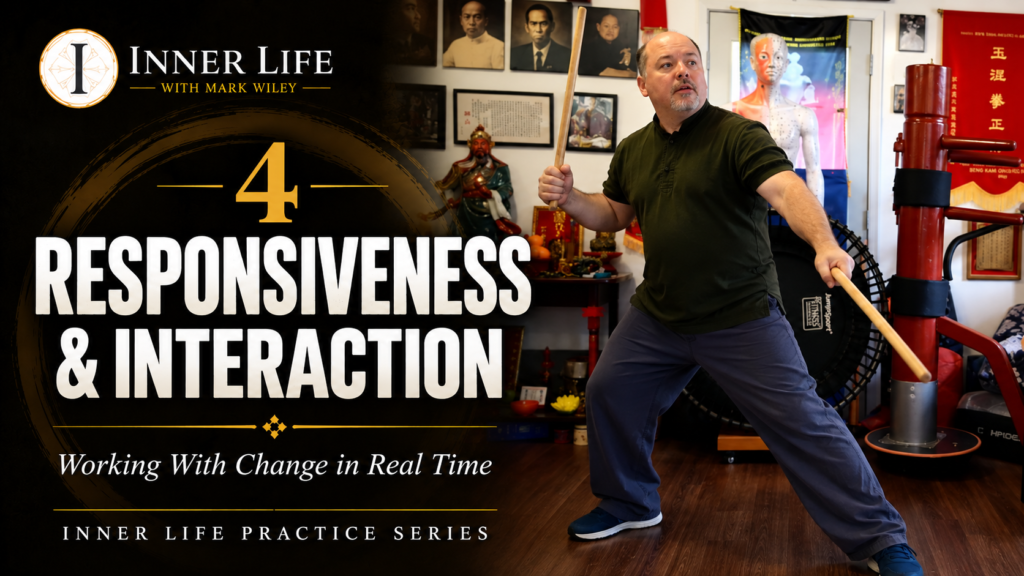
Mark Wiley practicing with two sticks in Inner Life Practice 4, Responsiveness & Interaction.

Practice 4: Responsiveness & Interaction

Practice 4 introduces interaction through coordinated two-stick movement. Develop timing, proprioception, spatial awareness, and the ability to remain organized while responding to change.

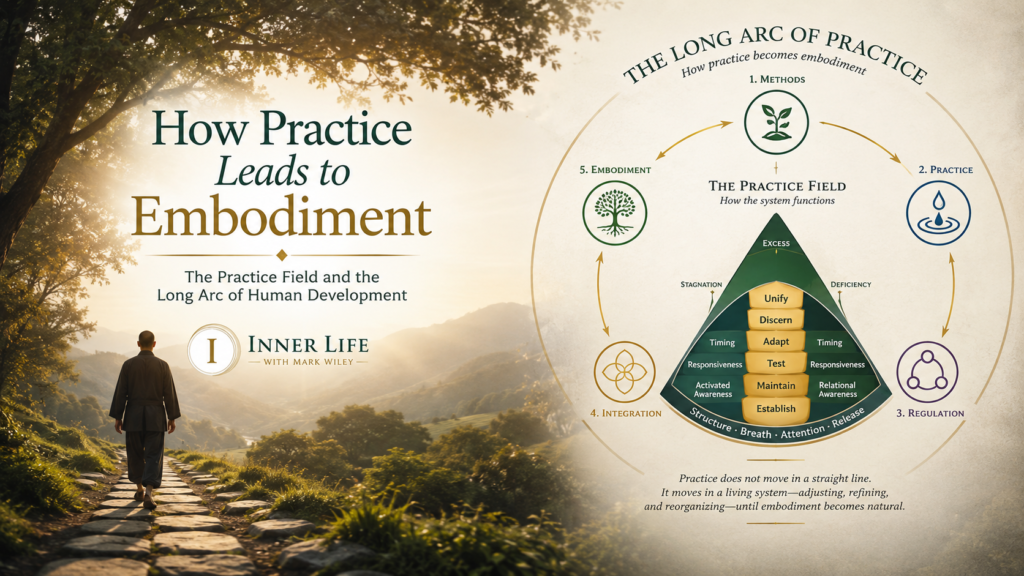
Illustration of how sustained practice leads to embodiment through the Practice Field and the Long Arc of Practice, showing the gradual development of integration, regulation, and embodied awareness.

How Practice Leads to Embodiment

Why do some people practice for decades yet experience little real transformation? This article explores how the Practice Field and the Long Arc of Practice reveal the living process through which sustained practice gradually becomes embodiment.

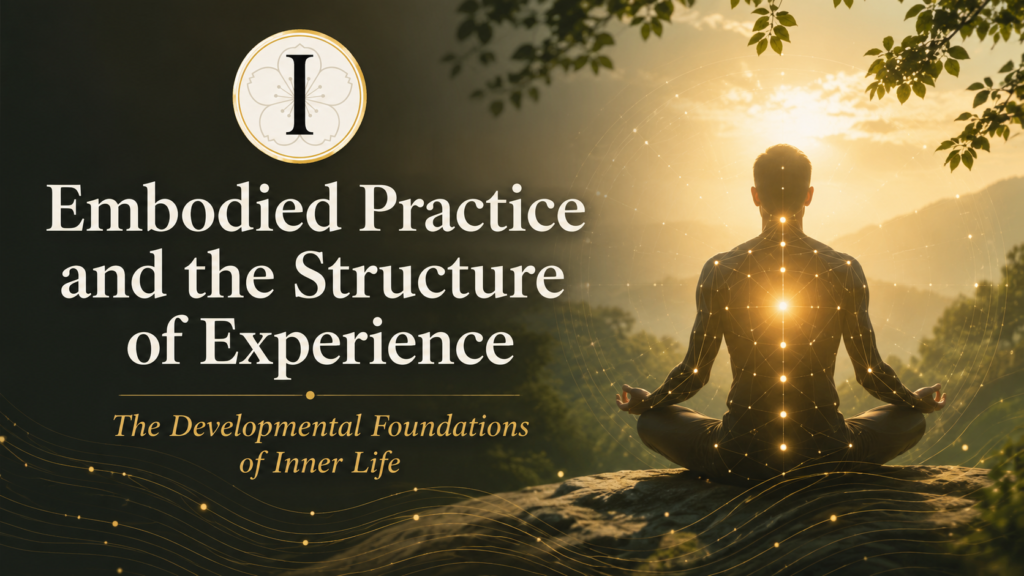
Embodied practice and the structure of experience illustrating awareness, embodiment, continuity, and integration within the Inner Life developmental framework.

Embodied Practice and the Structure of Experience

mbodied Practice and the Structure of Experience explores how human beings reorganize themselves through practice. Discover the developmental foundations of Inner Life, including embodiment, awareness, continuity, entrainment, regulation, and integration, and learn why direct experience remains essential for lasting transformation.

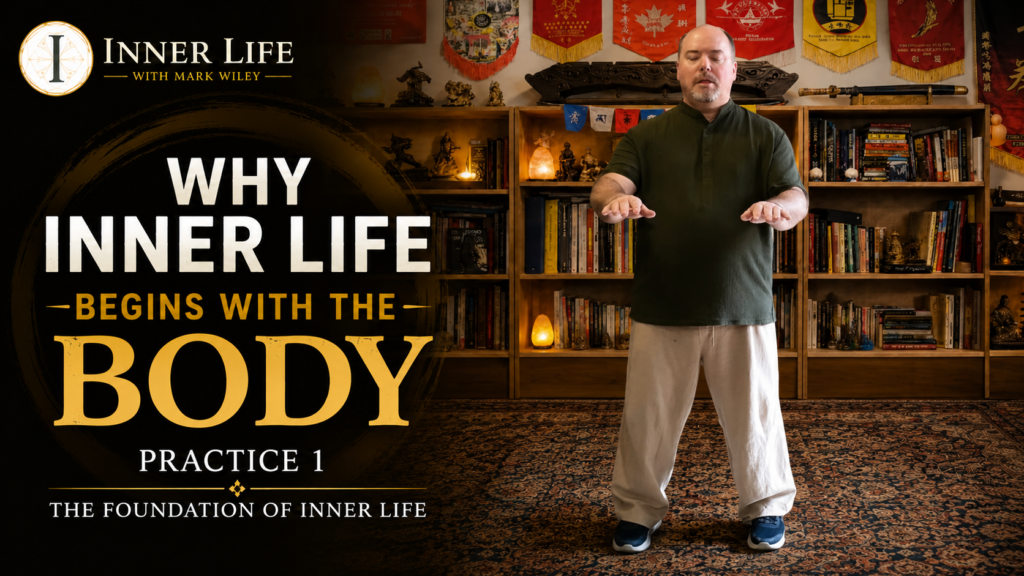
Mark Wiley demonstrates the foundational standing practice in Practice 1, explaining why inner life begins with the body through embodied awareness and stillness.

Practice 1: Returning to the Soma

Practice 1 restores sensory continuity through standing awareness, breath, sensation, and non-doing. Rather than attempting to change experience, the practitioner learns to remain present to it.

At first, the practice may feel simple. Even uneventful. Yet beneath that simplicity, important changes begin to occur. Body, breath, and attention gradually shift from functioning as separate processes toward operating as a more unified whole.