
Organized Within
How body, breath, attention, and action work together when they are needed
by Mark V. Wiley
Organization is one of the most frequently used terms within the Inner Life System. I use it when discussing posture, movement, breathing, attention, emotional regulation, and our ability to remain present under pressure. Because the word appears across so many dimensions of practice, it deserves a clear explanation.
Organization involves more than physical alignment, a collection of skills, or the simultaneous presence of desirable qualities. We may possess strength, sensitivity, concentration, and experience without those capacities working together when we need them. What matters is how they come into relationship in the moment, allowing us to perceive what is happening and respond appropriately.
To be organized means that structure, breath, sensation, attention, emotion, intention, and action function together in relationship with the situation. Their arrangement changes according to what is needed. The organization that supports quiet standing must adapt when we begin walking, receive unexpected pressure, or enter a difficult conversation.
This makes organization a living capacity that can be observed through participation. Its significance becomes apparent in how we move, perceive, and respond as circumstances change.
Inner Organization Is Relationship
Consider what happens when we stand quietly. The feet receive support from the ground, the legs support the pelvis, and the spine rises above that support. Breathing changes pressure throughout the torso, while vision, the sense of balance, and bodily sensation contribute information about our position. Attention participates by registering what is happening within and around us.
These functions continually influence one another. A change in breathing can alter muscular effort, while a shift in attention can affect balance and the way we hold ourselves. When these relationships function well, standing may feel stable, comfortable, and responsive. We may describe the experience as alignment, coherence, or centeredness.
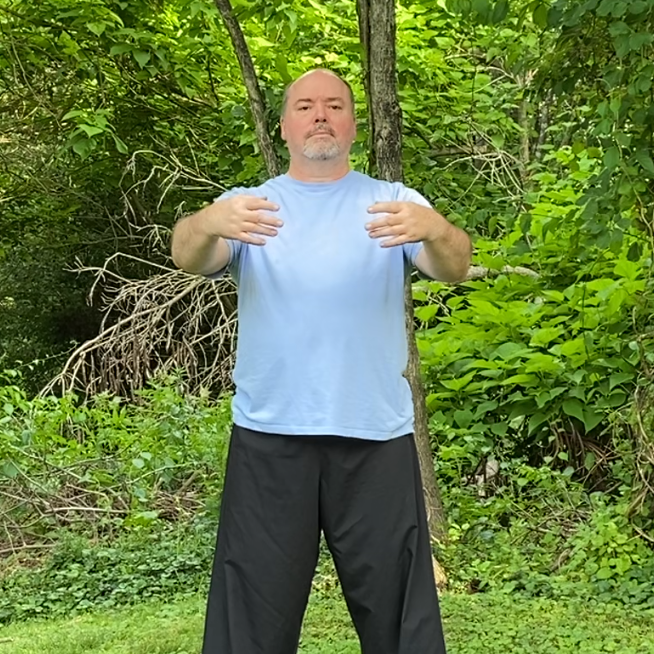
Each of those words identifies something useful, but organization concerns how the qualities work together. A person can appear structurally aligned while feeling psychologically overwhelmed. Someone may feel emotionally centered while holding unnecessary muscular tension, or remain physically steady while attention is too narrow to recognize a changing situation. Organization asks whether the relationships among these functions support what is happening now.
How Pressure Reveals Inner Organization
Organization becomes easier to recognize when conditions change. Someone applies force, we lose our footing, or unexpected news interrupts the day. A challenging conversation can expose the same underlying question as a physical disturbance: what happens to the relationships within us when the familiar arrangement is disrupted?
Perhaps breathing stops, the shoulders rise, and attention narrows. Thinking may accelerate while movement becomes restricted or emotion begins directing the response. These changes reveal how we organize ourselves under pressure. They also show which capacities remain available and which become difficult to access.
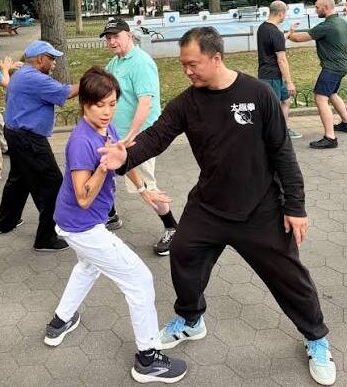
This is one reason appropriately applied pressure is valuable in martial arts practice. A person may look beautifully aligned while standing alone, yet lose that organization as soon as a partner introduces force. The posture’s appearance tells us only part of the story. Contact reveals whether support, movement, breathing, and perception can continue working together.
The useful inquiry extends beyond whether a position can be maintained. We want to discover whether its organization can adapt to a real relationship. That gives both teacher and practitioner something concrete to observe and refine.
Stability Requires Adaptation
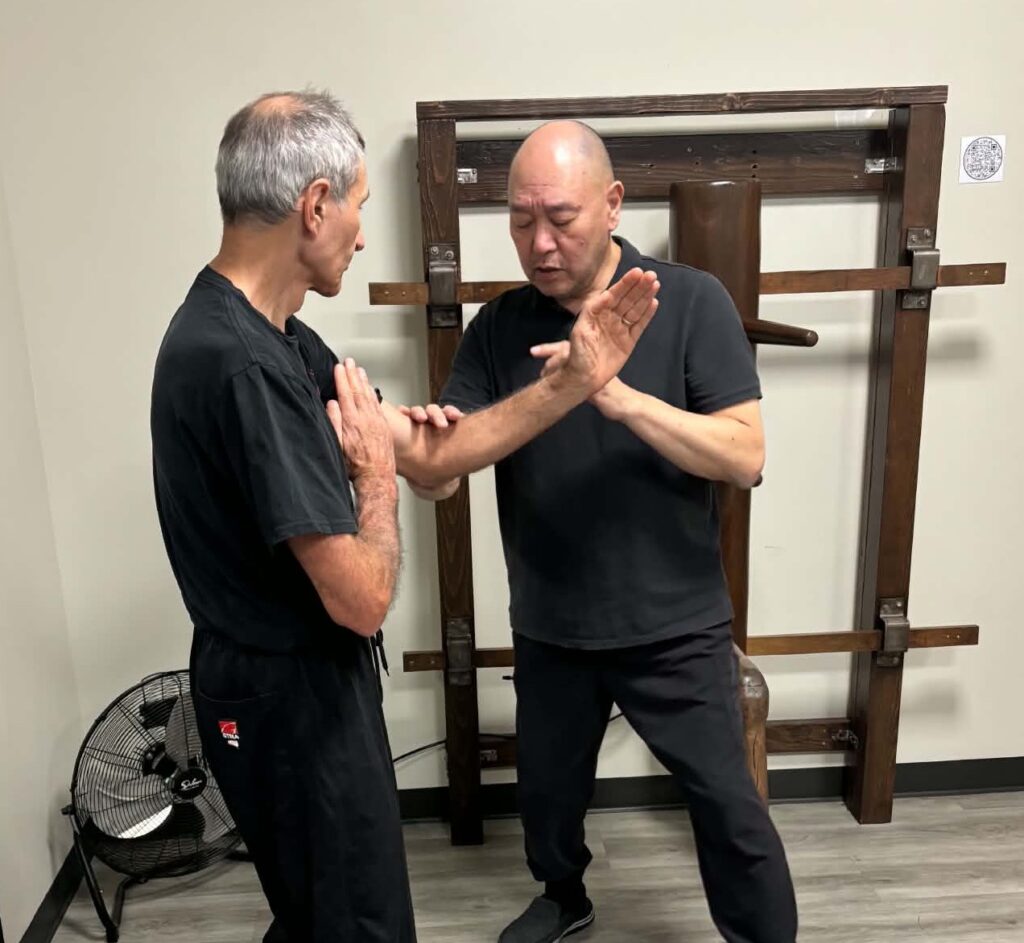
We often try to become stable by preventing change. We brace the body, hold a preferred posture, control the breath, suppress emotion, or concentrate harder. These strategies may create a temporary sense of security, particularly when the disturbance is predictable. Their limitations become apparent when circumstances require a different response.
Imagine someone pushing against your arm. Bracing may initially resist the pressure, but a change in its direction can leave you unable to adjust. The effort used to preserve the position has reduced your options. What felt strong under one condition becomes restrictive under another.
A more adaptable organization allows the feet, legs, pelvis, and spine to respond together as pressure changes. Breathing can continue, attention can register the new direction, and movement can redistribute support. The structure changes so that its functional relationships can be maintained or recovered. Stability emerges through those adjustments.
The same principle applies beyond physical training. During disagreement, we may need to reconsider an interpretation, recognize an emotional response, or pause before speaking. Remaining organized includes having enough flexibility to make those changes while staying engaged with the conversation.
Centered, Aligned, Coherent, and Organized
Centered, aligned, coherent, and regulated are useful terms within practice, but they emphasize different aspects of experience. Centered may describe a felt relationship with support or composure. Aligned may describe how structures relate, while regulated concerns the ability to respond to changing demands. Organization brings these qualities into the practical question of how the whole person is functioning.
Can structure, breath, sensation, attention, emotion, intention, and action continue participating together? Can the capacities relevant to this situation become available at the appropriate time? These questions help us distinguish possessing a quality from being able to use it within a changing relationship.
In martial arts, organization may become visible through efficient movement and appropriate timing. In meditation, it may appear as the ability to remain present without continually struggling against experience. During conversation, it can mean hearing something difficult while retaining the capacity to listen and choose a response. The outward expressions differ because the situations require different forms of participation.
No single arrangement is suitable for every circumstance. Organization includes recognizing what is needed and allowing our capacities to coordinate accordingly. Its value lies in the relationship between what we have developed and what we can actually bring to the moment.
Organized and Available
This is why I often pair the words organized and available within Inner Life. Organization needs to support our capacity to receive information, make adjustments, and respond. When maintaining order becomes the overriding concern, we may begin excluding the very experiences through which development could occur.
We can create predictable conditions by repeating familiar practices, controlling the environment, or avoiding situations that expose uncertainty. Within those conditions, we may feel remarkably centered. Yet we have learned relatively little about whether that centeredness remains functional when the environment changes. Availability becomes apparent when something unfamiliar enters.
An organized martial artist retains the ability to move and perceive while receiving pressure. A contemplative practitioner remains receptive to experience even when it is uncomfortable. In ordinary life, availability may involve recognizing that our preferred strategy is no longer helping and being willing to try another. Organization supports these possibilities by keeping relevant capacities accessible.
Disturbance can still occur. We may become tense, defensive, confused, or emotionally activated, and recognizing those changes is part of the work. What matters is whether we can remain sufficiently in relationship to sense what is happening and begin reorganizing.
From Practice to Embodied Capacity
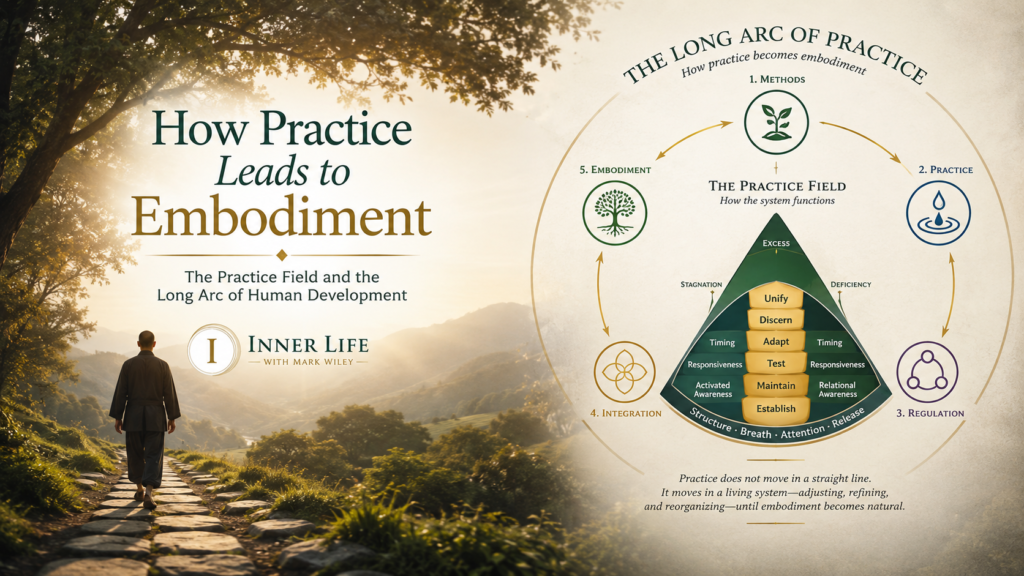
A practice can help organize us through its particular conditions. Standing practice may bring posture, support, and attention into relationship. Breath practice can reveal how breathing interacts with effort and sensation, while meditation offers opportunities to examine attention and our relationship with thought. Martial training introduces changing demands through movement, timing, and contact.
These experiences matter because they make relationships perceptible and trainable. With repetition, we may become more capable of recognizing unnecessary effort, restoring attention, or adjusting our structure. But a further question concerns how readily those capacities transfer beyond the conditions in which they were learned. Their availability in life tells us something about what has become embodied.
Can breathing remain accessible during conflict? Can awareness include the body when emotion intensifies? Can we perceive a change in circumstances before repeating a familiar response? These inquiries help us examine whether practice is developing a capacity that can function across situations.
Transfer often requires deliberate exploration. We may need to vary a practice, introduce manageable uncertainty, or notice the same relationships during everyday activity. Through that process, we learn how to recover organization as well as how to establish it. Development includes becoming more skillful when continuity is interrupted.
Integration Becomes Visible
This also helps clarify the relationship between organization and integration. Integration describes the developmental process through which capacities become more closely connected and mutually supportive. Organization describes how those relationships function in a particular moment. What has developed over time becomes observable through present action.
A practitioner may have cultivated attention, structural sensitivity, and breathing awareness through different methods. Their integration becomes apparent when those capacities inform one another during movement or pressure. The person can feel a change, adjust support, and continue responding without having to manage every element separately. Organization expresses the coordination that practice has made possible.
When this coordination breaks down, the disruption provides information. It may reveal a capacity that is difficult to access, a relationship that needs further development, or a demand that exceeds what we can currently manage. It can also show how fatigue, stress, and unfamiliarity affect what is available. These observations give practice a specific direction.
The aim is to recognize what happened with enough clarity to work with it. We can adjust the conditions, reduce the demand, and explore the relationship again. Recovery and refinement become part of development rather than evidence that development has failed.
The Question Changes
Much of training begins with questions about correctness. We want to know whether the posture is appropriate, the movement is accurate, or the breathing follows the instruction. These questions provide useful guidance while we learn to recognize the elements of a practice. Over time, their value deepens when we connect them with function.
We begin asking what happens to our organization when conditions change. Does the posture support adjustment? Does attention remain broad enough to receive new information? Can what we have learned contribute to an appropriate response in the moment it is needed?
These questions move the inquiry toward living capacity. We are developing the ability to remain coherent, responsive, and available within circumstances that continually change. That includes moments of disruption, when organization has to be recognized and recovered rather than simply maintained.
Within Inner Life, being organized means that our capacities can work together in relationship with what is happening. Alignment, skill, and experience contribute to this, but their significance depends on how they become available within life. Through practice, we learn to coordinate what we have developed and bring it to the situations that need it.
“Organization is integration made available in the moment.” —Mark V. Wiley
Want guidance with your own practice? Work with Mark 1-on-1 to begin or deepen your practice, work through difficulties, and further your personal development.

1-on-1 guidance to help you begin or deepen your practice, work through difficulties,
and further your personal development—bringing what you cultivate into everyday life.

Continue Exploring