
Standing Practice and the Organization of the Human System
How stillness, structure, breath, and awareness restore continuity within the body and nervous system.
by Mark V. Wiley
Modern life conditions human beings toward constant movement, stimulation, and fragmentation. Attention is continuously drawn outward. Breathing becomes shallow and irregular. Thought operates almost without interruption, while direct sensory contact with the body gradually diminishes. For many people, stillness itself becomes uncomfortable.
Yet throughout contemplative, martial, healing, and internal traditions, standing practice emerged as one of the simplest and most direct methods for restoring continuity between body, breath, attention, and perception. Though outwardly uncomplicated, the practice has been used for centuries to cultivate structural organization, nervous system stability, embodied awareness, and sensitivity to internal experience.
Within Inner Life, standing practice is approached neither as exercise nor as an esoteric technique. It is a practical method for restoring relationship with the living body. What begins as standing gradually becomes sensing. What begins as observation becomes participation. Over time, awareness, physiology, breath, and structure begin functioning together rather than separately.
This movement does not occur all at once. It unfolds through a recognizable process that carries the practitioner from fragmentation toward greater continuity and integration.
The Arc of Embodied Integration
Standing practice can be understood as a progressive movement through several interconnected stages of human organization. What begins as simple stillness gradually reveals fragmentation within the system. Through sustained attention, awareness turns inward, restoring interoception and direct contact with bodily experience. As perception deepens, physiological processes begin reorganizing themselves through breath, posture, circulation, and nervous system regulation. Over time, this process supports greater regulation, coherence, and integration across the body, mind, and nervous system.
“Integration is not achieved directly. It emerges through the progressive reduction of fragmentation.”
—Mark V. Wiley
The progression may be summarized as:
Stillness → Fragmentation → Interoception → Physiology → Regulation → Integration
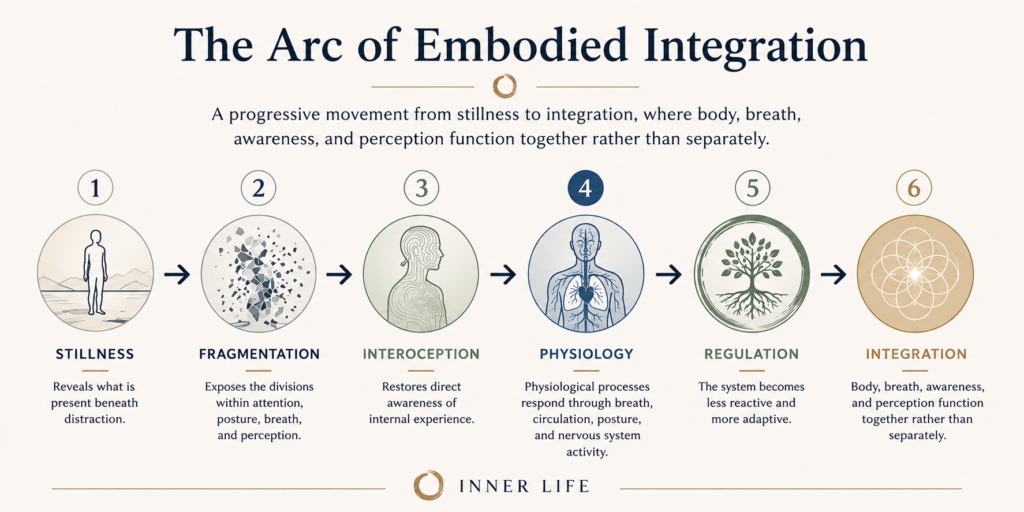
fragmentation toward embodied awareness, physiological regulation, and integration.
- Stillness reveals what is present beneath distraction.
- Fragmentation exposes the divisions within attention, posture, breath, and perception.
- Interoception restores direct awareness of internal experience.
- Physiology begins responding through changes in breathing, circulation, posture, and nervous system activity.
- Regulation emerges as the system becomes less reactive and more adaptive.
- Integration develops as body, breath, awareness, and perception function together rather than separately.
This sequence is not strictly linear. Practitioners may move back and forth between stages repeatedly. Yet over time, standing practice tends to support a gradual movement from fragmentation toward greater continuity within the human system. Moreover, this progression points toward what I mean by embodiment: not simply sensing the body more clearly, but developing capacities that remain available beyond the practice itself. I examine that distinction in What Embodiment Actually Means.
Why Stillness Feels Difficult
This creates a strong bridge between the opening discussion of standing practice and the deeper physiological and contemplative sections that follow. It also reinforces one of the central themes of Inner Life: integration is not achieved directly; it emerges through the progressive reduction of fragmentation.
The moment external stimulation decreases, the system often reveals its underlying instability:
- restless thinking
- compulsive adjustment
- emotional agitation
- postural tension
- shallow breathing
- loss of attention continuity
Many people cannot simply stand quietly without immediately attempting to fix posture, control breathing, or chase relaxation. This tendency creates further division within the system.
Standing practice interrupts this habit by creating a space in which awareness can observe experience directly rather than immediately attempting to change it. Rather than imposing another layer of control, the practitioner gradually learns to sense what is already occurring:
- weight
- contact
- imbalance
- breathing
- effort
- tension
Awareness begins moving from abstraction into direct participation. The body is no longer treated as an object to optimize or dominate. It becomes something lived from within.
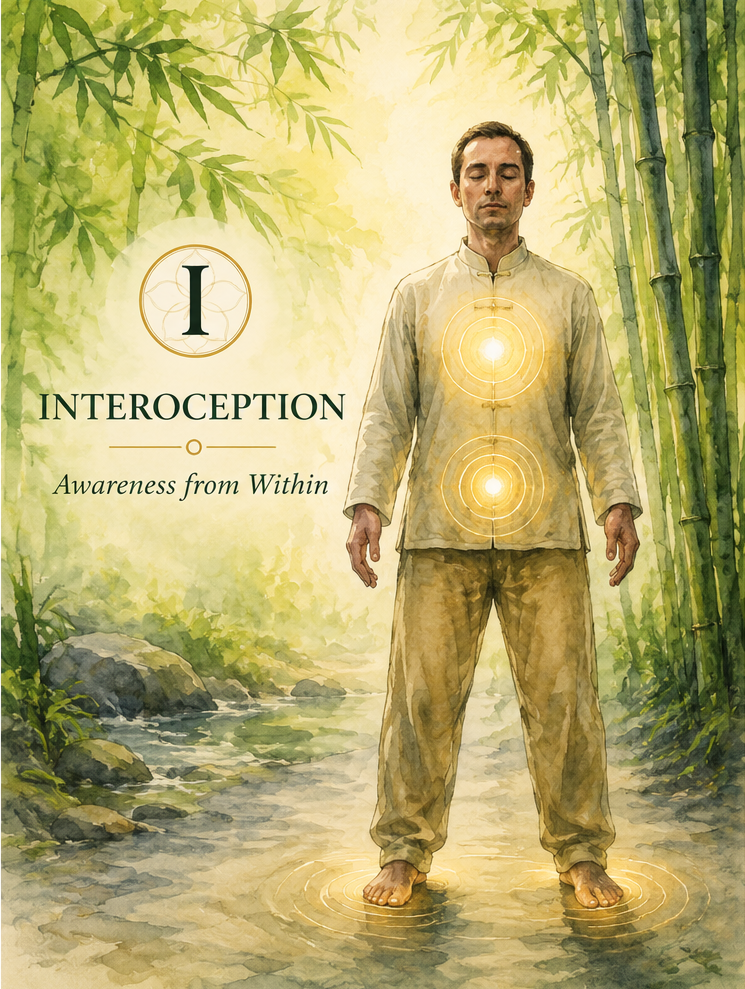
As practice deepens, attention and bodily sensation begin stabilizing together. This is significant because most people experience attention as disconnected from the body. Thinking occurs “up here,” while the body exists vaguely “down there.” Standing practice gradually reduces this division.
Breathing becomes less mechanical and more responsive. Excess tension begins releasing without force. Balance becomes less rigid and more adaptive.
The practitioner gradually discovers that awareness itself can organize physiology — not through domination, but through relationship.
The Physiology of Stillness
Although standing practice emerged long before modern physiology, contemporary research increasingly helps explain why sustained stillness under gentle load produces regulatory effects throughout the body.
“The body reorganizes not merely through effort, but through the transition from effort into release.”
—Mark V. Wiley
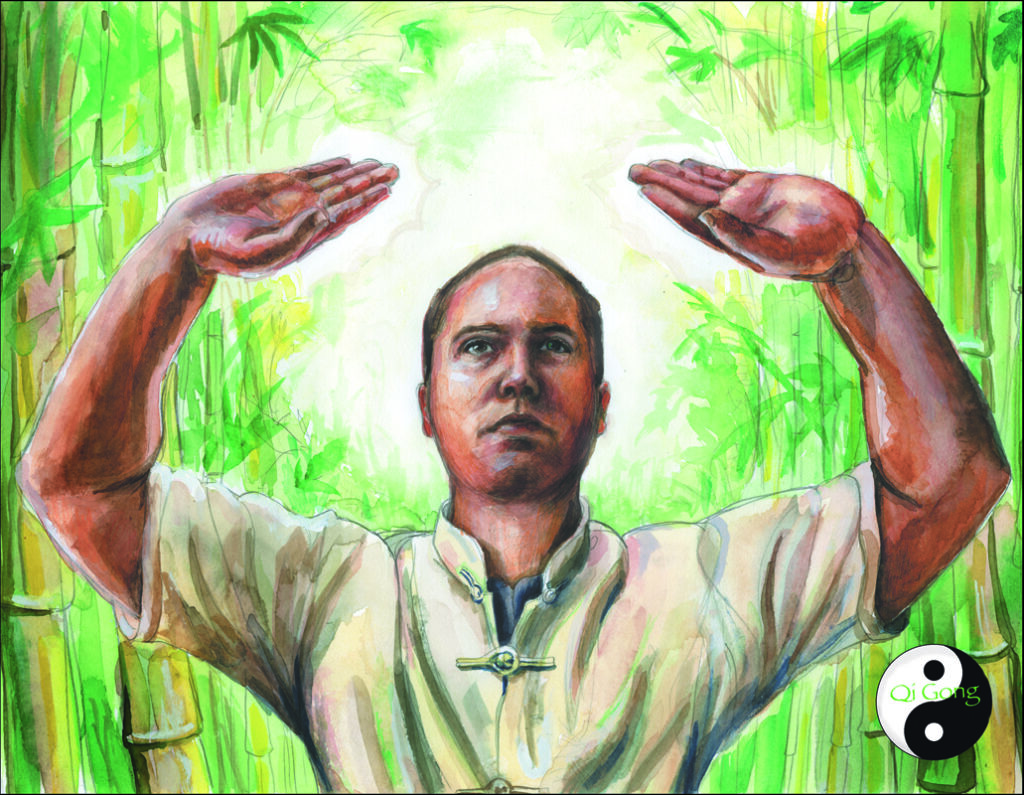
During sustained muscular engagement, blood flow within certain tissues becomes partially restricted through compression. When the body softens or the hold ends, circulation rapidly returns through a rebound process known as reactive hyperemia — a post-release vascular surge associated with nitric oxide activity, vascular relaxation, and systemic settling.
In simple terms, much of the therapeutic effect appears to occur after the release. The body reorganizes not merely through effort, but through the transition from effort into release, a principle recognized experientially within many traditional systems long before modern physiology could describe it scientifically.
Standing, Breath, and Nervous System Regulation
Standing practice also profoundly affects breathing patterns and autonomic regulation.
Most modern breathing becomes shallow, upper-chest dominant, and stress-reactive. Sustained standing with relaxed awareness often gradually restores more natural respiratory behavior without forced breath manipulation.
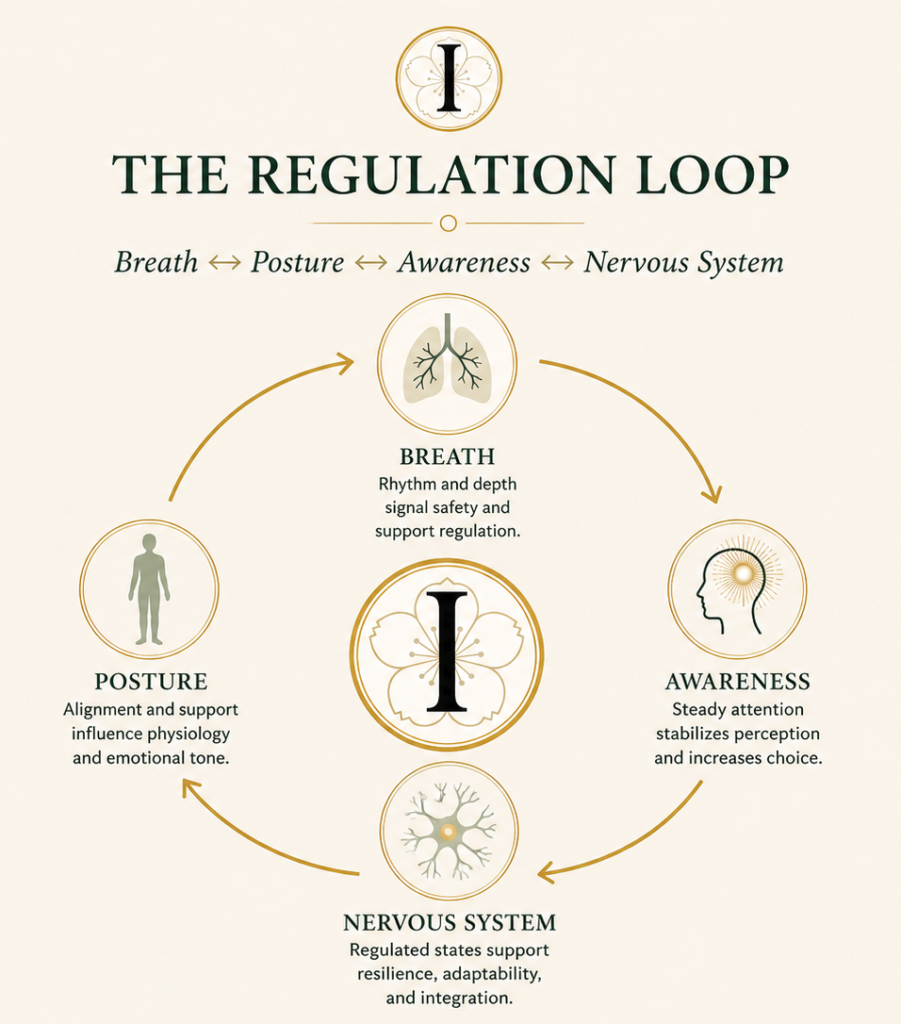
Many people attempt to control themselves into relaxation. Standing practice instead allows the system to gradually settle through relationship with gravity, structure, breathing, sensation, and awareness.
Over time, practitioners often notice quieter internal activity, reduced agitation, increased sensory continuity, and greater steadiness under stress.
Structure, Aging, and Postural Integrity
Standing practice may become even more important with age.
Modern sedentary life dramatically reduces the amount of sustained structural loading the body experiences. Over time this contributes to muscular atrophy, postural collapse, balance decline, reduced connective tissue resilience, and diminished circulation.
Research increasingly shows that lower-body strength and postural integrity are closely associated with long-term mobility, independence, and cardiovascular health.
Sustained standing and isometric loading appear to support:
- quadriceps strength
- connective tissue adaptation
- joint stability
- balance systems
- circulation efficiency
- postural organization
Equally important, standing practice develops awareness within structure. The practitioner gradually becomes more capable of sensing unnecessary effort, asymmetry, collapse patterns, and compensatory holding. As posture becomes more responsive and integrated rather than mechanically imposed, support distributes more evenly throughout the body and less force is required to remain upright. The result is a system that becomes both softer and stronger simultaneously
Standing Practice Within Inner Life
Within Inner Life, standing practice is not treated as an isolated technique. It is part of a broader process of embodied integration.
The purpose is not merely better posture, endurance, or relaxation — though these may occur. The deeper function is the restoration of continuity within the human system.
“Stillness becomes less about remaining motionless and more about becoming internally continuous.”
—Mark V. Wiley
Standing practice helps develop the foundational capacities underlying all deeper work:
- structure
- breath
- attention
- release
As these begin functioning together rather than separately, practice changes in quality.
What initially feels like “doing an exercise” gradually becomes inhabiting the body differently, perceiving differently, and responding differently.
This marks the beginning of embodied development. The aim is not performance, achievement, or another form of self-improvement as identity construction. Rather, it is the gradual reduction of fragmentation through sustained relationship with direct experience. As this process unfolds, stillness becomes less about remaining motionless and more about becoming internally continuous.
Enter Practice 1
Understanding standing practice intellectually is valuable, but its deeper effects can only be discovered through direct experience. Practice 1A—Returning to the Soma provides a simple entry point into the process described throughout this article.
Through standing, breathing, sensing, and allowing, the practitioner begins restoring continuity between body, breath, awareness, and perception.
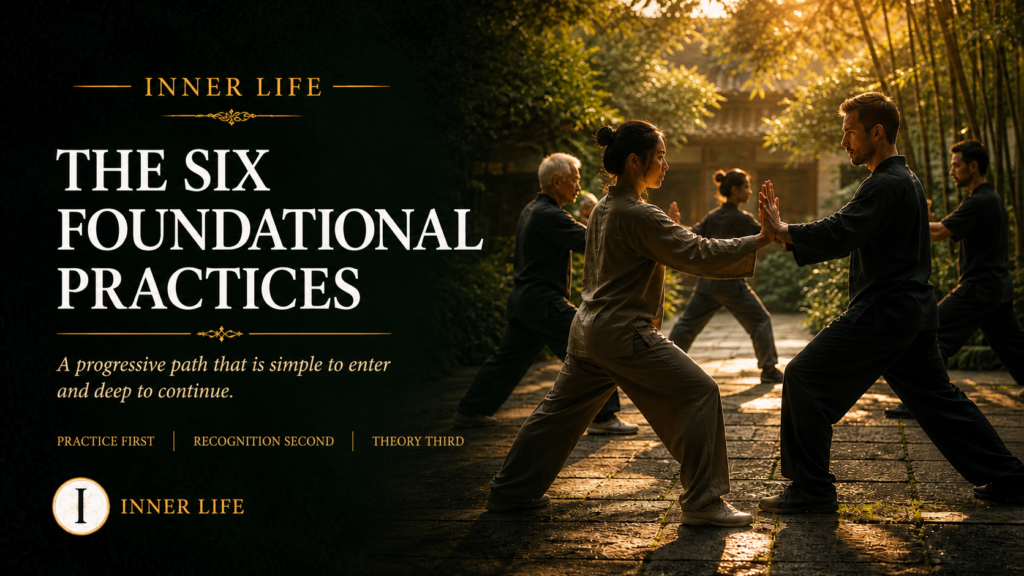
Explore the Foundational Practices
Practice 1 is only the beginning. The Inner Life Foundational Practices are designed to develop awareness, regulation, embodiment, and integration through direct experience.
Scientific research relating to this practice
- Research on interoception from Cleveland Clinic
- Research on autonomic regulation from National Institutes of Health
- Research on heart rate variability from Harvard Health Publishing
Continue Exploring Transformative Practice