
What Remains When Style Falls Away
On Tai Chi, transmission, and what continues beneath form
by Mark V. Wiley
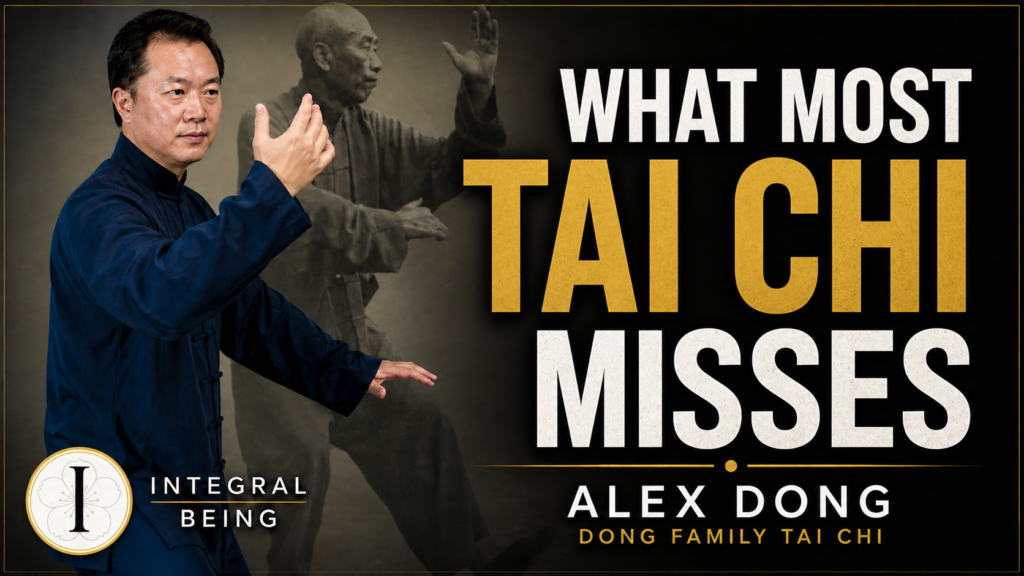
This reflection explores Tai Chi principles beyond style—looking beneath form, lineage, and terminology toward what remains when systems fall away. Drawing from the teachings of Alex Dong, fourth-generation lineage holder of Dong-style Tai Chi Chuan, and my Integral Being conversation with him, it reflects on the principles that continue beneath tradition, method, and form.
There are moments in conversation where something subtle shifts. You begin speaking about one thing—but what is actually being revealed is something else entirely. My dialogue with Alex Dong had that quality. What began as a discussion of lineage, form, and tradition gradually opened into something deeper—something that had less to do with Tai Chi as a system, and more to do with what continues beneath all systems.
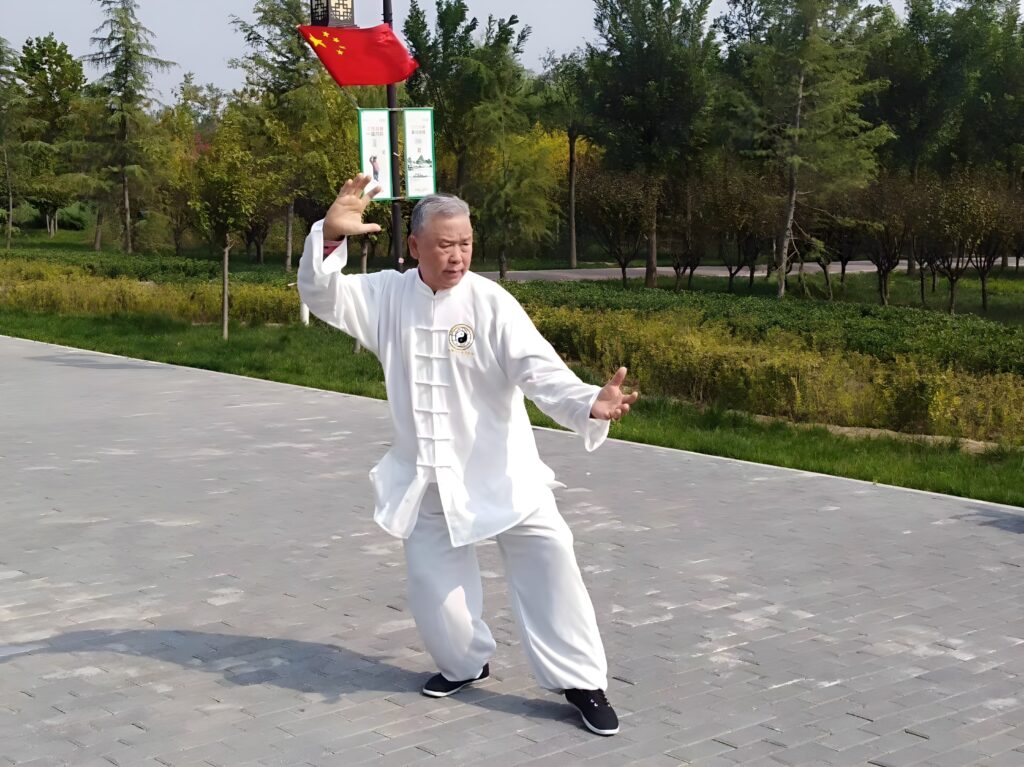
We started, as many of these conversations do, with history—his family’s connection to Yang style, the evolution across generations, and the relatively recent adoption of the name “Dong style.” But what stood out was not the lineage itself. It was what existed before the lineage needed a name.
For most of that history, what they were doing was not labeled as something separate. It was simply practiced, lived, and transmitted. Only later did it require identity—for the sake of communication, preservation, or recognition.
“What is most fundamental does not begin as identity. It becomes identity later.” —Sifu Alex Dong
We started, as many of these conversations do, with history—his family’s connection to Yang style, the evolution across generations, and the relatively recent adoption of the name “Dong style.” But what stood out was not the lineage itself. It was what existed before the lineage needed a name.
For most of that history, what they were doing was not labeled as something separate. It was simply practiced, lived, and transmitted. Only later did it require identity—for the sake of communication, preservation, or recognition.
“What is most fundamental does not begin as identity. It becomes identity later.” —Sifu Alex Dong
Tradition as Living Continuity
Listening to Alex Dong describe how the system evolved across generations, it became clear that change was never seen as deviation. Each generation contributed—refining, adjusting, deepening—while maintaining continuity of principle. The forms shifted, the methods expanded, and the expression evolved, but the underlying logic remained intact.
We often think of tradition as something to be preserved exactly as it was handed down. What emerged here was something more alive: not the preservation of form, but the preservation of understanding. The outer structure changes because it must, while the inner coherence remains because it is recognized.
“Not the preservation of form—but the preservation of understanding.” —Sifu Alex Dong
That distinction reaches far beyond Tai Chi—it applies to any path where form risks being mistaken for what it was meant to reveal.
Tai Chi Principles Beyond Style
At one point, Alex made a simple observation: internal and external arts may begin from different places—but they arrive at the same place . It’s easy to hear that and move on, but it carries weight.
If that is true, then the divisions we emphasize—style, method, terminology—are secondary. What matters is not where something starts, but whether it leads you into direct contact with how the body actually functions, how movement organizes itself, and how attention shapes action.
Over time, surface differences begin to dissolve. What remains are patterns:
• timing
• structure
• responsiveness
• continuity
These are not owned by any system. They are not inventions. They are simply there—waiting to be recognized.
“What remains are patterns—timing, structure, responsiveness, continuity.” —Sifu Alex Dong
Correctness as Alignment
Another thread ran quietly through the conversation—one often overlooked in modern practice: the question of correctness. Not correctness as imitation or rigid adherence to form, but correctness as alignment.
There is a tendency today to approach something like Tai Chi casually. If the movement looks approximately right, it is considered sufficient. But what Alex pointed to is something else entirely.
When something is done correctly, it is not just visually accurate—it is functionally coherent. It changes the experience of the body. You feel it immediately. Movement becomes more efficient. Balance becomes more stable. Energy becomes more continuous.
“Correctness is not imposed from the outside. It is recognized from within.” —Sifu Alex Dong
From Form to Function to Perception
At the beginning, the form feels like the practice. You are trying to remember it, replicate it, perform it. It feels like the thing itself.
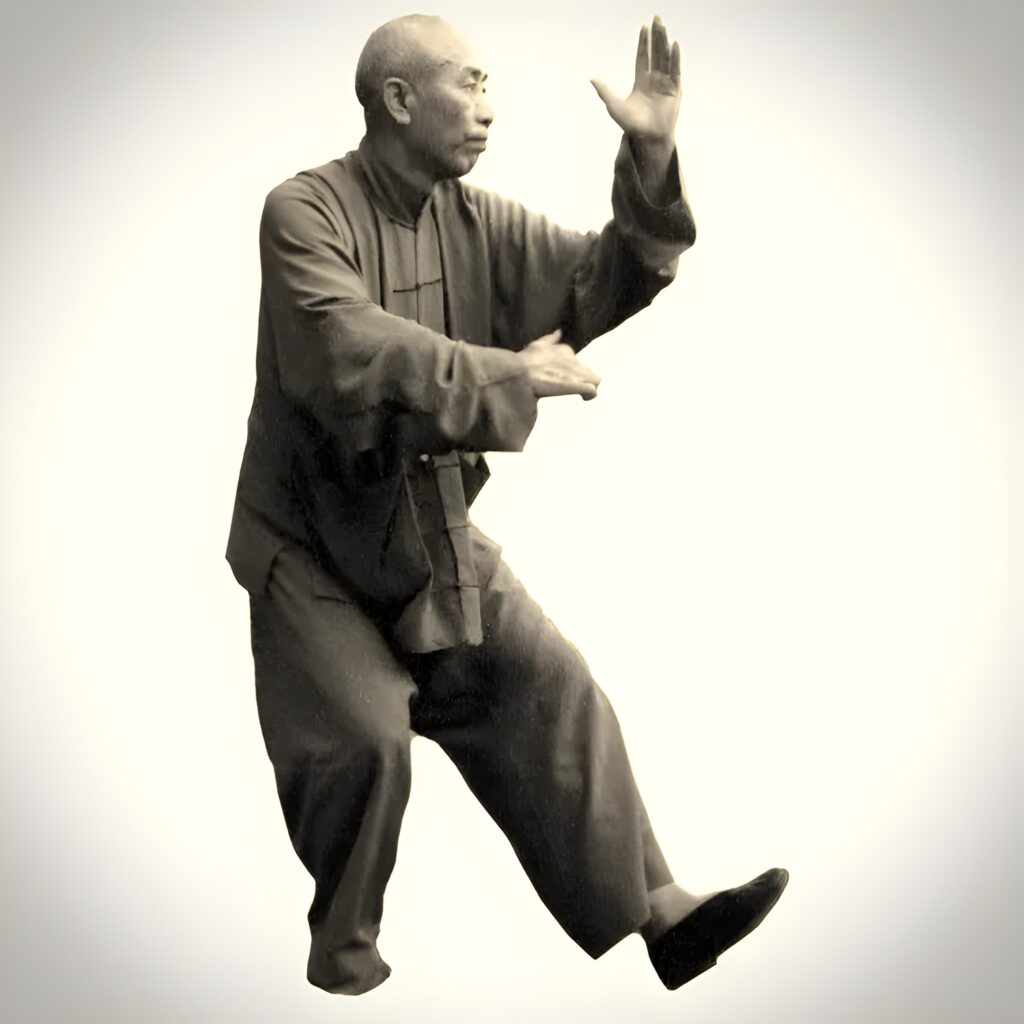
But if you stay with it—if practice continues with enough depth and clarity—something begins to shift. You start to notice what the form is doing to you: how it reorganizes your balance, refines your sensitivity, and stabilizes attention. Eventually, the form becomes secondary. Not irrelevant—but transparent. A vehicle through which something deeper becomes visible.
There was a moment in the conversation where this became unmistakable: internal processes do not need to be manufactured. They emerge when conditions are correct . This runs counter to how most of us are conditioned to learn. We are taught to produce results—to make things happen, to impose structure from the outside. But this points in another direction:
Less imposition.
More recognition.
“Internal processes do not need to be manufactured. They emerge when conditions are correct.” —Sifu Alex Dong
What Remains
After the conversation, what stayed with me was not a set of techniques, or even specific insights. It was a shift in orientation. Less concern with style. More attention to principle. Less attachment to form. More sensitivity to what the form reveals.
And perhaps this is what remains when style falls away.
Not emptiness—but something more stable than any system. Something that does not belong to a lineage, even as it is carried through one. Something that does not need to be preserved—only seen clearly enough that it continues.
Tai Chi beyond style is ultimately less about preserving movements and more about recognizing what the movements reveal—ultimately pointing toward recognition rather than imitation.
“What remains when style falls away is not emptiness—but something more stable than any system.” —Sifu Alex Dong
Watch Alex Dong’s Integral Being Conversation
Explore More Cultivation