Awareness Does Not Equal Embodiment
with Robert Noah
Aikido, Tai Chi, embodiment, and the relationship between awareness, regulation, and lived experience
In this Integral Being dialogue, Mark Wiley speaks with Bob Noah about embodiment,
regulation, and the internal arts. The conversation explores the difference between awareness,
experience, and lived transformation through Aikido and Tai Chi practice.
The conversation around Bob Noah Awareness vs Embodiment explores one of the central questions of internal martial arts and contemplative practice: what is the difference between awareness and embodiment? What actually changes through practice?
This question sits quietly beneath many martial, contemplative, and meditative traditions, yet it is rarely examined directly. Techniques can be learned. Movements can be memorized. Philosophies can be discussed endlessly. But genuine embodied transformation involves something deeper than intellectual understanding or physical repetition alone.
Drawing from nearly six decades of Aikido training and more than 50 years in Tai Chi, Bob Noah explores the hidden dimensions of these arts—not merely as systems of movement or self-defense, but as vehicles for refining perception, reorganizing the nervous system, and stabilizing presence under pressure.
“There’s a distinction between awareness and experience.” —Bob Noah
That distinction becomes one of the central themes running throughout the conversation.
Bob Noah on Awareness and Embodiment
One of the most important insights Bob Noah shares is the difference between conceptual awareness and lived experience. A practitioner may intellectually understand the principles of an art and even experience moments of clarity or insight, yet still fail to embody those principles under pressure.
This is where many forms of training quietly reveal their limitations.
Under stress, tension often returns. The nervous system contracts. The body loses continuity. Attention narrows. What appeared integrated in calm conditions may dissolve the moment unpredictability enters the system.
Bob describes how practitioners can spend decades training while never fully realizing how little transformation has actually stabilized within them. Awareness alone can create the feeling of development long before embodiment has genuinely occurred.
This is why serious internal systems emphasize direct experiential training rather than conceptual understanding alone.
“You can’t go through those layers and dimensions from a mental perspective alone.” —Bob Noah
Within traditions like Tai Chi and Aikido, the body itself eventually becomes the measure of integration. The body reveals where continuity breaks, where tension overrides perception, and where awareness has not yet become lived regulation.
Grace Under Pressure
A major focus of the discussion involves the ability to remain coherent under incoming force.
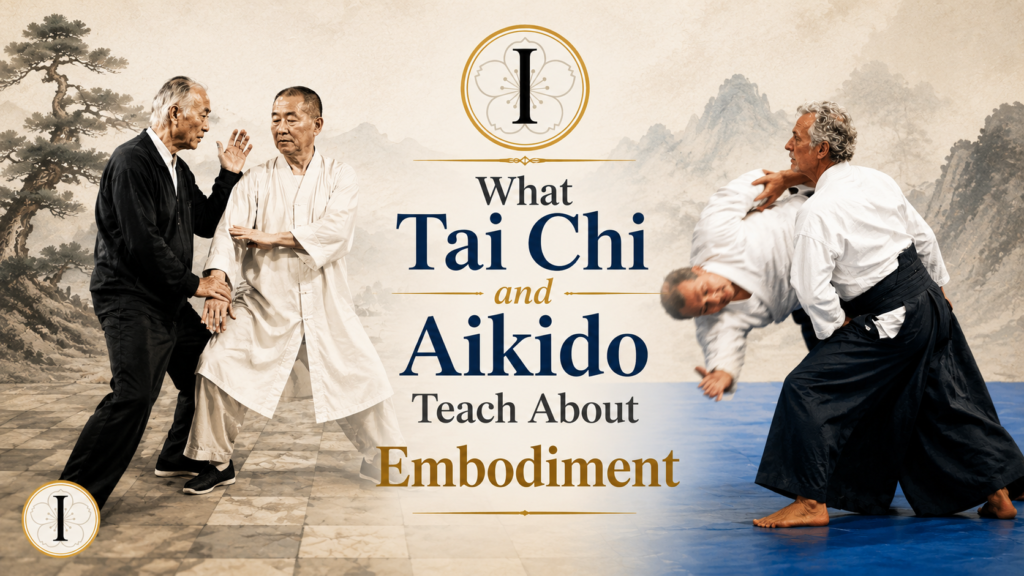
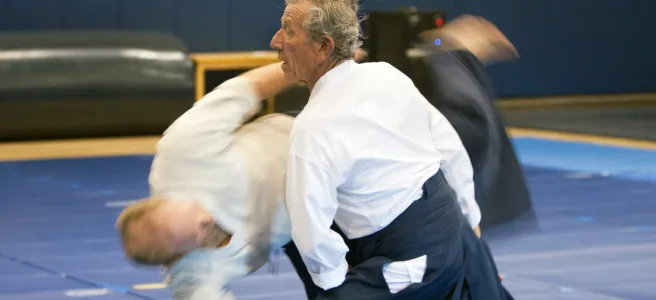
In Tai Chi push hands, practitioners learn sensitivity, yielding, listening, and structural continuity through direct contact. In Aikido rondori, multiple attackers create unpredictability and pressure that challenge the practitioner’s ability to remain centered while moving dynamically within changing conditions.
Though the arts appear outwardly different, Bob Noah reveals how both are training toward the same deeper principle: continuity under pressure. The deeper principle is not rigidity or domination, but the ability to remain internally organized while force is entering the system. But the ability to remain internally organized while force is entering the system.
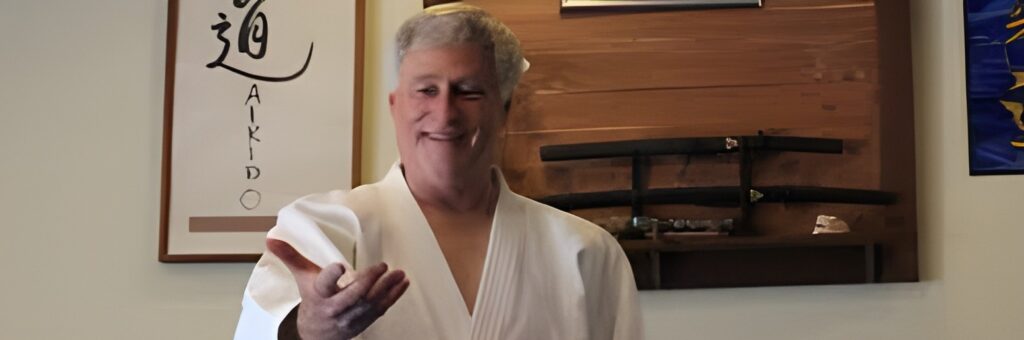
“The secret of Aikido is to be in harmony with the movement of the universe itself.” —Bob Noah
This harmony is not abstract philosophy. It becomes directly experiential through the nervous system, breath, posture, energetic organization, and perception itself. The practitioner gradually learns not to collapse into resistance when pressure appears.
This is where embodiment becomes visible.
Grace under pressure is not emotional suppression or passivity. It is the capacity to remain present, responsive, and internally continuous amidst instability.
Push Hands, Rondori & Nervous System Organization
Throughout the conversation, Bob repeatedly returns to the idea that the nervous system resists change far more deeply than most practitioners initially realize.
Even small changes in posture, breathing, alignment, or organization can feel uncomfortable because the nervous system often interprets unfamiliar organization as instability. What feels “natural” is frequently habitual conditioning rather than genuine balance.
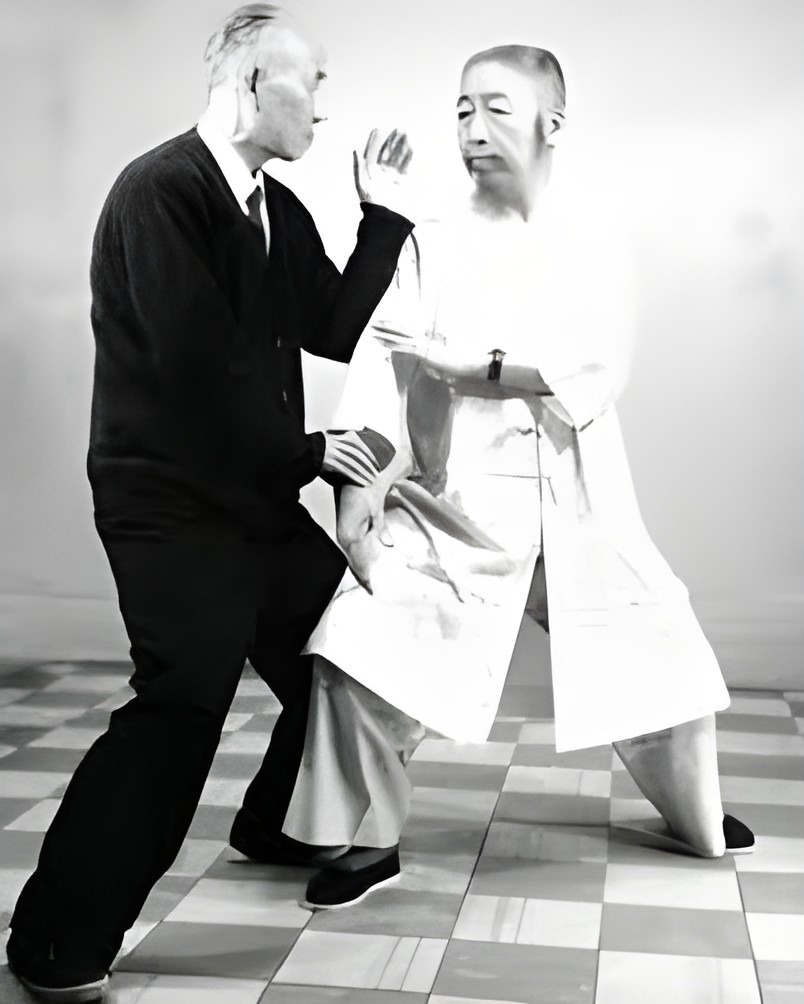
Push hands, yielding drills, and Aikido partner training all become methods for exposing unconscious contraction and reorganizing the practitioner into greater continuity.
Investing in Loss
One of the most powerful ideas discussed is Cheng Man-Ch’ing’s principle of “investing in loss.”
Modern culture conditions people to avoid failure, instability, and discomfort. Yet authentic embodied practice often requires the opposite. It requires direct contact with limitation.
When a practitioner loses balance, becomes tense, collapses under pressure, or reacts unconsciously, the instinct is often to defend the ego or blame external conditions. But Bob explains that these moments contain the very information necessary for transformation.
“If the other person’s hard, it’s you.” —Bob Noah
Beyond Technique
One of the deeper themes emerging throughout the discussion is that authentic internal practice was never intended merely as physical technique or combat skill.
At its depth, practice becomes a way of reorganizing human perception itself.
Over time, breathing changes, attention changes, reaction changes, and the body begins listening differently. The body begins listening differently. Over time, what first appears as technique becomes lived experience. What first appears as method becomes perception. And what first appears as training slowly becomes a way of being.
This conversation with Bob Noah offers a rare exploration of those deeper dimensions—where martial arts, embodiment, nervous system regulation, contemplative practice, and lived transformation begin converging into something far larger than technique alone.
About the Guest
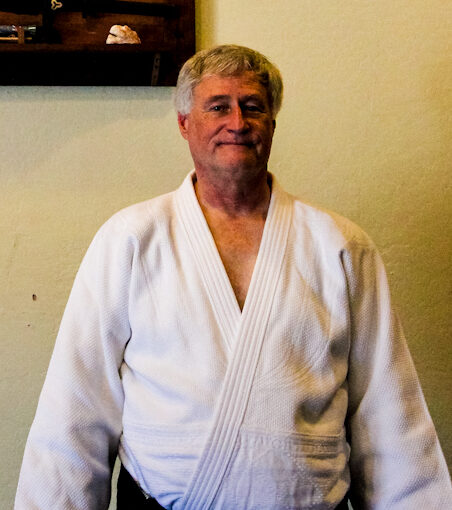
Robert Noah has spent more than five decades exploring the intersection of internal martial arts, embodiment, nervous system development, and transformational practice. Beginning his Aikido journey in 1966, he became a longtime student of renowned teacher Robert Nadeau, whose emphasis on the deeper spiritual and energetic dimensions of Aikido profoundly shaped Noah’s path. Over the years, he has trained extensively in Aikido, Tai Chi (taiji), bagua, and xingyi, integrating principles of structure, awareness, breath, and internal development into a lifelong practice of embodied inquiry.
Noah founded some of the earliest Aikido schools in both the Washington, D.C. and Buffalo, New York areas before establishing Aikido of Petaluma in California in 1983, where he continues to teach today. His studies also include direct training with influential martial arts scholar Robert W. Smith and exposure to the teachings of Professor Cheng Man-ch’ing and senior practitioners within the Yang, Wu, Chen, and Sun traditions of Tai Chi. Through decades of teaching and practice, Noah has continued exploring how internal training supports human integration, presence, perception, and deeper levels of transformation.
Explore Tai Chi, Embodiment & Internal Development