
The Return to Wholeness
Why Suffering Deepens When Awareness Becomes Fragmented
by Mark V. Wiley
Modern culture tends to approach fragmentation and suffering as problems to eliminate directly.
We attempt to remove anxiety, quiet intrusive thought, overcome emotional instability, resolve fear, repair identity, and manage psychological discomfort through endless analysis, stimulation, distraction, or self-improvement. Within this fragmentation of awareness, even spirituality often becomes another form of acquisition—more techniques, more experiences, more understanding, more states.
Yet beneath much of this effort lies an assumption rarely questioned: that suffering itself is the primary problem.
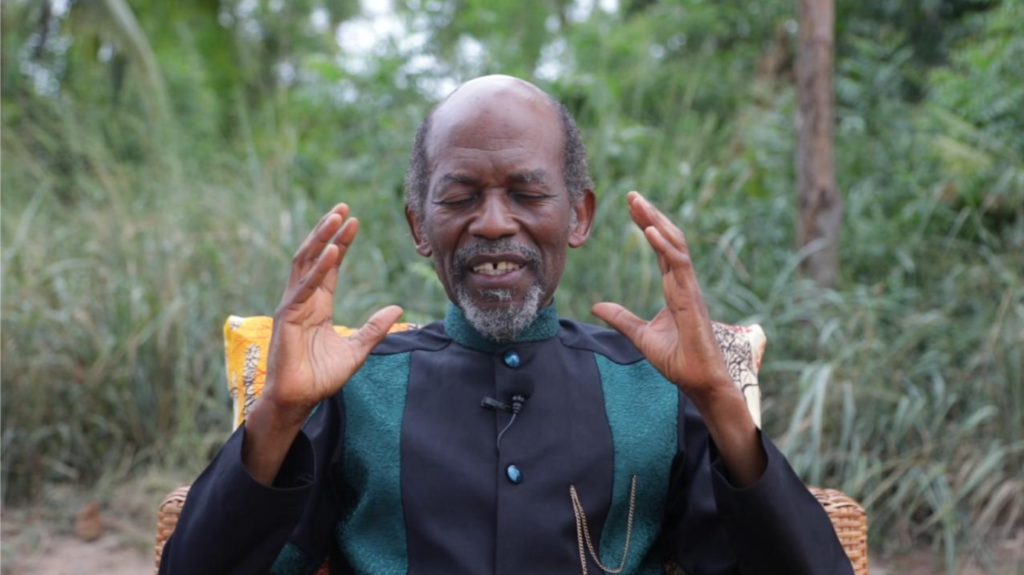
In my conversation with Dr. Baffour Jan, another possibility quietly emerged.

What if suffering is not the root disturbance at all? What if suffering is the consequence of fragmentation? What if fragmentation itself is the deeper issue beneath suffering?
Again and again, Dr. Jan returned to a deceptively simple principle: imbalance narrows awareness. And as awareness narrows, the sense of separation deepens. The more contracted perception becomes, the more isolated we experience ourselves to be—from others, from life, and even from our own deeper nature.
What we call suffering may often be the lived experience of this contraction.
“False identity is strongest when imbalance is strongest.” —Dr. Baffour Jan
This moves the discussion beyond both modern self-help psychology and popular spirituality. Rather than attempting to manufacture positivity or escape discomfort through spiritual experiences, the conversation points toward something far more fundamental: the restoration of balance within the human system itself.
Not as ideology. Not as belief. But as direct regulation and alignment.
Fragmentation and Suffering
Another subtle but important aspect of the conversation is its refusal to romanticize extraordinary experiences. Modern spirituality often gravitates toward altered states, psychic phenomena, energetic experiences, or emotional intensity as signs of advancement. Yet these experiences can easily become another form of attachment—another movement of acquisition organized around the self. The deeper question is not what experiences arise, but whether fragmentation itself is diminishing. Clarity is not the accumulation of unusual states, nor is transformation the construction of a new spiritual identity. The work is quieter than that: more sober, grounded, and less theatrical. And perhaps far more demanding, because it requires restraint, stillness, patience, and moderation rather than continual stimulation or pursuit.
“Experiences are not freedom.” —Dr. Baffour Jan
False Identity and the Narrowing of Awareness
Much of contemporary culture reinforces the assumption that the isolated psychological self is the center of experience. We become increasingly identified with personal history, emotional reactivity, internal narration, preference, fear, and psychological defense.
Yet in the conversation, Dr. Jan suggests that this separate identity is not entirely fixed or ultimate. It is reinforced through imbalance itself.
As awareness contracts, separation intensifies.
As balance deepens, perception widens.
The boundaries that once appeared absolute begin to soften.
This is not philosophical abstraction. It is perceptual. The world no longer feels entirely divided into “self” and “other.” Life begins to feel less adversarial. Defensiveness weakens. Reactivity loosens. One no longer experiences existence solely from inside a contracted psychological center.
“Love is already the feeling of inclusiveness.” —Dr. Baffour Jan
This insight carries profound implications.
Not sentimental love.
Not emotional intensity.
But inclusiveness itself—the gradual dissolution of rigid separation.
Beyond Spiritual Performance
Another subtle but important aspect of the conversation is its refusal to romanticize extraordinary experiences. The return to wholeness is not easily achieved through modern spirituality, which often gravitates toward altered states, psychic phenomena, energetic sensations, or emotional highs as signs of advancement. Yet such experiences can easily become another form of attachment—another movement of acquisition by the self seeking continuity through experience.
The deeper issue is not what experiences arise, but whether fragmentation itself is diminishing. Clarity is not the accumulation of experiences, nor is transformation the construction of a new spiritual identity. The work is quieter than that—more sober, more grounded, less theatrical, and perhaps far more demanding.
Because what is required is not constant stimulation, but a different quality of relationship to oneself and to experience itself.
Not more experience.
Not a more refined identity.
But less fragmentation.
Less interference.
Less compulsion.
In this sense, real transformation may depend less on what is added than on what gradually falls away. The unnecessary tensions. The compulsive reactions. The endless movement of self-concern attempting to secure itself through achievement, certainty, or spiritual accumulation.

Wholeness Beneath Agitation
One of the most important implications of this conversation is that wholeness may not be something created through effortful self-construction. It may already exist beneath the layers of imbalance that continuously obscure it.
The conversation continually returns to the relationship between fragmentation and suffering, suggesting that psychological contraction distorts perception itself.
Modern life conditions fragmentation:
- constant stimulation
- endless distraction
- emotional reactivity
- compulsive mental activity
- identification with psychological movement
Few people ever become still enough to observe what remains when the constant movements of thought, reaction, and agitation begin to settle.
Yet as internal disturbance decreases, another possibility quietly emerges—not dramatic transcendence, but a deeper form of coherence. Awareness becomes more inclusive. One no longer relates to life from a chronically defended position. There is less internal conflict, less fragmentation between thought, emotion, body, and perception.
Not the acquisition of something extraordinary.
But the gradual ending of unnecessary disturbance.
This is not withdrawal from life, but participation within it from a quieter and more stable center.
In this sense, transformation is not primarily about becoming something new. It is about ceasing to reinforce the conditions that perpetuate fragmentation. And perhaps what we call wholeness is not an achievement at all, but what naturally remains when imbalance no longer dominates perception.
Continue Exploring