How Practice Becomes Life
How movement, internal arts, meditation, healing, and relationship support one another
—and become part of how we live.
by Mark V. Wiley
Prefer to listen? Play the audio.
Meditation, martial arts, internal cultivation, healing, and contemplative inquiry are often approached as separate activities. Each has its own methods, language, and purpose. Yet the person practicing them is the same person who goes to work, cares for a family, encounters conflict, and makes decisions throughout the day.
The Inner Life Ecosystem explores how these domains support one another. Drawing on decades of practice, teaching, and study, this talk examines how the capacities we cultivate can become organized within us and available beyond the practice session. The accompanying Q&A explores qigong and martial arts, the role of ego, and the relationship between specialization and integration.
An Ecosystem of Practice
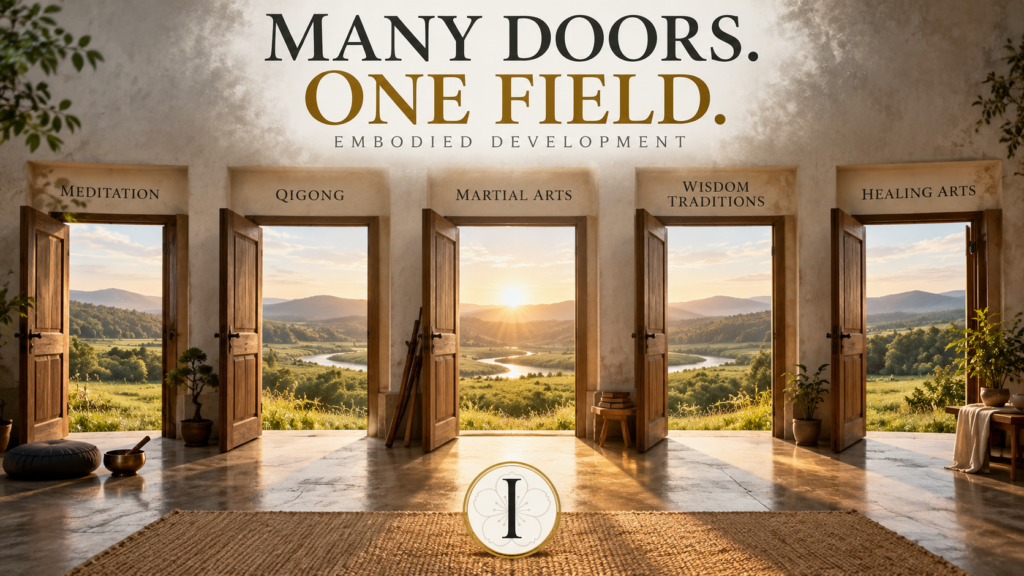
An ecosystem is sustained through relationships. Its parts contribute to one another and develop through their interaction. Within Inner Life, this offers a way to understand the relationship between internal arts, meditation, martial practice, healing, contemplative traditions, somatic practice, and relational work.

Each domain develops particular capacities. Meditation cultivates attention. Somatic practice develops sensitivity to bodily experience. Martial practice brings timing, structure, and responsiveness into contact with pressure. Contemplative traditions open questions of identity, meaning, and reality. Healing supports our ability to participate, while relationships reveal how we listen, react, and respond.
These domains can inform one another. The attention cultivated in meditation can influence how we listen. The sensitivity developed through internal practice can change how we move with another person. What happens in relationship can reveal where our practice needs further development.
From Practicing to Having a Practice
A session has a beginning and an end. We sit, move, breathe, or train, and then return to the rest of the day. We may feel calm and centered during that session, only to lose our balance when a difficult message arrives or someone challenges us.
Having a practice involves returning to what we are cultivating across the circumstances of life. Can we listen without preparing our response? Can we notice unnecessary effort while working? Can we remain attentive when something unexpected happens?
These ordinary moments reveal how much of our practice has become available to us. Over time, what we repeatedly cultivate can become a more stable capacity.

Regulation Through Excess Stagnation and Deficiency
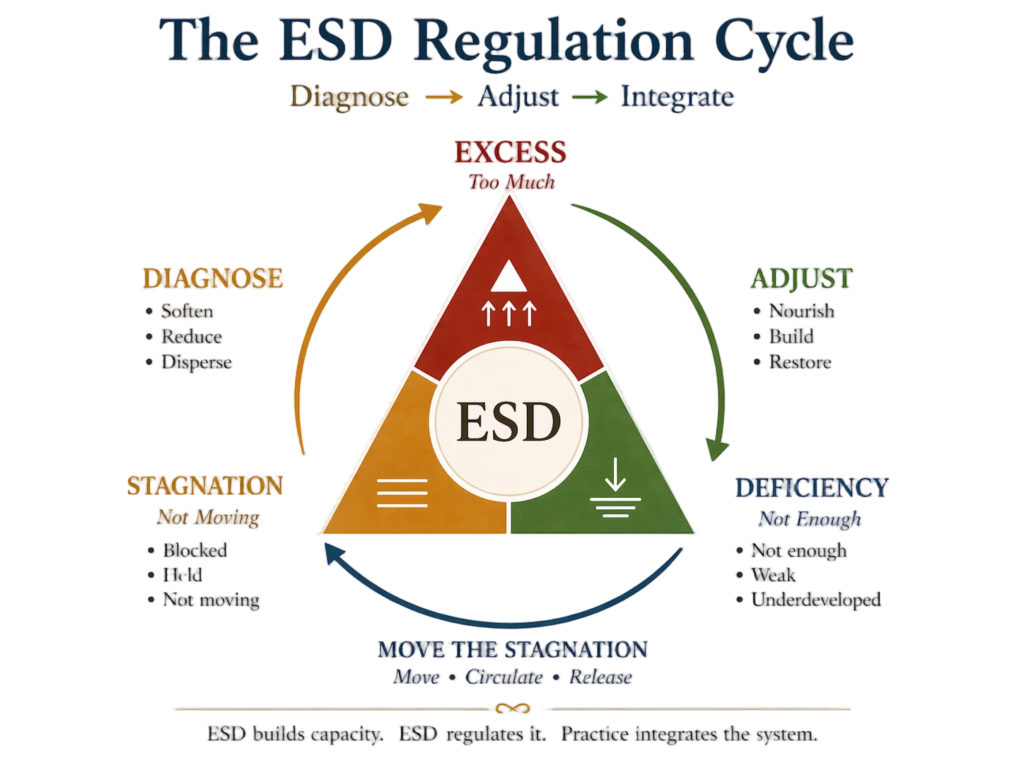
Practice does not always call for more effort. Sometimes we are already doing too much. Sometimes something is held or restricted. At other times, we have not yet developed the capacity a situation requires.
The Inner Life ESD model describes these patterns as excess, stagnation, and deficiency. Excess may appear as unnecessary tension, overreaction, or forcing an outcome. Stagnation may appear as restricted movement, indecision, or an inability to respond. Deficiency points to something that needs strengthening, nourishment, or further training.
Recognizing the pattern helps us adjust our approach. We may need to soften effort, restore movement, or build a missing capacity. Regulation becomes an ongoing process of observing, adjusting, and integrating what changes.
Integration Requires Deliberate Training
Learning several practices does not automatically integrate them. We can become skilled in individual techniques while struggling to bring those skills together when circumstances change.
Integrated Modular Training emerged from my work in martial arts as a way to address this problem. Particular skills are developed, brought into relationship, and practiced together under progressively different conditions. This approach also informs how I work with attention, breath, movement, and internal cultivation.
In the Q&A, we explore this through martial training: individual movements become combinations, forms, partner exercises, and responsive interaction. Each stage introduces demands that the earlier stage could not fully provide. Specialization gives us something to integrate; deliberate integration helps us use it.
What Qigong Brings to Martial Practice
Qigong offers a practical example of how capacities can move between domains. Quieting the mind, sensing the body, coordinating breath and movement, and sustaining intention all have relevance to martial training.
When working with a partner, these capacities influence how we recognize pressure, maintain our organization, and respond. Timing and sensitivity become as important as speed or strength.
One lesson shared in the talk came from training with Antonio Diego. What I initially understood as exceptional speed was, as Christopher Ricketts pointed out, precise timing. Recognizing that distinction changed what I needed to practice. It also required enough humility to see beyond my existing understanding.
Practice and the Ego
Practice can challenge our habits of identity, but it can also give them new material. We may become attached to our skill, our system, our experiences, or the belief that our approach is more complete than someone else’s.
The question is what happens when that identity is challenged. Can we remain receptive to correction? Can we learn from someone whose abilities reveal our limitations? Can we recognize the desire to prove ourselves without allowing it to direct everything we do?
Martial and contemplative practices offer different ways to meet these questions. Their value becomes evident in our willingness to learn, revise our assumptions, and participate with greater honesty.
Embodiment in Ordinary Life
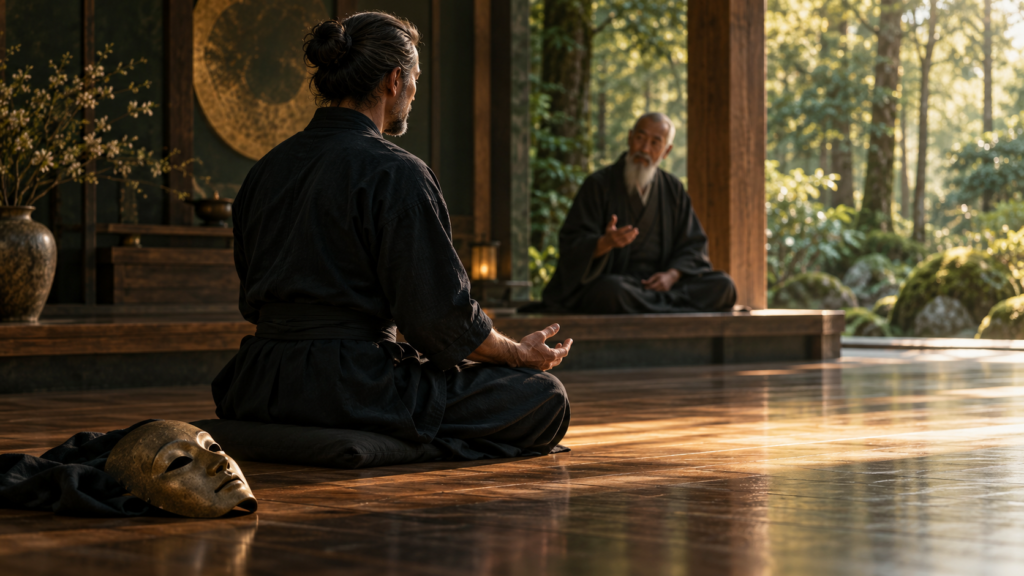
Embodiment becomes visible in how we live. Attention influences listening. Internal stability supports our response to difficulty. Sensitivity changes how we meet another person. Practice begins to affect ordinary activities: doing laundry, sweeping the floor, working, or being present with someone who needs to be heard.
Shared practice also contributes to this development. A teacher, partner, or group introduces feedback and conditions we cannot provide entirely on our own. We discover where our capacities hold and where further work is needed.
The Inner Life Ecosystem provides a context for this ongoing process. Through repeated practice, adjustment, and integration, the capacities we develop can become part of how we perceive, participate in, and respond to life.
This discussion also draws on Rupert Sheldrake’s hypothesis of morphic resonance, which proposes that patterns of activity can influence similar systems through a form of collective memory.
Watch & Listen
Watch on YouTube or listen on your favorite podcast platform




Continue Exploring