Living in a Sacred Universe
with Aliya B. Haeri
From Mystical Experience to Authentic Spiritual Transformation
A lifelong seeker reflects on mystical experience, Sufi practice, psychic research, healing, and why authentic transformation begins not by acquiring something new, but by uncovering the sacred reality already present. Drawing on a lifetime of spiritual exploration, Aliya B. Haeri reflects on Sufism, mystical experience, silence, witnessing, and how removing the veils of the self-reveals the sacred reality that has always been present.
The spiritual journey is often imagined as a search for something we do not yet possess—greater knowledge, deeper experiences, extraordinary states of consciousness, or elusive moments of enlightenment. Many seekers spend years moving from one teacher, one practice, or one tradition to another, believing that the next experience will finally provide the answer they have been seeking.
Yet the world’s authentic contemplative traditions consistently point in another direction.
Transformation is rarely about acquiring something new. More often, it is about removing the layers of conditioning that prevent us from recognizing what has always been present. The journey is not primarily one of accumulation but of unveiling.
This understanding lies at the heart of my conversation with Aliya B. Haeri. Her remarkable life spans decades of spiritual inquiry, consciousness research, Sufi practice, and direct experience with both the ordinary and the extraordinary. Through it all, she has come to a deceptively simple realization: the deepest transformation occurs not when reality changes, but when perception changes.
The Long Arc of Seeking
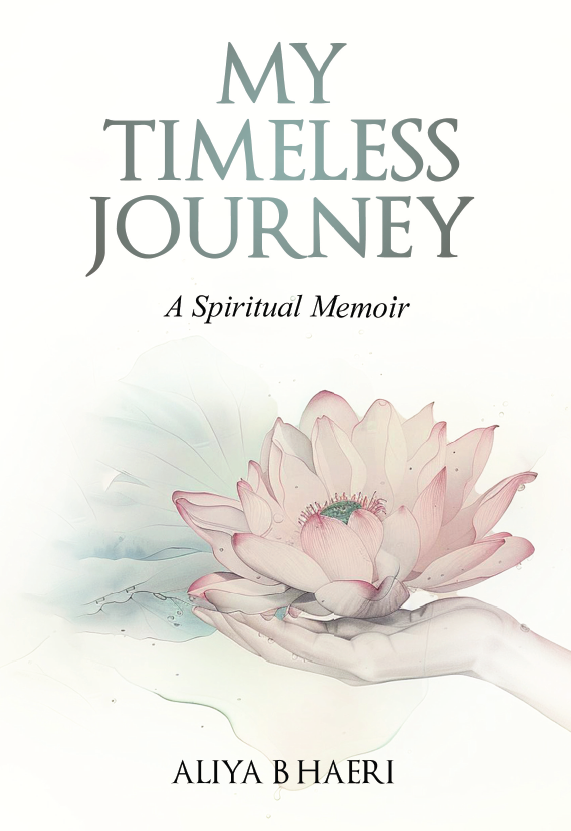
Aliya’s memoir, My Timeless Journey, follows a life shaped by curiosity and an unwavering desire to understand the nature of reality. Unlike many spiritual autobiographies, however, her story does not begin with childhood or the events that formed her personality. It begins with a khalwa—a traditional Sufi retreat of solitude, remembrance, and silence. That choice is significant.
Rather than presenting the retreat as the culmination of her search, Aliya offers it as the beginning of a much deeper inquiry. In the silence of retreat, the familiar reference points of identity begin to fragment then fall away.. The mind gradually exhausts itself, habitual stories lose their certainty, and another quality of awareness quietly emerges.
This movement from certainty into unknowing has long been recognized across contemplative traditions. Whether in Sufism, Christian mysticism, Zen Buddhism, Taoism, or Yoga, genuine practice often begins not by finding answers but by discovering the limitations of the questions we have been asking.
The spiritual path matures when our need to possess reality gives way to a willingness to participate in it.
“The deepest journeys begin not by finding ourselves, but by seeing through our familiar identities as products of conditioning.” —Aliya B. Haeri
Beyond Extraordinary Experience
One of the most compelling aspects of Aliya’s life is her involvement with pioneering investigations into psychic phenomena alongside physician and consciousness researcher Dr. Andrija Puharich. During that period she encountered events that challenged conventional assumptions about the limits of human perception and consciousness.
Many people would build an entire spiritual identity around such experiences. Aliya does not. Instead, she repeatedly returns to a distinction that has echoed throughout the wisdom traditions for centuries: extraordinary experiences are not the same as transformation.
Miracles, visions, psychic abilities, and mystical states may awaken wonder. They may expand our understanding of what is possible. But they can also become subtle distractions if they strengthen our fascination with experience itself.
Authentic practice continually redirects attention away from the unusual and back toward the ordinary work of refining perception, cultivating humility, and allowing the heart to become more transparent to reality.
The real miracle is not that consciousness can occasionally transcend ordinary expectations. The greater miracle is that a human being can become less driven by fear, less governed by ego, and more capable of compassion, clarity, and presence.
“The greatest miracle is not what we experience. It is who we become.” —Aliya B. Haeri
Science and the Search for Meaning
Modern culture often assumes that science and spirituality occupy opposing worlds. Aliya’s experience suggests otherwise.
Having worked alongside researchers committed to careful investigation, she developed a deep respect for disciplined inquiry while recognizing that scientific and contemplative traditions address different dimensions of human life.
Science asks how…. Spirituality asks why.
Science examines mechanisms, patterns, and measurable processes. Spiritual traditions explore meaning, purpose, consciousness, and the transformation of the one who is asking the questions.
Neither discipline replaces the other. Together they reveal something larger than either could fully describe alone.
This conversation reminds us that genuine inquiry—whether scientific or spiritual—begins with humility. Both require a willingness to remain open before reality rather than forcing reality to conform to our expectations.
Witnessing Instead of Reacting
Among the richest discussions in this conversation is the distinction between observing and witnessing.
Most of what we call observation is already shaped by judgment. We immediately classify experience as pleasant or unpleasant, success or failure, agreement or disagreement. The mind rarely encounters reality directly because it is continually interpreting what appears before it.
Witnessing invites another possibility. It asks us to remain present before the habitual machinery of interpretation takes over. This shift may appear subtle, yet it changes everything.
When witnessing deepens, we gradually become less imprisoned by automatic reactions. Instead of immediately defending ourselves, resisting experience, or chasing pleasant sensations, we begin seeing more clearly what is actually taking place.
Many contemplative traditions describe this capacity as one of the essential foundations of spiritual maturity. It allows perception itself to become quieter, more spacious, and ultimately more truthful.
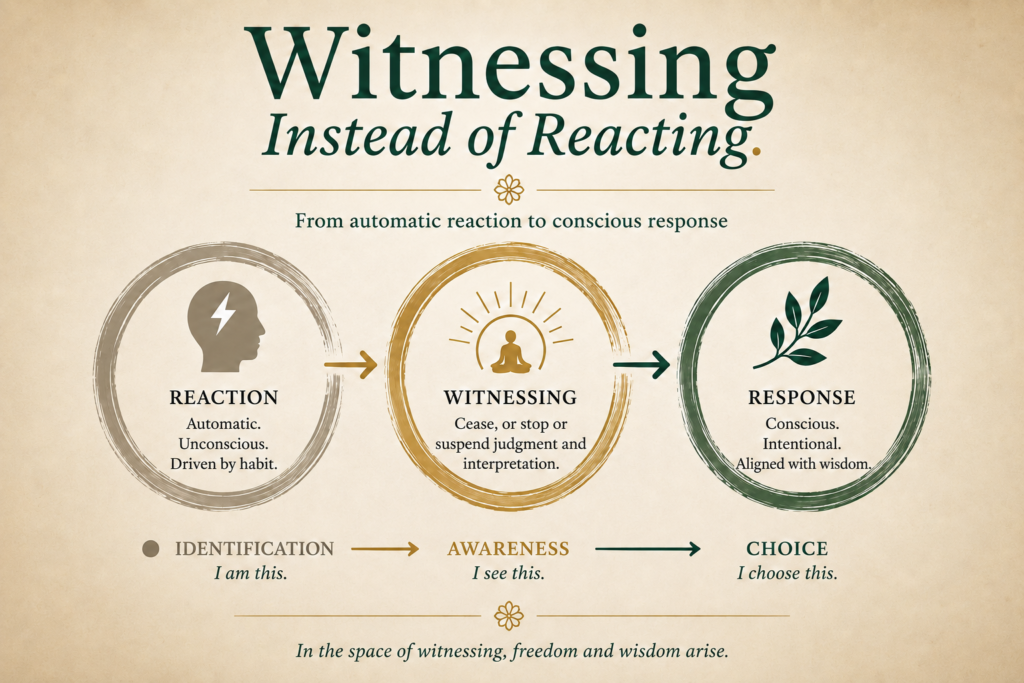
“Witnessing begins where judgment becomes quiet.” —Aliya B. Haeri
The Self Is Not the Final Identity
Throughout the conversation, Aliya gently distinguishes between the personality we ordinarily identify as ourselves and a deeper dimension of being that spiritual traditions often call the soul. This distinction is frequently misunderstood.
The goal is not to reject the personality or escape ordinary human life. Rather, the personality gradually learns to serve something greater than its own fears, ambitions, and habitual patterns.
Seen in this light, spiritual practice becomes less about self-improvement and more about self-transparency. The self becomes increasingly capable of reflecting qualities that were never manufactured by effort alone—compassion, wisdom, gratitude, patience, and love.
The soul does not need to become whole… It is our perception that slowly remembers that wholeness.
Silence Changes the Way We See
Perhaps no theme appears more consistently across the world’s contemplative traditions than the value of silence. Silence is often misunderstood as emptiness or withdrawal. In reality, silence creates the conditions through which deeper perception becomes possible. As external stimulation decreases and inner commentary settles, another way of knowing begins to emerge.
This is why silence appears at the center of monasteries, meditation halls, hermitages, Sufi retreats, and countless other places devoted to inner cultivation. Silence is not an escape from life. It is preparation for entering life more completely.
A quieter mind becomes more attentive.
A quieter heart becomes more receptive.
Gradually, reality begins revealing dimensions that constant mental activity had concealed.
“Silence does not remove us from reality. It allows us to encounter it more fully.” —Aliya B. Haeri
Living in a Sacred Universe
By the conclusion of this conversation, one insight quietly gathers everything together. The spiritual path is not about becoming extraordinary. It is about learning to recognize the extraordinary nature of ordinary existence.
Every authentic tradition eventually points toward this recognition. The sacred is not confined to mountaintops, monasteries, mystical visions, or rare moments of revelation. It is woven through every encounter, every relationship, every breath, and every ordinary day.
What changes is not reality itself…. What changes is our capacity to perceive it.
Aliya B. Haeri’s journey reminds us that a lifetime of seeking ultimately leads back to the place where every authentic path has always pointed—not toward another experience to acquire, but toward a way of living that recognizes the sacred already present within life itself.
About the Guest
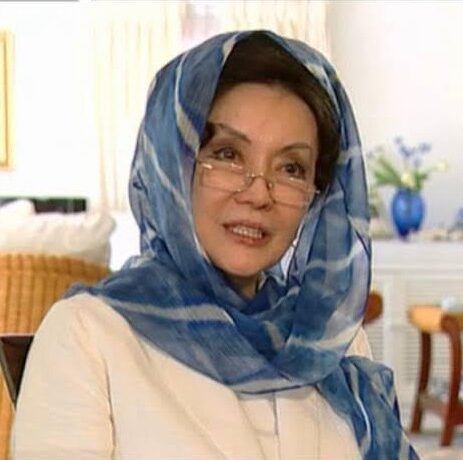
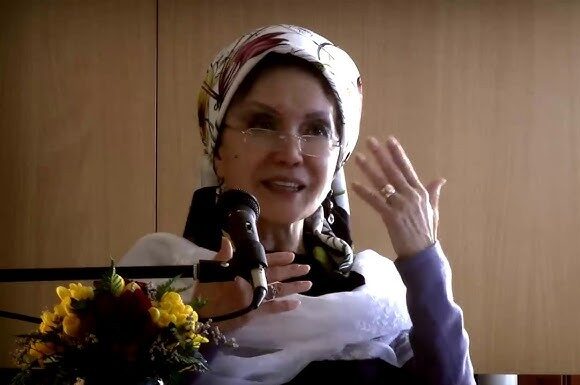
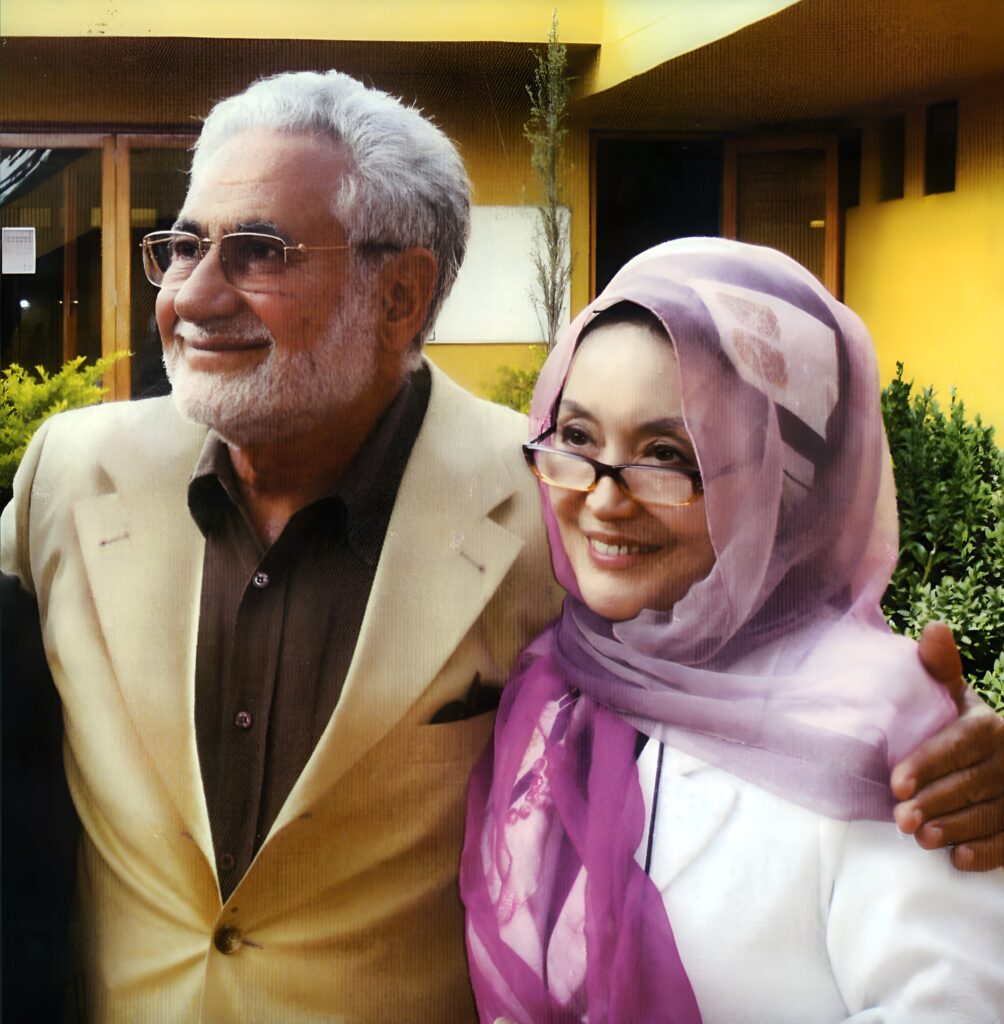
Aliya B. Haeri is an author, psychologist, spiritual counselor, mentor, and international speaker whose work explores the intersection of Sufism, consciousness, psychology, healing, and self-knowledge. Trained in psychology and transpersonal psychology, she has spent more than twenty-five years helping people integrate psychological understanding with the wisdom of Islam, Sufism, and contemplative practice.
A lifelong student of Shaykh Fadhlalla Haeri, Aliya is the director of the Academy of Self Knowledge (ASK) in South Africa, where she has guided people from diverse backgrounds toward greater awareness, resilience, and authentic living. Her work encompasses spiritual counseling, mindfulness, extraordinary states of consciousness, and psychological and spiritual development. Her memoir, My Timeless Journey, chronicles decades of inner exploration and the practical application of Sufi principles to everyday life.
Continue Exploring