
On Oneness:
From Inherited Wholeness to Realization
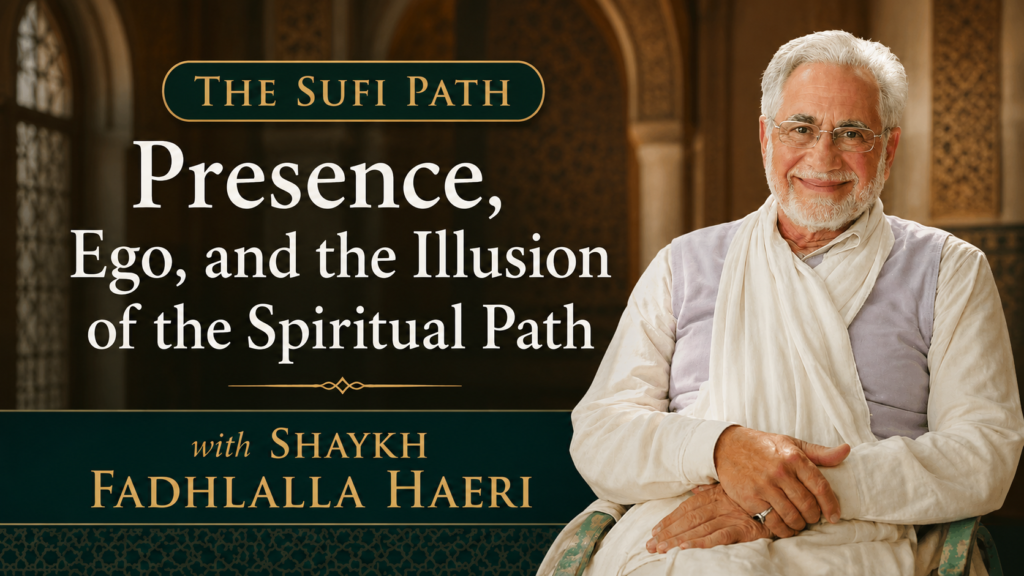
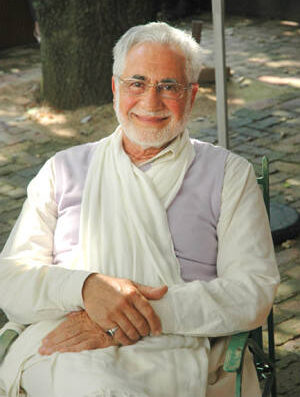
Teachings of Shaykh Fadhlalla Haeri
by Mark V. Wiley
This reflection explores the movement from fragmentation to unity within human experience based on the teachings of Shaykh Fadhlalla Haeri oneness. There are lives that unfold in stages, and there are lives that reveal a structure. Shaykh Fadhlalla Haeri’s journey is not simply a biography of events, but a map of transformation—one that begins in wholeness, passes through fragmentation, and resolves in the recognition of an underlying unity that was never absent. His life does not present spirituality as something acquired, but as something uncovered—something present from the beginning, obscured only by layers of identity, conditioning, and misunderstanding.
Inherited Wholeness
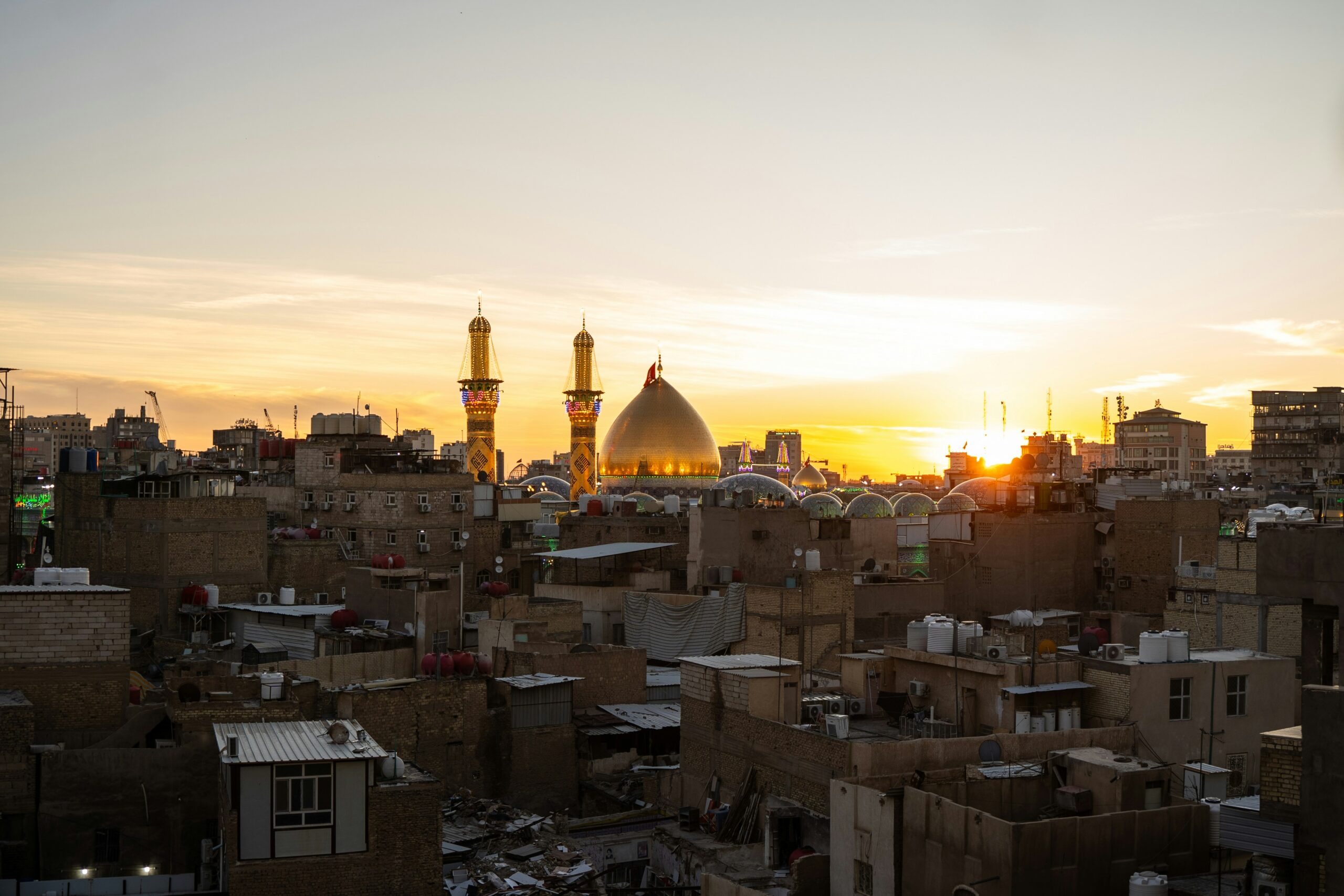
This early condition became one of the most important reference points in his life. It demonstrated, without explanation, that human life can exist in a state of integration. Alignment was not something constructed, but something natural—when nothing interferes. As Shaykh writes in Lantern of the Path, “The outer behavior… emanates from an inner equilibrium.” What he experienced as a child was precisely that equilibrium—a natural correspondence between inner state and outer action.
He was born into a world where this coherence was still intact. By the late 1970s, and into around 1980, his life had already begun to extend beyond that origin, entering a broader, transnational phase of teaching. His early Sufi community first formed in the United States, and from there his work quickly spread to Britain and other regions—including Pakistan, Scandinavia, and South Africa.
By this period, he was already living and teaching in the West, with England emerging as one of the early centers of his activity. This movement did not simply mark a geographical shift, it established a contrast. The integrated life he had known would now be encountered against a world increasingly structured by separation.
The Break: Fragmentation of Life
Within a relatively short period, modernization, centralization, and cultural change disrupted a continuity that had endured for generations. That world did not evolve; it fractured. The integrated life he had known dissolved. What was once unified became segmented, abstracted, and increasingly disconnected from its source.
As a young man setting out into the world his first move to England intensified this rupture. There, life appeared organized, efficient, and functional—but inwardly hollow. Practices that once carried meaning now appeared as forms without depth. Even his own religious routines began to erode—not through rejection, but through the gradual loss of living context. Outwardly, he adapted, as one must. Inwardly, something remained unresolved.
This marks a universal threshold: the transition from embedded belonging to self-conscious fragmentation. It is the moment when one begins to sense the gap between how life is lived and what it is meant to be. That gap does not immediately produce clarity: it produces unease.
Success and the Failure of Fulfillment
This dissatisfaction did not arise as philosophy. It emerged as a total unease—mental, emotional, and even physical. The body itself began to reject the life he was living. And from within that condition came a simple but irreversible recognition:
This is not it.
There was no alternative, no defined path forward, only the certainty that what he was living could no longer be sustained. And so he left. Not toward something new, but away from what was no longer true.
The Turning: Nothing to Gain
The decisive transformation began not with a system, but with an encounter. What he met in his teacher was not instruction, but a state—a way of being fully engaged in life without being bound by it. This reframed everything. The central insight that emerged was simple, but radical:
- Nothing needs to be gained.
- What is required is the removal of what obscures what is already present.
- The path inverted—from accumulation to subtraction. Not becoming, but uncovering.
Yet this inversion does not eliminate effort. Effort remains necessary—not to attain the truth, but to remove resistance to it. What begins as effort resolves, ultimately, in grace.
The Two Zones of Existence
From this realization emerges one of the most essential structures in his teaching. Human beings live between two dimensions of existence.
On one level, there is the conditioned self—the identity constructed through memory, culture, and personal history. It operates within time and is driven by survival, continuity, and recognition.
On another level, there is the deeper reality—the soul—which is not bound by time or identity. It is not something to be attained, but the ground of awareness itself. As he writes in Pathways to the Garden, “The soul… is eternal and the moment radiates from timelessness.”
Human life unfolds between these two poles, the human and the divine. The path is not about moving between them, but about recognizing which is fundamental.
The human being is not merely caught between these two dimensions, but functions as a bridge between them. Within a single life, the finite and the infinite meet. The mind mediates the changing world, while the heart carries the imprint of the eternal. Human existence, in this sense, is not a problem to be solved, but a condition to be understood and lived consciously.
The Illusion of Separation
The conditioned self sustains itself through mind, identity, and time. Together, they create a closed loop of perception that appears self-evident and unquestionable. This loop is reinforced by culture, education, and social systems, all of which validate the same assumptions about what it means to exist.
At the root of this structure is a single error: the belief in separation.
Man… imagines himself as a separate entity… — from, The Mercy of Qur’an
From this imagined separation arise fear, desire, comparison, and the endless effort to stabilize what has no stable ground.
Awakening Through Exhaustion
Time, Presence, and the Eternal
In his teaching, time is not treated as an obstacle, but as a gateway. The present moment is not merely psychological but the point of contact between the temporal and the eternal. Each moment carries within it a direct link to what does not change.
To be present is not to withdraw from life, but to align with its underlying continuity. Through time, one touches the timeless. Through the moment, one accesses the eternal.
Shaykh Fadhlalla Haeri Oneness
In Shaykh Fadhlalla Haeri on oneness, the central insight is not accumulation, but recognition. From the perspective of realization, the structure of reality simplifies. There is not a fragmented world of separate things, but a unified field of existence.
All quests… lead to the realization that the soul… is eternal. — from, Pathways to the Garden
Everything emerges from a single divine reality and returns to it. This is tawhid: not as belief, but as perception.
The division between sacred and secular dissolves. The distinction between inner and outer becomes contextual rather than absolute. Life is no longer experienced as a series of disconnected events, but as a coherent unfolding.
Image sky / water / light field subtle geometric pattern
Knowledge, Ego, and Direct Experience
One of the notable aspects of his teaching is his approach to knowledge and ego. He repeatedly warns against accumulation—even spiritual accumulation.
Knowledge… without sincerity has no benefit. — from, Lantern of the Path
Knowledge, if not grounded in lived experience, becomes another layer of identity.
The emphasis shifts from understanding to direct experience—from concept to what he refers to as taste. The ego is not destroyed, but seen clearly. It becomes functional, no longer central.
The ego is not an error, but a functional shadow—an interface through which the deeper reality is able to operate within the world. When misunderstood, it dominates. When seen clearly, it serves.
Final Orientation
In the end, Shaykh Fadhlalla Haeri offers a correction of orientation. From fragmentation to unity. From seeking to recognition. From identity to essence.
The final insight is simple, yet demanding: The truth is not elsewhere. It has never been absent. It is present within the life you are already living—obscured only by the belief that it must be found.
For one who has lived in recognition, death is not an end, but a completion—the unveiling of what was always present beneath the surface of life.
Integral Being Conversation
Shaykh Fadhlalla Haeri points repeatedly to something prior to both—the ever-present source from which all experience arises. What emerges is not instruction in the conventional sense, but a dismantling of assumptions. The idea of progress, the attachment to spiritual identity, even the notion of the seeker itself—all are brought into question.
At the center of this orientation is presence—not as a technique, but as recognition. Not cultivated, but uncovered through honesty.
He speaks directly to the tensions that define modern spiritual life—between path and realization, ego and function, knowledge and wisdom, individuality and unity. He challenges both institutional religion and spiritual self-identification, while affirming the necessity of humility, participation, and lived responsibility.
Rather than offering resolution, his teaching clarifies the terrain. It reveals where confusion persists, where effort becomes interference, and where sincerity begins to open into something beyond the personal.
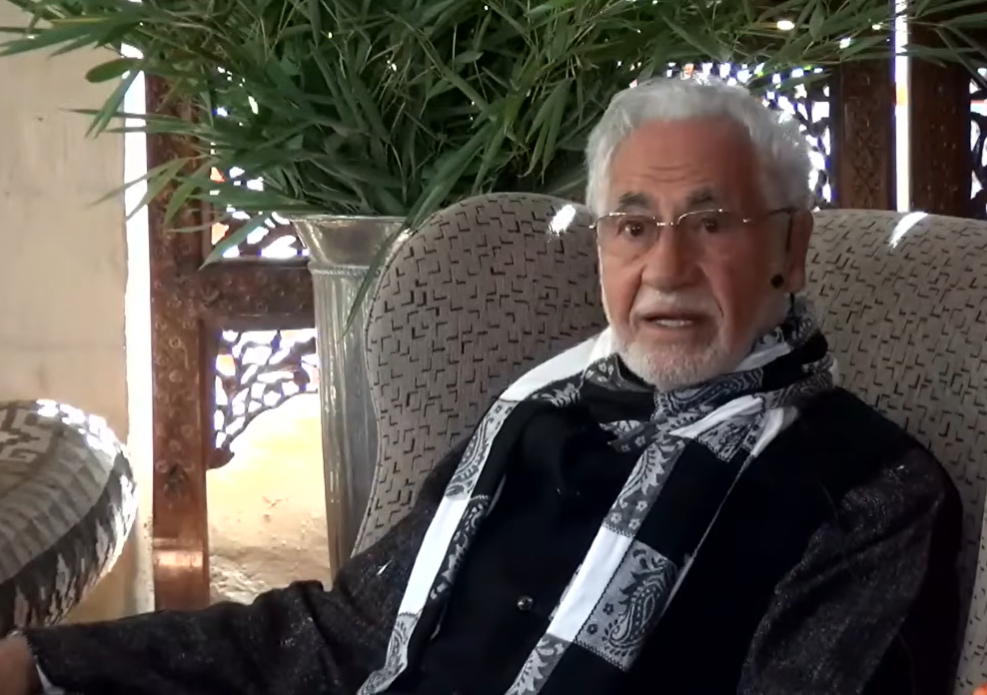
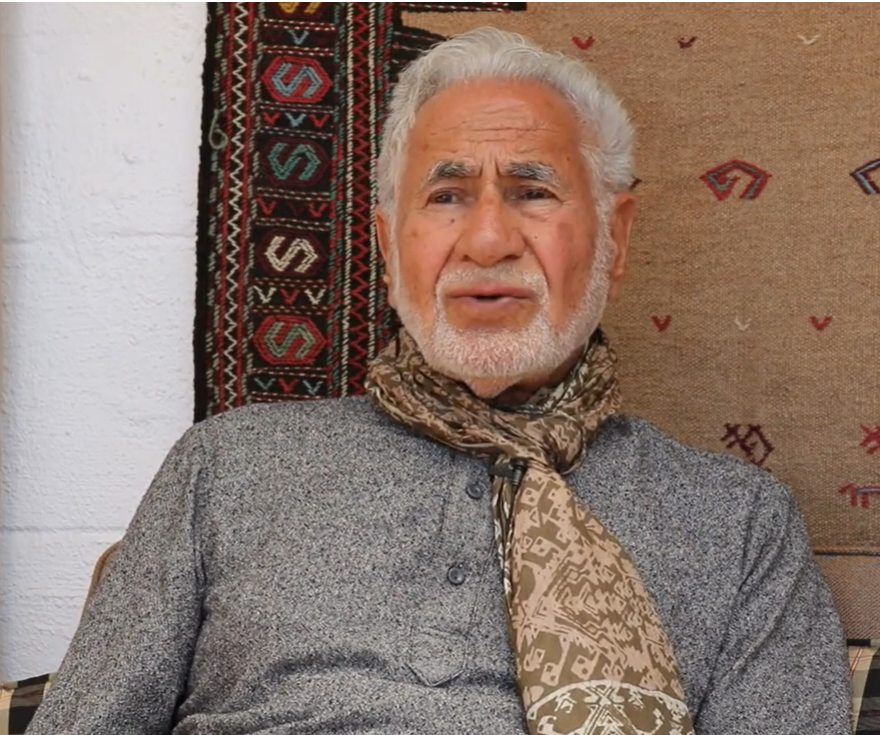
It was in this spirit that Shaykh Fadhlalla Haeri graciously joined me for an Integral Being conversation. What unfolded was not an interview, but a shared inquiry into the nature of reality, the illusion of the constructed self, and the tension between conditioned human life and the underlying unity of existence. We explored the movement from becoming to being, the role of exhaustion in awakening, the limits of knowledge, and the subtle persistence of identity even within spiritual practice.
Again and again, the conversation returned to a central recognition:
What we seek is not elsewhere. The work is not to attain,
but to see clearly, live honestly, and remain rooted in that which does not change.
Visit Shaykh Fadhlalla Haeri’s WEBSITE | YOUTUBE | AMAZON
With gratitude to Lleya Kalla and Abbas Bilgrami for their kind assistance with refinement of this Reflection.
Continue Exploring