
Structure Testing:
The Language the Body Cannot Fake
Under intelligent pressure, the body shows whether structure is real—or only performed
by Mark V. Wiley
In the early stages of training, most practitioners are evaluated visually. Does the stance look correct? Is the posture aligned? Are the movements coordinated and precise? These are reasonable starting points. External form matters, and visual correctness provides an important foundation for learning.
Yet appearance can be deceptive.
The body can imitate shape long before it embodies function. A posture may look stable while remaining mechanically fragile. A movement may appear powerful while leaking force throughout the system. At a certain level of development, visual assessment alone becomes insufficient.
This is where structure testing enters the picture.
Among the traditional martial arts, structure testing remains one of the most honest diagnostic tools available. Properly applied, it reveals whether the body is truly organized to receive, manage, and transmit force—or whether the movement is only cosmetically correct.
Under pressure, the body tells the truth.
When Pressure Reveals the Gap
I first encountered this reality directly while training with my teacher, Alex Co. At the time, I believed my structure was reasonably solid. My forms were clean, my applications worked, and from the outside there appeared to be few obvious problems.
Then came the testing.
With surprisingly little effort—often no more than the pressure of two fingers—Sifu could uproot, redirect, or collapse my position at will. He did not rely on strength or speed. Instead, he applied precise pressure into structural gaps I did not yet know existed.
What appeared stable visually was not yet reliable mechanically.
That distinction marked the beginning of a very different kind of training. Rather than asking whether a posture looked correct, the question became whether it could maintain integrity when force entered the system.
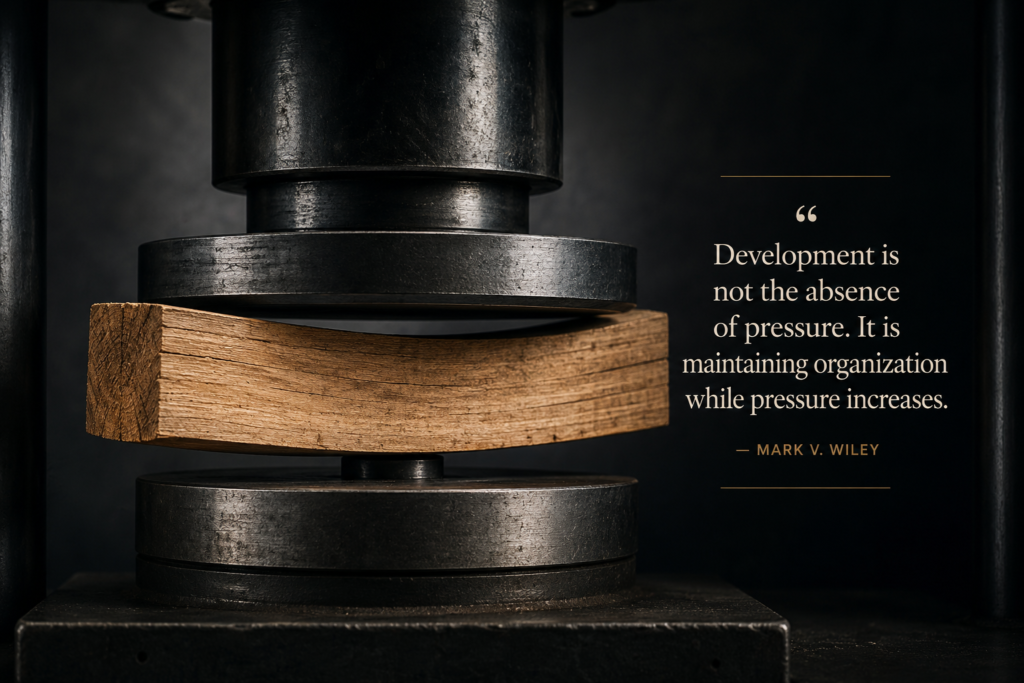
“Development is not the absence of pressure...
It is maintaining organization while pressure increases.” —Mark V. Wiley
Structure Under Pressure
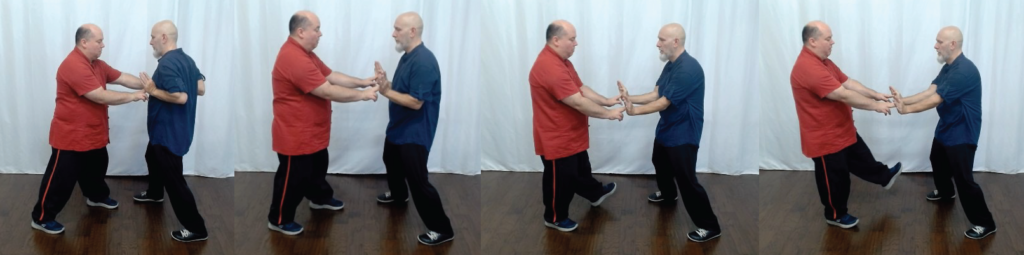
Within orthodox Ngo Cho Kun training, this principle is built directly into foundational practice. The Qi Kun opening sequence, which begins every form, is more than a preparatory exercise. It serves as a structural baseline, encoding alignment, breath coordination, rooting, and force expression within a compact series of movements.
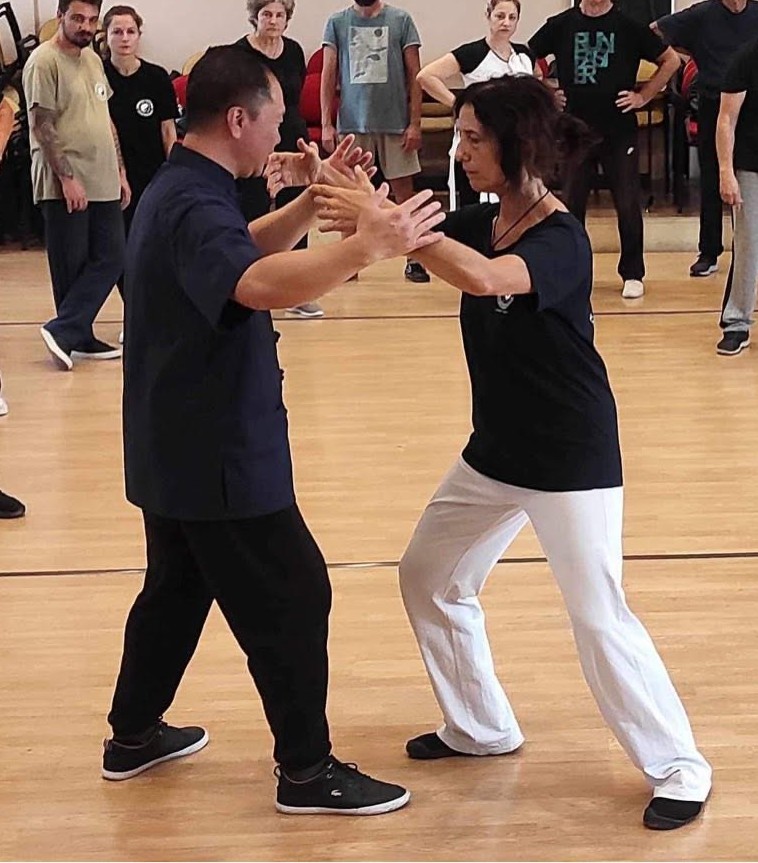
As training progresses, these movements are repeatedly placed under direct testing. The practitioner may be pushed, pulled, lifted, pressed, or redirected to determine whether the body can maintain organization under changing conditions.
What appears stable in solo practice often changes dramatically upon contact.
For this reason, Qi Kun functions not only as an introduction to the system, but as an ongoing measure of structural correctness. The same principles introduced on the first day of training continue to reveal deeper levels of refinement decades later.
What Structure Testing Exposes
Structure testing works because the body must obey the laws of mechanics whether we understand them or not. Alignment, pressure vectors, breath regulation, connective continuity, and force transmission either support incoming pressure—or they do not.
There is very little room for illusion.
When structure is immature, predictable compensations appear. The shoulders rise unnecessarily. Breathing becomes disrupted. Rooting becomes inconsistent. Force leaks through disconnected segments of the body.
None of these deficiencies may be obvious during solo performance. Under intelligent pressure, however, they become immediately apparent.
This is why practitioners who appear highly skilled in demonstrations sometimes struggle when their structure is examined directly. The body cannot hide from pressure.
Pressure as Feedback
Structure testing is often misunderstood as a method of proving superiority or demonstrating dominance. In reality, its value lies elsewhere.
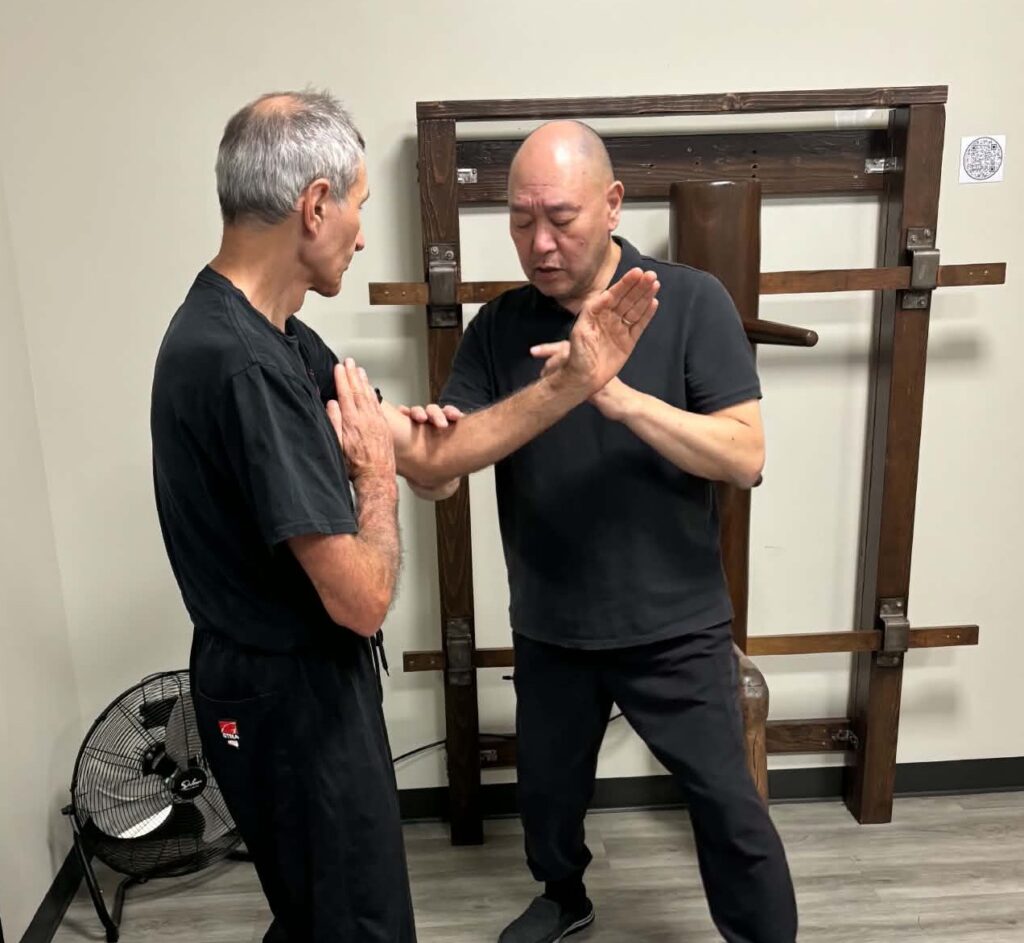
At its best, structure testing functions as a form of feedback—a tactile conversation between teacher and student. The goal is not to overwhelm the practitioner but to reveal opportunities for refinement.
Too much force teaches very little. Too little force reveals very little.
Effective testing requires just enough intelligent pressure to expose the truth of the body’s organization while preserving the practitioner’s ability to feel, adapt, and learn. This balance requires skill from both teacher and student.
When applied correctly, pressure becomes information.
Signs of Integration
Over time, consistent testing begins to cultivate forms of awareness that visual correction alone rarely develops. Subtle but meaningful changes emerge.
The body organizes earlier in the movement. Breath remains more stable under contact. Force pathways become increasingly continuous. Recovery from disruption becomes quieter, quicker, and less dramatic.
These changes are not always visible to an observer, yet they are unmistakable to the practitioner.
They signal that the art is beginning to penetrate beneath choreography and into the deeper coordination of the organism itself.
I discuss these principles in greater detail in Inner Gate: The Orthodox System of Ngo Cho Kun, but the underlying lesson extends well beyond any single style. Across serious martial traditions—and indeed across many embodied disciplines—pressure reveals truth more quickly than observation alone.
Testing as a Method of Learning
In traditional training environments, structure testing is not reserved for advanced practitioners. It is introduced early and repeated consistently throughout one’s development.
Its purpose is not to challenge strength but to refine organization.
Pressure becomes a form of instruction. Not something applied after learning has occurred, but something through which learning takes place.
Through testing, practitioners begin to feel the difference between appearance and function, between performing a shape and embodying a principle.
The Question Pressure Asks
Modern training culture often places understandable emphasis on visible performance. Forms are demonstrated. Techniques are displayed. Movements are refined for precision and aesthetics.
All of this has value.
Yet without intelligent pressure testing, it is possible to build considerable skill upon an unstable foundation. Structure testing bypasses appearance. It ignores rank. It is unconcerned with how many forms have been learned or how impressive a movement may look.
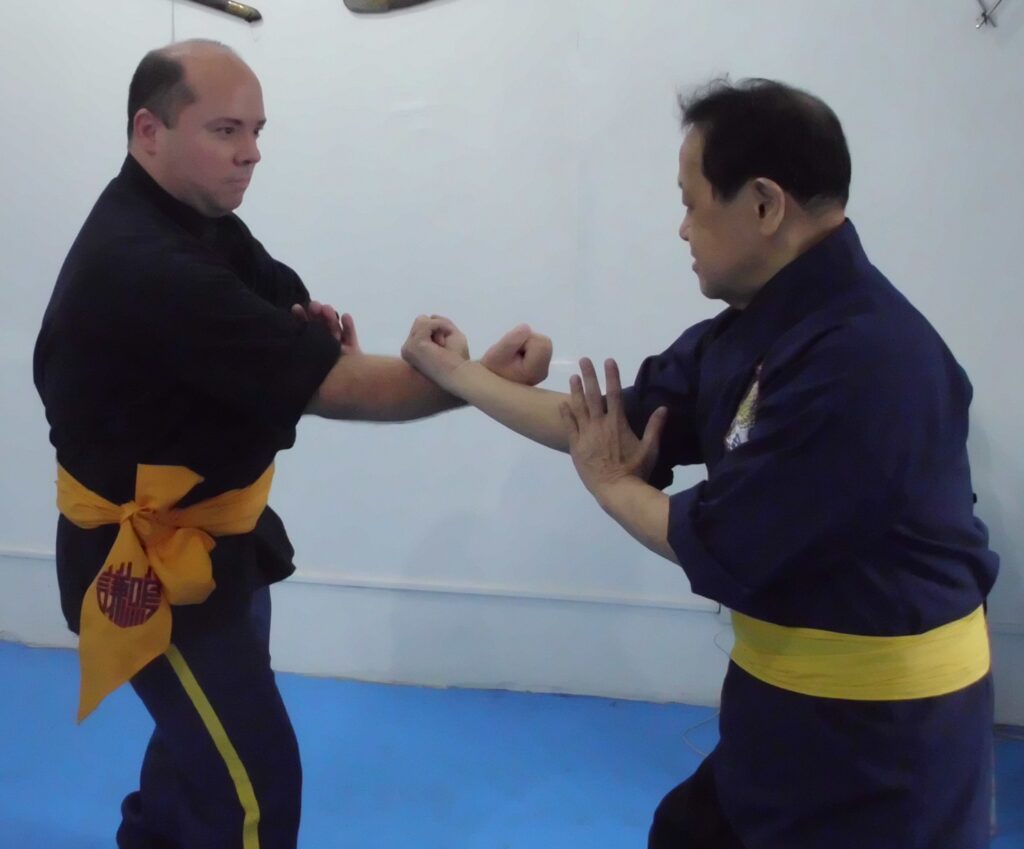
It asks only one question: When force enters the system, what actually happens?
For the serious practitioner, that question is not threatening. It is invaluable. Because the answer marks the beginning of real refinement.
From the Inner Gate
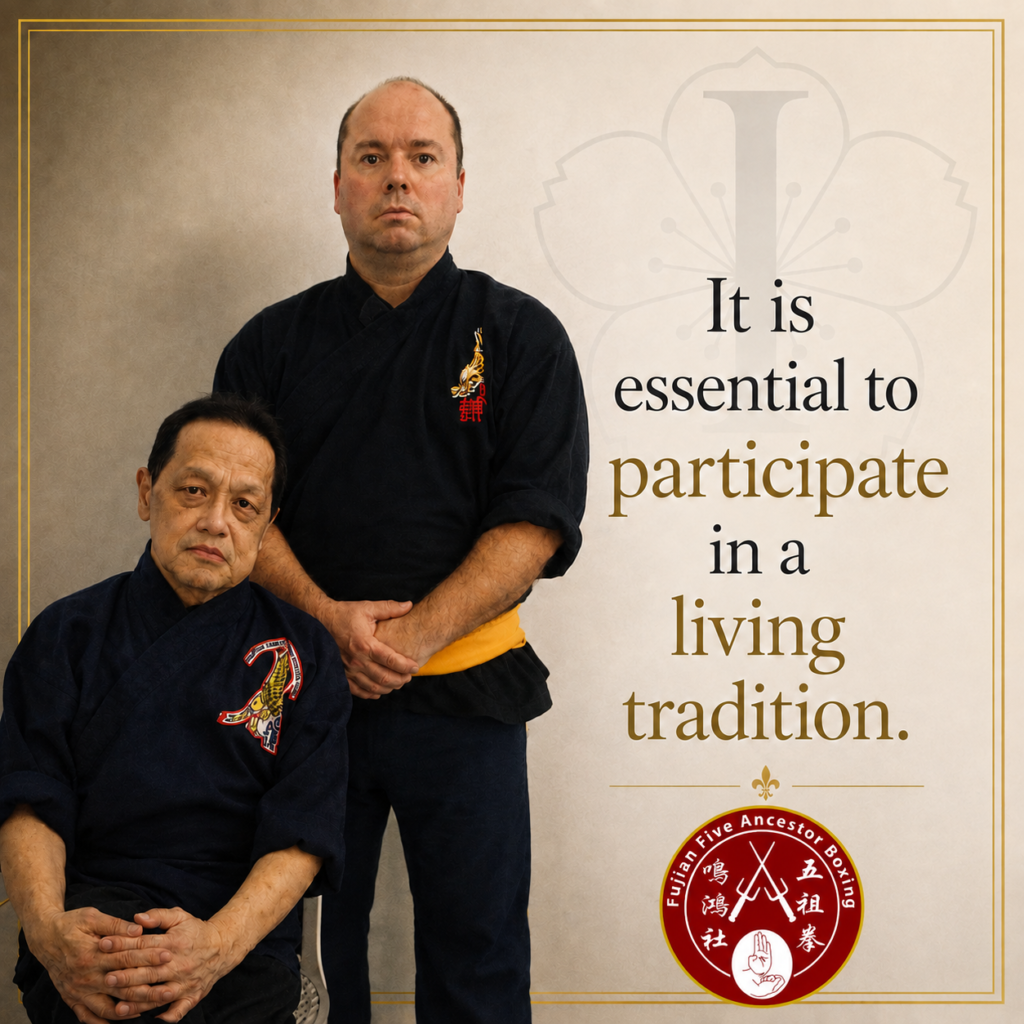
This Field Note explores principles also examined in Inner Gate: The Orthodox System of Ngo Cho Kun, Mark V. Wiley’s examination of the history, training methods, principles, and living transmission of orthodox Ngo Cho Kun.
Inner Gate is also preserved as part of the Inner Life Archive.
About Mark V. Wiley
Mark V. Wiley is a martial artist, author, and researcher with nearly five decades of training across traditional martial arts, internal cultivation systems, healing arts, and contemplative disciplines. He is the founder of Integrated Eskrima, a lineage holder in orthodox Ngo Cho Kun, and the creator of Inner Life — a practice-based system exploring embodied development, integration, and lived transformation.

Continue Exploring