

The Evolution of Consciousness
Bliss, Tantra, and the Path of Transformation
by Mark V. Wiley
There is a fundamental difference between changing what we do and transforming who we are.
Most people approach practice as a means of improvement. We seek greater skill, better health, sharper focus, emotional balance, or spiritual insight. While these outcomes may emerge through training, they do not necessarily constitute transformation. Often, they represent refinements within the same structure of perception, identity, and habit. The underlying patterns remain largely unchanged, even as performance improves.
My recent conversation with Acarya Vimalananda of the Ananda Marga tradition explored a different possibility. Rather than viewing practice as a method of self-improvement, Ananda Marga presents practice as participation in the expansion of consciousness itself. Meditation, ethical living, service, tantra, and disciplined self-cultivation are not separate pursuits. Together, they form a developmental path designed to move awareness beyond its habitual limitations and toward a more expansive experience of reality.
What struck me most throughout the conversation was not a particular technique or doctrine. It was the consistent emphasis on transformation as a lived process. The question is not simply how to become more effective, successful, or spiritually knowledgeable. The deeper question is whether consciousness itself can evolve through sustained participation in practice.
“Practice is not about becoming better. It is about becoming different.” —Acarya Vimalananda
This distinction may seem subtle, but it changes the orientation of the entire path. If practice is about improvement, then the goal is optimization. If practice is about transformation, then the goal is reorganization. One seeks greater efficiency within an existing structure. The other gradually changes the structure itself.
What Is Transformation?
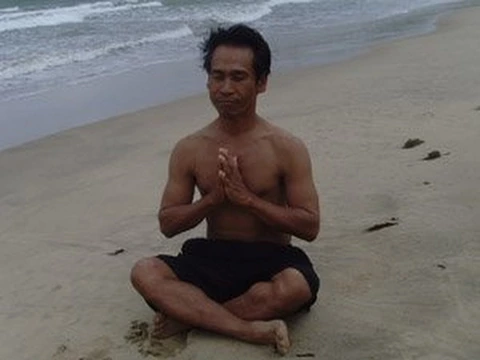
Transformation is a word that is frequently used but rarely examined. We often assume transformation means becoming a more successful version of ourselves. We imagine acquiring new skills, new experiences, or new forms of knowledge. Yet many traditions of spiritual cultivation suggest something different. Transformation is not primarily about addition. It is about uncovering.
A person can accumulate information without becoming wiser. One can collect techniques without becoming more present. It is even possible to pursue spiritual experiences without fundamentally changing the patterns through which life is perceived and understood.
Transformation occurs when the underlying organization of experience begins to shift. Attention becomes less fragmented. Reactivity softens. Awareness becomes more stable. Identity becomes less rigid. What changes is not simply what a person thinks. What changes is the way experience itself is organized.
“The path is not about adding something new, but uncovering what is already there.” —Acarya Vimalananda
This perspective appears repeatedly throughout the Ananda Marga tradition. Beneath the layers of conditioning, distraction, and habit lies a deeper possibility for human life. Practice is not designed to manufacture that possibility. It is designed to reveal it.
Bliss Beyond Pleasure
One of the most important distinctions discussed in the conversation concerns the difference between pleasure and bliss. Although the two words are often used interchangeably, Ananda Marga treats them as fundamentally different experiences.
Pleasure depends upon conditions. It arises through achievement, stimulation, recognition, comfort, or possession. Because it depends upon circumstances, it is inherently unstable. What brings pleasure today may disappear tomorrow. What satisfies one desire often gives rise to another. The cycle continues, creating an endless search for fulfillment through external means.
Bliss, in contrast, is not dependent upon conditions. It is not merely an emotional high or an intensified feeling. Rather, it is described as a stable expansion of consciousness. As awareness becomes less confined by fear, attachment, and identification, a deeper sense of connection begins to emerge. This state does not depend upon success or failure, gain or loss, praise or criticism. It arises from a different relationship to experience itself.
“Bliss is not something you feel. It is something that remains.” —Acarya Vimalananda
This perspective immediately reframes the purpose of spiritual practice. If the goal is pleasure, then practice becomes another strategy for obtaining desirable experiences. If the goal is bliss, practice becomes a process of removing the obstacles that obscure a more fundamental condition of being. The emphasis shifts from acquisition to realization.

Many people enter contemplative traditions seeking extraordinary experiences. Yet the deeper invitation may be far simpler. Rather than chasing increasingly dramatic states, practice encourages a more stable and enduring relationship with awareness itself. What is sought is not another experience, but a transformation in the way experience is known.
Tantra as Expansion
Few spiritual traditions have accumulated more misunderstanding than tantra. Popular culture often associates tantra with sexuality, exotic ritual, or esoteric practices detached from everyday life. Yet the understanding presented by Acarya Vimalananda is both simpler and more profound.
At its root, tantra means expansion. It is a systematic approach to expanding consciousness beyond the limitations imposed by fear, attachment, conditioning, and narrow identity. Rather than rejecting the world, tantra seeks to engage it more fully. Rather than escaping human experience, it seeks to transform the way human experience is perceived and understood.
“Tantra is not indulgence. It is expansion.” —Acarya Vimalananda
This understanding resonates with many authentic traditions of cultivation. Whether encountered through meditation, martial arts, qigong, contemplative prayer, or disciplined self-study, the deeper purpose remains remarkably similar. Practice expands capacity. The body becomes more organized, attention becomes less fragmented, perception becomes more stable, and awareness becomes less constrained by habitual patterns.
What changes is not simply what a person believes. What changes is the structure through which reality is experienced. The world remains the same, yet one’s relationship to it begins to shift. Situations that once produced fear may generate curiosity. Challenges that once provoked reaction may invite observation. Life is not escaped. It is encountered from a broader and more integrated perspective.
Seen in this light, tantra is not a collection of exotic techniques. It is a developmental process through which consciousness gradually expands beyond its ordinary limitations.
Discipline and Participation
One of the most valuable insights from the conversation concerns the nature of discipline. In modern culture, discipline is often associated with control, willpower, and self-enforcement. It is frequently framed as the ability to impose structure upon one’s life through effort and determination.
While effort certainly has a role, the perspective offered within Ananda Marga points toward something deeper. Discipline is not merely control. It is participation. It is the willingness to remain engaged with a process whose results may not yet be visible.
“You cannot make it happen, but you can create the conditions in which it appears.” —Acarya Vimalananda
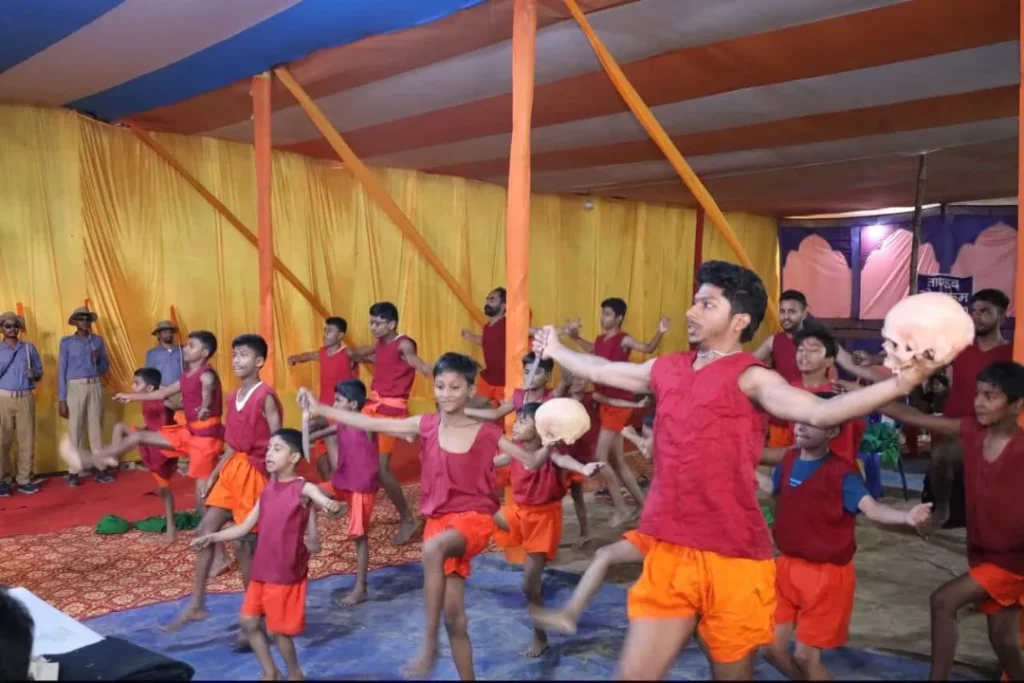
This principle appears throughout every genuine path of development. The martial artist repeats foundational movements for years before their deeper significance becomes apparent. The meditator returns to practice despite periods of distraction and uncertainty. The musician rehearses scales whose purpose only reveals itself over time. In each case, transformation is not produced through force. It emerges through sustained participation.
This perspective challenges one of the central assumptions of contemporary culture. We have become accustomed to immediate feedback and measurable outcomes. We expect visible progress and rapid results. Yet many of the most important forms of transformation unfold beneath conscious awareness. Something is changing even when nothing appears to be happening.
The practitioner cannot command insight. Realization cannot be manufactured. Expansion cannot be forced into existence. What can be done is the creation of conditions in which transformation becomes possible. Practice provides the structure. Participation sustains the process. Over time, change emerges naturally from the relationship between the two.
The Evolution of Consciousness
A recurring theme throughout the conversation is that humanity is not a finished project. Biological evolution may have produced the human organism, but the evolution of consciousness continues. This idea lies at the heart of the Ananda Marga worldview and offers a profound reorientation of how spiritual practice is understood.
The metaphor offered by Acarya Vimalananda is both simple and powerful. A river flows toward the ocean. When it reaches the ocean, it does not disappear. It fulfills itself. Its journey is not one of annihilation but completion.
“The river does not disappear when it reaches the ocean. It fulfills itself.” —Acarya Vimalananda
Likewise, the spiritual path is not about becoming something other than what we are. It is about realizing dimensions of ourselves that remain largely unrecognized. The process involves expansion rather than replacement, fulfillment rather than rejection.
This understanding carries significant implications. Human life is not merely about survival, achievement, or comfort. It contains the possibility of conscious participation in a larger unfolding. Meditation becomes more than a technique for stress reduction. Ethical living becomes more than a moral code. Service becomes more than altruism. Each becomes part of a larger developmental process through which awareness expands beyond its ordinary boundaries.
The path, therefore, is not oriented toward escape from the world. It is oriented toward a deeper participation in reality. Through practice, consciousness gradually learns to recognize itself more fully.
When Practice Becomes a Path
What remains with me after this conversation is how different this orientation feels from much of modern spirituality. Even within spiritual communities there is often an emphasis on accumulation: more knowledge, more techniques, more experiences, more states. Yet the movement described within Ananda Marga points in another direction.
Rather than accumulation, the emphasis is on clarity. Rather than becoming more, the emphasis is on becoming whole. Rather than endlessly seeking something outside ourselves, the path invites us to discover what has always been present beneath the noise of habit and conditioning.
“The path is not somewhere else. It is revealed through practice.” —Acarya Vimalananda
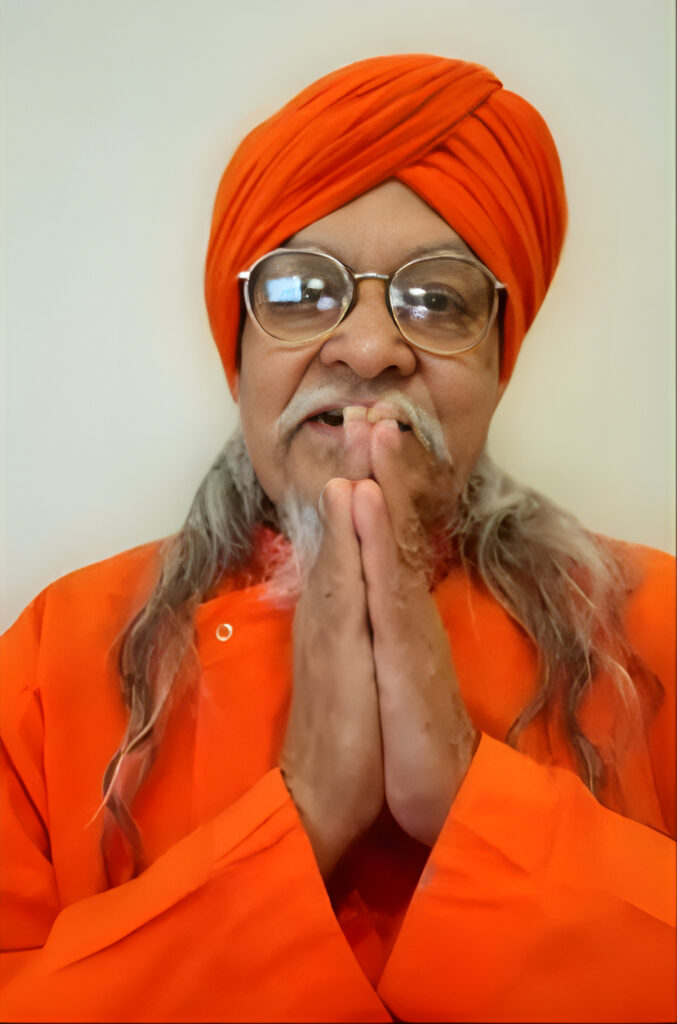
In my own experience, the most meaningful transformations have rarely arrived through dramatic experiences. More often they have emerged through sustained engagement with ordinary practices. A shift in posture. A different relationship with breath. A clearer perception of a recurring pattern. A moment of awareness that changes the way a familiar situation is understood. These moments often seem insignificant when they occur, yet their cumulative effects can be profound.
Over time, practice begins to reshape the structure of experience itself. Attention becomes steadier. Perception becomes clearer. Identity becomes less rigid. What begins as effort gradually becomes participation in a larger process of transformation. Practice ceases to be something we do and becomes a way of relating to life.
Perhaps this is the deepest lesson offered by Ananda Marga. Transformation is not found in extraordinary moments alone. It emerges through the gradual evolution of consciousness through disciplined participation in practice. The path is not waiting in some distant future. It is revealed through the way we meet this moment, this breath, this action, and this life.
When that realization begins to take root, practice ceases to be merely an activity. It becomes a path.
Watch the Conversation with Acarya Vimalananda Avadhuta
Visit the Ananda Marga OFFICIAL WEBSITE
Continue Exploring
The Inner Life Model
How body, breath, attention, and perception organize into lived experience.
The Practice Field
What emerges when perception, awareness, and embodied capacities begin functioning together.
Integrated Modular Training (IMT)
How capacities develop, integrate, and become stable traits rather than temporary experiences.
Integral Being
Conversations exploring transformation, embodiment, and the cultivation of the human being.