Who Am I?
Beyond Philosophy to Direct Experience
with Michael James
Ramana Maharshi, Self-Investigation, and the Practice of Turning Within
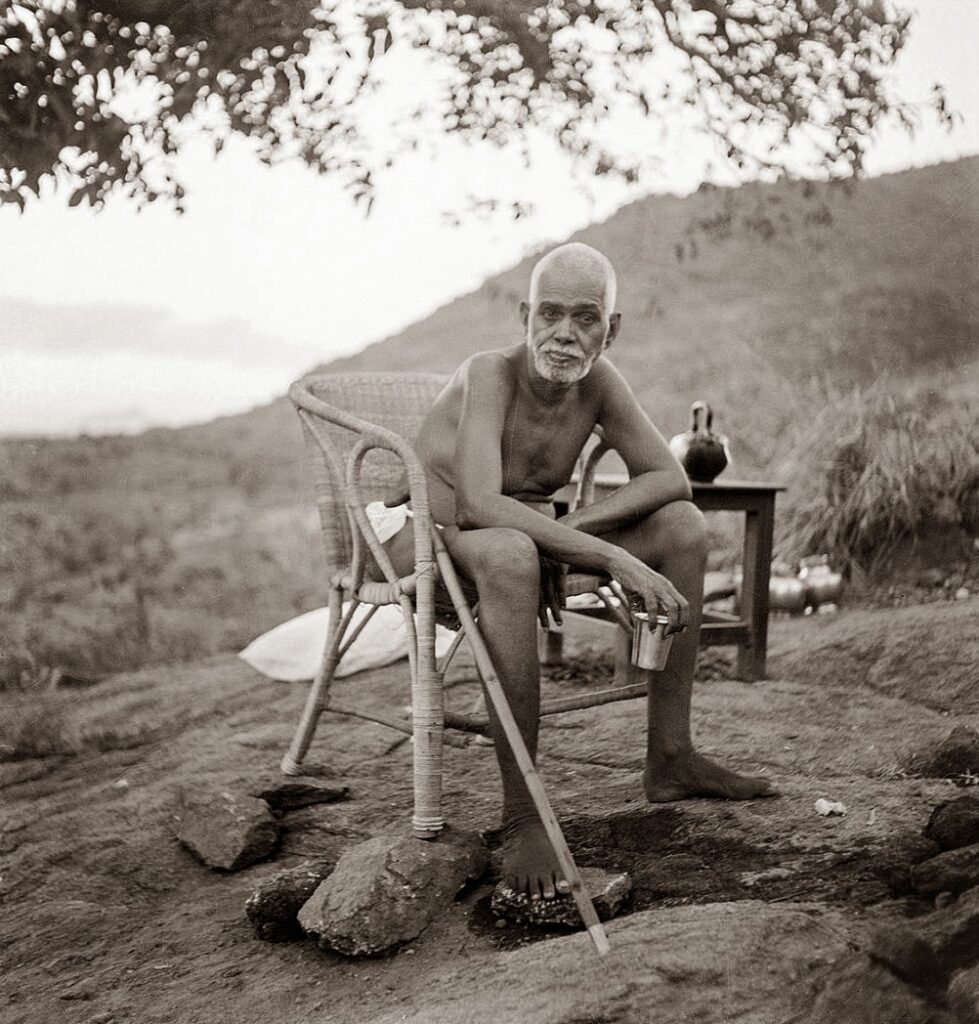
Ramana Maharshi’s teaching can sound deceptively simple: Who am I? Yet behind those three words lies a radical reorientation of attention. Rather than seeking fulfillment, knowledge, spiritual experience, or even God somewhere outside ourselves, Ramana points toward the one thing ordinarily overlooked—the one who is seeking.
In this Integral Being conversation, Michael James, a longtime scholar, translator, and practitioner of Ramana Maharshi’s teachings, explores what this turning inward actually means. The conversation moves from Ramana’s spontaneous awakening at sixteen through silence, devotion, yoga, self-investigation, grace, and the nature of ego. Beneath all these subjects, however, runs a single practical question: Can spiritual understanding become direct experience?
For Michael, Ramana’s teaching ultimately leads away from accumulating explanations and toward investigating the very sense of “I” around which our experience has been organized.
“The practice is the most important.” —Michael James
The Experience That Changed Everything
At sixteen, Ramana Maharshi was suddenly overwhelmed by an intense fear of death. There was no apparent physical cause. Rather than allowing his attention to move outward toward family, possessions, relationships, or everything else that might be lost through death, however, his attention moved inward. The question was not merely whether the body would die. It was whether he would die.
Michael describes this as a spontaneous turning of attention toward the fundamental question of identity: if the body dies, what is it that I actually am? Ramana’s attention turned inward with such intensity that the ego—the ordinary identification of oneself with a particular body and personality—subsided completely. What remained was what Ramana would later describe as pure being or pure awareness.
The event became the experiential foundation of everything Ramana later taught. His teaching did not begin as a philosophical system that he subsequently attempted to practice. It emerged from an experience that philosophy could only later attempt to describe.
This distinction matters. Words can point toward an experience. They cannot substitute for it.
The Ego Begins With “I Am This”
One of the central distinctions in the conversation concerns what Ramana meant by ego. The ego is not simply arrogance, selfishness, or an inflated personality. It is something much more fundamental: the identification of awareness with a particular form.
We do not simply experience a body. We experience “I am this body.”
From that primary identification follows an enormous network of secondary identifications: my history, my relationships, my possessions, my accomplishments, my beliefs, my fears, my desires, and my problems. Michael describes ego as a false awareness of ourselves because we mistake the body and person for what we fundamentally are.
Ramana describes the structure succinctly in Who Am I?: “Of all the thoughts that arise in the mind, the ‘I’ thought is the first.” Only after this primary identification arises do all the other thoughts become organized around it.
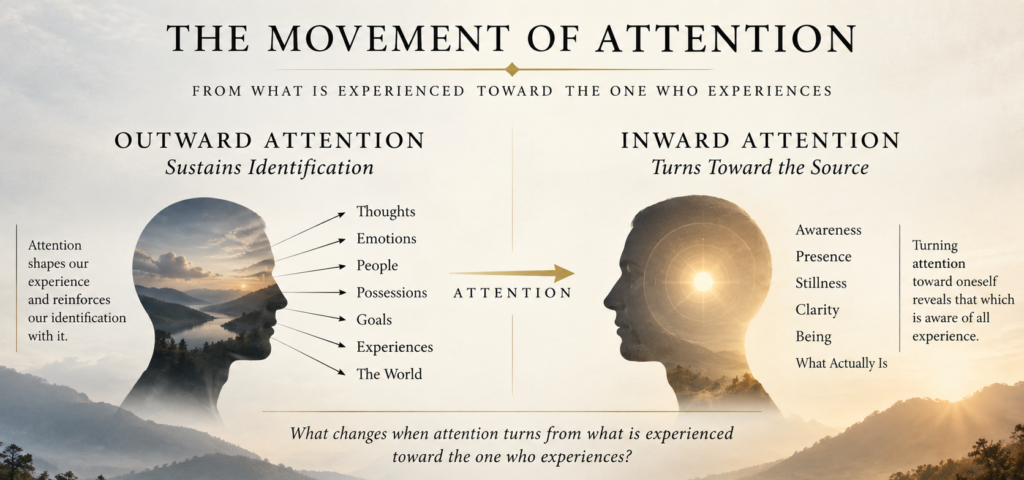
Once this identification occurs, attention naturally moves outward. We seek satisfaction through experiences, relationships, achievements, possessions, knowledge, beliefs, and even spiritual practices.
Ramana’s teaching reverses this habitual movement. Instead of asking what the ego can acquire, improve, understand, or experience, he asks us to investigate the one who wants those things in the first place.
What “Who Am I?” Actually Means
The phrase Who am I? has become so familiar that it can easily become another spiritual slogan. Michael makes an important correction: Ramana was not instructing practitioners simply to sit quietly and repeatedly ask themselves the verbal question Who am I?
“He never said, ‘Ask who am I?’ He said, ‘Investigate who am I?’” —Michael James
The distinction is crucial. Michael explains that the term commonly translated as self-inquiry can be misleading because the English word inquiry suggests asking questions and searching for intellectual answers. Ramana’s instruction is better understood as self-investigation or self-attentiveness.
Ramana himself made the same distinction. Self-enquiry, he said, is “more than repetition of any mantra.” Its purpose is to direct the mind toward its source rather than generate another stream of mental questioning.
This means that Who am I? is not primarily a question requiring a verbal answer. Instead of directing attention toward thoughts, sensations, memories, beliefs, objects, or experiences, attention turns toward the one to whom all those experiences appear.
Michael describes the process precisely: to the extent that we attend to anything other than ourselves, mental activity continues. To the extent that attention turns back toward ourselves, the ego begins to subside.
Self-investigation is therefore less an act of intellectual analysis than a change in the direction of attention.
From Outward Attention to Inward Attention
Much of ordinary life depends upon outward attention. We navigate environments, solve problems, interact with other people, acquire information, anticipate threats, and pursue opportunities. There is nothing inherently wrong with these capacities.
The difficulty, in Ramana’s account as Michael presents it, is that the ego continually strengthens itself through its identification with what it experiences. Ramana described this dynamically: ego comes into being by “grasping form,” remains through grasping form, and flourishes by continually attending to further forms.
Attention therefore does more than observe experience. It participates in maintaining our identification with experience.
This is where Ramana’s teaching becomes especially relevant to an embodied understanding of practice. Transformation is not accomplished simply by adopting another belief about ourselves. Saying I am Brahman, I am awareness, or I am not the body can remain another activity of thought.
The direction of attention itself must change.
In Who Am I?, Ramana gives a practical instruction for precisely this moment. When thoughts arise, rather than following them, the practitioner asks to whom the thought has arisen. The answer is “to me.” Attention is then returned toward that “me”—toward the source of the “I.” Through repeated practice, he says, “the mind will develop the skill to stay in its source.”
That is practice, not merely philosophy.
Why Spiritual Practices Matter
Ramana did not simply dismiss other spiritual paths. Michael explains that practices such as worship, service, repetition of sacred names, meditation, devotion, and yoga can all contribute to the purification of the mind.
Here purification has a specific meaning. The mind contains tendencies that continually pull attention outward through likes and dislikes, desires and attachments, hopes and fears. As long as these tendencies remain strong, simply telling someone to turn within may accomplish very little. The practitioner may understand the instruction perfectly and still find attention repeatedly drawn outward.
Practice gradually changes that condition.
Michael describes a progression within devotion, for example. A person may initially approach God because they want something. As devotion matures, however, God ceases to be merely a means of obtaining something else. Love becomes less transactional and increasingly directed toward God for God’s own sake.
Other practices can similarly prepare the mind. Ramana himself described breath control, meditation on divine forms, and repetition of mantras as aids for making the mind more quiescent and one-pointed, thereby making self-investigation easier.
The important distinction is between preparing the conditions for transformation and transformation itself.
From Many Practices Toward One Movement
This gives the conversation an important developmental dimension. Different practices are not necessarily competing systems. They can represent different ways of reorganizing attention and weakening the tendencies that continually carry us outward.
Michael describes Ramana’s understanding of spiritual development as movement toward greater inwardness. Even devotion and knowledge, which are sometimes treated as separate paths, eventually converge. Ramana, Michael explains, often said that “devotion is the mother of knowledge.” The love that once moved toward God as something apparently separate eventually becomes the love necessary to turn toward the source of one’s own being.
From an Inner Life perspective, this raises an important question about practice itself: What direction is the practice actually taking us?
Practice can accumulate experiences, identities, techniques, beliefs, and concepts. Or it can gradually transform the conditions from which we perceive and participate in life. The outward form of the practice does not necessarily tell us which of these is occurring.
What matters is what the practice is cultivating.
Silence Is More Than the Absence of Thought
Ramana is famous for emphasizing silence as his deepest teaching. But Michael cautions against interpreting this too literally.
Silence does not simply mean not speaking. Nor does it mean temporarily stopping thought. Both vocal silence and mental quiet come and go. A meditation session may be peaceful one day and restless the next. Neither condition represents what Ramana ultimately meant.
“It is the eternal silence of pure being.” —Michael James
Michael explains that even the arising of ego is already a kind of metaphorical noise—the first movement away from undivided being into the experience of multiplicity. Silence therefore points beyond a temporary state produced through practice. It points toward that which does not come and go.
Ramana expresses this even more radically: “The Self is that where there is absolutely no ‘I’-thought. That is called ‘Silence.’”
This distinction matters because practitioners can easily become attached to states: stillness, bliss, spaciousness, energetic sensations, absorption, or mental quiet. But every state has a beginning and an end.
Ramana’s investigation points toward something more fundamental: What is aware of every changing state?
When Understanding Becomes Another Obstacle
At one point in our conversation, I raise a recurring problem within spiritual traditions: becoming absorbed in intellectual understanding. Texts are studied. Philosophies are compared. Terms are defined. Commentaries accumulate.
All of this can be useful. But usefulness depends upon what the knowledge does.
Michael agrees that people can become caught in scholarly and intellectual approaches until the explanations themselves obscure the practice. Different teachings may also appear contradictory because they were given at different levels and for different practitioners. We therefore need to be discriminating about explanations and understand the level at which they are being offered.
Ramana himself was remarkably direct about this. In Who Am I?, when asked whether reading books is useful for someone seeking liberation, he says that once their essential purpose has been understood, “there is no need for endless reading.” The Self, after all, cannot ultimately be discovered in books.
The solution is not necessarily to abandon philosophy. It is to understand its function. A teaching should point beyond itself.
“You Are That” Is an Instruction
The Upanishadic statement Tat Tvam Asi—“You are That” can easily become another metaphysical proposition to accept or debate. Michael presents it differently. If the teaching says You are That, the practical response is not simply to repeat I am That. It is to investigate: Who am I?
We ordinarily seek what we believe we lack outside ourselves. We seek happiness, knowledge, God, recognition, fulfillment, or some experience that will finally make us complete. The Upanishadic declaration redirects that search. What you are seeking is not somewhere else.
You are That. Its purpose is therefore to turn attention back toward the seeker. The teaching becomes transformative only when it changes the direction of our attention.
Why We Keep Looking Outside Ourselves
Near the end of the conversation, the discussion returns to a very ordinary human experience: dissatisfaction.
We continually want something to be different. For one person it may be money, recognition, possessions, or power. For another it may be knowledge, spiritual realization, inner peace, or a better version of themselves.
The objects differ. The movement of seeking remains.
Michael explains this through Ramana’s understanding of ego. What we actually are, in this teaching, is unlimited. But by identifying ourselves as a particular body and person, we experience ourselves as limited. From that sense of limitation comes dissatisfaction, and from dissatisfaction comes seeking.
Ramana begins Who Am I? from precisely this human predicament: all living beings desire happiness, and happiness is ultimately our own nature. The problem is that we search for it elsewhere.
We repeatedly attempt to resolve an inward sense of incompleteness through something outside ourselves. Yet whatever we obtain is finite and temporary. Nothing finite can permanently resolve the felt limitation from which the search began.
This is why self-investigation is so radical. Instead of asking What will finally satisfy me?, Ramana’s teaching asks: Who is the one who feels incomplete?
Grace Is Not Somewhere Else
The conversation also brings self-investigation into relationship with grace. At first these can appear contradictory. If realization depends upon turning attention inward, what role remains for divine grace? Michael explains that for Ramana the two are not separate.
“Grace is our own very being.” —Michael James
Grace is not simply an external force descending upon an individual from somewhere else. God, grace, and our fundamental being ultimately point toward the same reality.
What appears to us as the gradual pull toward spiritual life—the increasing dissatisfaction with superficial answers, the desire to understand ourselves, the attraction toward teachings and practices that turn us inward—can itself be understood as the movement of grace.
We appear to be searching for the source. Yet from another perspective, the source is drawing attention back toward itself.
The Practice Is the Most Important
The final exchange of the conversation brings everything back to practice.
Philosophy has value. Study has value. Explanation has value. Tradition has value. But none of them is the destination. Michael’s closing observation provides perhaps the clearest bridge between Ramana Maharshi’s teaching and the larger inquiry of Inner Life:
“The philosophy is useful to the extent to which it turns our attention back towards ourselves.” —Michael James
Its purpose is to help us recognize the necessity of attending to ourselves and to cultivate the desire to do so. And then comes the essential point:
“But the practice is the most important.” —Michael James
This distinction reaches far beyond Advaita Vedanta. A person can understand meditation without becoming less reactive. They can understand martial arts without embodying their principles under pressure. They can study consciousness without becoming more aware. They can accumulate spiritual teachings without fundamentally changing the way attention, perception, and response are organized.
Inner Life begins precisely at this threshold. The question is not only What do I understand? It is What has become embodied?
And Ramana Maharshi’s teaching takes the inquiry still deeper. Before asking what we have learned, accumulated, improved, or transformed, it asks us to investigate the one around whom the entire project has been organized.
Who am I?
Not as a question requiring another conceptual answer, but as an invitation to turn attention toward its source.
About the Guest
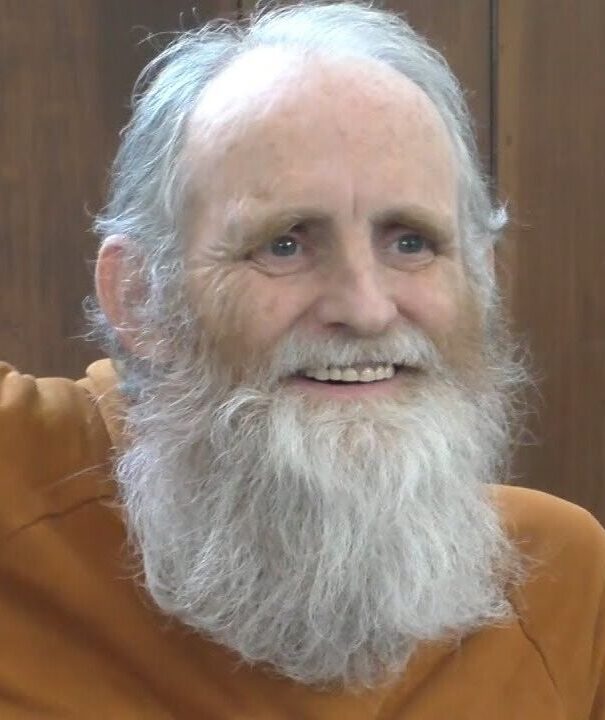
Michael James is a writer and longtime student of the teachings of Bhagavan Sri Ramana Maharshi, particularly the practice of ātma-vicāra, or self-investigation. He first encountered Ramana’s teachings while traveling in India in 1976 and subsequently lived for 20 years in Tiruvannamalai, where Ramana had spent most of his life. There he immersed himself in Ramana’s original Tamil writings and the practice of turning attention inward toward the fundamental awareness of “I am.”
For more than eight years, James studied closely with Sri Sadhu Om, a direct devotee of Ramana and close associate of the poet-disciple Sri Muruganar. Working from Ramana’s original Tamil texts, James developed a detailed understanding of self-investigation and later helped translate Guru Vācaka Kōvai, an important collection of Ramana’s teachings, into English. Through his writing and teaching, he continues to explore Ramana’s central invitation: to turn attention away from objects of experience and investigate directly the consciousness we experience as “I am.”
Continue Exploring