
The Dao Is Everywhere
Presence, Practice, and the Natural Self in Daoist Thought
by Mark V. Wiley
One of the quiet misunderstandings in spiritual life is the belief that transformation lies somewhere beyond ordinary experience. That it requires a peak moment, a breakthrough, or an extraordinary state that separates us from daily life. My conversation with Daoist teacher and author Dr. Livia Kohn gently but firmly dissolves that assumption. In the Daoist view, the Dao is not elsewhere. It is already present, already active, already expressing itself through everything we experience.
In Daoist practice, transformation is not understood as becoming something other than oneself. What changes is not reality itself, but our capacity to recognize it.

The Dao Is Already Present
“The Dao is not elsewhere. It is already present.” —Dr. Livia Kohn
This reframing shifts the entire orientation of practice.
Rather than striving toward something distant, the work becomes one of allowing. Letting go of the patterns that obscure perception. Softening the constructed layers of identity that filter experience. Creating the conditions in which what is already present can be felt directly.
This is not passivity. It is refinement.
Daoist Practice and Receptivity
A key insight that emerges is the distinction between experience and control.
There is a tendency, especially among practitioners, to assume that if the right techniques are applied with enough discipline, certain states will inevitably arise. But Daoist thought offers a more subtle understanding. Practice does not produce the experience. It prepares the person to receive it.
The experience itself happens.
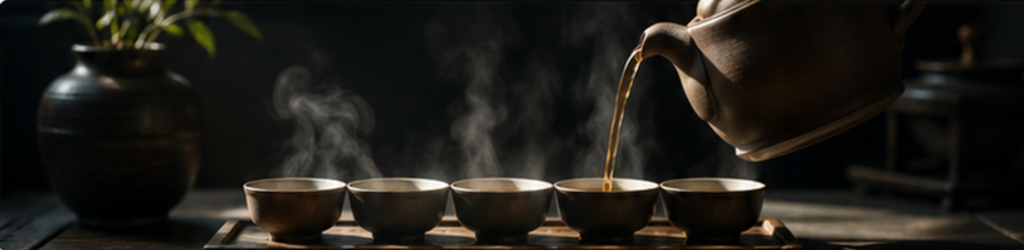
“Practice does not create the experience.
It prepares us to receive it.” —Dr. Livia Kohn
“Transformation is not something we manufacture.
It is something we align with.” —Dr. Livia Kohn
This introduces a necessary humility into the process.
It reminds us that transformation is not something we manufacture. It is something we align with. The role of practice is to make the system—body, mind, and attention—more receptive, more open, less obstructed. And from that openness, moments of clarity begin to appear.
Mystical Experience and Everyday Life
Another important shift in this conversation is the redefinition of mystical experience.
Rather than framing it as rare, overwhelming, or otherworldly, it becomes something far more accessible. A moment of complete presence. A state in which the division between self and world softens. A brief but real sense of unity with what is happening.
This can occur in meditation. But it can also occur while listening to music, walking in nature, or simply being fully present in an ordinary moment. This changes the relationship to everyday life.
The goal is no longer to escape it. The goal is to enter it more fully. Underlying this is a deeper structural understanding of the self.
“The goal is not to escape life, but to enter it fully.” —Dr. Livia Kohn
The Constructed Self and the Natural Self
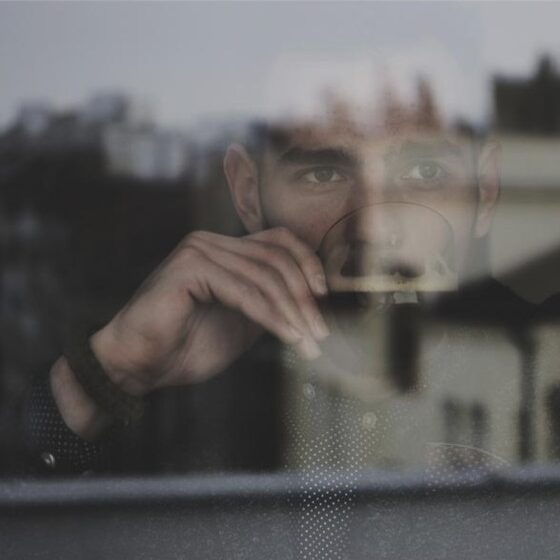
Daoist thought distinguishes between the constructed self and the natural self. The constructed self is shaped by conditioning, social roles, expectations, and learned behavior. It is necessary for functioning in the world, but it often becomes dominant.
The natural self, by contrast, is spontaneous, unforced, and aligned with the deeper movement of life.
The tension between these two creates much of what we experience as conflict.
When the constructed self overrides the natural self, life becomes effortful, constrained, and disconnected. When the natural self is allowed to emerge, there is a sense of ease, coherence, and alignment.
The work, then, is not to eliminate the constructed self, but to place it in service of the natural one. This has direct implications for how we understand authenticity. Authenticity is not a performance or an identity claim. It is the degree to which one’s life expresses what is naturally present, rather than what is imposed or constructed.
“The constructed self must serve the natural self.” —Dr. Livia Kohn
It is not something added. It is something uncovered. The conversation also brings forward a nuanced understanding of time.
Daoism and the Experience of Time
In modern life, time is treated as fixed, linear, and external—measured by clocks, schedules, and obligations. But from a Daoist perspective, this is only one layer. Beneath it are multiple dimensions of time: biological rhythms, psychological experience, cosmic cycles, and even states that move beyond time altogether.
To engage with practice is, in part, to shift one’s relationship to time. When attention becomes steady and present, the dominance of past and future begins to loosen. Memory and projection lose their grip. What remains is immediacy.
“Time is not singular. It is layered and experiential.” —Dr. Livia Kohn
This has practical consequences.
Much of psychological suffering is tied to attachment to past experiences or anxiety about future outcomes. Daoist methods, rather than analyzing these patterns in detail, often emphasize releasing them. Not through force, but through disuse. By returning attention to what is present, the structures that sustain these patterns begin to dissolve.
“Suffering is sustained by attachment to past and future.” —Dr. Livia Kohn
Ethics as Alignment Rather Than Enforcement
Ethics, in this framework, also take on a different meaning.
Rather than being imposed externally through rules or enforced through fear of consequence, ethical behavior arises naturally from alignment with the Dao. When one is in harmony with the underlying movement of life, action tends to be balanced, appropriate, and non-destructive.
This is not moral relativism. It is a different foundation for behavior.
“Ethical behavior arises from alignment, not enforcement.” —Dr. Livia Kohn
What becomes clear through all of this is that the path is not about becoming something new. It is about removing what interferes with what is already functioning at a deeper level.
Nothing New Needs to Be Added
The Dao does not need to be created. It needs to be recognized. And that recognition does not require extraordinary conditions. It begins, very simply, with presence.
“Nothing new needs to be added. Only what obstructs must be removed.” —Dr. Livia Kohn
Watch the Conversation with Dr. Livia Kohn
In this Integral Being conversation, Livia Kohn explores false identity, awareness,
balance, and the return to wholeness.
Or Watch & Listen
on your favorite podcast platform




Continue Exploring This Theme