When Practice Stops Being Imitation
Notes on Resonance, Entrainment, and the Arc of Embodied Learning
by Mark V. Wiley
Resonance and entrainment are rarely discussed openly in embodied traditions, yet they sit beneath nearly all forms of deep human learning and transformation. There are things you can only understand after decades in the field. Not from books, seminars, or the accumulation of techniques, but through direct contact with practice itself — across teachers, traditions, cultures, and years of repeated exposure.
Over nearly five decades, I trained with masters and practitioners across many disciplines: martial arts, meditation, internal cultivation, healing systems, contemplative traditions, and embodied practices both traditional and modern. I watched. I listened. I followed along. At first, learning was simple: monkey see, monkey do. A teacher demonstrated movement and I copied it. They corrected posture, timing, breathing, structure, rhythm. I adjusted. Slowly, the body changed through repetition and correction.
This is where most practice begins — though for many, it never moves beyond this stage.
Over time, I began noticing that learning itself was unfolding in recognizable stages — not as rigid steps, but as shifts in relationship between practitioner, teacher, and practice. What begins as imitation can become something far deeper.
Contact
Every path begins with exposure. You encounter a teacher, a form, a movement, a practice, or perhaps simply a different way of being. At this stage, little has changed internally. The system has merely come into contact with something outside itself.
The beginning is usually external:
Copying Movements → Hearing Explanations → Following Instructions → Trying to “do it correctly“
And yet contact matters deeply, because sometimes a single encounter quietly rearranges the direction of a life.
Attention and Orientation
After enough exposure, attention changes. You no longer merely watch the technique — you begin searching for the essence behind it. Observation deepens.
I found myself paying increasing attention to what teachers did rather than only what they said. Over time, it became clear that explanation and embodiment are not always operating at the same level. A teacher may speak through the lens of culture, education, personality, or conceptual understanding, while the body reveals something far more direct.
Broad tendencies also became apparent. Western teachers often explain more — mechanics, theory, concepts, systems. Eastern teachers often demonstrate more — timing, feeling, structure, presence. Less explanation. More transmission through observation and shared practice.
Neither approach is inherently superior. But eventually one realizes that the deepest instruction is often happening beneath language.
“The deepest instruction is often happening beneath language.” —Mark V. Wiley
Resonance
At some point, understanding stops being merely intellectual. Something begins resonating directly in the body. Not agreement. Not belief. Recognition.
A movement suddenly makes sense from the inside. A principle becomes physically obvious. Breath, structure, timing, and attention begin aligning in ways words alone could never fully transmit.
This is resonance — the system responding because something within it already contains the possibility being awakened.
At this stage, practice changes profoundly. You stop trying merely to remember instructions and begin sensing truth directly through experience.
Following and Mimetic Coupling
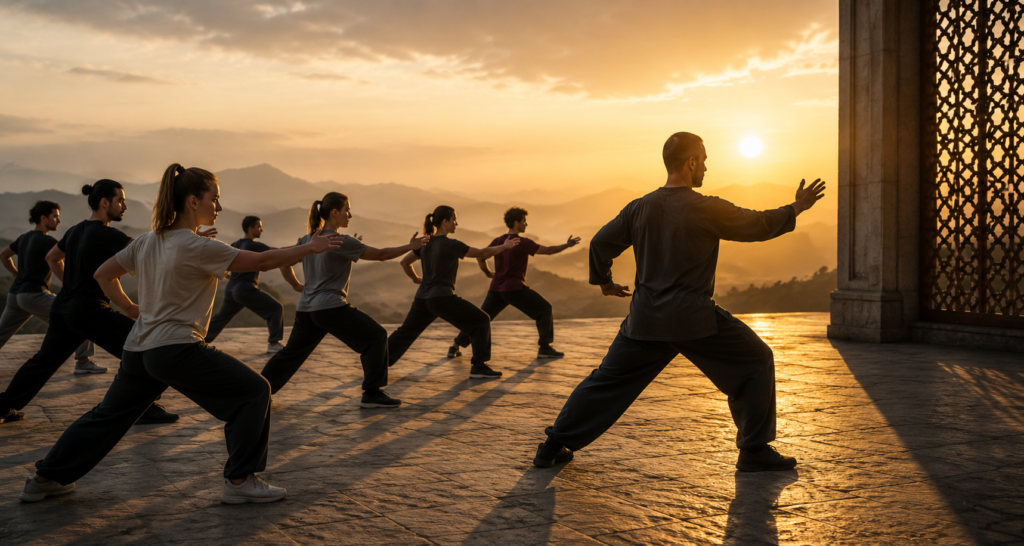
Shared practice creates another important phase. You move with the teacher. You move with the class. You synchronize posture, rhythm, pacing, breathing, and cadence. You try, in some sense, to become like the master.
This is not foolish. It is developmental. Much early learning occurs through:
Imitation + Mirroring + Synchronization + Borrowing organization from another system
In martial arts forms, meditation halls, qigong practice, chanting, ritual movement, and paired exercises, this process is everywhere. It creates a bridge between where you are and where you are trying to go.
“You cannot become the teacher, nor should you.” —Mark V. Wiley
But imitation is not the destination. Eventually something becomes clear: you cannot become the teacher, nor should you.
Entrainment
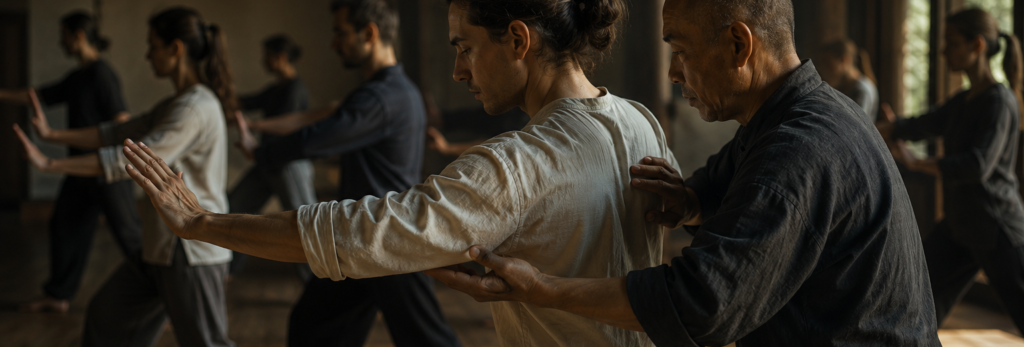
With enough shared practice, synchronization deepens. The relationship is no longer merely external imitation. The systems begin organizing together.
Breathing synchronizes. Timing synchronizes. Attention synchronizes. Movement continuity synchronizes. This is entrainment.
Unlike simple mimicry, entrainment changes the practitioner from within. The nervous system begins adapting to new rhythms and new possibilities of organization. Sustained exposure gradually reorganizes perception itself. This is why long-term immersion matters so much — not because a teacher gives you secret techniques, but because sustained exposure gradually reorganizes perception itself. Over time:
Effort Decreases → Responsiveness Increases → Continuity Stabilizes → Principles begin appearing spontaneously
What once felt foreign starts feeling natural.
Internalization
Eventually, external support becomes less necessary. The movement no longer belongs to the teacher. The rhythm no longer depends on the group. The posture no longer requires constant correction.
The principles begin sustaining themselves internally.
This is where practice starts becoming lived rather than performed. What was once imitation becomes capacity. You no longer remember alignment intellectually — you perceive misalignment directly. Breath is no longer something you “apply.” It remains continuous naturally.
This marks a major threshold in serious practice, because the system is no longer merely reproducing form. It has begun reorganizing itself.
Differentiation and Separation
And then comes a stage many traditions rarely discuss openly: separation.
To truly mature, one must eventually go beyond the teacher, beyond the exact method, beyond imitation itself. Not through rejection, but through integration.
Because: we are not the teacher; we are not the method; we are not the style; we are not the system. We are unique expressions moving through living processes. This is precisely why they are called arts.
“To master an art, one must finally enter oneself.” —Mark V. Wiley
At this stage, direct perception becomes more important than preservation of appearance. The practitioner no longer asks, “Am I doing it exactly like the teacher?” but instead, “What is actually happening here?”
That question changes everything.
Integration
Eventually, the distinctions soften. Practice is no longer separate from life. Principles move naturally across contexts. What once required concentration becomes part of perception itself.
The deepest traditions often point here — not toward endless accumulation of techniques, but toward transformation of organization.
What begins as correction becomes sensitivity. What begins as imitation becomes responsiveness. What begins as practice becomes a way of being.
“What begins as practice becomes a way of being.” —Mark V. Wiley
And perhaps this is the hidden arc beneath all embodied disciplines:
Contact → Attention → Resonance → Following → Entrainment → Internalization → Differentiation → Integration
Not a rigid ladder. Not a doctrine. But a living process through which the human being gradually becomes more organized, responsive, and awake to itself.
What traditions often call transmission may partly reflect processes of resonance and entrainment unfolding through sustained shared practice. Related concepts in cognitive science are also explored through the study of entrainment and interpersonal synchronization.

The process appears differently across traditions,
but the underlying movement remains remarkably consistent.
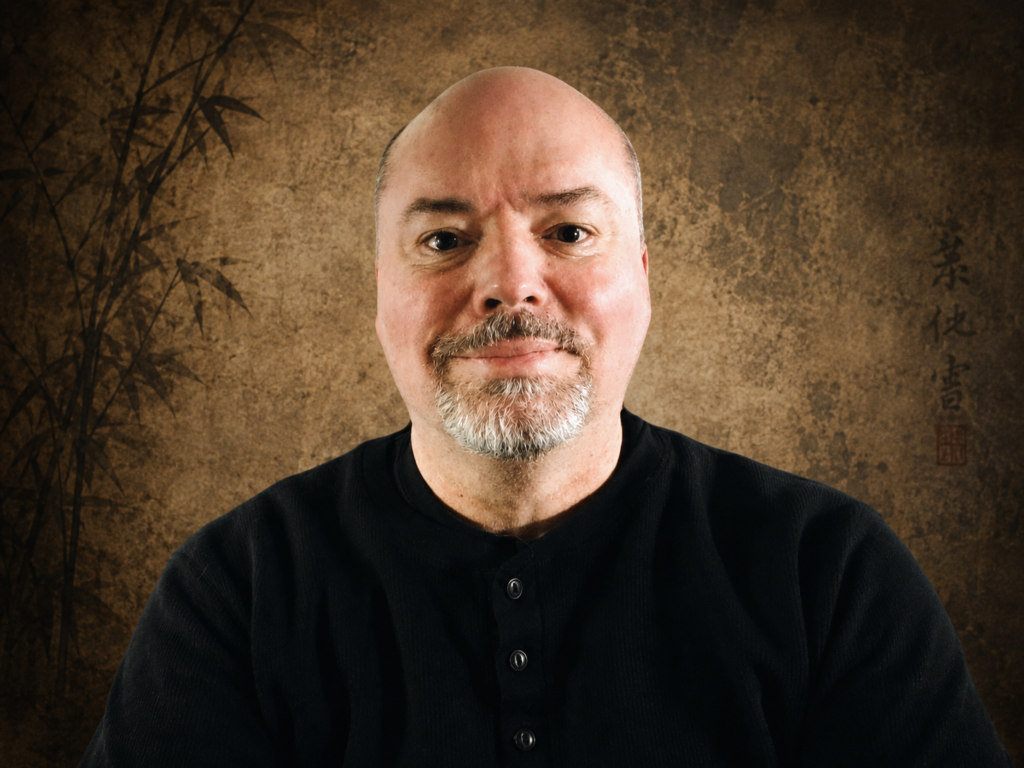
About Mark V. Wiley
Mark V. Wiley is a martial artist, author, and researcher with nearly five decades of training across traditional martial arts, internal cultivation systems, healing arts, and contemplative disciplines. He is the founder of Integrated Eskrima, a lineage holder in orthodox Ngo Cho Kun, and the creator of Inner Life — a practice-based system exploring embodied development, integration, and lived transformation.
Continue Exploring