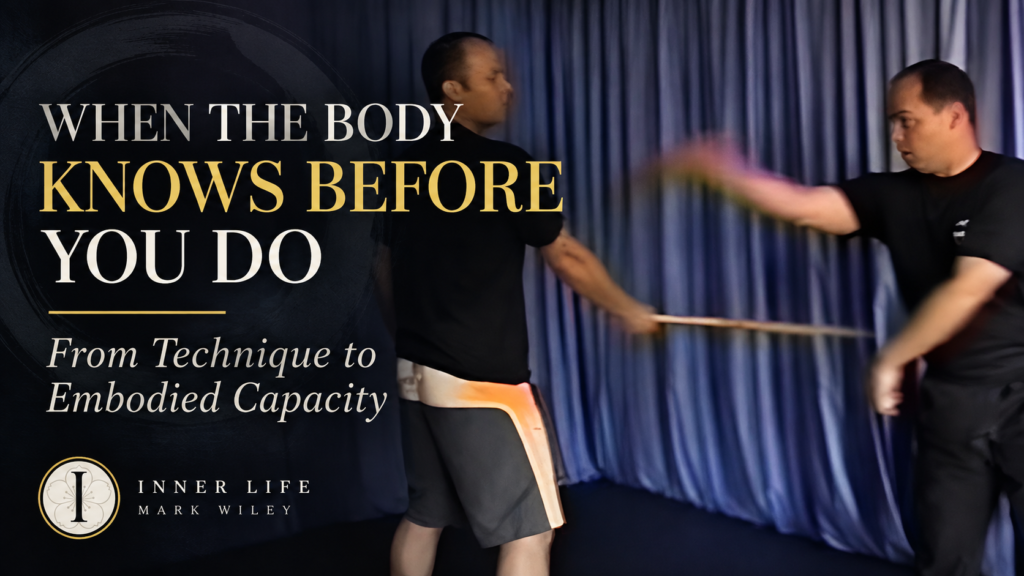
What Slowness Reveals:
A Lesson from Angel Cabales
Insight into precision, presence, and embodied practice
by Mark V. Wiley
Forty years ago, I was a teenager hungry for martial arts. I washed dishes in restaurants, flipped burgers at greasy spoons, and mowed lawns to save enough money to travel and train with the best masters I could find.
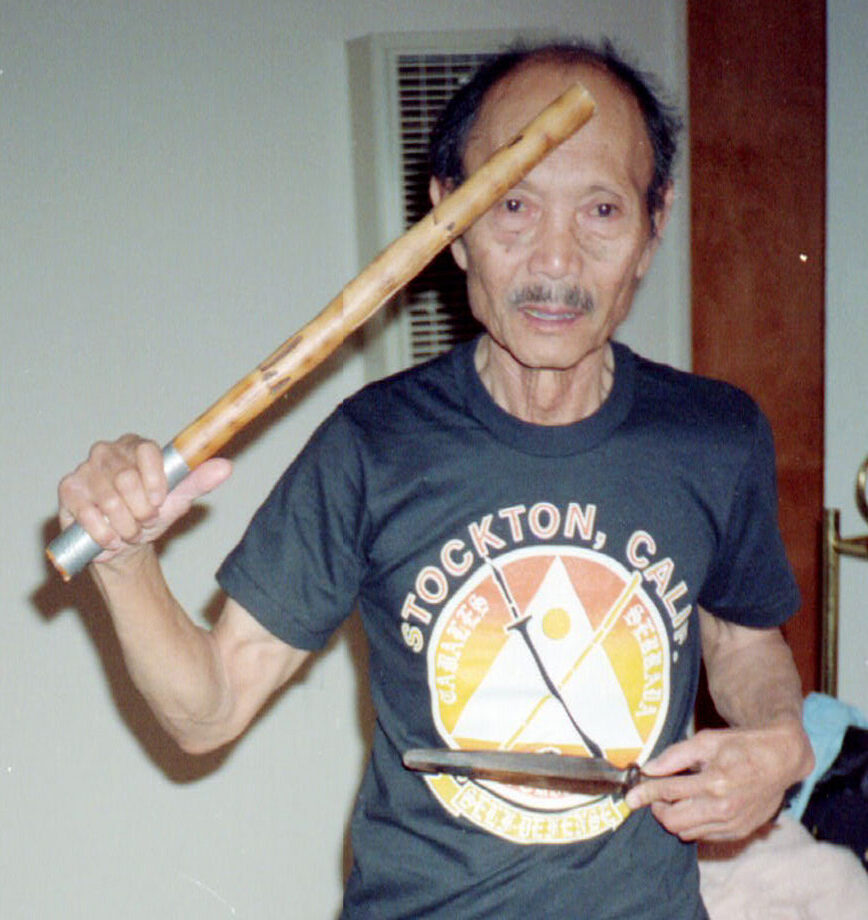
Those jobs helped pay for several flights from Philadelphia to Stockton, California, where I studied with Serrada Escrima master Angel Cabales. Back home, I was the only person practicing his system of Filipino stick fighting. I trained hard between visits, and each time I returned, I wanted him to see how much I had improved.
On one particular trip, I tried to impress the master with my speed. He was not impressed. “You do the move wrong and move fast, make it more wrong.”
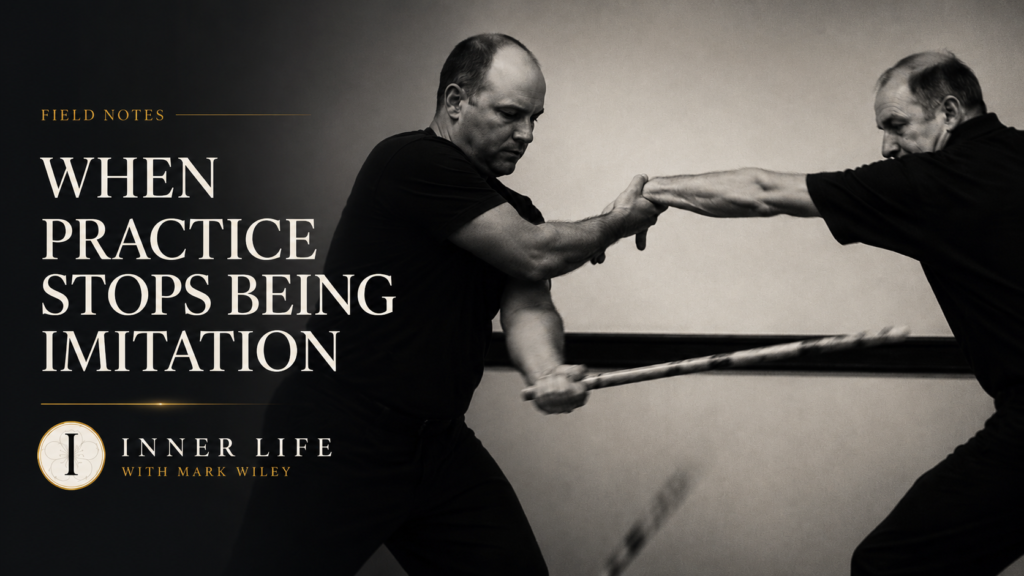
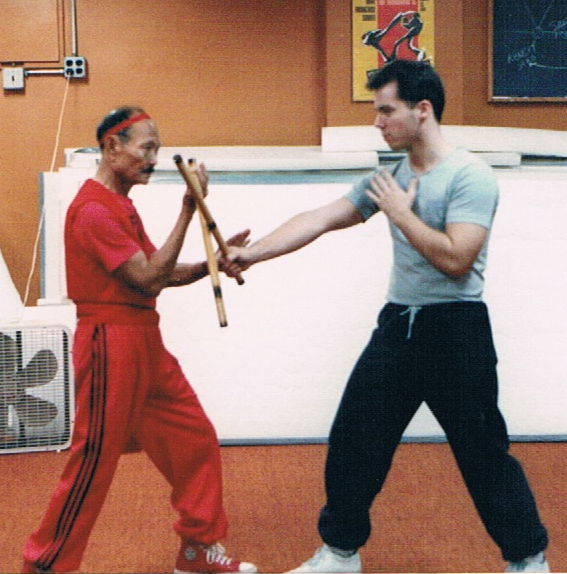
At first, I did not understand. When he directed his angle-six forehand thrust toward my chest, I stepped back, raised my stick vertically, and met his weapon with a cross block.
Again and again, I made contact, which to my teenage mind meant the technique was working.
Then he slowed down. And I began missing it.
One Hour, One Movement
At normal speed, I could get my stick in the way. Moving slowly exposed what I had been doing: rushing toward contact without clearly recognizing the relationships among my step, my turn, my arm, and the two weapons.
He instructed me to slow down as well. As he thrust, I stepped back with my left leg and raised the stick in my right hand vertically along my center. I had to coordinate the pivot so that our sticks met at the appropriate angle, allowing his thrust to be deflected.
The distinction mattered. I had been pushing my cross block outward, much as I would against an angle-three horizontal forehand strike toward the waist. But a thrust approaches differently, and by pushing outward against it, I created an opening he could use to redirect his weapon underneath mine and counter.
I was meeting his stick, but I was also giving him something. Slow practice allowed me to recognize that difference.
The placement of my weapon depended on the organization of my whole body: the step, the waist, the shoulder, the elbow, the wrist, and the hand. Each contributed to what happened at the point of contact.
We spent an hour on that single response to that single thrust. One hour of stepping, raising, turning, meeting, and beginning again.
I was annoyed with myself. I had traveled across the country eager to demonstrate my progress, and here I was struggling with something I thought I already knew.
Yet I was also elated. I could finally feel distinctions that speed had allowed me to overlook. The movement was becoming something I could recognize and repeat with greater precision.
A Lesson I Had Heard Before
On the flight home, I remembered my childhood piano lessons. I studied piano from age six until I was thirteen, and my teacher, another elder man with little patience for rushing, repeatedly told me to slow down when practicing scales.
I wanted to move quickly through the notes. He wanted me to hear each one.
Even when I struck the right keys, I blurred the notes together. Each needed its allotted duration, and the rhythm had to remain even, whether I played one octave, two, or three. My fingers needed to arrive with clarity and coordination.
I had heard this lesson years before meeting Angel Cabales. I simply had not recognized it in another form.
On the piano, I rushed through the scale. In Escrima, I rushed toward the block. In both, I was concerned with getting through the movement, and I missed much of what gave it quality.
Slowness gave me time to listen, feel, and make corrections. As the coordination became reliable, I could increase the speed while preserving more of what I had developed. The speed needed to grow from the skill I could sustain.
Moving at a Pace We Can Learn From
Slowness alone does not ensure precision. We can repeat a poorly organized movement slowly, just as we can repeat it quickly. Its value lies in the opportunity it gives us to notice and adjust.
Where does the movement begin? What happens to our balance? Does the shoulder rise unnecessarily? Does the hand arrive before the body can support it? Are we holding our breath? Can we remain aware of the person in front of us while attending to ourselves?
These questions become available through practice. They are felt in the movement itself.
Slow martial arts practice does not automatically ensure precision. We can repeat a poorly organized movement slowly, just as we can repeat it quickly. Its value lies in the opportunity it gives us to notice and adjust.
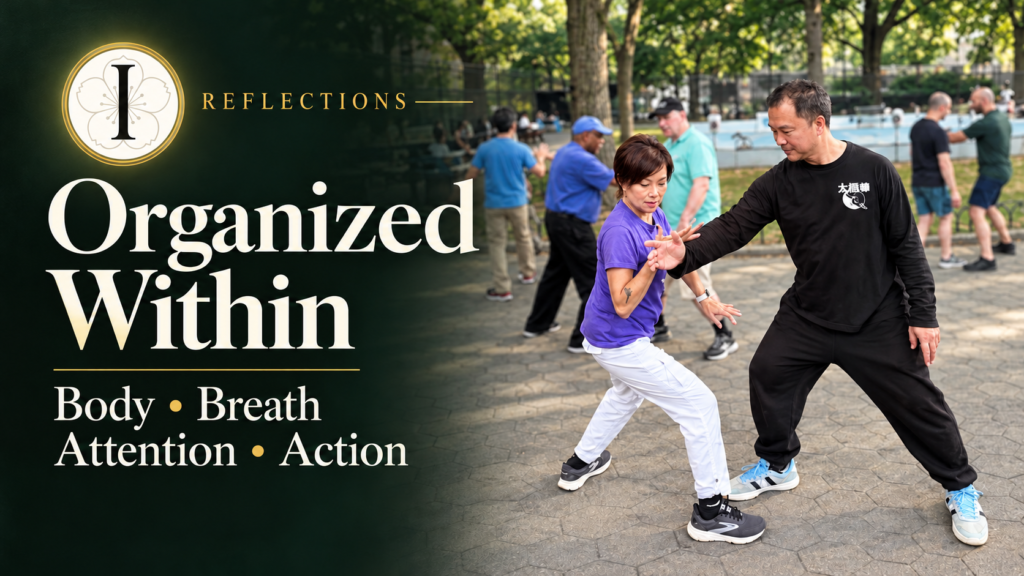
Some arts, such as Tai Chi, give considerable attention to slow movement. This offers opportunities to explore posture, weight transfer, sequencing, and the relationship among attention, breath, and intention.
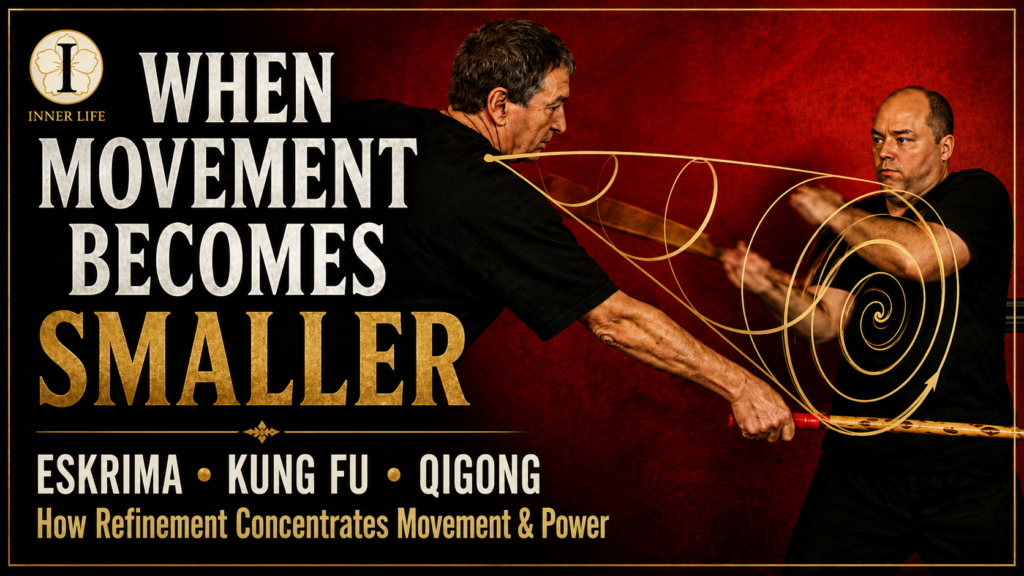
Martial application also requires practice with changing speed, distance, pressure, and a responsive partner. Movements explored slowly and expansively must become available in more compact and immediate forms.
I have written elsewhere about this process of movements becoming smaller and more refined. You can explore that further in “When Movement Becomes Smaller.”
In arts commonly practiced at speed—Filipino martial arts, Wing Chun, Five Ancestor Fist, and others—deliberately slowing down offers a complementary opportunity. We can examine the coordination that makes speed useful, then test that coordination as the demands increase.
The question becomes: how much clarity can I retain as I move? And as the pace increases, can I preserve the timing, placement, and awareness that give the movement its effectiveness?
The Practice Within the Art
This is where the lesson connects with Inner Life. As we slow down, we have an opportunity to bring attention, bodily sensation, posture, breath, and intention into closer relationship. We begin to recognize how we organize ourselves while doing something.
We also encounter our impatience. We want to advance, add another technique, complete the sequence, or demonstrate what we know. Spending an hour on one movement can feel like an obstacle to progress. Yet that hour can reveal precisely what our usual practice has been passing over.
An art with many techniques offers years of such investigation. Each movement contains relationships to explore, and each practice session gives us feedback about how we engage with learning.
When mastery of an art becomes a way of understanding ourselves, these qualities matter deeply. Can we take our time? Can we remain interested in a small distinction? Can we recognize an error without immediately rushing past it? Can we adjust and try again?
Through this engagement, martial arts, music, yoga, sport, or another physical discipline can become a practice of cultivation. We develop capacities that extend into how we listen, work, relate, and meet difficulty.
The patience practiced in a movement becomes available when a conversation is uncomfortable. Sensitivity to unnecessary effort helps us recognize when we are forcing a situation. The ability to notice, reorganize, and continue becomes useful throughout daily life.
From Movement Toward Stillness
For someone who finds sitting meditation difficult, slow physical practice can offer a meaningful place to begin. An active mind and a restless body already have something to engage with: the shifting of weight, the movement of a hand, the changing contact of the feet with the ground.
Begin with a familiar movement and give it more time. Feel how it unfolds, and let attention accompany it. Notice the breath and allow it to settle without forcing it into a prescribed rhythm.
As the movement becomes more familiar, explore doing less. Let the gesture become smaller. Pause and feel what remains.
This can provide a gradual approach to standing practice, qigong, or seated meditation. We learn to remain present through movement and carry that familiarity into stillness.
What Remains With Me
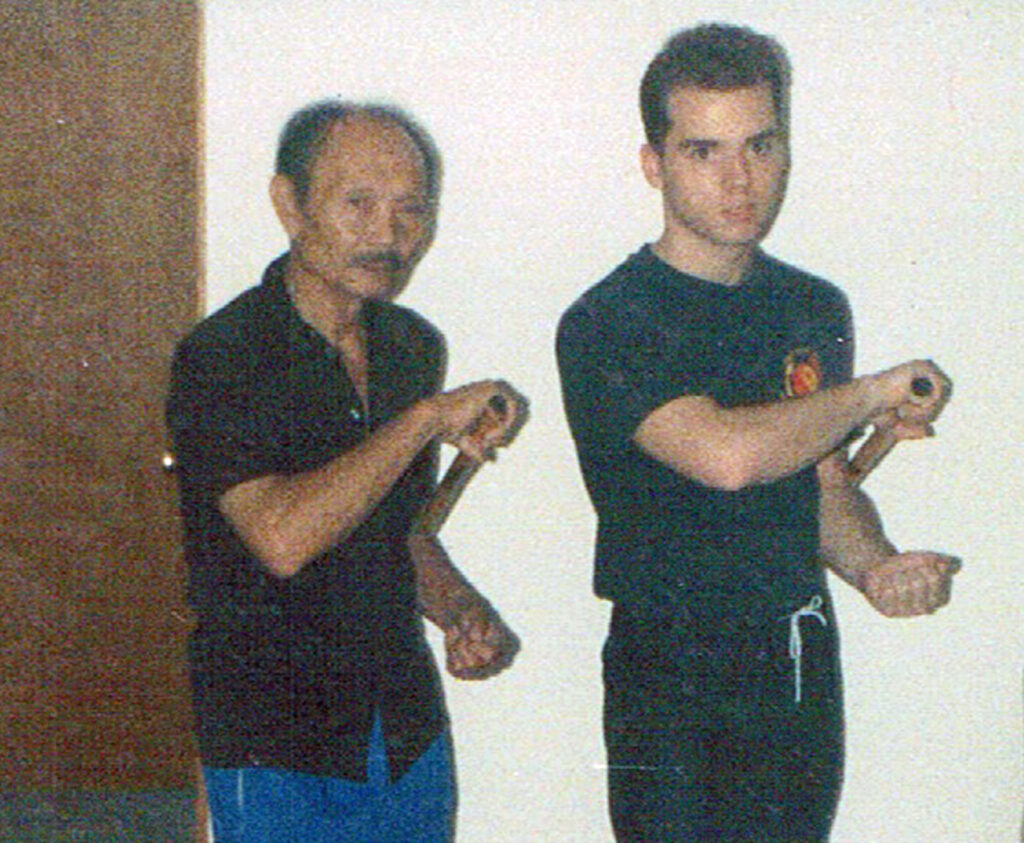
When I remember the late Grandmaster Angel Cabales, I feel deep gratitude for his patience, his instruction, and the trust he placed in me to carry his art. That afternoon in Stockton has remained with me for four decades.
I arrived wanting him to notice my speed. He helped me notice my movement. He gave me an hour in which I could begin to feel what I had been missing.
Slowness made the details available. Attention allowed me to learn from them. And practice gradually made that learning my own.
Continue Exploring This Theme