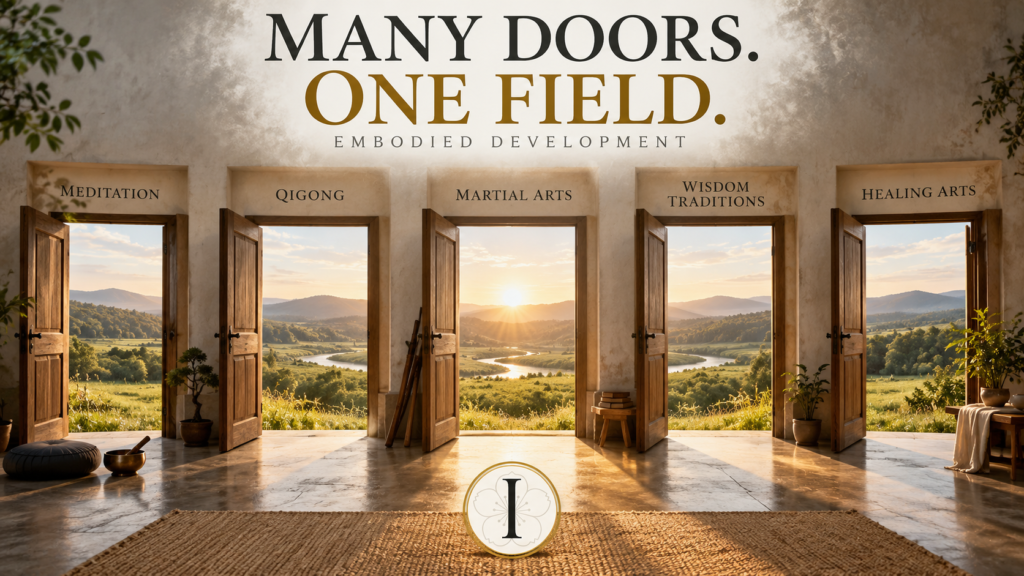
Many Doors, One Field
Why Meditation, Martial Arts, Qigong, and Wisdom Traditions
May Be Developing the Same Human Being
by Mark V. Wiley
For much of my life, I approached different practices as different subjects. Martial arts belonged to one part of my life. Qigong belonged somewhere else. Meditation opened another territory. Philosophy, religion, healing traditions, consciousness, breath, and internal cultivation each seemed to have their own languages, methods, teachers, histories, and goals. Only much later did I begin to see them as different entrances into a larger field of embodied development.
And in one sense, they do. A martial art should not be reduced to meditation. Meditation is not qigong. Taoism is not Buddhism. A contemplative tradition cannot simply be translated into the language of physiology. Each has its own integrity, and something important is lost when we flatten their differences by claiming that everything is really saying the same thing.
But after enough years of moving among these fields, another pattern becomes difficult to ignore. The traditions may be different, but the human being entering them is the same.
Different Practices Work on the Same Person
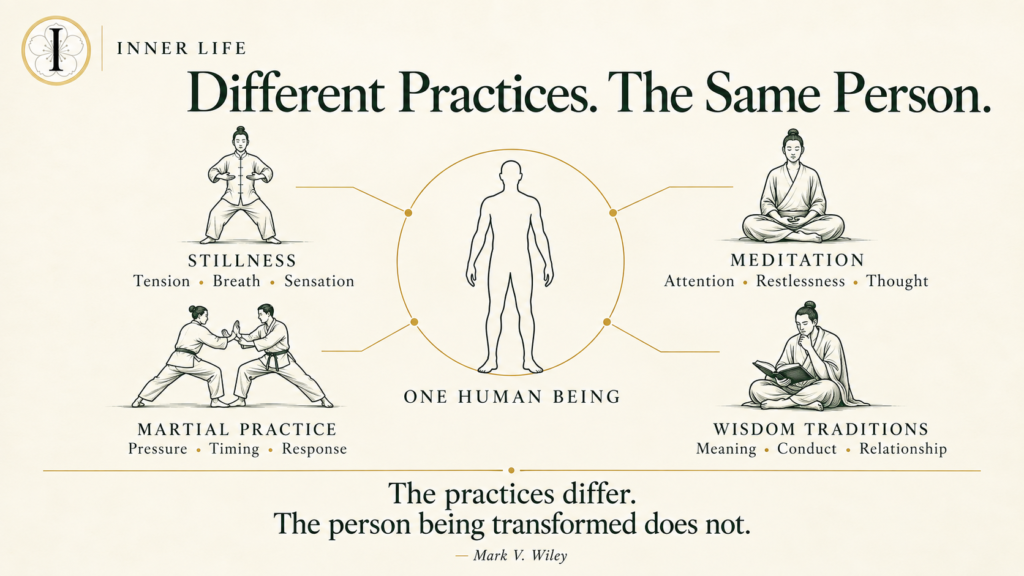
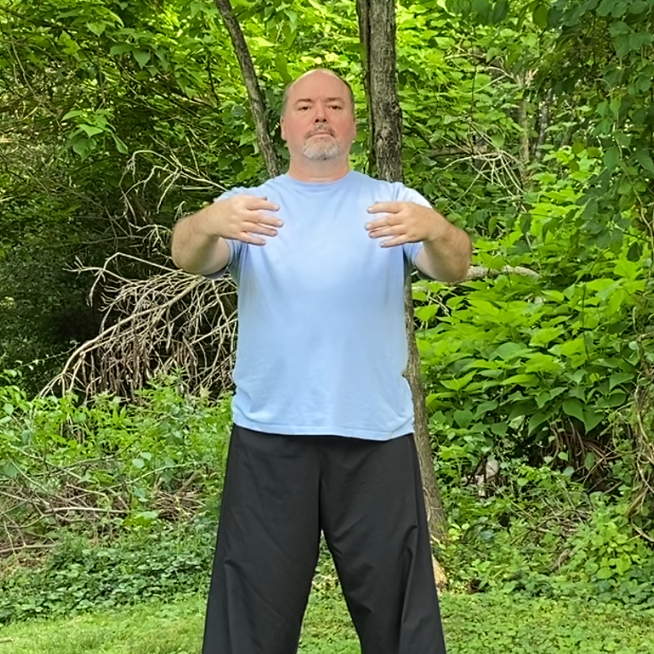
Stand quietly for twenty minutes and certain things begin to become visible: unnecessary tension in the shoulders, the inability to remain still, wandering attention, changes in breathing, or the impulse to adjust, interpret, escape, or improve the experience. This is one reason embodied practice begins with sensing rather than simply performing an exercise correctly.
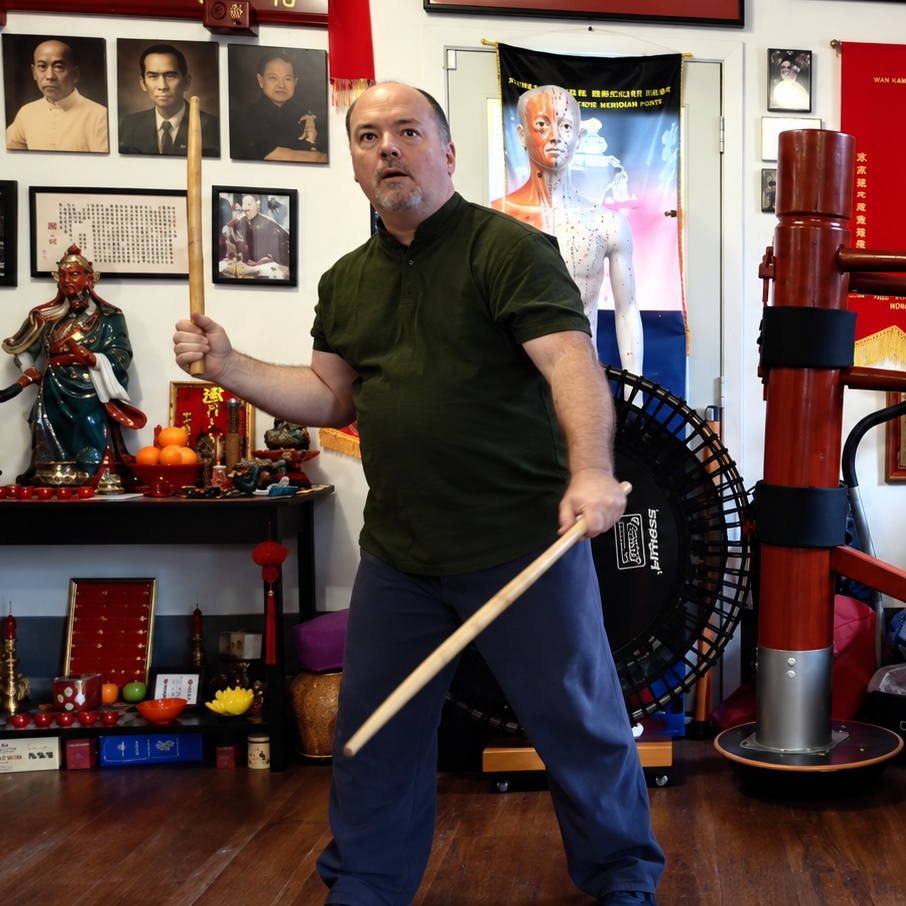
Practice a martial art under pressure and another set of things becomes visible. You may brace when force arrives, hold your breath, lose structure, narrow your attention, or move before you have actually perceived what is happening. The circumstances are different, but the practitioner has not suddenly become another person.
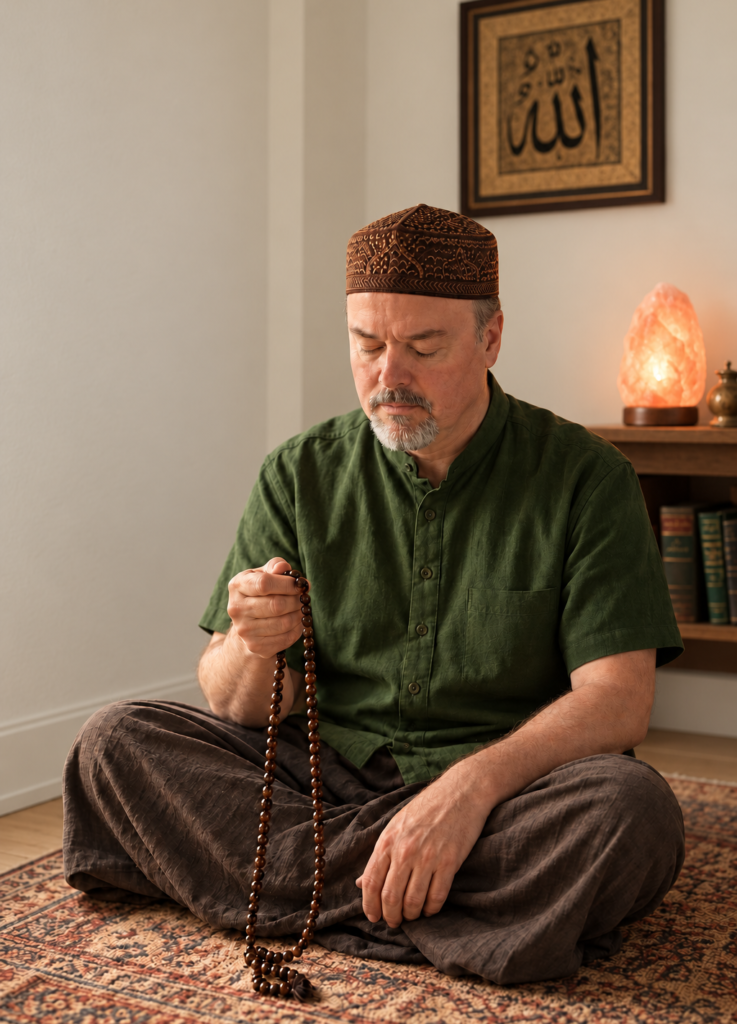
Sit in meditation and the conditions change again. Restlessness appears. Attention wanders. We become identified with thought. We resist discomfort or pursue particular experiences. Enter a serious religious or wisdom tradition and still other dimensions become visible: attachment, identity, fear, conduct, relationship, meaning, surrender, and responsibility.
These practices are not doing identical things, but neither are they unrelated. They are encountering the same living organism from different directions.
The Door Is Not the Destination
We commonly identify ourselves by the door through which we entered. We say that we practice martial arts, meditate, practice qigong, or follow Buddhism, Taoism, Sufism, Christianity, yoga, or some other tradition. These descriptions are useful, but eventually they can obscure a more important question: What is all of this developing?
Perhaps standing practice teaches us to detect unnecessary effort. Martial practice reveals whether that relaxation survives contact. Meditation shows us how quickly attention becomes captured. Relationship reveals whether awareness remains available when emotion enters. Ordinary life shows whether any of it has become embodied.
This is one of the reasons I distinguish between simply doing practices and developing the capacities described in the Inner Life System. The purpose is not to collect increasingly sophisticated methods. It is to understand what those methods are cultivating and how those capacities begin to function together.
What appeared to be separate practices can then be understood as different conditions in which the same underlying human capacities are cultivated, challenged, tested, and eventually integrated.
From Methods to Capacities
Over time, my attention shifted away from how many methods a person knew and toward what capacities those methods had actually developed. Can you sense yourself clearly? Can you regulate unnecessary tension? Can attention remain available without becoming rigid? Can you adapt when circumstances change? Can you receive pressure without immediately becoming reactive? Can perception, breath, structure, intention, and action begin to organize together?
These are not merely philosophical questions. They are questions of embodiment: what has become sufficiently integrated that it no longer depends entirely upon remembering a technique, entering a special state, being in a particular environment, or having a teacher standing beside us.
“The deeper measure of practice is not what we have learned, but what we have become capable of.” —Mark V. Wiley
Someone may have meditated for thirty years and still become immediately reactive when challenged. Someone may possess remarkable martial skill but have little awareness of what is occurring internally. Someone may understand sophisticated spiritual philosophy while remaining largely unable to recognize tension, fear, or habitual response as it arises in the body.
The method tells us what someone practices. It does not necessarily tell us what has developed.
The deeper measure of practice is not what we have learned, but what we have become capable of.
The Practices Begin to Meet
This may be one of the most interesting stages of long-term development. At first, practices often seem to move outward. We acquire techniques, forms, concepts, exercises, teachings, books, teachers, and experiences. We become better at distinguishing one method from another and understanding the particular territory each tradition explores.
Eventually, if practice deepens, the movement can begin to reverse. Things start to converge.
Breathing is no longer merely a breathing exercise because it changes how we organize ourselves under pressure. Standing is no longer merely standing because it teaches us to sense relationships throughout the body. Meditation is no longer confined to sitting because attention begins appearing during movement, conversation, discomfort, and decision.
Martial practice is no longer simply about fighting because interaction exposes our relationship with fear, force, timing, perception, adaptation, and response. Wisdom teachings cease being ideas about life and increasingly become ways of recognizing what is happening while life is actually occurring.
This movement from isolated capacities toward greater organization is central to the Inner Life Model. Development does not necessarily mean adding more. Often it means previously separate aspects of ourselves beginning to participate together.
The practices have not become identical. They have begun meeting inside the practitioner.
Regulation Changes What Becomes Possible
There is another connection beneath all of this that is easy to overlook. Our ability to sense, attend, move, interact, and respond is affected by the condition of the organism doing those things.
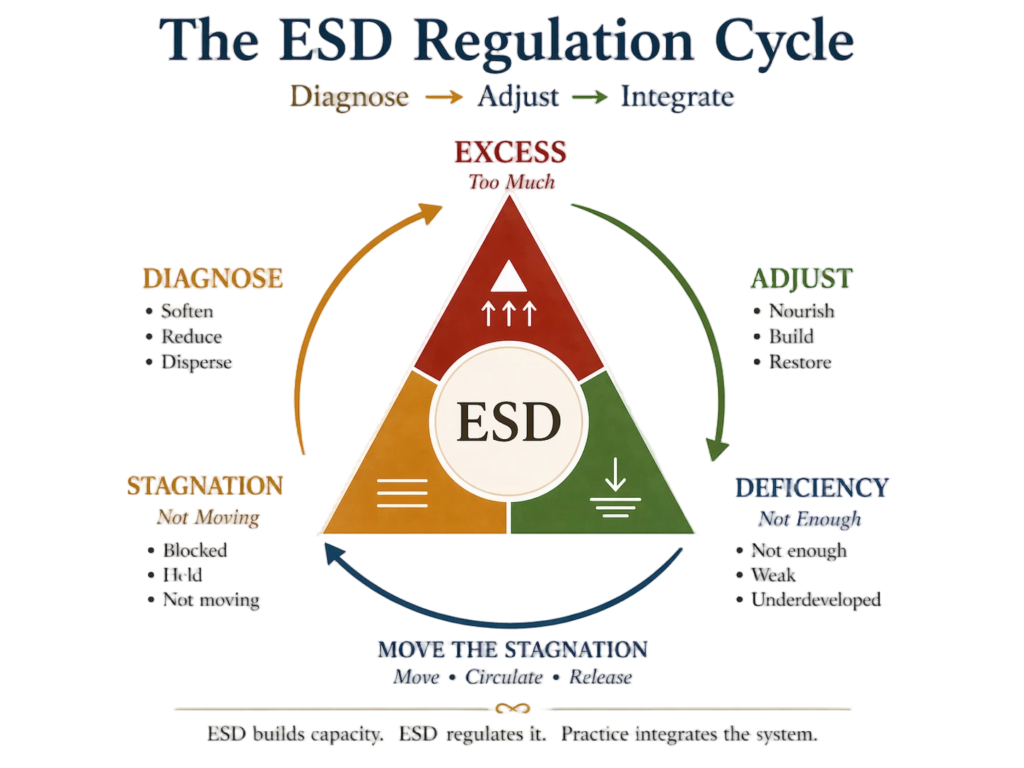
When we are chronically overactivated, depleted, stagnant, scattered, or braced, perception and response change with it. What appears to be a problem of technique, discipline, concentration, or even character may sometimes involve a more fundamental problem of organization.
This is the territory explored through the Inner Life Regulation Model: how excess, stagnation, and deficiency affect our capacity to participate effectively in experience. Regulation is not the final goal of development, but it changes what becomes available for development.
A person who cannot sense tension cannot easily release it. A person who cannot recognize activation cannot readily regulate it. A person who cannot remain organized under changing conditions will have difficulty expressing whatever they have cultivated when those conditions become unpredictable.
This is why embodiment cannot remain confined to controlled practice.
Practice Has to Survive Life
A quiet room can teach us something important, but life does not remain quiet. A form can develop organization, but life does not follow choreography. A teacher can create conditions that allow us to experience something new, but eventually the teacher is no longer standing beside us.
Development therefore requires variation. The capacities cultivated under favorable conditions have to encounter increasingly different circumstances. This progression—from sensing and organization toward adaptability, responsiveness, and expression—is built into the Six Foundational Practices.
The question gradually changes from Can I experience this during practice? to Is this available when I need it? That is a very different standard.
Calm that exists only in meditation is valuable, but incomplete. Relaxation that disappears when someone pushes us has not yet become stable. Awareness that vanishes during conflict remains conditional. Structure that works only while performing a known movement has not yet become adaptable.
Practice gives us a laboratory. Life tells us what has become ours.
“Practice gives us a laboratory. Life tells us what has become ours.” —Mark V. Wiley
What Is Embodied Development?
This is increasingly how I understand Inner Life. It is not an attempt to combine martial arts, meditation, qigong, consciousness, philosophy, and wisdom traditions into a new hybrid tradition. Nor is it an argument that all traditions ultimately teach the same thing. They do not.
Rather, they provide different entrances into a shared field of inquiry: How does a human being become more integrated, aware, responsive, and capable of participating in life?
One person may enter that inquiry through the body. Another through meditation. Another through suffering. Another through philosophy. Another through martial practice, prayer, qigong, or the realization that the way they have been living no longer seems sufficient.
This is also why there does not need to be one correct starting point. The Inner Life System is better understood as a map of relationships than a curriculum everyone must follow in precisely the same order. Different people encounter the field through different doors.
The entrance matters. But eventually we have to look beyond the entrance. Because the point is not to spend our lives standing in the doorway. It is to discover where the door leads.
Continue Exploring