
The Moment You Are Brought Inside the Gate
In-Door Disciple: Full Transmission of Traditional Chinese Martial Arts
by Mark V. Wiley
There is a moment in serious traditions that cannot be scheduled. It cannot be requested, and it does not arrive simply because someone has accumulated techniques. In the older martial cultures, this moment was sometimes described as being brought inside the gate. That is, being allowed inside the core transmission of the art, the inner (private) courtyard of the master; becoming an in-door disciple, learning away from the regular student populous. Not everyone reaches it — not because teachers are withholding secrets, but because most practitioners are not yet prepared to recognize what is being shown. When it happens, it does not feel like learning a new technique. It feels as if the ground of the entire art shifts beneath your feet.
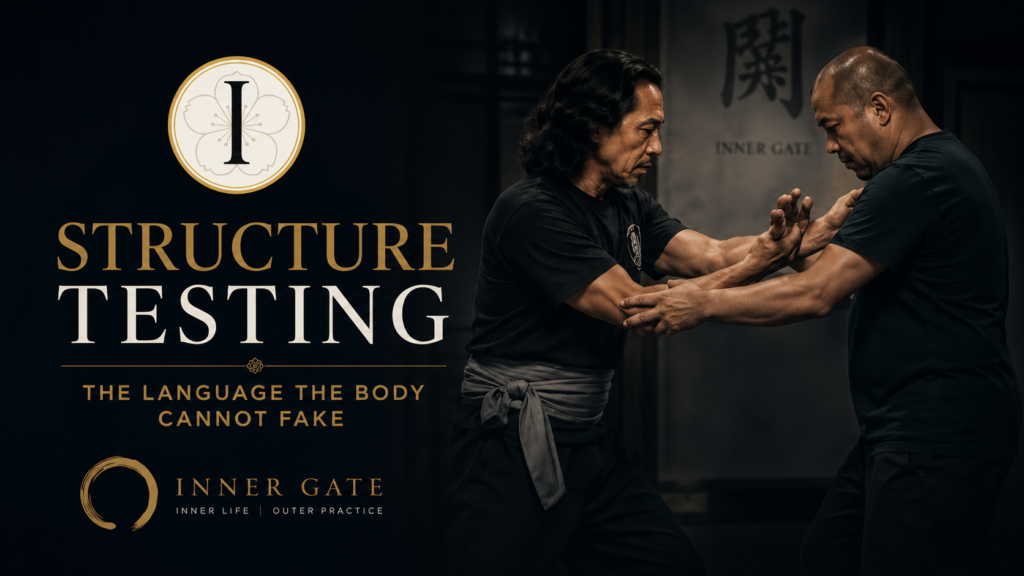
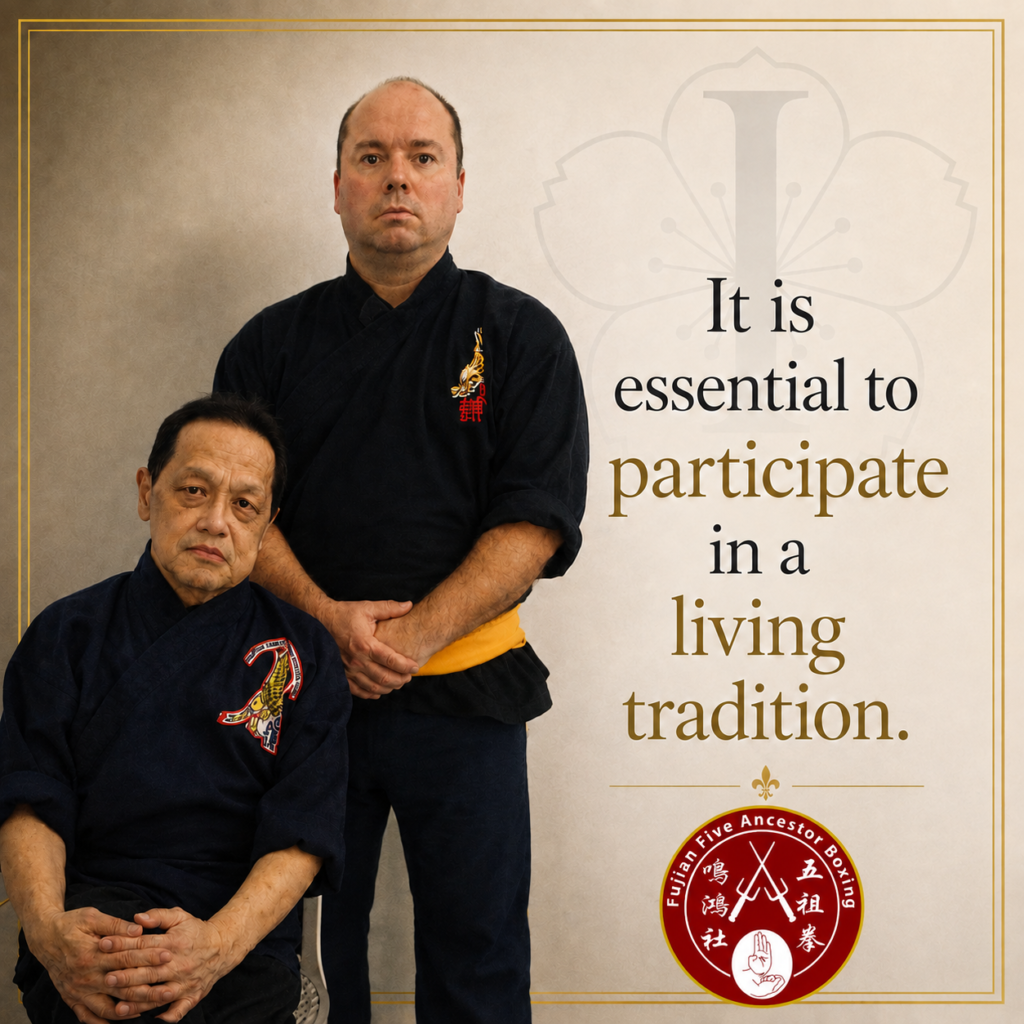
I experienced this directly in 1997 during a late-night training session with my teacher, the late Sifu Alex Co. By that time, I had already spent nearly two decades in the martial arts. I knew forms. I could spar. I understood applications — or at least I believed I did. That night, Sifu asked me to perform the opening sequence and stop at each position so he could “test” my structure (body alignment and root to the floor). Within seconds, I was being uprooted with the light pressure of two fingers. Again and again, I found myself displaced with surprising ease. What looked correct externally was internally incomplete. That night, I was introduced to what I now understand as the beginning of the inner gate.
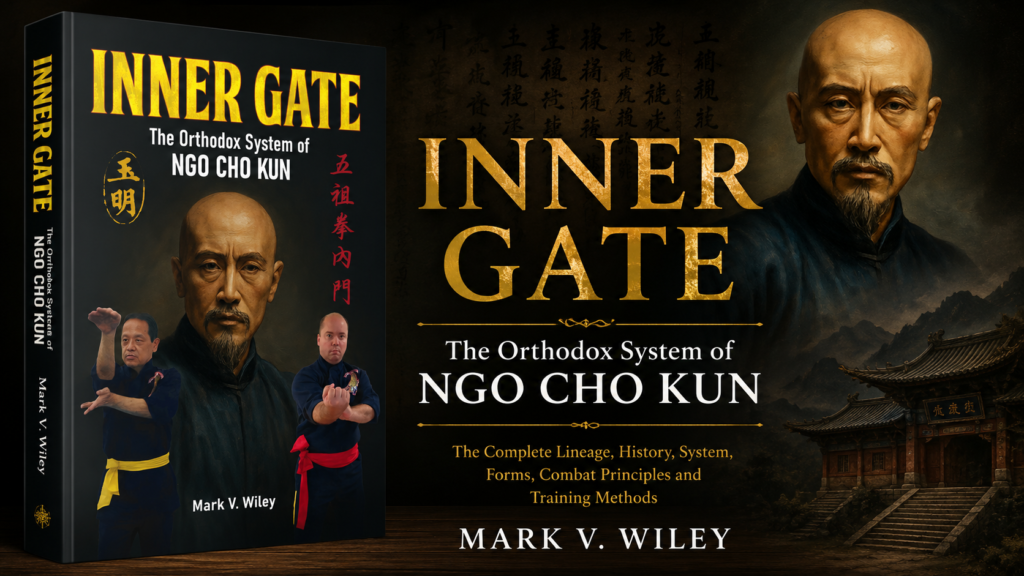
I describe this experience in more detail in my book Inner Gate: The Orthodox System of Ngo Cho Kun, but the essential point bears repeating here: the inner gate is not a new form, a hidden application, or a clever technical trick. It is a reorganization of understanding.
- Structure suddenly means something different.
- Force flow becomes visible.
- Rooting becomes measurable.
- Bridging becomes alive.
What previously seemed advanced is revealed as foundational. The journey does not end at that moment—in many ways, it begins anew.
There is also a quiet requirement that often goes unspoken. One must already be at a certain level to receive what is being shown — not in rank, but in sensitivity, in embodied experience, and in the capacity to recognize significance when it appears. Many people are exposed to important teachings. Few actually perceive what is in front of them.
This is one reason serious teachers historically waited. It was not simply to create hierarchy, but to conserve effort for those prepared to integrate what was being transmitted.
Over time, I came to see that inner gate moments are not unique to martial arts. They appear in any deep discipline — in meditation, in internal medicine, in music, and in traditional crafts. At a certain point, the student stops merely doing the method and begins to perceive the underlying engine that makes the method work. When that shift occurs, practice changes permanently. The practitioner is no longer collecting movements but refining a living process within the body.
Most practitioners spend their lives accumulating more material — more forms, more drills, more information. But the inner gate does not add. It reorganizes. It reveals that what appeared advanced was often preparatory, and what seemed simple may contain the deepest work. Once this is seen clearly, it cannot be unseen.
And in that moment, the real practice begins.
For readers interested in the full technical and historical context of this transmission,
I explore the inner-gate material in depth in Inner Gate: The Orthodox System of Ngo Cho Kun.
Continue This Line of Inquiry