Learning How to Lose:
Taoism, Tai Chi, and the Art of Living Well
with Stuart Alve Olson
Yielding, gratitude, cultivation, and the wisdom revealed through a lifetime of practice
What remains after decades of Tai Chi, Daoism, Buddhism, and cultivation?
Stuart Alve Olson reflects on yielding, gratitude, mortality, and the art of living well.
Few individuals have done more to preserve and transmit the practical wisdom of Taoist cultivation to Western audiences than Stuart Alve Olson.
For more than four decades, Stuart devoted himself to the study and practice of Tai Chi, Qigong, Taoism, Buddhism, meditation, Internal Alchemy, and Chinese martial traditions. A longtime student of Master T.T. Liang, disciple of Venerable Master Hsuan Hua, author and translator of more than thirty books, and founder of the Sanctuary of Tao, Stuart became one of the most respected voices in contemporary Taoist practice.
Yet despite the depth of his knowledge, what stood out most during our conversation was not scholarship or philosophy. It was simplicity.
Again and again, Stuart returned to a handful of enduring principles: gratitude, humility, yielding, direct experience, and the cultivation of a life lived in harmony with reality rather than in resistance to it.
“The primary opponent is the self.” —Stuart Alve Olson
That phrase became one of the central threads of our dialogue.
Tai Chi Beyond Fighting
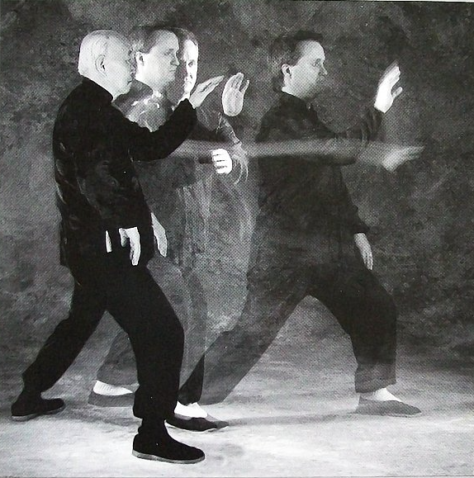
In popular culture, martial arts are often framed through domination, force, speed, and victory. Stuart presented something very different. Through his years studying with Master T.T. Liang, he came to understand Tai Chi not primarily as combat, but as placement, adaptability, and what he called “defense against the self.”
This changes the entire orientation of practice.
The problem is not simply the external opponent. The deeper issue is the unnecessary tension, rigidity, resistance, and misalignment we bring into situations ourselves. Much of human conflict—physical, emotional, and relational—emerges from pressing too hard in the wrong direction.
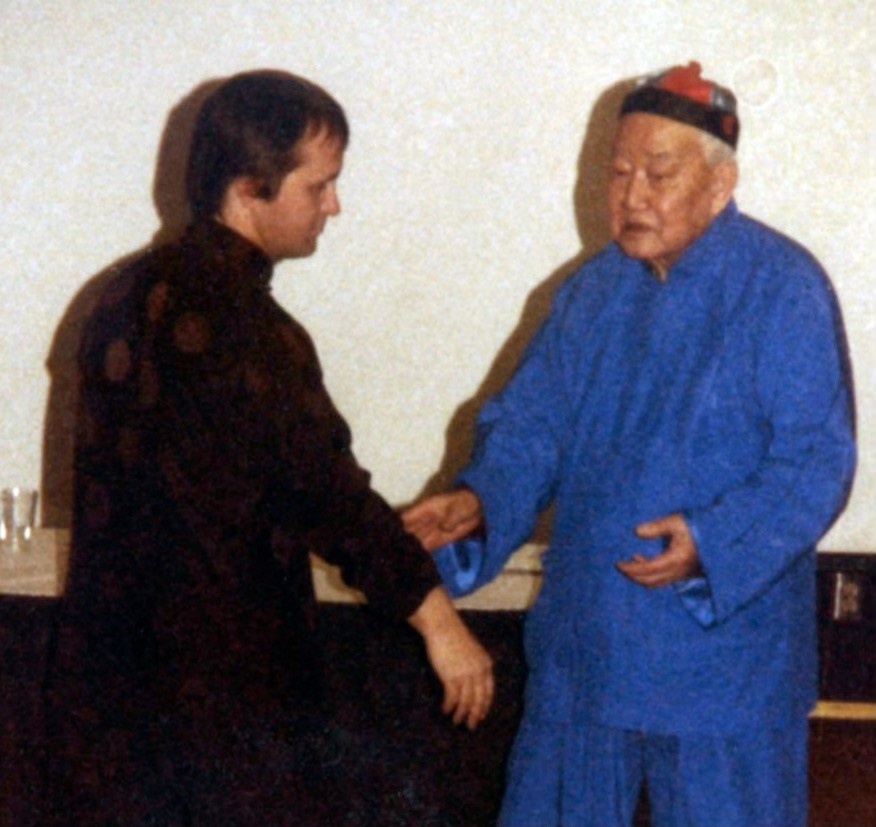
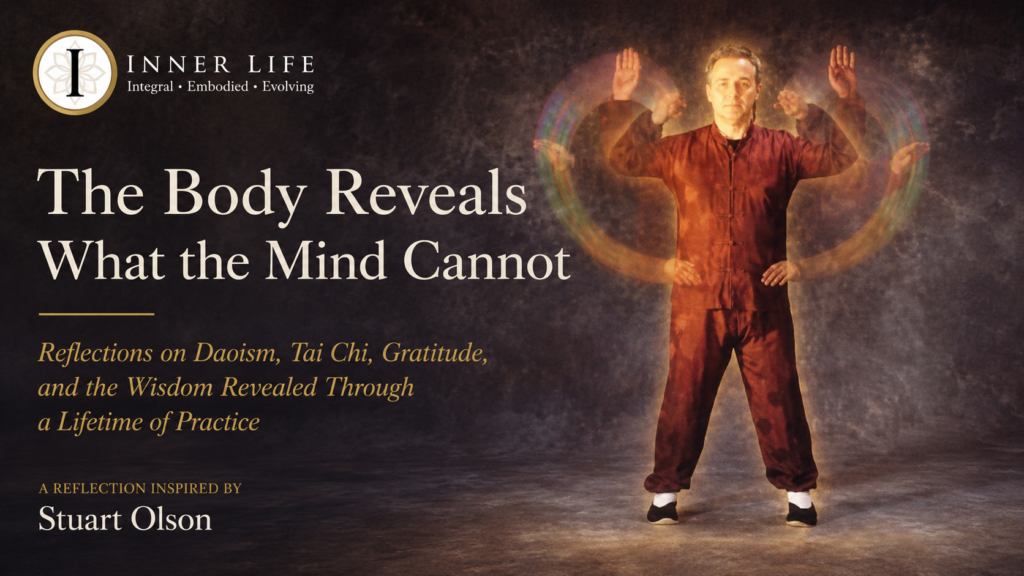
This perspective aligns closely with something repeatedly encountered across genuine embodied traditions: the body begins revealing forms of intelligence the conceptual mind alone cannot access.
The Spiritual Olympics
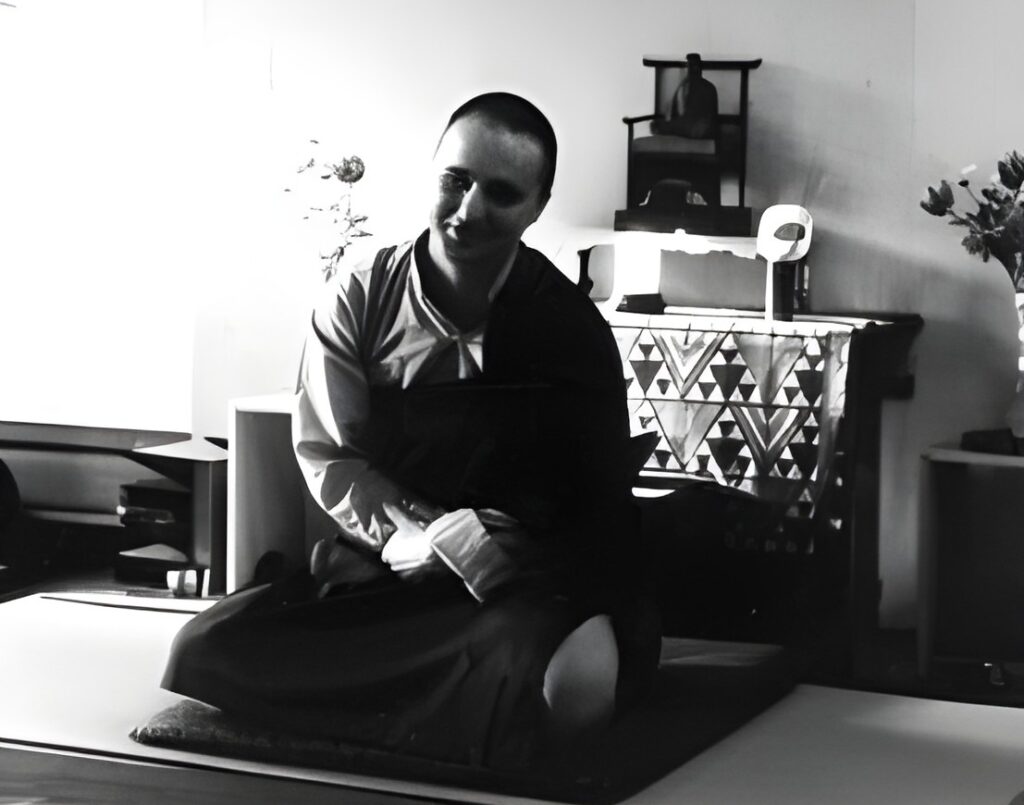
One of the most compelling sections of the conversation centered around Stuart’s famous Nine Steps One Bow pilgrimage across the American Midwest during the early 1980s. For over two years, he traveled slowly by taking nine steps followed by a full prostration, repeating the process mile after mile across open roads and rural towns.
At first glance, such a practice appears extraordinary. But Stuart spoke about it with striking honesty and humility.
Rather than romanticizing the experience, he reflected on what he later called “the Spiritual Olympics” — the subtle danger of turning intense practice into performance. External hardship and visible austerity can easily become another form of identity.
“Intensity is visible. Sincerity is not.” —Stuart Alve Olson
That insight feels especially relevant today.
In a culture increasingly shaped by performance, branding, and public identity, spiritual practice itself can quietly become another form of self-construction. Stuart’s reflections pointed in the opposite direction: toward sincerity, simplicity, and the gradual dissolution of unnecessary self-importance.
The Body Reveals What the Mind Cannot
Throughout the conversation, another deeper principle continued emerging beneath the stories and philosophy.
Real practice changes perception.
In the beginning, the mind attempts to control everything. It analyzes movement, forces outcomes, and manages experience conceptually. But sustained internal training gradually reorganizes this relationship. The body becomes more sensitive. Tension decreases. Structure improves. Response becomes immediate rather than calculated.
Mortality, Taoism, and Aging Well
The final portions of our dialogue turned toward aging, mortality, and the Taoist understanding of death.
Rather than approaching mortality with fear or denial, Stuart spoke about it with unusual openness and steadiness. He referenced an old Chinese blessing: “May you have youthfulness within your old age.”
The goal was not endless extension of life, but continuity of spirit, curiosity, vitality, and clarity for as long as life remained. That insight feels especially relevant today. Throughout his life, Stuart encountered teachers who demonstrated remarkable dignity in their final days. Their example reinforced a lesson often overlooked in contemporary culture: the quality of one’s life is inseparable from the quality of one’s relationship with impermanence.
“Life is to be appreciated.” —Stuart Alve Olson
Following Stuart’s passing in 2025, these reflections now carry even greater resonance.
What remains through this conversation is not simply information about Taoism or Tai Chi, but the presence of someone who genuinely lived the work he spoke about. There was no performance in him. No inflated mysticism. No need to appear extraordinary.
Only decades of practice gradually distilled into clarity, humility, humor, and direct experience.
And perhaps that is the deepest lesson of all.
Following Stuart’s passing in 2025, this conversation now serves not only as an interview, but as a record of a life devoted to cultivation, translation, teaching, and the preservation of Taoist wisdom traditions. What remains is not simply information about Taoism or Tai Chi, but the example of someone who spent a lifetime embodying the principles he taught.
About the Guest
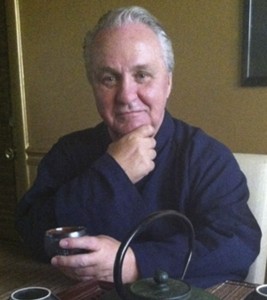
Stuart Alve Olson (1950–2025) was one of the most influential translators, authors, and teachers of Taoist cultivation in the modern West. A disciple of Venerable Master Hsuan Hua and longtime student of Master T.T. Liang, he devoted more than four decades to the study and transmission of Taoism, Tai Chi, Qigong, Internal Alchemy, meditation, and Chinese martial traditions.
Stuart authored and translated more than thirty books, including works on Taoist philosophy, meditation, Internal Alchemy, Tai Chi, and Qigong. He founded the Sanctuary of Tao and helped make classical Taoist teachings accessible to generations of Western practitioners through his writing, courses, and direct instruction.
Known for his clarity, humility, humor, and emphasis on lived experience, Stuart’s work bridged ancient traditions and contemporary life, leaving a lasting legacy within Taoist, Tai Chi, Qigong, and contemplative communities worldwide.
Continue the Exploration
The themes explored in this conversation extend across Taoism, embodied practice, cultivation, and the deeper questions of transformation.
→ Integral Being: Livia Kohn on Daoist Practice
→ Integral Being: Alex Dong on Tai Chi and Internal Training
→ Reflection: What Remains When Style Falls Away
→ Reflection: When Practice Becomes Goalless
→ Field Note: What the Body Reveals Over Time
Explore Tai Chi, Embodiment & Internal Development