
Poetry, Mysticism & the Search for Living Truth
with Kythe Maryam Heller
Art, direct experience, and the attempt to give language to what the soul already knows
In this Integral Being dialogue, Mark Wiley speaks with Kythe Heller, PhD about poetry, mysticism, transformation, and the search for direct encounter with the sacred. The conversation explores art not merely as expression, but as recognition — a way of remembering truths often felt long before they can be explained.
What happens when spirituality is approached not as inherited belief, but as lived experience? In this conversation, Kythe Heller joins Integral Being host Mark V. Wiley for a profound exploration of poetry, mysticism, transformation, and the search for direct encounter with the sacred.
Drawing from her work as a poet, artist, scholar, and founder of Vision Lab, Kythe speaks about the role of art as a form of recognition—an attempt to give language to truths that are often known long before they can be explained. Throughout the conversation, poetry emerges not merely as literary expression, but as a way of remembering, uncovering, and reconnecting with what the soul already knows.
Poetry and the Experience of Recognition
Kythe reflects on discovering poetry as a child and encountering writers who seemed able to articulate experiences she herself had deeply felt but could not yet describe. Through poets such as Rainer Maria Rilke, she found not simply literature, but a profound sense of recognition—a realization that others across cultures and centuries had touched the same inner realities.
The conversation explores how poetry, at its deepest level, becomes less about creativity and more about truth. It speaks to moments of connection, beauty, longing, and revelation that exist beneath ordinary social language. In this sense, poetry becomes an act of remembering rather than invention.
“The deepest truths of our lives are often encountered long before we have words for them.” —Kythe Heller
Suffering, Transformation, and the Firebird
One of the most moving parts of the conversation centers on Kythe’s experiences working at a temporary shelter for unhoused youth in Portland. She recounts the story of a young girl suffering from a rare blood disease that caused her skin to burn with constant heat and pain. Despite unimaginable hardship, the child carried an extraordinary grace, presence, and quiet dignity that deeply shaped Kythe’s understanding of suffering and transformation.
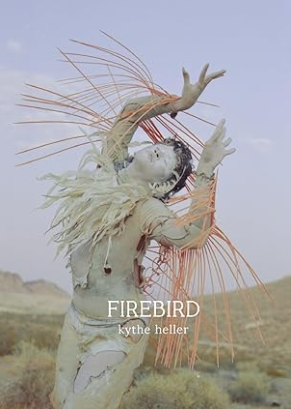
This experience became one of the emotional foundations behind her poetry collection Firebird, where the image of the phoenix emerges as a symbol of spiritual transformation—not as self-improvement, but as a burning away of what can no longer remain.
The discussion touches on how suffering can sometimes reveal unexpected depth, tenderness, and resilience.
Rather than romanticizing pain, Kythe speaks about moments where hardship opens a person to profound states of presence and inner illumination.
“Transformation is not addition. It is burning and renewal.” —Kythe Heller
Beyond Religious Structure
Kythe also reflects on growing up between a Protestant Christian upbringing and a deeply skeptical, scientific worldview shaped by her father’s work as an astrophysicist. While she felt drawn toward spiritual reality from an early age, she struggled with religious forms that seemed disconnected from lived experience or direct inner transformation.
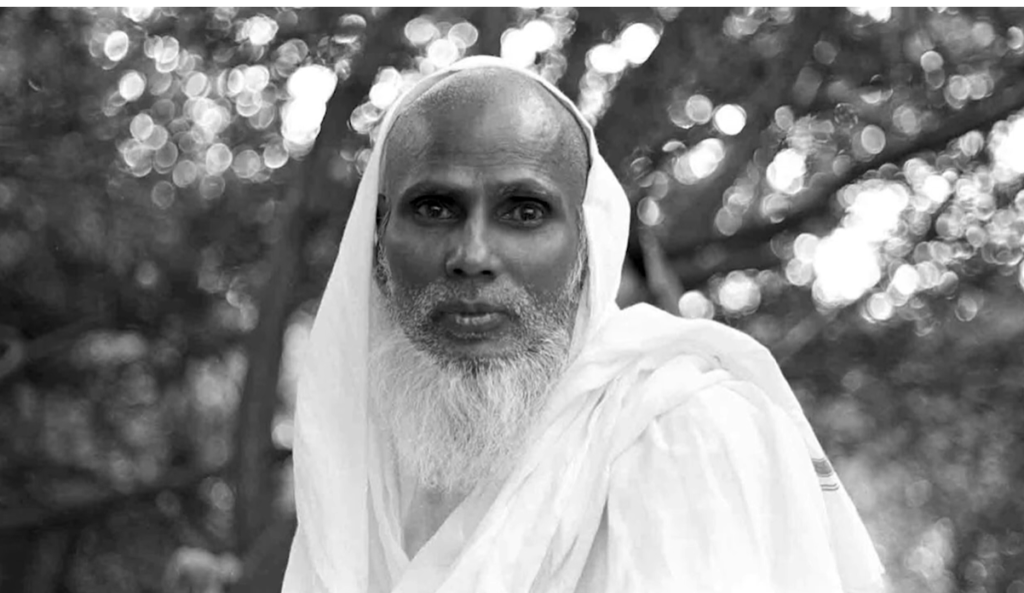
This led her into years of searching through multiple traditions, including Buddhist meditation, yoga, contemplative practice, and eventually the Sufi path through the teachings of Bawa Muhaiyaddeen. Rather than seeing these traditions as contradictory, Kythe describes them as different stages in a deeper process of purification, embodiment, and surrender.
A powerful theme throughout the conversation is the recognition that spiritual traditions may appear separate intellectually, while at the level of direct experience the movement is often continuous.
“The soul does not experience traditions the same way the mind does.” —Kythe Heller
The Need for Transmission and Living Practice
A major focus of the discussion is the difference between studying spirituality and actually undergoing transformation. Kythe speaks candidly about eventually realizing that self-directed seeking has limits—that a person cannot fully move beyond their own consciousness while remaining trapped inside its patterns and assumptions.
This leads into a deeper exploration of the role of the teacher, transmission, and living traditions. The conversation contrasts genuine spiritual cultivation with forms of religion, mysticism, martial arts, and yoga that have become disconnected from direct practice and inner realization.
Rather than treating mysticism as something historical or abstract, Kythe emphasizes that these traditions remain alive through practice, relationship, surrender, and embodied transformation.
“A teacher is not authority, but living transmission.” —Kythe Heller
Art as Praise
The conversation concludes with a beautiful reflection on art itself—not as self-expression alone, but as a form of praise, participation, and remembrance. Kythe describes artistic practice as “heart work,” echoing the teachings of Bawa Muhaiyaddeen, who viewed creative work as an expression of the heart’s longing for the Divine.
In this view, art becomes more than production or identity. It becomes a way of aligning oneself with truth, beauty, compassion, and presence. Across poetry, contemplative inquiry, and spiritual practice, the conversation continually returns to the same insight: that the deepest dimensions of life are not manufactured or constructed, but uncovered through attention, surrender, and direct experience.
“Art is not expression. It is participation in truth.” —Kythe Heller
About the Guest

Kythe Heller is an award-winning poet, interdisciplinary artist, and scholar-practitioner. She earned a PhD at Harvard University in Comparative Studies in Philosophy and Religious Thought, with a secondary field in Literary Arts, Film, and Visual Studies. Recently published work includes a collection of poems, Firebird (Arrowsmith), an anthology of translations, essays, and visual art, The Soul Conveys Itself in Shadow (Stenen), and several critical studies on medieval and contemporary mysticism and philosophy, phenomenology of the senses, aesthetics, and the arts.
Kythe is also the founder and creative director of Vision Lab, an international arts and contemplative research platform founded at Harvard Divinity School that brings artists, scholars, and spiritual practitioners into sustained dialogue and collaboration.
Kythe Heller’s Links
About Integral Being
Integral Being is a series of inquiry-based conversations exploring what changes through sustained practice.
Across traditions, these dialogues examine how attention, the body, and perception are trained and refined.
What begins as conversation becomes a way of seeing—one that can be lived.