

The 6 Foundational Practices
A progressive path that is simple to enter—and deep enough to continue unfolding
Begin Where You Are
Begin Where You Are
The Inner Life Foundational Practices introduce embodied development through sensation, breath, attention, and movement. Each practice builds on the previous one, helping you develop greater coordination and awareness.
Begin with stillness, carry awareness into movement, and learn to maintain continuity through variation, interaction, and expression. The six practices come together in integrated presence in action.
Start with Practice 1 and return to earlier practices as needed. Take time to become familiar with each experience before moving forward.
You do not need to understand the whole system to begin. Understanding develops through practice.
Begin the Inner Life Foundational Practices
Watch each brief introduction, then select Enter Practice to open the full page with guided video instruction and supporting text.
FOUNDATION
Restoring continuity between body, breath, attention, and movement
Practice 1 — Returning to the Soma
Restoring continuity through sensation, posture,
breath, and awareness
Practice 2 — Awakening Through Movement
Learning continuity while moving through rhythm,
breath, and coordinated action
ADAPTATION
Learning stability, responsiveness, and relationship
Practice 3 — Stability Through Variation
Maintaining continuity as conditions, rhythm, breath,
and attention change

Practice 4 — Responsiveness & Interaction
Developing timing, sensitivity, and continuity within
relationship and environment
EXPRESSION & INTEGRATION
Developing coordinated expression and sustaining presence in action
Practice 5 — Force & Expression
Coordinating breath, contraction, and expansion
through a structured movement sequence.
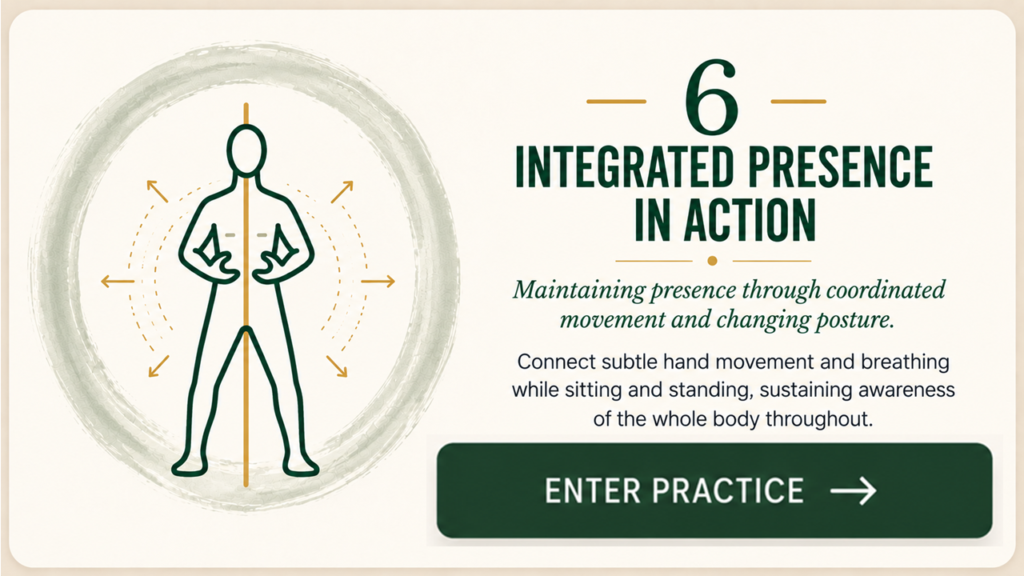
Practice 6 — Integrated Presence in Action
Maintaining presence through coordinated movement
and changing posture.
Why These Practices Matter
These practices develop your ability to remain aware and coordinated as conditions change. Stillness makes sensation and tension easier to recognize. Movement, variation, and interaction introduce new demands, revealing where coordination holds and where it becomes disrupted.
Through repetition and adjustment, what initially requires deliberate attention can become more familiar and dependable. Returning to an earlier practice can reveal details you did not notice before.
The aim is to develop capacities that remain available beyond the exercise—in how you move, respond, and participate in everyday life.