When the Path Disappears
Mystical Silence & the End of the Spiritual Journey
by Mark V. Wiley
A Field Note on a Letter from Sufi Teacher Llewellyn Vaughan-Lee
The Letter
Not long ago I invited Sufi teacher Llewellyn Vaughan-Lee to take part in an Integral Being conversation.
His reply was thoughtful and gracious, but unexpected.
He explained that he had entered into a mystical silence and stepped away from public speaking. His work, he felt, was complete. Then he added something that stayed with me:
“Since I stopped teaching much has dissolved for me and mostly emptiness remains. Even images of the spiritual path have mostly been lost. So I do not feel that there is much I could contribute.” — Llewellyn Vaughan-Lee
At first glance this might sound like retirement. But the more I reflected on his words, the more they appeared to describe something very different.
Not withdrawal. Completion.
As I reflected on his words over the following days, something Vaughan-Lee had once said in an earlier interview returned to mind. After some searching I found the clip again, where he explains the difference between spiritual life and mystical life. His words were strikingly clear:
“A mystic wants nothing. We aspire to be completely empty. To be used by God for His purpose. We do not even want heaven or anything like that. We aspire to be empty… We know nothing. But we are given what we need.”
In this understanding, the mystic does not accumulate knowledge. Nor does he rely primarily on doctrine or memory. Instead, he attempts to become empty enough that insight appears when it is needed. Wisdom does not belong to the individual. It flows through the moment.
Seen in this light, Vaughan-Lee’s email begins to make sense. The language of dissolution and emptiness is not resignation. It is the natural consequence of the mystical path carried to its end.
Vast Emptiness
Vaughan-Lee was also kind enough to share an essay he had written titled “Vast Emptiness,” which sheds further light on this state. Reflecting on 50 years of contemplative life, he writes:
“Fifty years later this emptiness is again present… now it is no longer experienced only inwardly, in meditation, but also infuses my waking consciousness. I am living in a vast emptiness.”
He then says something rarely spoken in spiritual literature:
“There is no longer any awakening, because there is no one present to awaken.” — Llewellyn Vaughan-Lee
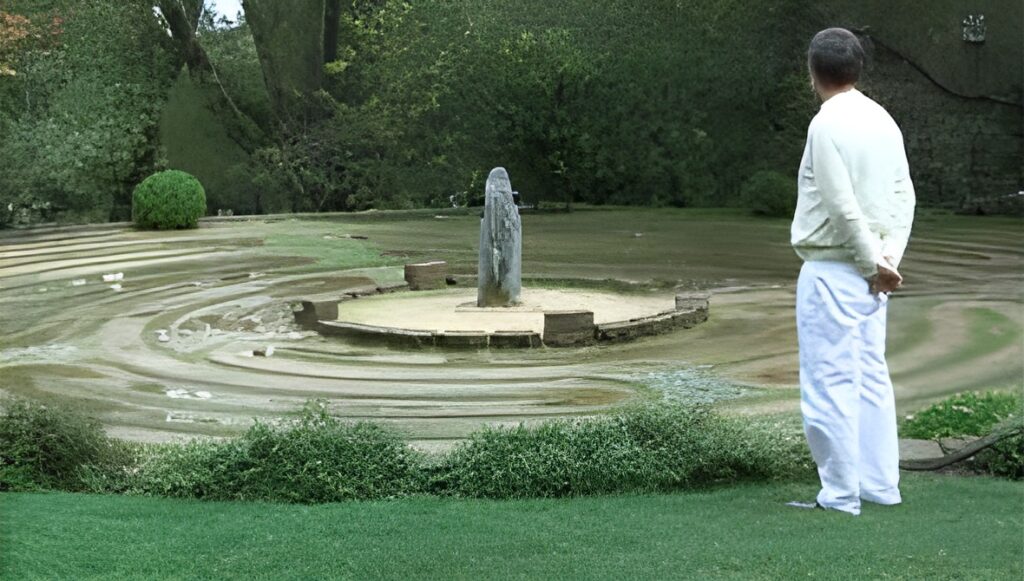
Most spiritual traditions are structured around a journey — a seeker progressing toward realization. Yet here the journey itself dissolves.
Later in the same essay he writes:
“I used to speak of a spiritual journey, of states and stages along the path. But here there is no journey, even the dharma is lost in the vast emptiness.”
For most traditions the path is everything: a seeker progressing through practices, realizations, and stages of awakening. Yet here the language of the journey itself falls away. What Vaughan-Lee points toward is not withdrawal from life, but a movement into mystical silence—where identity, seeking, and expression begin to soften.
The Disappearance of the Seeker
The early stages of spiritual life are familiar. First comes the seeker — the person who begins the path, practices disciplines, and searches for understanding. Then comes transformation — moments of insight, union, or awakening. But beyond these lies a third stage described in different languages across traditions.
- In Sufism it appears in the movement from fanā (the dissolution of the ego) to baqā (abiding in the divine).
- In Zen it appears in the paradox that there is ultimately “no attainment.”
- In Christian mysticism it emerges in the via negativa, the “cloud of unknowing.”
At this point the structure of the path itself begins to fall away. The seeker disappears. Even the story of realization loses its meaning. What remains is simply presence — often described as silence or emptiness.
Historically, many mystics become quieter at this stage. Some stop teaching entirely. Not because realization has faded, but because the identity of the teacher itself dissolves.
The path has done its work.
Mystical Silence and the End of Expression
Vaughan-Lee’s essay closes with words passed down from his teacher’s own master:
“There is nothing but nothingness.” — Irina Tweedie
Such statements can sound stark, but within mystical traditions they often point toward a profound simplicity. When the structures of the spiritual journey fall away, life returns to what it always was — the ordinary world unfolding moment by moment.
In “Vast Emptiness,” Vaughan-Lee describes this quiet return to the immediacy of the world around him:
“A bird alights on a branch outside my window. I can hear the noise of traffic passing at the bottom of the hill… I watch the tide rise and fall in the bay outside my window.”
In these simple images we glimpse what he calls vast emptiness — not an absence of the world, but the quiet field within which it appears. The imagery also echoes the Zen koan with which Vaughan-Lee opens his essay:
“The wild geese do not intend to cast any reflection; the water has no mind to retain their image.”
World and emptiness appearing together.
In the vastness beyond the mind and its thoughts, he writes, everything is both present and absent. The world continues in its ordinary rhythms even as the mystic stands within a silence deeper than the language of awakening. The mystic does not step outside this world. Rather, he sees it emerging from what Vaughan-Lee calls vast emptiness — a silence so complete that even the language of awakening no longer applies.
A Final Observation
From the outside this can look like silence. But within many contemplative traditions it is understood as something else entirely — the final stage of the path, where even the path itself disappears.
This field note is not offered as doctrine, but simply as an observation drawn from wisdom texts and from encounters with teachers who seem to inhabit this landscape, such as Llewellyn Vaughan-Lee.
In many traditions, mystical silence is not considered the absence of truth, but the point where truth can no longer be contained by language. Perhaps what remains at the end of the journey is not attainment, but the disappearance of the one who sought it.
Read “Vast Emptiness” here.
About Llewellyn Vaughan-Lee
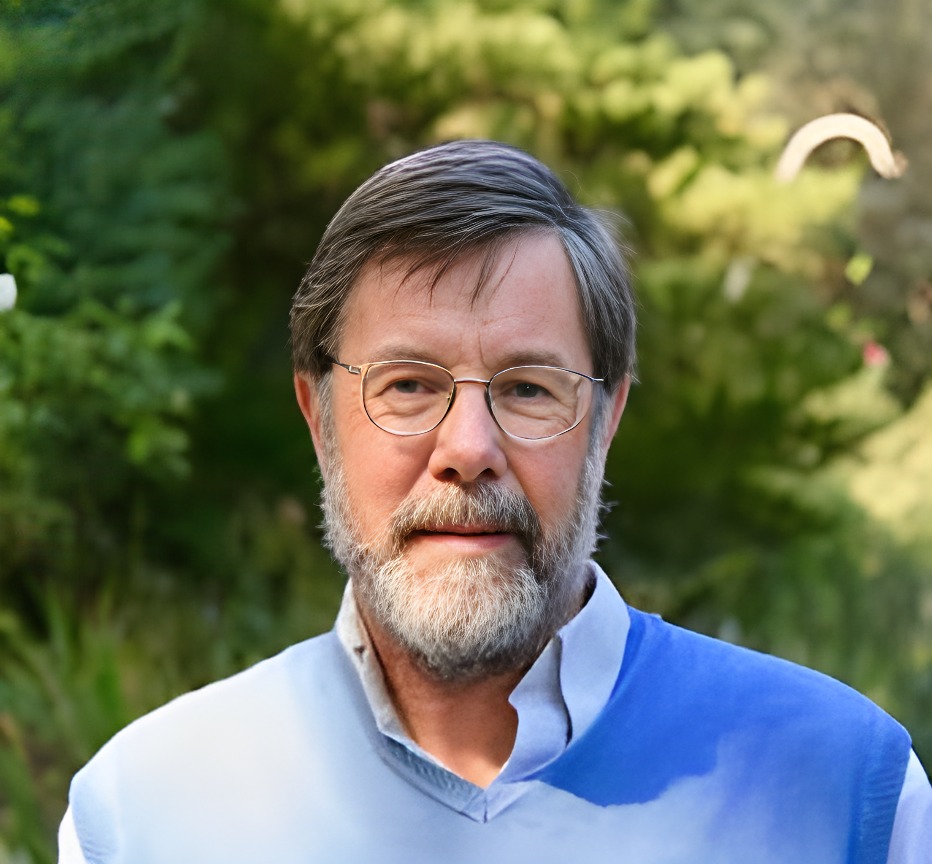
Llewellyn Vaughan-Lee is a Sufi teacher, author, and longtime representative of the Naqshbandiyya-Mujaddidiyya Sufi order. For decades his work explored the relationship between mysticism, psychology, sacred ecology, and the spiritual transformation of consciousness.
Through books, lectures, and retreats, he became known for articulating the deeper dimensions of silence, emptiness, and the dissolution of the separate self within the mystical path. In recent years, Vaughan-Lee has gradually withdrawn from public teaching, emphasizing silence and inwardness over continued public expression.
Cointinue Exploring