

The Books My Teacher Gave Me
What begins as technique becomes interference—until the mind learns to step aside.
by Mark V. Wiley
This reflection explores martial arts philosophy through the books my teacher gave me—and what they revealed about interference, presence, and natural learning.
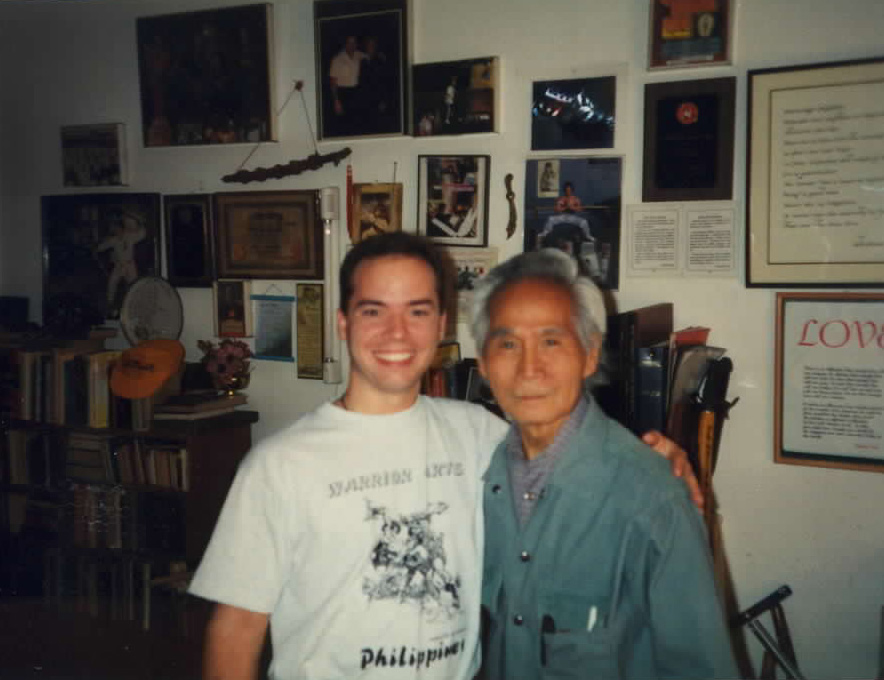
Non-Interference
Most people begin martial arts training believing the challenge lies outside themselves. The opponent appears to be the person standing across from them. They focus on technique, combinations, timing, strength, and conditioning. But anyone who trains long enough discovers something unexpected. The real opponent is often internal.
This insight sits at the heart of what W. Timothy Gallwey described as The Inner Game of Tennis—the dynamic between two aspects of ourselves that shape performance in any discipline. He called them Self 1 and Self 2.
Self 1 is the thinking mind—the voice that judges, corrects, interferes, and attempts to control every movement. Self 2 is the deeper intelligence of the body—an embodied awareness that already knows how to coordinate balance, timing, and response.
When Self 1 dominates, movement becomes rigid. Timing collapses. Action hesitates. When Self 1 quiets, Self 2 begins to function. What emerges is not effort, but coherence.
Presence
One of the books he gave me was The Tao of Leadership. At the time, it seemed completely unrelated to martial arts. But over time, I began to see what it was pointing toward.
“Effective action arises out of silence and a clear sense of being.” —John Heider
This is a martial arts lesson if there ever was one. The teachers who have the deepest influence are not those who perform. They are those who are steady, quiet, and grounded. Their power comes from presence.
Interference
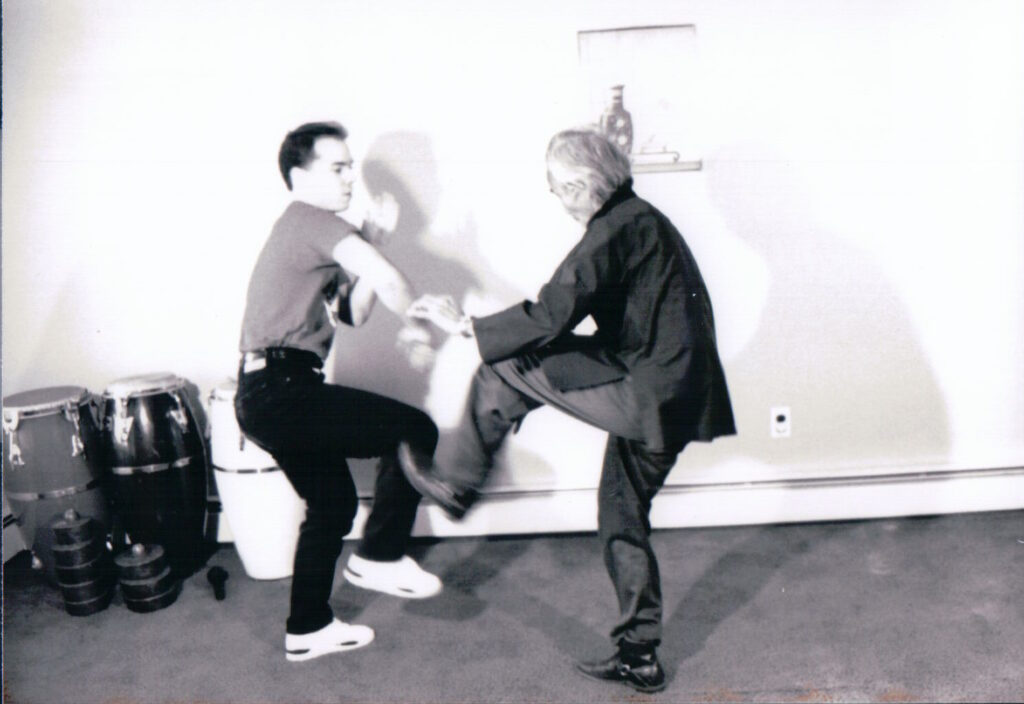
This is immediately recognizable in martial training.
- A student freezes in sparring.
- A familiar technique becomes uncertain.
- A movement that worked effortlessly in training collapses under pressure.
The body did not forget. The mind interfered.
According to this martial arts philosophy, this this is often described as flow—but the term is frequently misunderstood. It is not something we force. It is what remains when interference falls away
The more one tries to control performance, the more fragmented it becomes. Thought interrupts timing. Judgment introduces tension. The attempt to “do it right” breaks the continuity of action. And yet, the body already knows. This is the essence of Inner Game Martial Arts—not controlling movement, but allowing it.
Natural Learning
Through repetition, contact, and exposure, the nervous system organizes itself. Patterns emerge. Timing refines. Coordination develops beneath conscious awareness. This is what Gallwey called natural learning—the process by which the body integrates skill without the need for constant instruction.
But this process requires something that is rarely emphasized: Trust. Not blind belief, but the willingness to allow the body to function without constant correction.
This does not remove awareness from training. It refines it. There is a difference between awareness and judgment. Awareness observes what is happening—the shift of weight, the angle of contact, the rhythm of breath.
Judgment labels it—correct, incorrect, good, bad. When judgment dominates, learning slows. When awareness stabilizes, the system adjusts naturally.
When the Mind Steps Aside
Over time, something deeper begins to occur. The sense of “trying” diminishes. Action no longer feels manufactured. Movement arises directly from perception. A response appears without deliberation. A counter emerges before thought. The boundary between intention and action dissolves.
In these moments, the practitioner is not controlling the movement. The movement is expressing itself. This is not mystical. It is trainable. But it requires a reversal of how most people approach practice.
From Structure to Integration in Practice
Early training accumulates structure—positions, sequences, mechanics. This is necessary. But if these structures remain at the level of conscious control, they never fully integrate. Eventually, they must be allowed to settle. Technique simplifies. Movement quiets. Attention stabilizes. What was once effort becomes continuity.
This is why experienced practitioners often appear deceptively relaxed. Their skill does not come from doing more. It comes from interfering less.
Looking back, I realize those two books were not separate teachings. One pointed to how a person stands in the world. The other pointed to how a person moves within it. Together, they described something that is rarely taught directly.
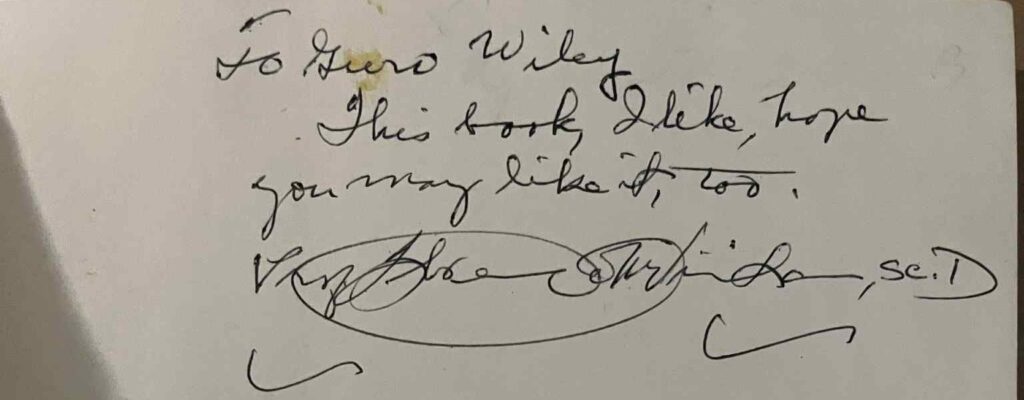
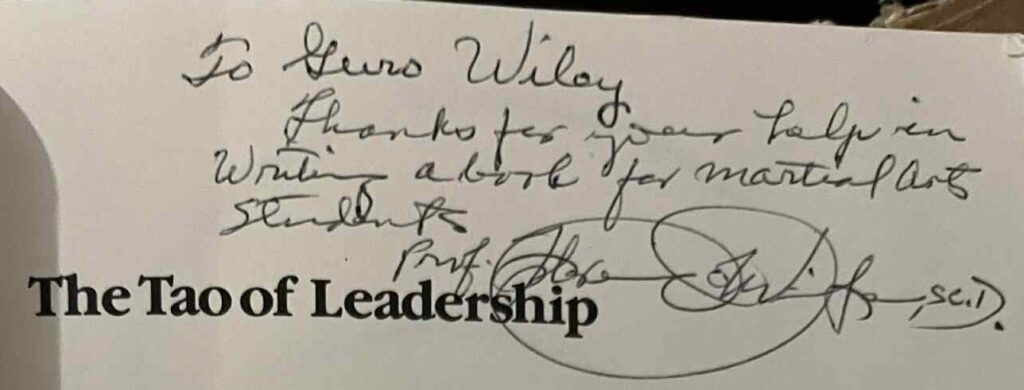
The Inner and Outer Game
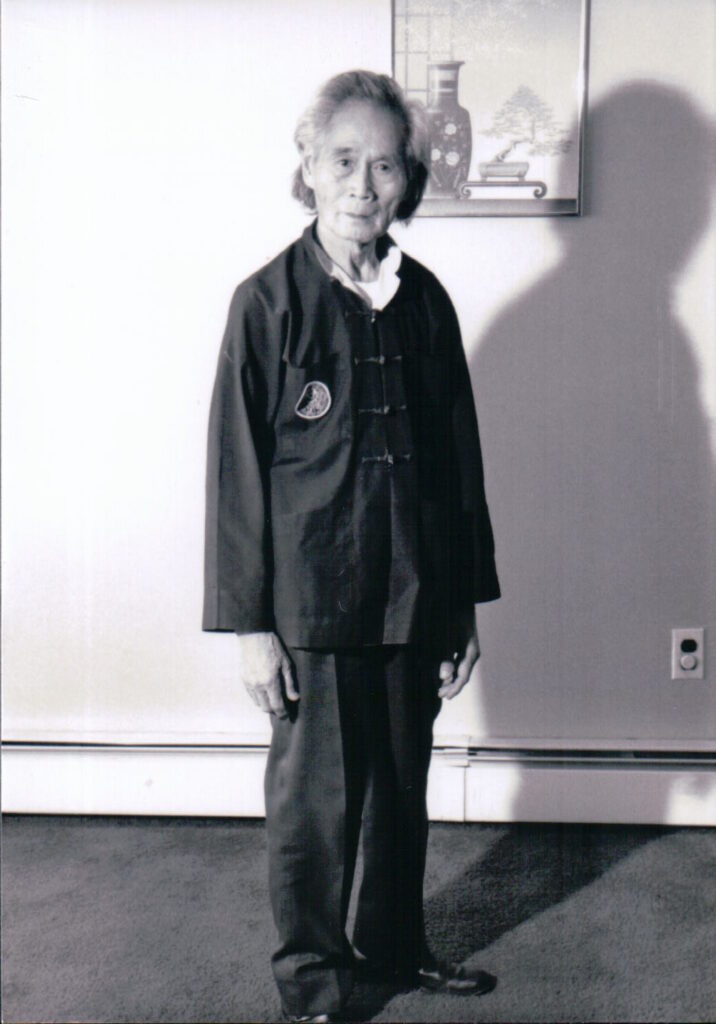
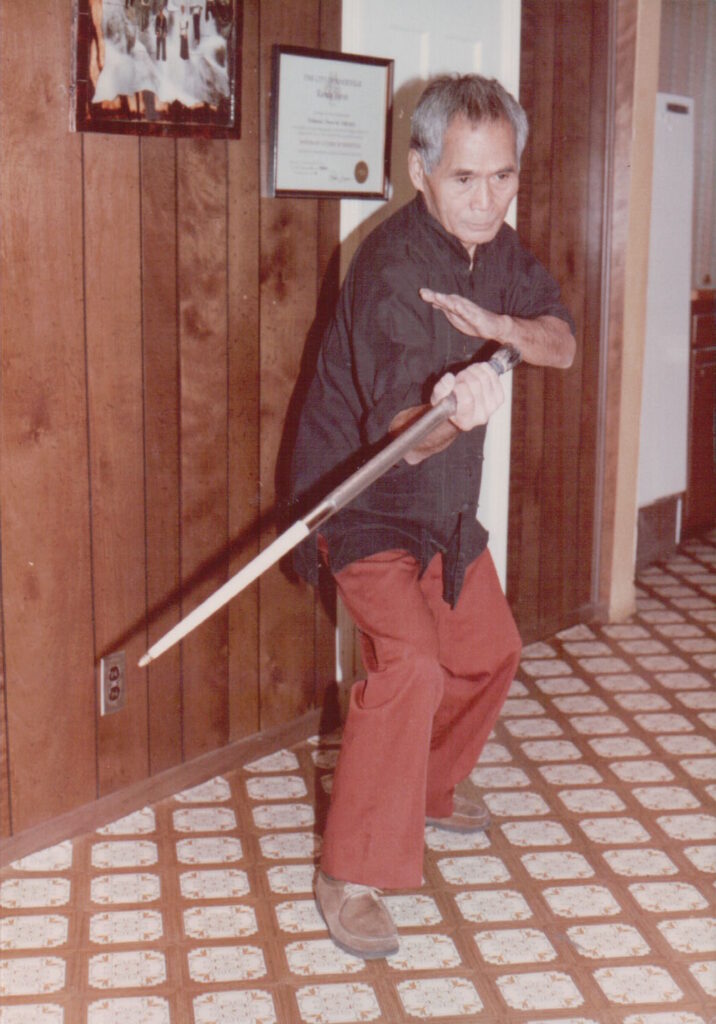
What my teacher gave me was not just instruction, but a direct encounter with martial arts philosophy—something revealed through practice rather than explained.
This was the moment those lessons were given. At the time, they didn’t make sense.
It took years to understand what they were pointing toward.
Many of the photographs, writings, magazine articles, and rare materials referenced in this reflection
are now part of the Professor Vee Archive Collection.
Watch the Video Below
Listen to Mark tell the full story of when he visited Prof. Vee and
received the books and what he thought about it.
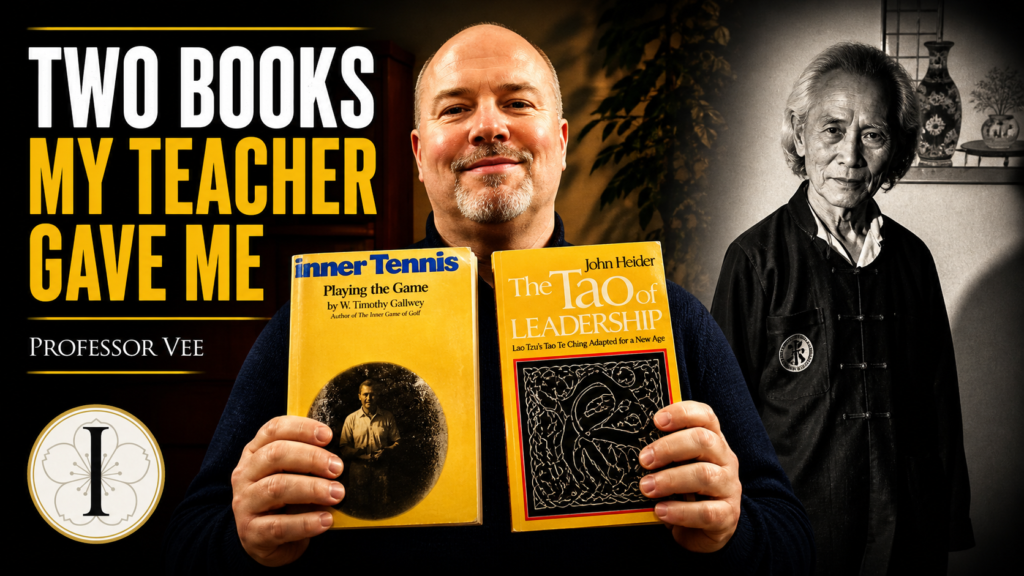
You can learn more about Professor Vee here.
Explore the Prof. Vee Archive
Rare writings, photographs, and magazine articles about Florendo
Visitacion from the private collection of Mark Wiley.

Enter the system:
→ The Practice Field (full framework)
→ Integrated Modular Training
→ The Inner Life Model