
Sri Aurobindo on Consciousness
Why Inner Change Must Precede Real Transformation
by Mark V. Wiley
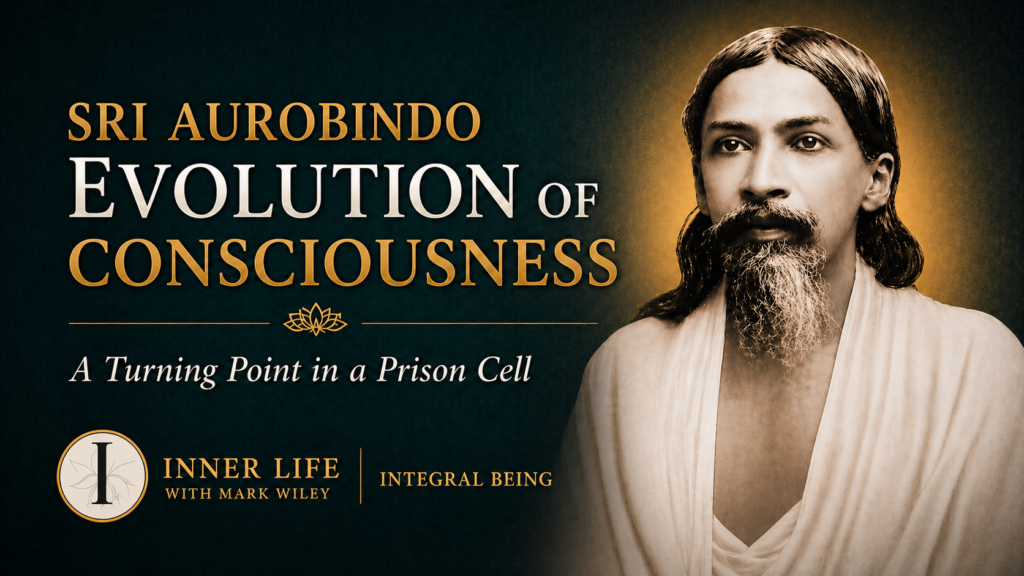
Sri Aurobindo consciousness reframes transformation as an inner process rather than an external one. This reflection explores consciousness, lived experience, and transformation through insights inspired by a conversation with Santosh Krinsky.
Sri Aurobindo & the Primacy of Consciousness
There is a persistent assumption in modern life: that if we change systems—political, economic, social—we can change the world. But in this conversation with Santosh Krinsky, a more fundamental insight emerges—one rooted in the teachings of Sri Aurobindo.
“Systems do not create consciousness. They reflect it.”
External structures are not the cause of change. They are the result of it. What must change first is consciousness.
This insight is not abstract philosophy—it is lived experience. As Krinsky describes, his own shift from political activism to spiritual inquiry was not a rejection of the world, but a recognition of its deeper mechanics. Without a transformation in consciousness, change remains superficial.
From Outer Reform to Inner Transformation
This reframes transformation entirely. It is no longer about imposing order from the outside. It is about awakening something from within. The direction of change reverses—from external control to internal alignment.
“Real change begins within, not in external structures.”
Instead of trying to fix the world directly, the work becomes one of refining perception, awareness, and inner orientation.
And from that, the outer begins to shift.
Knowledge vs. Direct Experience
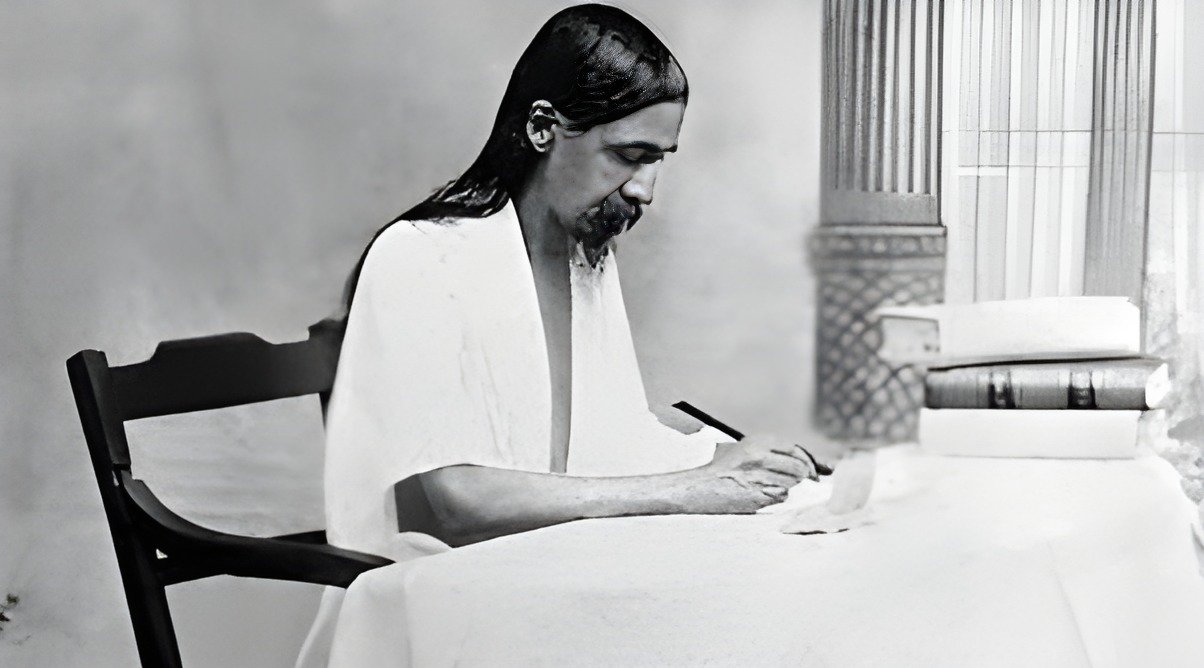
Meaning is not extracted—it is revealed. This fundamentally alters how knowledge is approached. Rather than accumulating information, the practitioner develops sensitivity to resonance. Certain passages begin to speak—not metaphorically, but directly. Understanding unfolds.
Participation Over Control
Sri Aurobindo consciousness does not treat the world as primary, but as an expression of inner perception. This points to a deeper principle: truth is not always accessible through linear reasoning. Some dimensions of experience cannot be dissected—they must be participated in.
“Understanding unfolds through participation, not control.”
Recitation, repetition, and immersion are not rituals for their own sake. They are functional methods that quiet the surface mind, allowing deeper layers of perception to emerge. This aligns directly with your broader Inner Life framework: what begins as method becomes perception.
Guidance Beyond Thought
Another powerful dimension in this dialogue is the recognition of guidance arising beyond deliberate thought. Moments occur where action emerges without the usual process of decision-making—an impulse, a knowing, a direction.
“Not all intelligence comes from deliberate thought.”
“Sometimes the deepest guidance arises from within.”
This is not framed as mysticism in abstraction, but as direct encounter with a deeper level of consciousness—one that operates with coherence beyond the surface mind.
Reframing Control and Surrender
Modern life is built on control—managing outcomes, directing effort, forcing results. But here, a different relationship is introduced.
“Sometimes what is most aligned comes when control relaxes.”
This is not passivity—it is attunement. It reflects a deeper intelligence that becomes accessible when the system stabilizes and aligns.
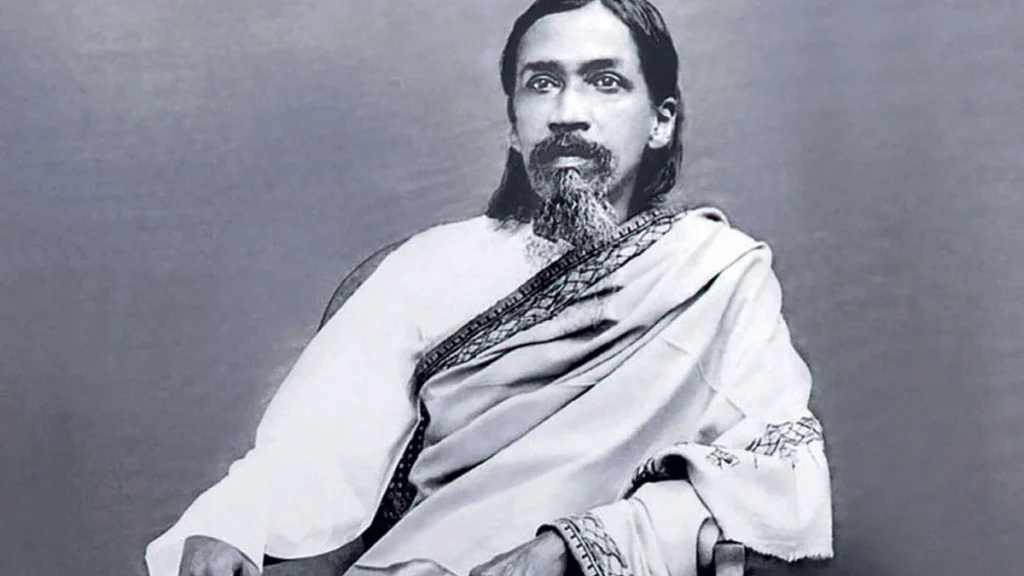
Sri Aurobindo’s Vision: Integration, Not Withdrawal
Beyond Tradition: A Universal Process
Another key insight is the universality of this work. These teachings are not confined to a single tradition, belief system, or identity.
“Traditions differ in language, but point to the same reality.”
When practice becomes experiential rather than conceptual, boundaries soften. What remains is a shared exploration of consciousness itself. Different forms. Same direction.
Non-Dual Insight: Within and Without
This becomes most clear in expressions found in the Gita:
The knower and the known. The source and the expression. Not as belief—but as lived realization.
“The divine is both within and without.”
“There is no separation. Only the appearance of it.”
Transformation Must Be Lived
This leads to a final recognition: If consciousness is primary, transformation cannot be outsourced.
“Transformation cannot be outsourced. It must be lived.”
Seen this way, Sri Aurobindo consciousness is not theory—it is a lived shift in how reality is experienced. It cannot be achieved through systems alone. It cannot be delegated to ideology or belief. It begins with perception.
“Change the way you see, and the world changes with it.”
Watch the full Integral Being conversation with Santosh Krinsky
exploring Sri Aurobindo’s teachings on consciousness and transformation.
For more on Sri Aurobindo, visit Santosh Krinsky’s YOUTUBE | AMAZON
Continue Exploring