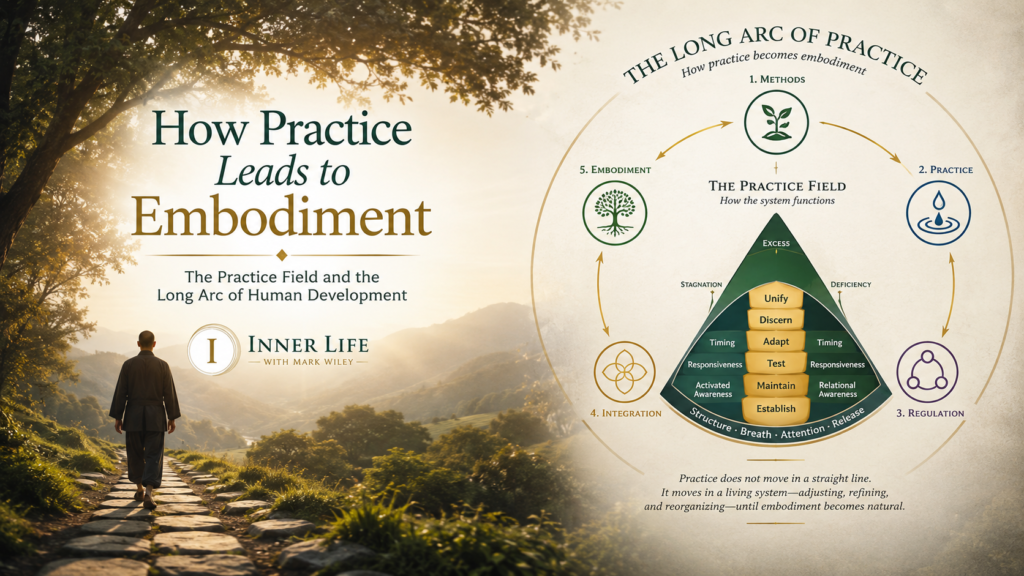
The Warrior Path as Inner Discipline
with Guru Yogi Shivan
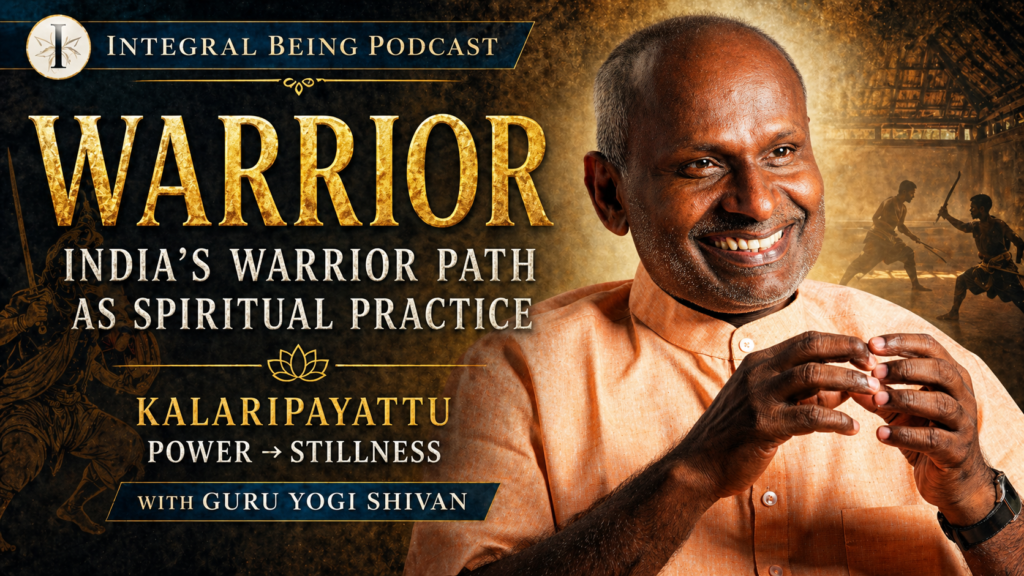
Kalaripayattu, embodiment, discipline, and martial practice as a path of human development
Mark Wiley speaks with Guru Yogi Shivan about Kalaripayattu, discipline, embodiment, and the deeper purpose of martial training. The dialogue explores the warrior path not merely as combat, but as a lifelong process of regulation, perception, responsibility, and inner cultivation.
In contemporary culture, martial arts are often reduced to systems of combat or physical conditioning. Yet within many classical traditions, the purpose of training extended far beyond fighting. It was a disciplined process of human development—one that shaped the body, regulated the nervous system, and refined the practitioner’s relationship to power.
In this conversation with Guru Yogi Shivan Kalaripayattu emerges not as a fighting method, but as a complete life science.
Martial art is not merely a fight. It represents our life. —Guru Yogi Shivan
The Warrior Beyond Combat
From the outset, Guruji reframes the role of the warrior. Strength alone is insufficient. Skill alone is insufficient. Without clarity, restraint, and inner balance, power becomes unstable. Kalari was designed to cultivate what might be called responsible power—the ability to act without being driven by impulse or emotion.
Kalari is a representation of the possibilities and problems in our life—
and it teaches us how to handle them in a balanced way. —Guru Yogi Shivan
Entering the Kalari: Training in the Ground
Traditionally, the Kalari is built below ground level. This is not symbolic—it is functional. Training barefoot on prepared earth allows the body to regulate directly through contact with the ground. Conditioning is not isolated from environment; it is shaped by it. The practitioner does not simply train the body. They begin to coordinate with natural forces.
The body is trained in direct relationship with the earth—not separated from it. —Guru Yogi Shivan
Power, Humility, and Inner Governance
A consistent theme throughout the conversation is humility.
Power should be handled with humility. —Guru Yogi Shivan
In traditional training, power is never separated from ethical responsibility. The student is expected to develop obedience—not as submission, but as a safeguard against misuse of force. This reflects a deeper principle: power must be governed internally before it can be expressed externally.
You can be powerful—but you must be controlled by an experienced and detached mind. —Guru Yogi Shivan
Experience Over Explanation
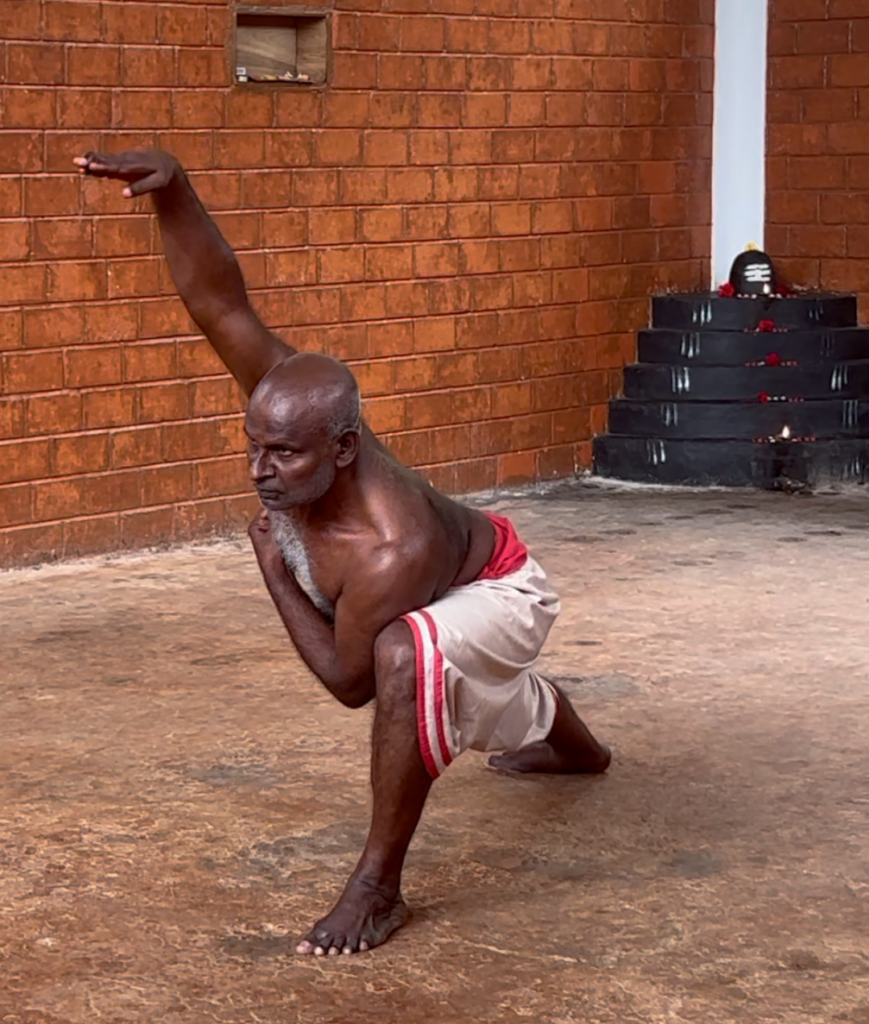
One of the clearest distinctions in the Siddha tradition is between knowledge that can be explained and knowledge that must be experienced. Conceptual understanding does not produce transformation. Direct experience does.
What we can explain is limited. What we experience is complete. —Guru Yogi Shivan
This aligns closely with your core Inner Life principle: what is not embodied does not endure.
This aligns closely with your core Inner Life principle: what is not embodied does not endure. —Guru Yogi Shivan
Breath, Prana, and the Return to Stillness
As training deepens, effort begins to reorganize into regulation.
Mind will not go out. It will merge into the body. —Guru Yogi Shivan
- Movement gives way to breath.
- Breath gives way to awareness.
- Awareness stabilizes into stillness.
Guru Yogi Shivan describes how intense physical training can eventually return the practitioner to silence—not as withdrawal, but as integration.
Exercise becomes practice when awareness enters the movement. —Guru Yogi Shivan
Marma: The Line Between Harm and Healing
Marma science—the study of 108 vital points on the human body—reveals a central paradox. The same knowledge that allows one to disable the body also allows one to restore it. This is not an additional layer of training. It is built into the system itself.
The same point can be used for destruction—or for healing. —Guru Yogi Shivan
The Warrior and the Healer Are One Continuum
What becomes clear is that Kalari was never intended to stand alone. It exists within a larger continuum—one that includes healing, breath science, and spiritual cultivation.
The warrior and the healer are not separate roles. They are expressions of the same understanding.
Kalari is meant to make an ordinary person into a liberated person. —Guru Yogi Shivan
In Part Two, this continuum becomes explicit as we move into Ayurveda and Siddha medicine—completing the arc of a system that never divided strength from restoration.
Everything can be explained—but unless we experience it, there is no use. —Guru Yogi Shivan
About the Guest
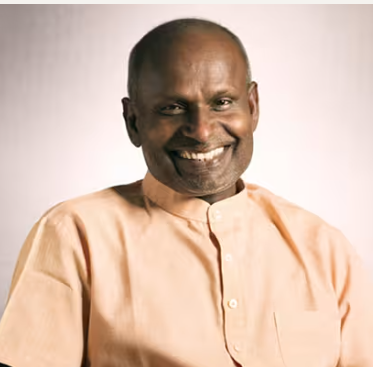
Guru Yogi Shivan is a modern mystic, master healer, and founder of Indimasi Ayurvedic Healing Village in Kerala, India. Rooted in the Siddha yogic lineage of South India, his work integrates Kalaripayattu, Ayurveda, breath science, and embodied awareness into a unified path of human development. Rather than presenting these as separate disciplines, he teaches them as expressions of a single continuum—one that trains the body, regulates the nervous system, and refines perception through direct experience.
His approach emphasizes restoration through alignment with the body’s natural intelligence. Working with individuals facing stress, burnout, and chronic imbalance, he guides practitioners not through abstract theory, but through lived process—where breath, touch, movement, and attention become the means of transformation.
Guruji’s Indimasi WEBSITE | Guruji’s YOUTUBE | Guruji’s FACEBOOK
Continue Exploring