Perception, Belief, and the Construction of Reality
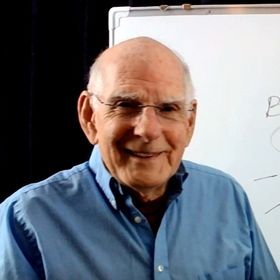
with Mike Filo Faff
Psychology, interpretation, conditioning, and the relationship between belief and perception
In this Integral Being conversation, Mark Wiley speaks with psychologist Mike Filo Faff about
perception, belief, and the interpretive nature of human experience. The dialogue explores how reality
is often shaped less by direct perception than by conditioned patterns of meaning and interpretation.
Perception is interpretation. In this conversation with psychologist Mike Faff, this becomes difficult to ignore: what we take to be reality is not perception itself, but interpretation. The senses do not reveal truth. They deliver information shaped by belief, reinforced through repetition, and often formed long before conscious awareness.
There is something both unsettling and clarifying in the realization that we may never encounter the world directly. We do not simply have beliefs. Our beliefs determine what we experience as reality. This is where the insight becomes immediate. If perception is structured by belief, then experience becomes self-confirming. We notice what aligns. We filter what does not. Over time, the world appears stable—not because it is—but because our interpretation is.
“We do not have beliefs. Our beliefs have us.” —Mike Faff
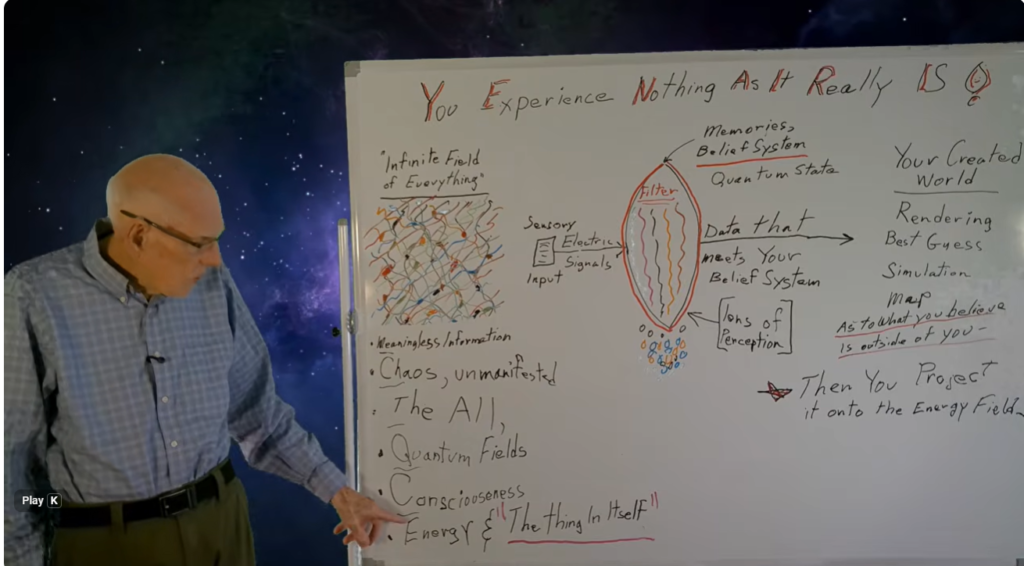
“You never fully see another person. You see your version of them.” —Mike Faff
Another layer emerges when we examine the senses themselves. We trust them. We assume they reveal the world accurately. But what they deliver is signal—not meaning. There is no inherent sound. No inherent taste. No inherent pain. There is interpretation.
“Pain is not simply felt. It is constructed.” —Mike Faff
This reframes the direction of change.
If experience is constructed, then transformation does not begin outside. It begins with the structure that interprets. Not by thinking differently—but by conditioning differently. Faff points to two mechanisms that operate beneath conscious reasoning: repetition and altered states such as hypnosis. These do not argue with belief—they reshape it.
“Belief is not changed by insight alone. It is reshaped through conditioning.” —Mike Faff
And then comes a deeper destabilization. Memory itself is not fixed. Each time it is recalled, it is reconstructed—filtered through the present state, subtly altered, and re-stored.
“Memory is not preserved. It is rewritten.” —Mike Faff
At this point, even identity begins to loosen.
If perception is constructed—and memory is fluid—then what we call the self is not observing reality from a fixed position. It is part of the same process. The observer and the observed arise together.
“The self is not separate from perception. It is part of the same construction.” —Mike Faff
What remains is not certainty—but orientation. Our experience of reality reflects the simple fact that perception is interpretation. We cannot eliminate interpretation. But we can become aware of it. And in that awareness, something loosens. Not control. Not certainty. But clarity.
This is why perception is interpretation—not as an idea to believe, but as a condition to recognize through direct experience.
About the Guest
Continue Exploring