
Resurrection, Rainbow Body & the Transformed Human Being
with Father Francis V. Tiso
Exploring resurrection, luminosity, and the transformed body through Christian mysticism and Tibetan Buddhism.
In this Integral Being dialogue, Mark Wiley speaks with Father Francis V. Tiso about resurrection, luminosity, and the transformed body across Christian mysticism and Tibetan Buddhism.
There are certain conversations that begin as theology and end somewhere far more unsettling. Not because they abandon rigor, but because they press directly against the assumptions we carry about the human being, consciousness, and the limits of embodiment itself.
In this Integral Being dialogue, Mark Wiley speaks with Father Francis V. Tiso — Catholic priest, theologian, and author of Rainbow Body and Resurrection — about one of the most enduring and controversial questions in spiritual history:
What actually happened in the resurrection of Christ?
Rather than approaching resurrection merely as doctrine or symbolic mythology, Tiso explores it as a transformative event involving body, consciousness, and what multiple traditions describe as luminosity. The result is a rare conversation that bridges Christian mysticism, contemplative anthropology, Tibetan Buddhism, and emerging scientific inquiry into light and embodiment.
Resurrection Beyond Symbolism
Modern discussions of resurrection often divide into two opposing camps. On one side are literalist interpretations that insist on historical fact while discouraging deeper inquiry into its implications. On the other are reductionist readings that reinterpret resurrection as little more than a psychological experience among the apostles.
Tiso rejects both simplifications.
Instead, he returns to the classical Christian understanding of resurrection as the transformation of the entire human person — not merely the survival of the soul, but the transfiguration of embodiment itself.
“Resurrection in the Christian tradition is not the survival of a soul alone, but the transformation of the whole human person.” —Francis V. Tiso
This distinction becomes central to the conversation.
If resurrection is understood as transformation rather than metaphor alone, then entirely new questions emerge regarding consciousness, matter, light, and the latent capacities of the human organism.
The Shroud of Turin and the Question of Light
A major thread of the discussion centers on the Shroud of Turin.
While careful not to overstate conclusions, Tiso explains why the Shroud continues to provoke scientific interest decades after its initial examination. The image imprinted on the linen does not behave like paint, pigment, or conventional contact transfer. Instead, some researchers have argued that it resembles a form of radiant projection.
This leads into one of the most provocative moments of the conversation: the possibility that the resurrection involved a transformation into light.
Not metaphorical light. Actual luminosity.
Tiso discusses theories proposing that the body represented on the Shroud underwent an intense energetic event — one powerful enough to alter the upper fibrils of the cloth itself.
Whether one accepts such interpretations or not, the implications are difficult to ignore.
The conversation shifts from belief toward inquiry.
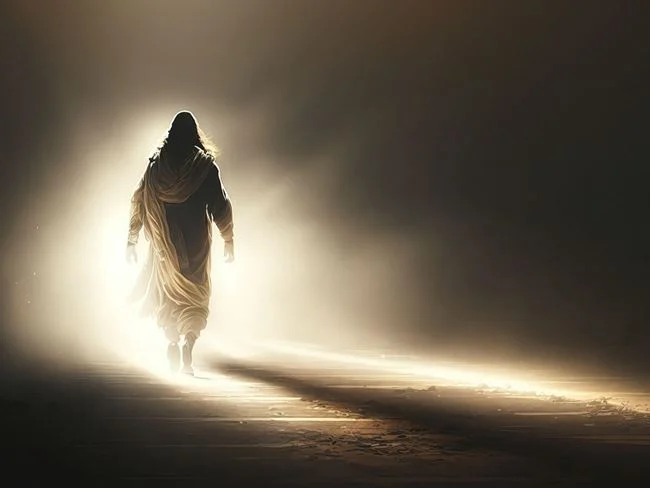
“What began as theological curiosity became a disciplined investigation into light, embodiment, and human transformation.” —Francis V. Tiso
Rainbow Body and the Possibility of Transformation
Tiso’s inquiry eventually led him beyond Christian sources and into the Tibetan Buddhist tradition known as Dzogchen.
There he encountered accounts of what is called the rainbow body — rare reports in which advanced contemplative practitioners are said to undergo postmortem dissolution accompanied by luminous phenomena. Unlike distant legends buried in antiquity, these were contemporary eyewitness accounts.
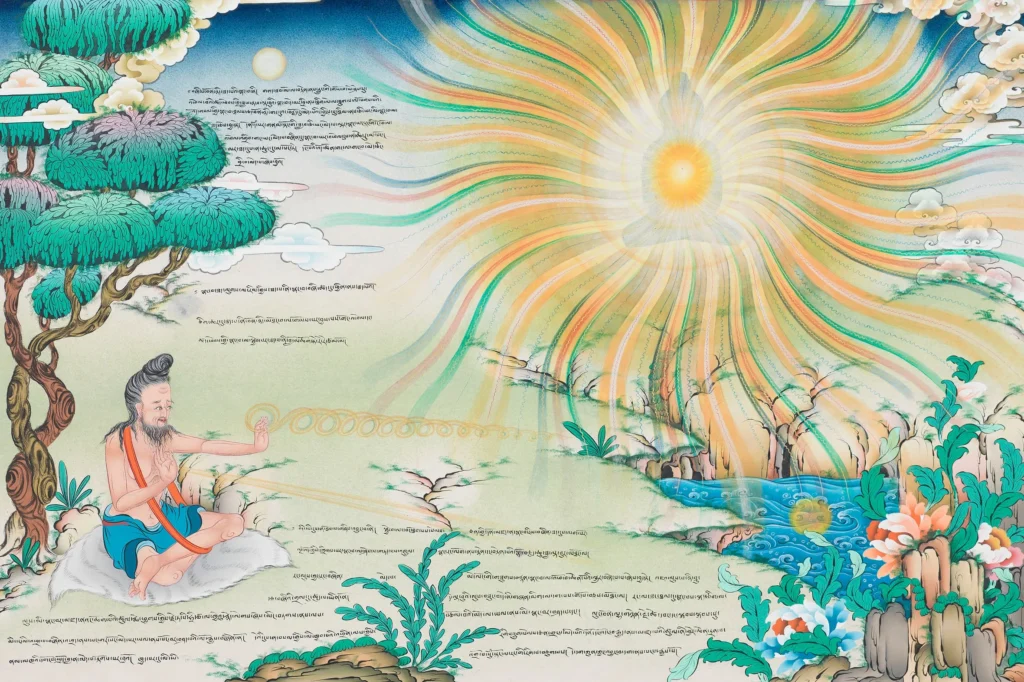
Tiso traveled to Tibet and interviewed individuals directly connected to one such event.
Importantly, he approaches these reports with scholarly discipline rather than sensationalism. His aim is not to force equivalence between traditions, but to ask whether multiple civilizations may have preserved observations of similar transformational phenomena.
This reframes the conversation entirely.
The question is no longer whether one tradition is “correct,” but whether different contemplative systems may be pointing toward underexplored dimensions of embodied consciousness.
“The question is not whether traditions are identical, but whether they are pointing toward underexplored capacities within the human organism.” —Francis V. Tiso
Consciousness, Biophotons, and the Living Body
One of the most fascinating dimensions of the dialogue involves emerging scientific research into biophotons — ultra-weak light emissions produced by living cells. While still speculative, studies suggest that contemplative states may influence biological coherence and energetic processes within the body.
Tiso carefully emphasizes that science has not “proven” mystical transformation. But he also notes that modern research may finally be developing conceptual frameworks capable of asking better questions.
This intersection between contemplative practice and embodied science becomes increasingly important for Integral Being’s broader inquiry into transformation. Because what emerges across traditions is not merely philosophy. It is practice.
Again and again, reports of luminosity, transformation, and extraordinary states are associated with disciplined lives of contemplation, prayer, ethical refinement, and inner development. Not random events. But cultivated conditions.
The Human Being as an Open Question
What makes this conversation compelling is not simply its discussion of extraordinary phenomena. It is the deeper implication beneath them. If even a fraction of these accounts hold validity, then the modern understanding of the human being may be radically incomplete.
The body may not be as fixed as we assume. Consciousness may not be confined to current materialist models. And transformation may extend far beyond psychological self-improvement.
“The mystery of the risen body may be less about belief alone and more about the unrealized potentials of embodied spiritual development.” —Francis V. Tiso
This does not reduce spirituality to science. Nor does it attempt to collapse traditions into sameness. Instead, it opens a more demanding possibility: that contemplative traditions across cultures may preserve fragments of a much larger understanding of human transformation — one modern civilization has only begun to rediscover.
About the Guest
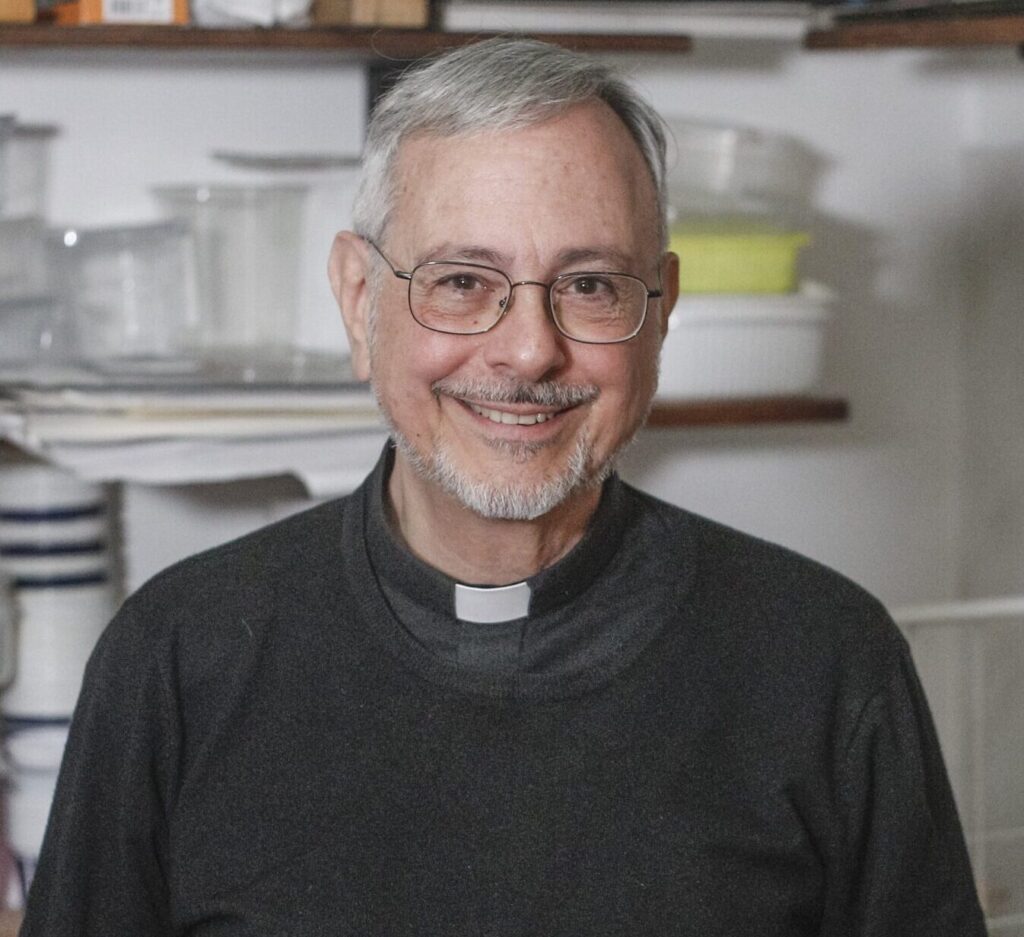
Father Francis V. Tiso is a Catholic priest, theologian, and scholar of comparative mysticism whose work explores the meeting point between Christian contemplation and Tibetan Buddhism. Over decades of study and field research, he has investigated reports of the rainbow body phenomenon, luminous transformation, and the role of contemplative practice in human spiritual development.
Best known for his book Rainbow Body and Resurrection, Tiso brings together theology, contemplative inquiry, anthropology, and firsthand research conducted in Tibet and Central Asia. His work examines resurrection, embodiment, consciousness, and the possibility that spiritual transformation may involve profound changes in the human organism itself.
About Integral Being
Integral Being is a series of inquiry-based conversations exploring what changes through sustained practice.
Across traditions, these dialogues examine how attention, the body, and perception are trained and refined.
What begins as conversation becomes a way of seeing—one that can be lived.
Related Conversations & Reflections
Real development doesn’t occur through isolated techniques, but through how practice organizes the system over time.
→ Shaykh Fadhlalla Haeri — Presence & Ego: A Deeper Inquiry
→ Sri Aurobindo — the Evolution of Consciousness
→ Livia Kohn — Daoist Practice and the Reorganization of Experience
→ Llewellyn Vaughn-Lee — Vast Emptiness
→ The Practice Field