The Medicine of Presence
with Felix de Haas
Chinese medicine, Daoist cultivation, perception, and the relationship between healing and awareness
Mark Wiley speaks with Felix De Haas about Chinese medicine, acupuncture, Daoist cultivation, and
the refinement of perception through practice. The discussion explores healing not merely as intervention,
but as a deepening relationship between embodiment, awareness, and human transformation.
Chinese Medicine as a Living Practice
Felix is not only a practitioner and teacher of Chinese medicine. He is someone who has spent decades exploring the deeper terrain beneath technique: contemplative practice, Daoist internal cultivation, Japanese acupuncture, palpation, and the subtle relationship between awareness and healing itself.
Early in the conversation, Felix shared a phrase given to him by one of his teachers:
“You don’t find Chinese medicine. Chinese medicine finds you.” —Felix de Haas
It perfectly framed the spirit of the discussion. What emerged throughout the dialogue was not a presentation of Chinese medicine as a rigid system of protocols, but as a living process of perception—one requiring sensitivity, stillness, and relationship.
“Acupuncture is a dance with the qi.” —Felix de Haas
Felix described how his own path began through philosophy, Buddhism, yoga, and contemplative inquiry long before he formally entered clinical training. Exposure to East Asian thought, Tibetan Buddhism, and Daoist literature shaped the way he approached medicine from the beginning—not simply as a technical discipline, but as a mode of listening.
Listen Through Palpation
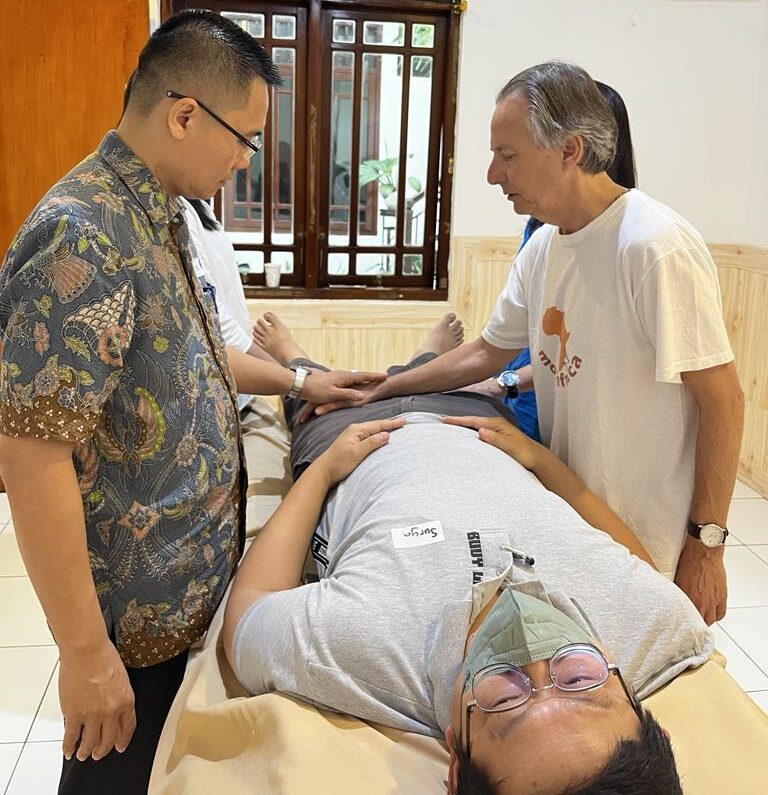
One of the central themes of the conversation was palpation.
Drawing from both Japanese acupuncture traditions and later osteopathic influences, Felix emphasized the importance of touch as a diagnostic language. In many modern clinical environments, acupuncture has increasingly become protocol-driven—reduced to fixed prescriptions and standardized treatments. Felix offered a very different orientation.
“You really have to listen to the story the body tells you.” —Felix de Haas
Rather than imposing predetermined theories onto the patient, he described the practitioner as entering into dialogue with the body itself through touch, sensation, and attentive awareness. This led naturally into a discussion of what he called “the shape of qi.”
The Shape of Qi
Rather than speaking about qi as an abstract mystical concept, Felix described it as something directly perceptible through cultivated touch and attention. Agitation, coherence, stagnation, openness, restriction, fluidity—these qualities become tangible within the body when the practitioner develops the capacity to perceive them. Importantly, he repeatedly emphasized that perception must remain free from projection.
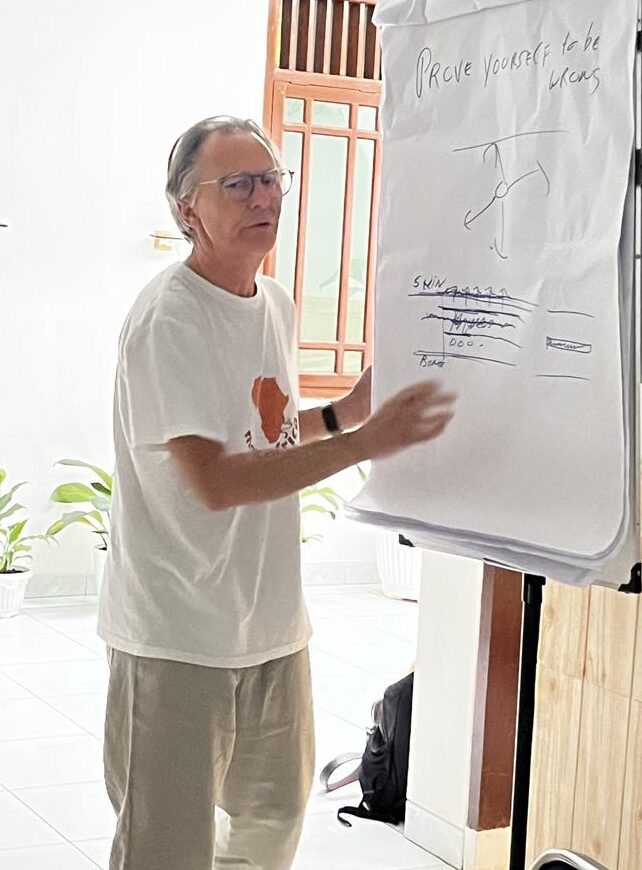
“You have to separate your sensation from the interpretation.” —Felix de Haas
That distinction feels increasingly important in an era where many practitioners seek certainty too quickly—mistaking intuition for insight before truly learning how to observe. Again and again, the conversation returned to the state of the practitioner.
Felix referenced the Ling Shu, one of the foundational classical texts of Chinese medicine, where the physician’s internal condition is treated as essential to the effectiveness of treatment itself. Healing is not simply mechanical intervention. It requires receptivity, stillness, and attentional clarity.
“You have to be in a state of receptivity, awareness, focused attention.” —Felix de Haas
Internal Cultivation and Daoist Practice
This is where the bridge between medicine and internal cultivation becomes impossible to ignore.
Meditation, contemplative practice, and Daoist internal work were never separate from medicine in the older traditions. They were part of the cultivation of the practitioner. Felix spoke extensively about Neidan (Daoist internal alchemy), not as exotic mysticism, but as a process of deepening stillness and allowing internal transformation to unfold naturally. One of the most striking moments came when he described the core of his own practice:
“I let the qi do the job.” —Felix de Haas
Simple words—but they point toward something profound. Not forcing. Not manipulating. Not endlessly imposing intention. But creating the conditions in which deeper processes can emerge on their own.
Beyond Technique
Throughout the conversation, Felix consistently returned to humility, observation, and refinement through experience. Techniques matter. Theory matters. But over time, genuine practice becomes less about accumulation and more about sensitivity. Less imposition. More listening. Less certainty. More perception.
In many ways, this reflects something found across contemplative traditions, martial arts, internal practice, and healing systems alike: what begins as method eventually becomes a way of perceiving. And perhaps that is the deeper thread running beneath this entire conversation.
Not merely how to perform medicine—but how to cultivate the kind of human being capable of truly listening.
About the Guest
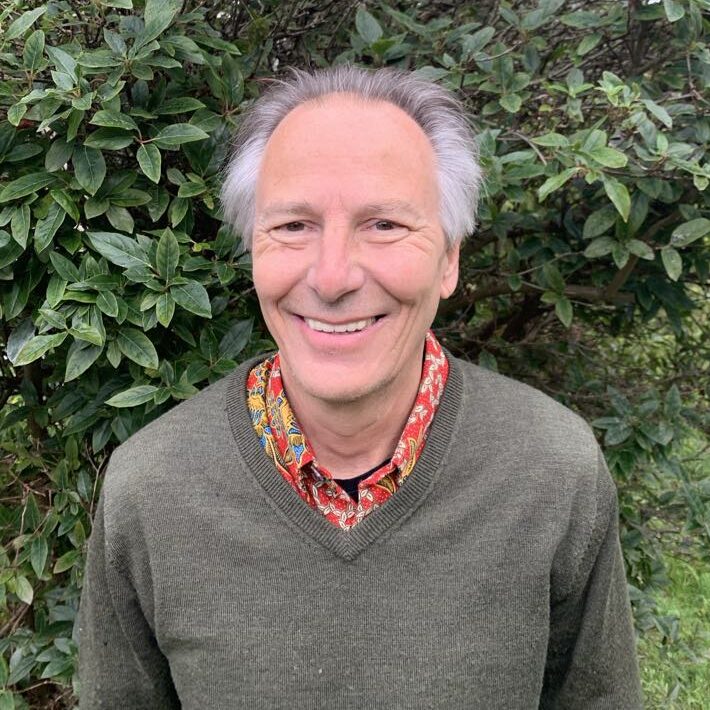
Felix De Haas has spent more than four decades studying and practicing East Asian medicine, integrating classical Chinese medicine, Japanese acupuncture traditions, herbal medicine, palpation-based approaches, and Daoist internal cultivation into a deeply experiential clinical practice. Trained in both Western medical sciences and traditional East Asian systems, he has studied with many influential teachers. Felix maintains clinics in the Netherlands and teaches internationally, with a particular focus on the Engaging Vitality® approach and the philosophical foundations of traditional medicine.
Alongside his medical work, Felix has long explored Buddhist and Daoist contemplative traditions, including Tibetan Buddhism and Neidan (Daoist internal alchemy). His work bridges medicine, meditation, perception, and internal cultivation, emphasizing attentive presence and the practitioner’s state of awareness as central aspects of healing and clinical practice.
Visit Felix’s FACEBOOK & TCM KONGRESS ROTHENBURG
Or Watch & Listen
on your favorite podcast platform




Continue Exploring This Theme