Sri Aurobindo and the Evolution of Consciousness
with Santosh Krinsky
Consciousness, transformation, Savitri, and the next stage of human development
Sri Aurobindo evolution of consciousness is a framework for understanding the ongoing development of human awareness. It begins with a turning point—not in theory, but in direct experience.
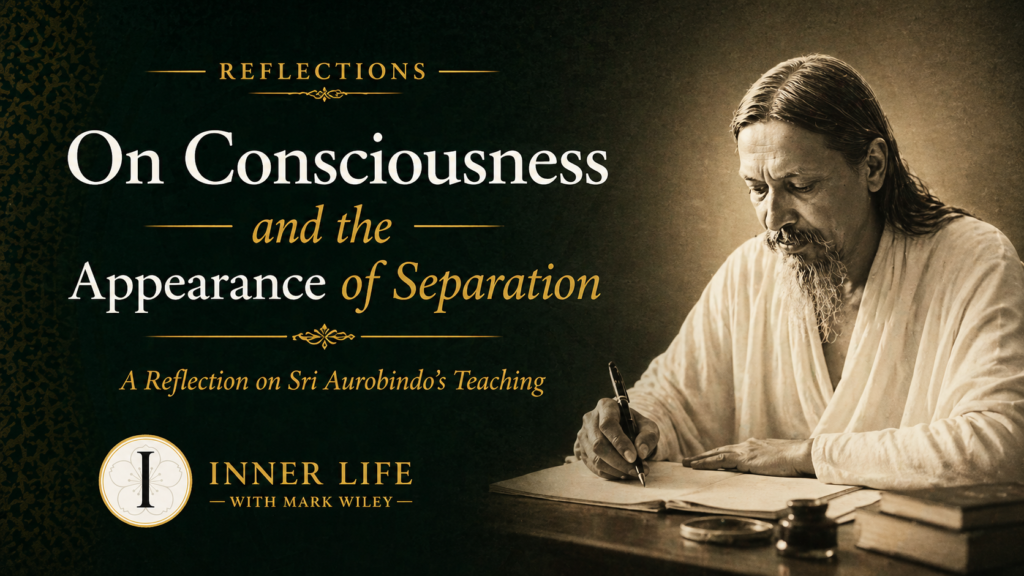
Sri Aurobindo did not begin as a mystic. He began as a revolutionary—deeply involved in India’s struggle for independence, intellectually formidable, and actively engaged in political resistance. His arrest under the Alipore bomb conspiracy case was meant to silence that movement. Instead, it marked a turning point.
Removed from political activity and placed in confinement, Aurobindo encountered something that would fundamentally alter the trajectory of his life. What began as isolation became initiation. He immersed himself in the Bhagavad Gita and underwent a series of inner experiences that transformed how he perceived reality itself.
He later described seeing the same presence—Sri Krishna—in the judge, the prosecutor, the guards, and even the prison bars.
Not symbolically, but directly.
“What changed was not his belief. It was his perception.” —Sri Aurobindo
From Revolution to Reorganization
Sri Aurobindo evolution of consciousness reframes human development as a process of transformation rather than belief. This shift did not lead to withdrawal, but to reorientation.
Upon release, Aurobindo stepped away from political activism and devoted himself fully to what he would later call Integral Yoga. The aim was no longer national liberation, but something more fundamental: the transformation of human consciousness.
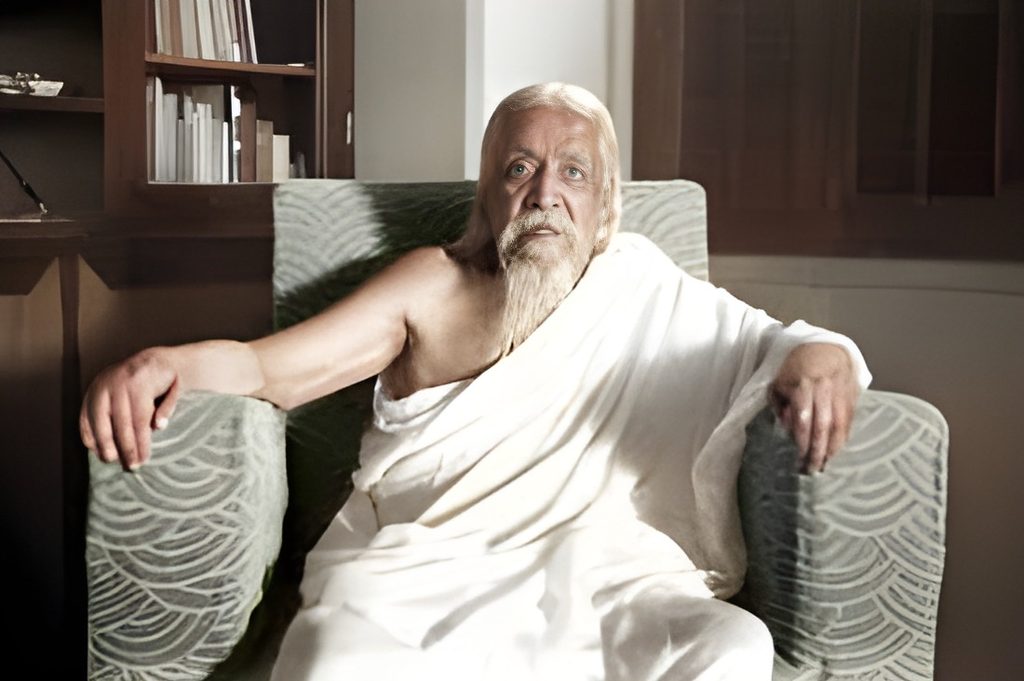
Humanity as a Transitional Stage of Consciousness
At the core of Aurobindo’s vision is a radical proposition:
“Humanity is not complete.” —Sri Aurobindo
Mind, as we know it—analytical, dividing, interpretive—is not the final stage of evolution. It is a midpoint. The instability, conflict, and fragmentation that define human life may not be signs of failure, but of transition. Beyond mind lies another mode of awareness: what he termed the supramental consciousness.
This is not an abstract ideal. It is a different way of perceiving—one that does not fragment reality into parts, but apprehends it as an integrated whole. The movement toward this is not automatic.
It requires participation.
Practice as Participation
Sri Aurobindo evolution of consciousness is expressed through practice, where transformation occurs through sustained engagement rather than belief.
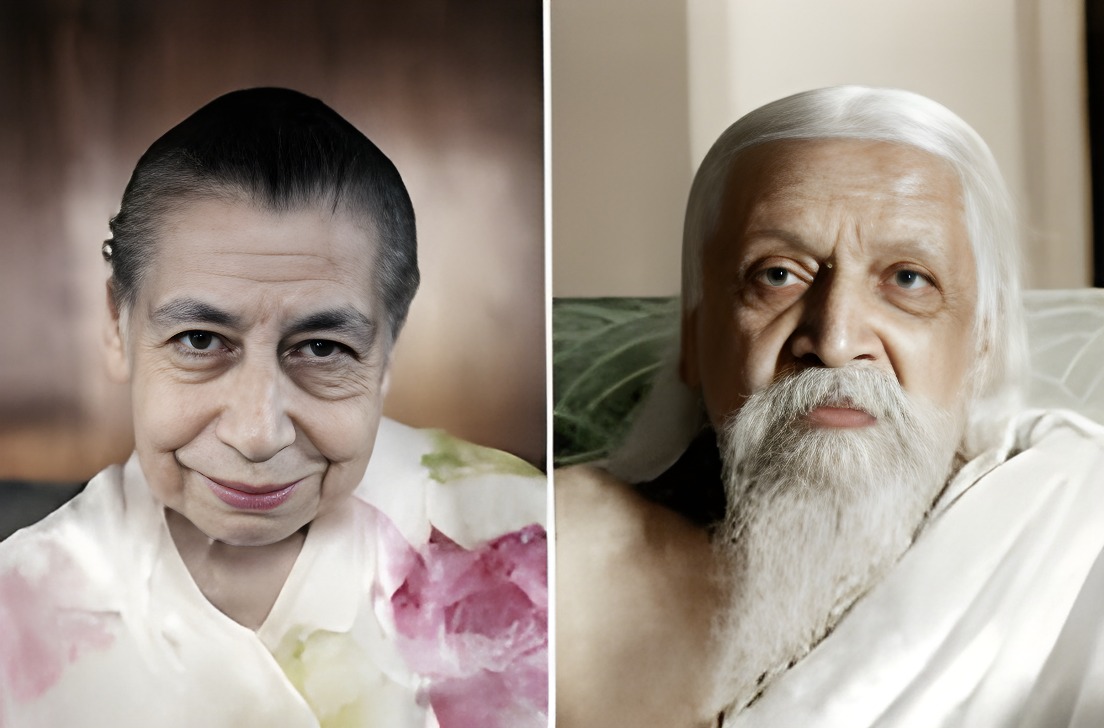
These are not steps to complete, but processes to live.
“Practice is not something you perform. It is something you become involved in.” —Sri Aurobindo
The difficulty lies not in understanding these principles, but in sustaining them within the conditions of daily life—work, relationships, emotional patterns, and social pressures.
Transformation does not occur outside life. It occurs within it.
Savitri and the Transmission of Consciousness
Aurobindo’s final and most extensive work, Savitri, reflects this vision in a different form. Rather than explaining philosophy, it embodies it.
“Consciousness can be carried through language.” —Sri Aurobindo
Readers are encouraged not to analyze the text, but to experience it—to read slowly, receptively, allowing the language to act rather than be dissected.
Over time, understanding emerges not through effort, but through familiarity and internal reorganization. The work becomes less a text and more a field.
Not a System of Belief
Throughout the conversation, one point remains consistent: This is not a religion.
It is not a doctrine, a philosophy, or a system to adopt. It is a framework for understanding and participating in the ongoing development of consciousness.
As Santosh Krinsky emphasizes, change does not occur through external systems—political, economic, or ideological—but through shifts in consciousness itself.
“We are not the doers. We are instruments of a larger process.” —Sri Aurobindo
In this sense, Sri Aurobindo evolution of consciousness is not an idea, but an ongoing process. Human life is not fixed. It is in process.
→ Read a Reflection on Sri Aurobindo’s Teachings.
About the Guest
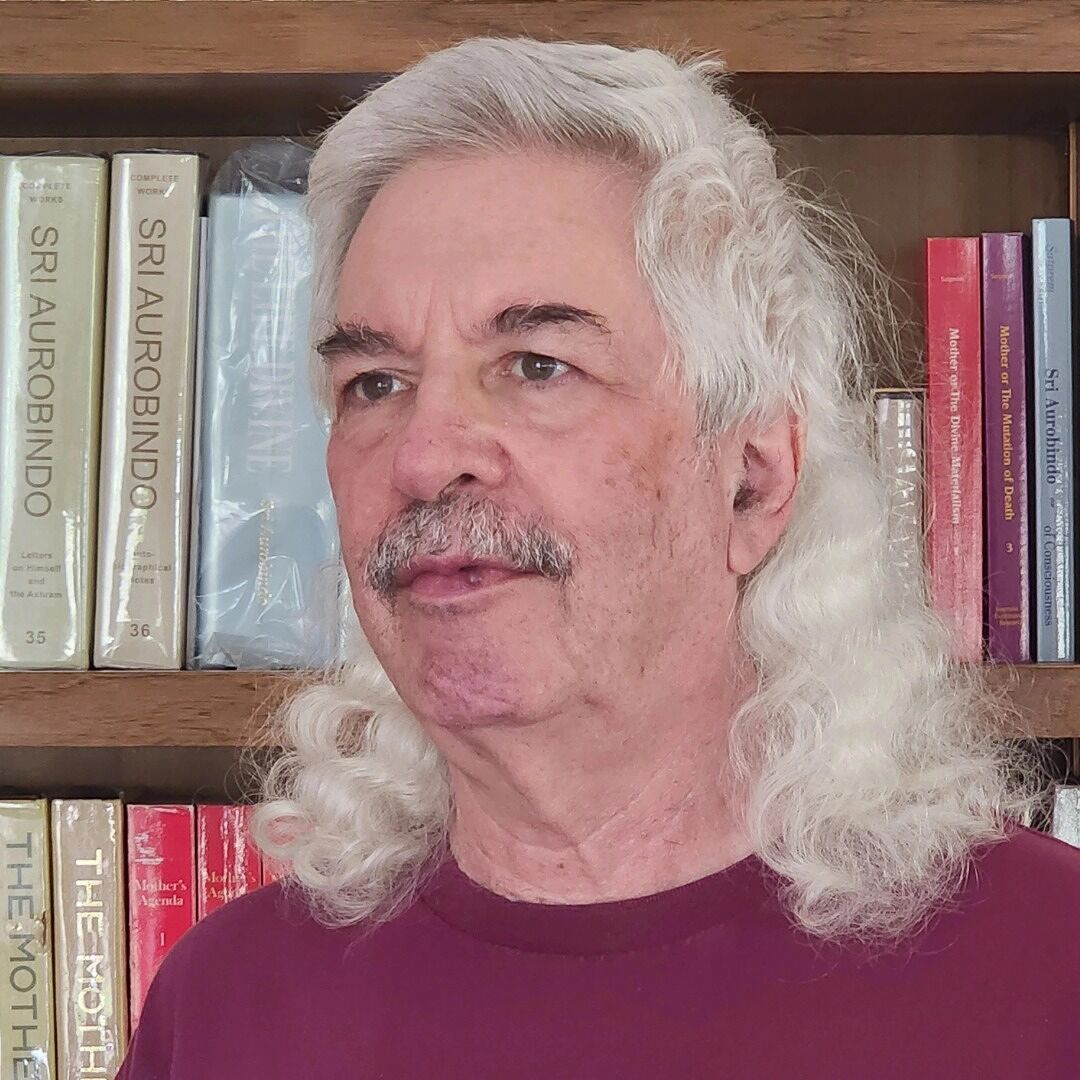
Santosh Krinsky is a longtime practitioner and publisher of Sri Aurobindo’s works, with over five decades of engagement in Integral Yoga. His path began during the political turbulence of the late 1960s, when a direct inner experience led him away from activism and toward a deeper inquiry into consciousness.
He later lived at the Sri Aurobindo Ashram in Pondicherry, India, where he studied and immersed himself in the teachings firsthand. Through decades of reading, publishing, and daily practice, Krinsky has developed a grounded and experiential understanding of Aurobindo’s work—emphasizing not theory, but lived transformation.
Visit Santosh Krinsky’s YOUTUBE CHANNEL
Visit the Lotus Press AMAZON PAGE
Continue Exploring