Daoist Cultivation and Human Transformation
with Dr. Livia Kohn
Daoism, embodied practice, and the reorganization of experience through lived cultivation
Daoist Cultivation and Mystical Experience
From the outset, Kohn reframes what is often misunderstood. Mystical experience, in the Daoist context, is not an extraordinary or distant state. It is not something to be manufactured through effort or attained through intensity. Instead, it emerges when the ordinary structures of perception begin to loosen.
“Mystical experience is the dissolution of ordinary awareness—letting go of personal concerns and ego patterns, and merging with a greater flow.“ —Dr. Livia Kohn
As she explains, “the experience happens.” It cannot be forced. But the conditions for it can be cultivated.
From Effort to Availability
This distinction is essential. Much of modern practice is driven by the assumption that effort produces results in a linear way. Daoism challenges this directly. Practice does not create the experience—it prepares the system. Through breath, stillness, and the gradual release of sensory and cognitive fixation, the practitioner becomes “experience-prone.”
“There is only the truth. Even falsehood is slightly disturbed truth.” —Shaykh Fadhlalla Haeri
From Effort to Recognition
The Shaykh speaks directly to the tensions of modern spiritual life—between effort and realization, identity and truth. At the same time, he does not reject structure entirely. Rather, he reframes it. Practice becomes a way of clearing rather than accumulating.
“The experience happens. It’s not something you can plan. But you can make yourself prone to it.” —Dr. Livia Kohn
What emerges from within Daoist cultivation is not something foreign. It is a shift—often subtle—in how one relates to what is already present.
Recognition Within Ordinary Experience
Kohn’s description aligns closely with peak experience theory, but places it within a structured tradition of Daoist cultivation. Moments of complete presence—whether in music, nature, or movement—are not anomalies. They are glimpses of a more fundamental way of being.
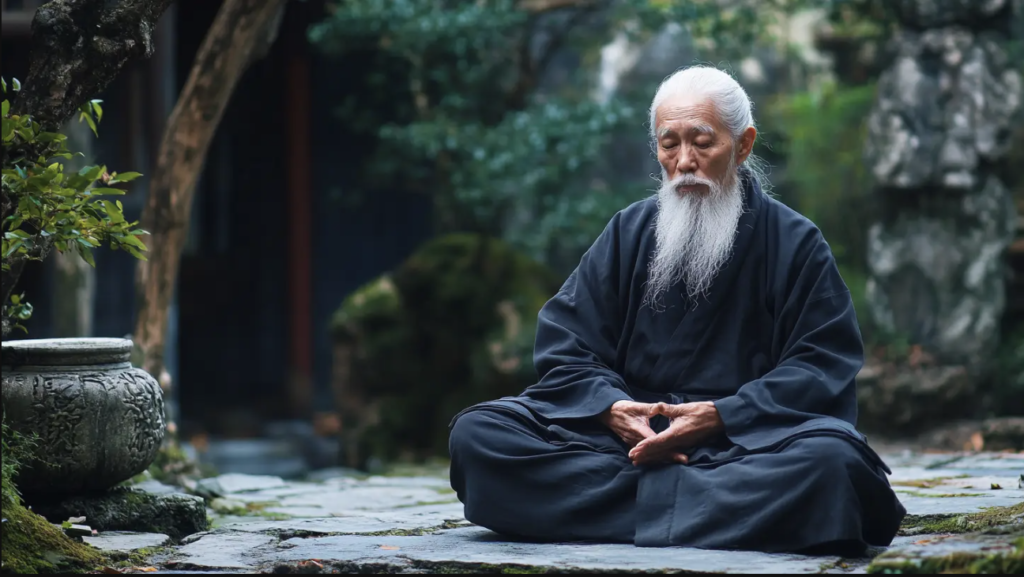
Practice, then, is not about becoming something new. It is about removing what obscures what is already there.
Methods of Clearing
This is where Daoist cultivation methods such as “mind fasting” and “sitting in oblivion” come into play. These are not abstract ideas, but precise practices. Through breath awareness and sensory quieting, the practitioner gradually releases identification with thought, memory, and external stimulus. What remains is a state of openness—what Daoist texts describe as emptiness—not as absence, but as availability.
From this condition, insight and alignment begin to emerge naturally.
“The Dao is here all the time. We are part of it—we just have to relax into it.” —Dr. Livia Kohn
Ethics as a Consequence of Alignment
Kohn also addresses the question of ethics, offering a perspective that stands in contrast to many modern frameworks. Rather than being imposed through rules, ethical behavior arises as a consequence of alignment. When one is in harmony with the Dao, action becomes appropriate without the need for external enforcement.
For those not yet established in this state, structures and rules serve a purpose. But they are secondary. The deeper aim is to cultivate a condition in which right action is spontaneous.
Time and the Structure of Experience
The conversation expands further through an exploration of time.
Drawing on multiple frameworks, Kohn outlines a layered understanding of temporality—from biological cycles to social constructs to timeless states accessed in meditation. Daoist practice engages all of these, but ultimately points toward a loosening of identification with constructed time.
In moments of deep presence, time changes. It slows, dissolves, or disappears altogether. This is not an abstraction, but a direct experiential shift—one that reveals the degree to which ordinary perception is structured rather than inherent.
Where Practice Leads
Across all of these themes, a consistent pattern emerges.
- Practice begins with method—but does not end there.
- It reorganizes the relationship between body, breath, attention, and perception.
- And as that relationship stabilizes, a different way of being becomes possible.
It is neither imposed nor imagined. It is directly lived.
About the Guest

Dr. Livia Kohn is a leading scholar of Daoism and Chinese philosophy, internationally recognized for her work on meditation, longevity practices, and the historical development of Daoist traditions.
A longtime professor of religion and East Asian studies at Boston University, she has authored and edited more than 30 books, including influential studies on Daoist internal alchemy, body cultivation, and early mystical traditions. She is also the founder and organizer of the International Daoist Conference and served for many years as editor of the Journal of Daoist Studies. Her work is widely respected for bridging rigorous scholarship with a deep understanding of lived practice.
Visit Dr. Livia Kohn’s AMAZON PAGE
Continue Exploring This Theme