

INNER LIFE
Cultivating the Human Being
Embodied Practice • Disciplined Reflection • Sincere Inquiry
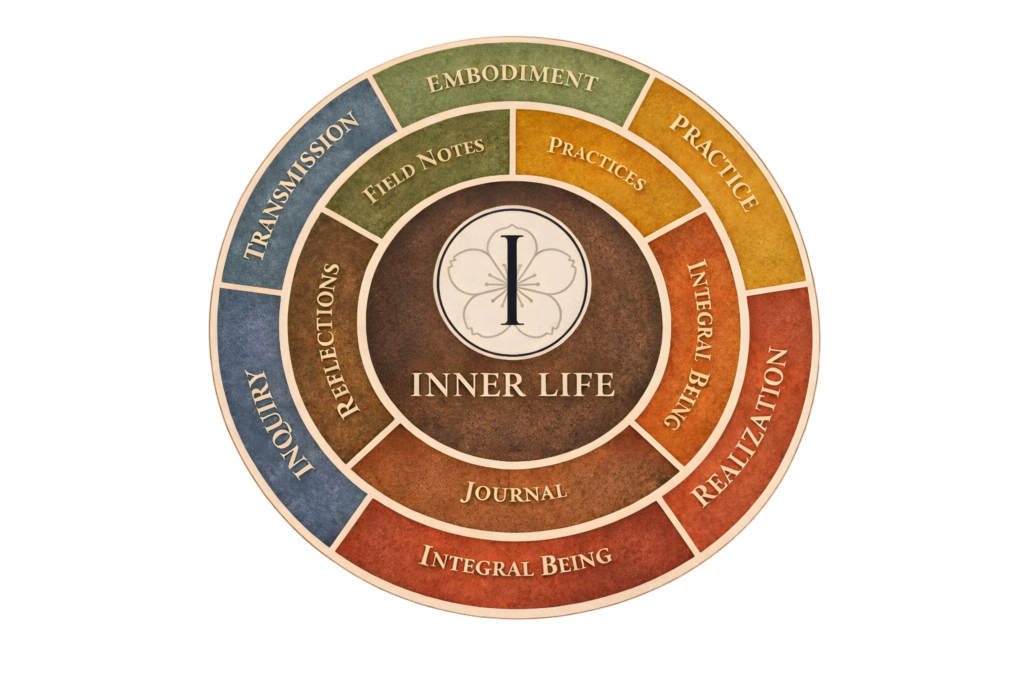
Inner Life is a space devoted to the careful cultivation of human development through embodied practice, disciplined reflection, and sincere inquiry.
It exists to support the gradual work of integration—not as ideas to collect, but as ways of living that stabilize the body, clarify attention, and mature conduct over time.
Origins
This work emerged from a long and often demanding search for what genuinely helps human beings stabilize, heal, and mature—across contemplative traditions, martial arts training, formal study, and field research.
Over time, a consistent observation appeared:
Many people gather methods.
Far fewer become internally organized by them.
Inner Life grew from this recognition and continues to evolve through ongoing practice.
Our Ethos
From long-term training and lived experience, a set of guiding principles emerged—not beliefs, but orientations shaped through practice.
The ethos can be expressed simply:
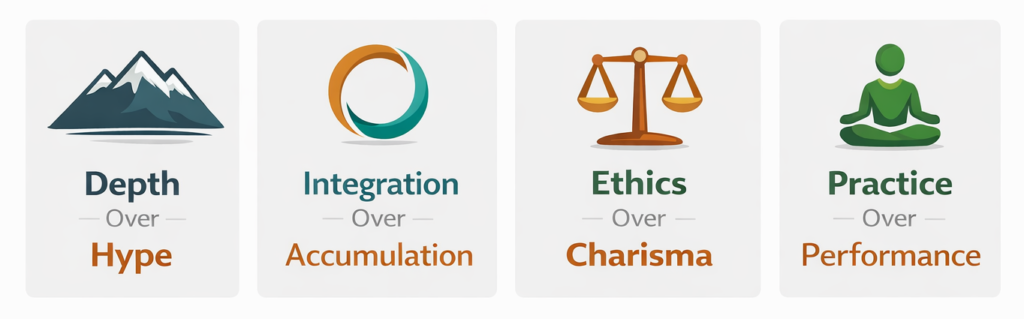
Each of these points reflects the same shift: from what is visible or impressive, to what becomes stable, embodied, and enduring over time.
Purpose
To preserve, practice, and share contemplative and embodied wisdom with care, rigor, and humility.
The orientation is:
Educational rather than promotional
Relational rather than transactional
Formational rather than performative
Inner Life grew from this recognition and
continues to evolve through ongoing practice.
The interaction between practices also reveals patterns of imbalance. At times there is too much—effort becomes force. At times something does not move—practice becomes held or stagnant. At times something is missing—capacity is not yet developed.
Within Inner Life, these patterns are understood simply as excess, stagnation, and deficiency—three conditions that guide how practice is adjusted and refi
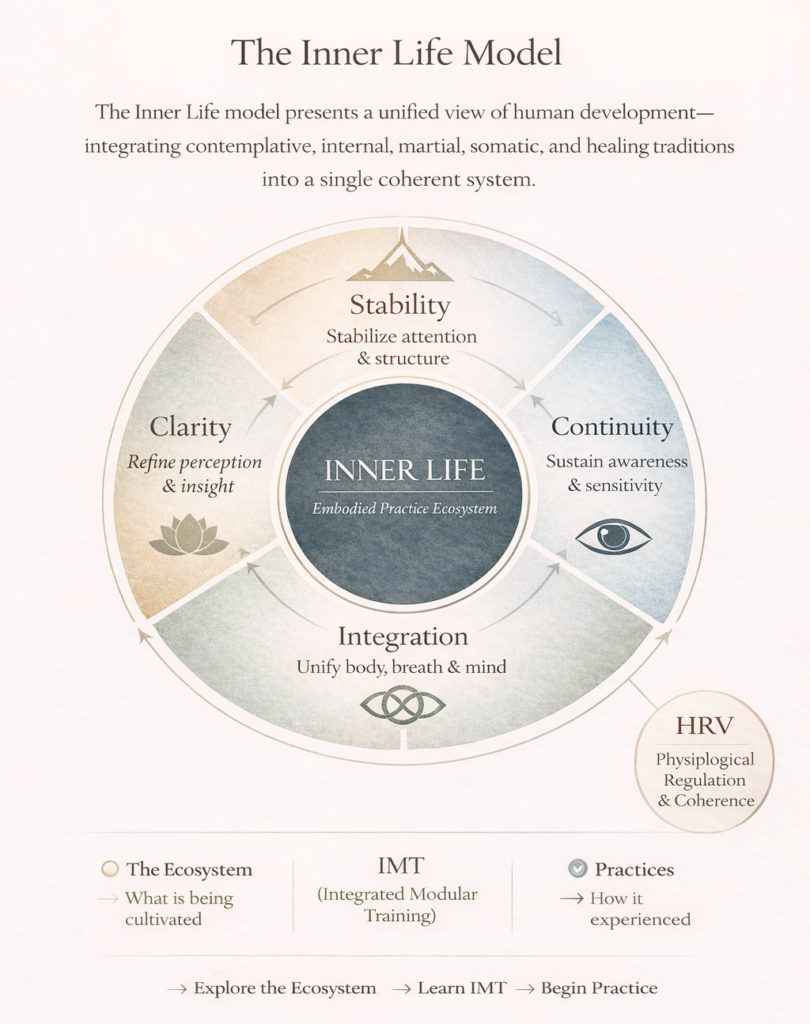
Inner Life is not built on ideas alone. It is built on what can be embodied, tested, and lived. |
Embodiment: The Unifying Thread
An ecosystem of practice
Embodiment is what allows practice to take root. It is where reflection becomes posture, breath becomes regulation, and insight becomes lived behavior.
Without embodiment, development remains abstract. With it, change becomes stable, cumulative, and real.
Toward an Integral Human Being
From the Inner Life perspective, development is not measured by peak experience or conceptual understanding, but by increasing coherence under real conditions.
An integral human being is not one who has achieved perfection, but one whose body, breath, mind, and conduct are increasingly aligned and reliable.
This process is gradual.
It is trained through Practice.
And it remains ongoing.
About the Founder
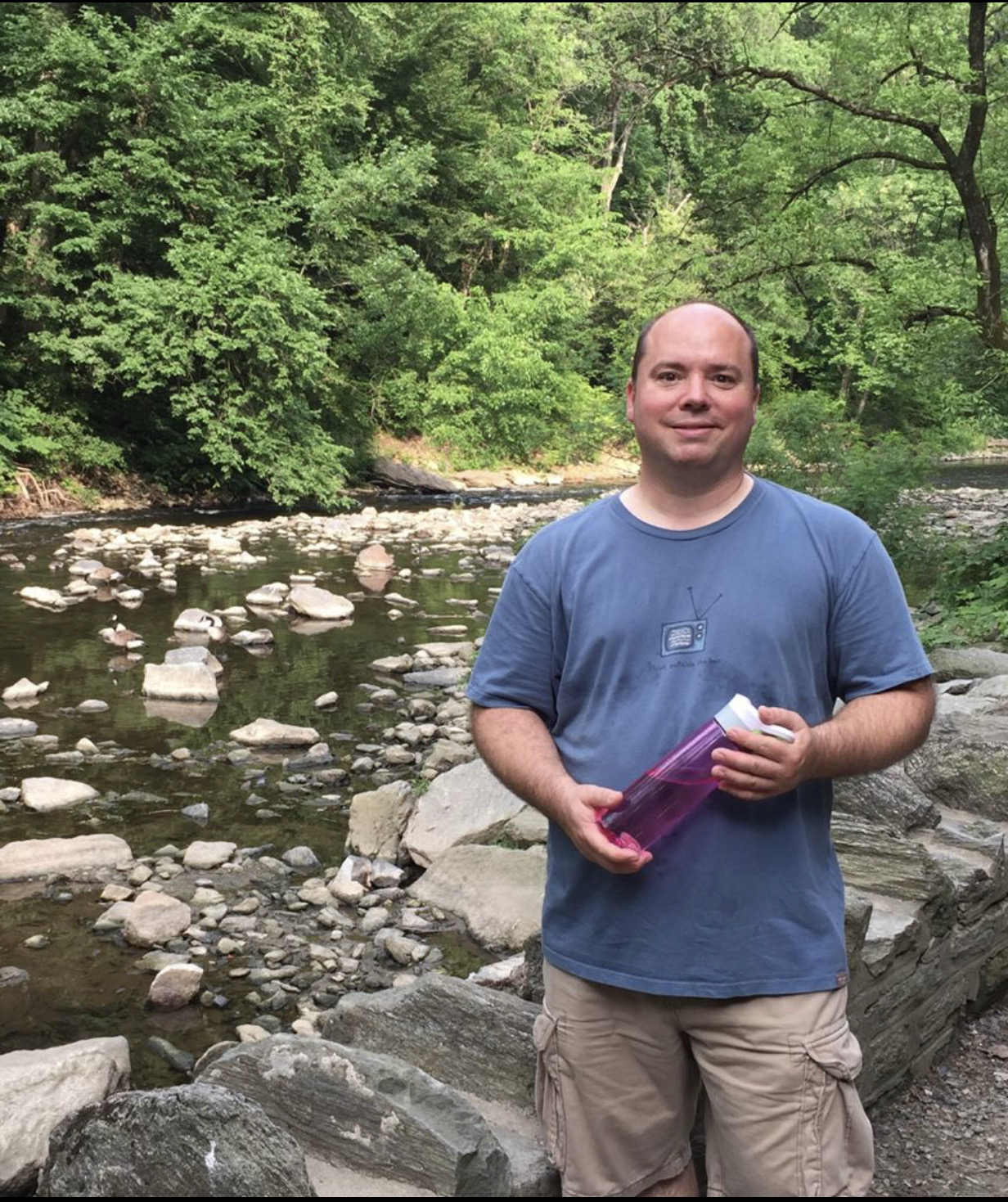 Mark V. Wiley is a lifelong practitioner, teacher, and field researcher of embodied wisdom traditions.
For more than four decades, his work has moved across martial arts, internal cultivation, healing systems, and contemplative practice—not as separate disciplines, but as interconnected methods of human development.
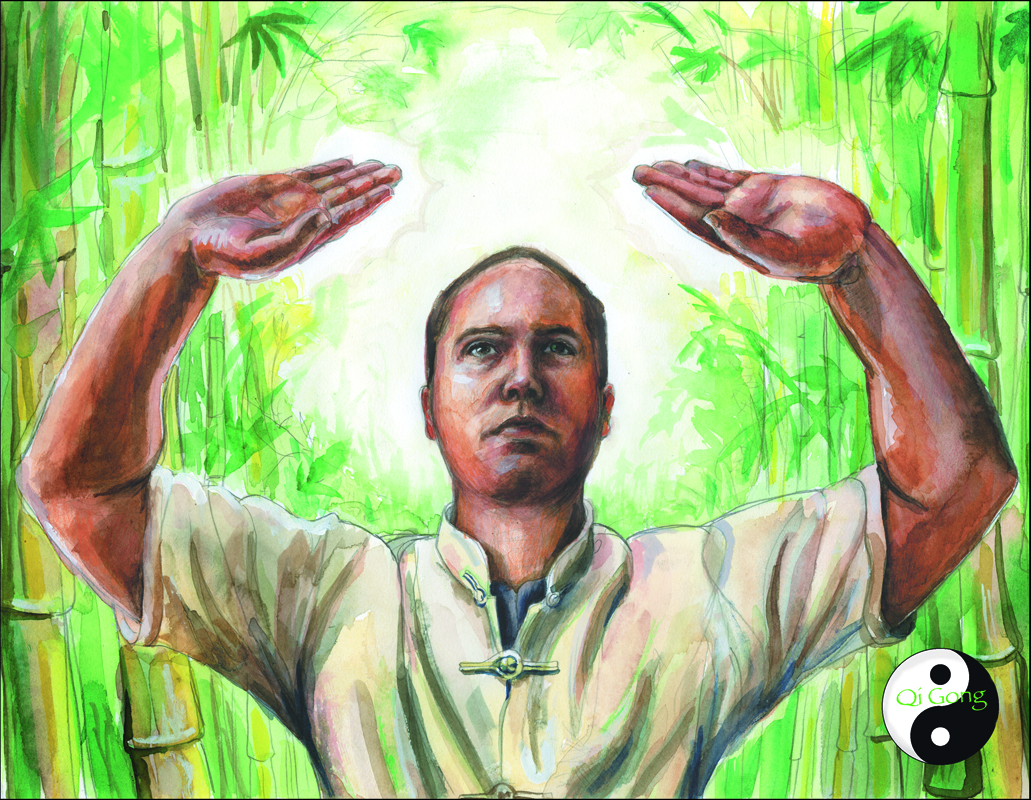
His training includes traditional kung fu and Filipino martial arts, qigong and internal arts, manual and Chinese medical approaches, and sustained engagement with contemplative traditions throughout Asia and the United States.
Across this work, a consistent question has guided him: What actually changes in a human being through practice?
Not what we believe. Not what we understand—but what becomes stable, embodied, and lived.
Inner Life emerges from this inquiry—not as a constructed system, but as a field shaped through direct experience, long-term training, and dialogue across traditions.
Through writing, teaching, and the Integral Being conversations, his work continues to explore how practice reshapes the body, refines perception, and supports the gradual development of an integrated human being.
The Integral Being Conversations
The Integral Being conversations extend this work through dialogue—exploring how practitioners across traditions understand embodiment, consciousness, and human maturation.
These conversations are not intended to promote ideology, but to deepen inquiry into what genuinely supports integrated human development.